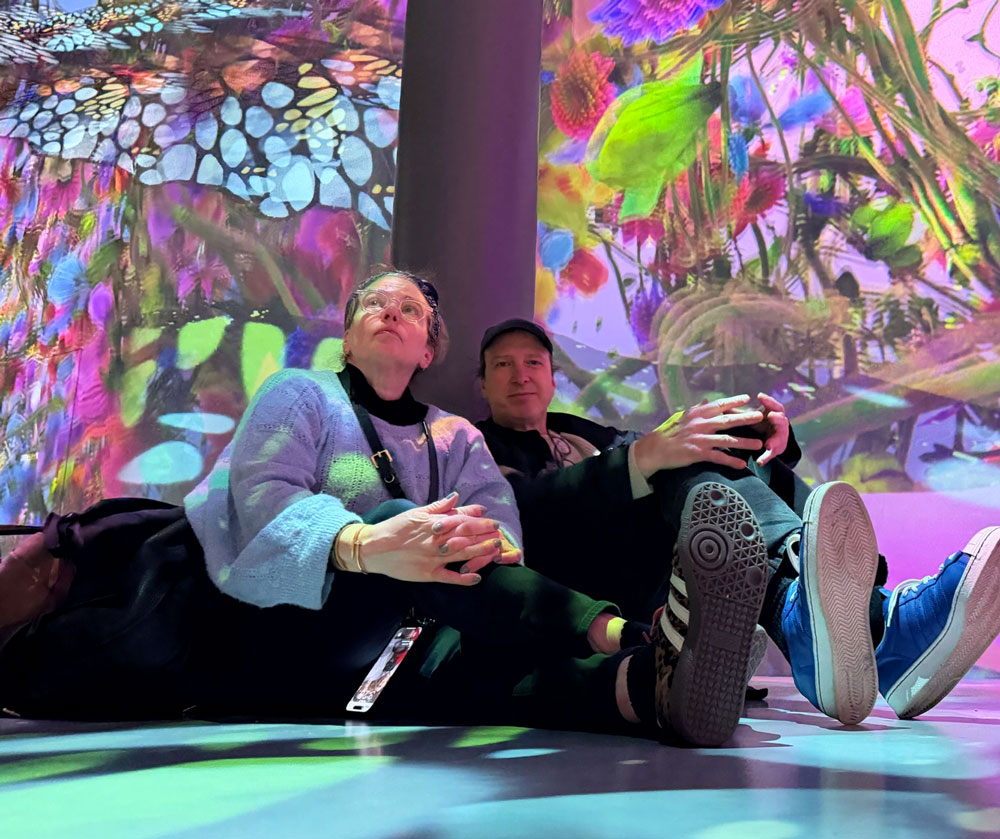
ARTECHOUSE NYC's Blooming Wonders: A Celebration of Spring

We kicked off the season with a visit to ARTECHOUSE NYC's Blooming Wonders: A Celebration of Spring, perfectly timed with cherry blossom season in New York City. The city itself begins to soften under bursts of pale pink and transient blossoms. Stepping inside the gallery feels like an extension of that moment, an immersive digital garden where nature is both familiar and fantastical. From the moment you enter, you're surrounded by a vivid, ever-shifting landscape—flowers glowing and unfurling, butterflies drifting in waves of color, light and sound responding to your presence. It's not just something you observe; it's something you gently influence, and even a simple pause at the bar feels like an extension of the artwork itself. The experience unfolds over roughly 22 minutes, moving through six interconnected environments: Crystal Bloom, Timeless Butterflies, Blooming Field, Milkweed Accord, Blooming Strings, and Digital Flower Experiments.
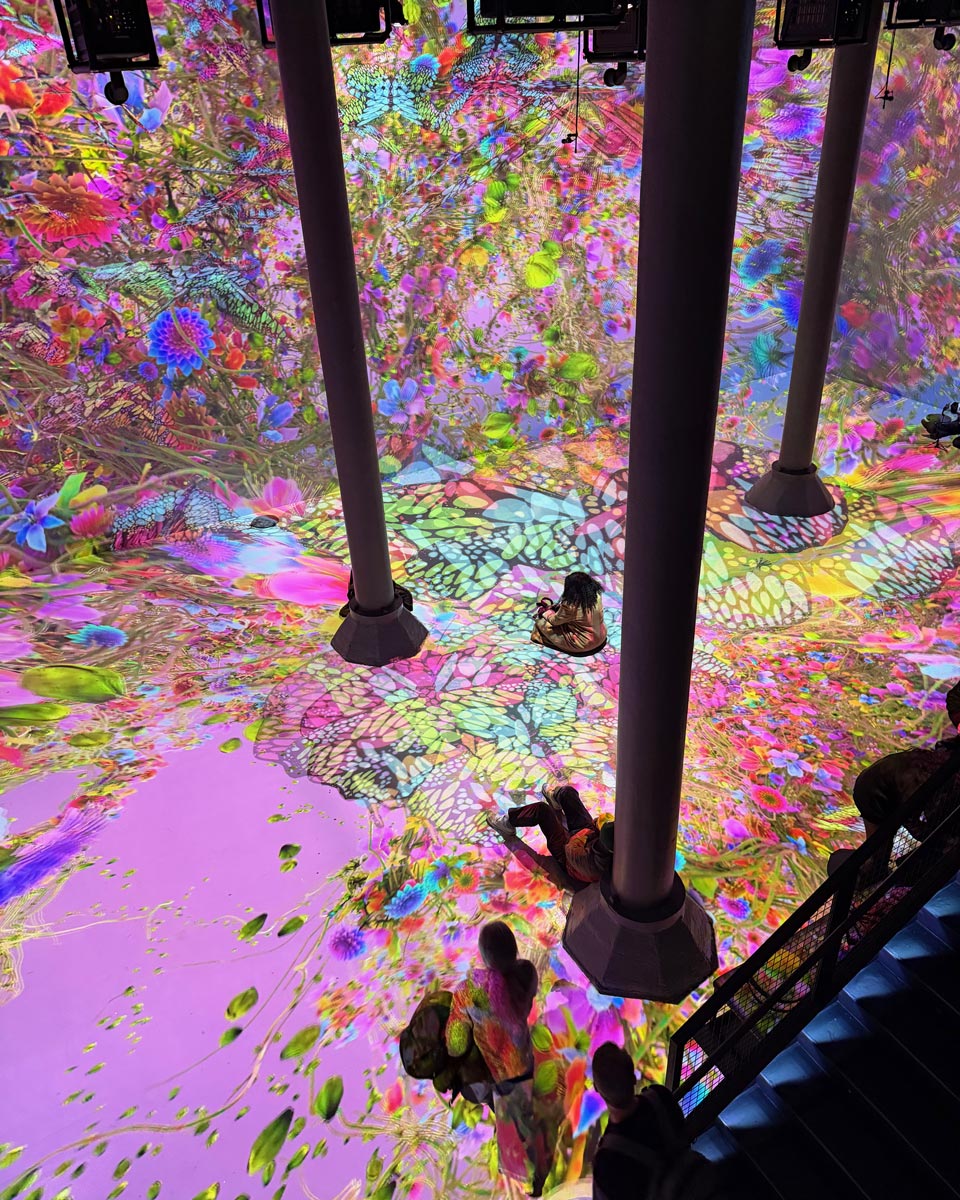
Crystal Bloom feels like stepping into a cooled dream at the height of summer. The air seems to shimmer as koi glide, flowers rise pulling your gaze upward in a slow, hypnotic spiral. There is a quiet stillness here, like your thoughts have been gently dimmed and replaced by color, reflection, and a serene detachment from time.
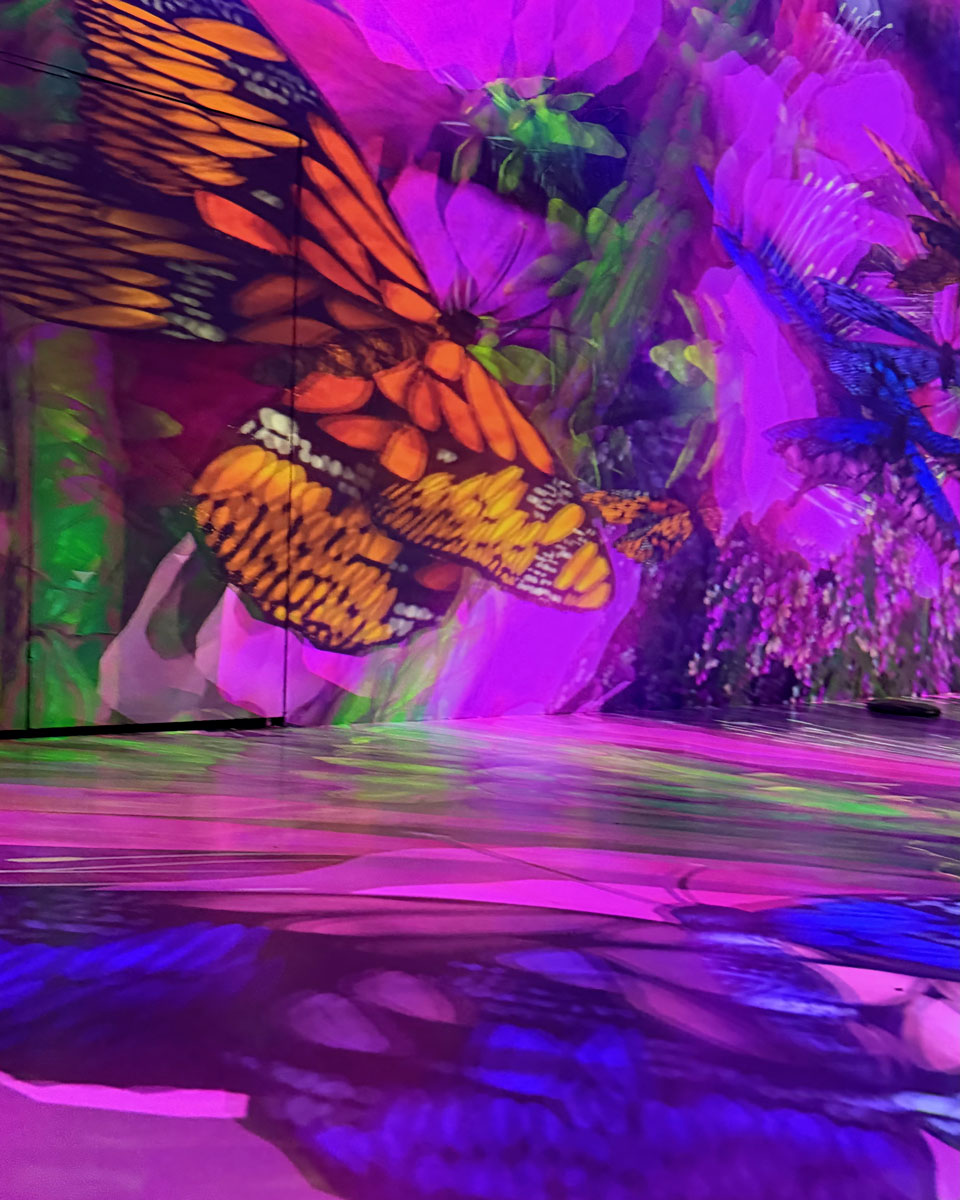
Then comes Timeless Butterflies, where stillness gives way to motion and emotion. You are carried into a storm of wings and petals, cherry blossoms blooming and dissolving in rapid succession. It's here that the idea of fleeting beauty becomes visceral. Butterflies, with their brief lifespans and delicate brilliance, have long symbolized transformation and impermanence. Watching them surge and vanish, you feel the impossibility of holding onto a perfect moment. The installation stretches time just enough for you to notice what usually slips by—the fragile, transient nature of beauty itself.
But beneath that beauty lies something deeper: interconnection. In nature, cherry blossoms and butterflies exist in a quiet symbiosis. The blossoms offer nectar, sustaining butterflies with the energy needed to move, mate, and survive. In return, butterflies pollinate the blossoms, ensuring the continuation of the trees. It's a mutual reliance—subtle, essential, and easily overlooked. Inside the installation, that relationship is magnified and abstracted, reminding you that even the smallest interactions in nature carry consequence.
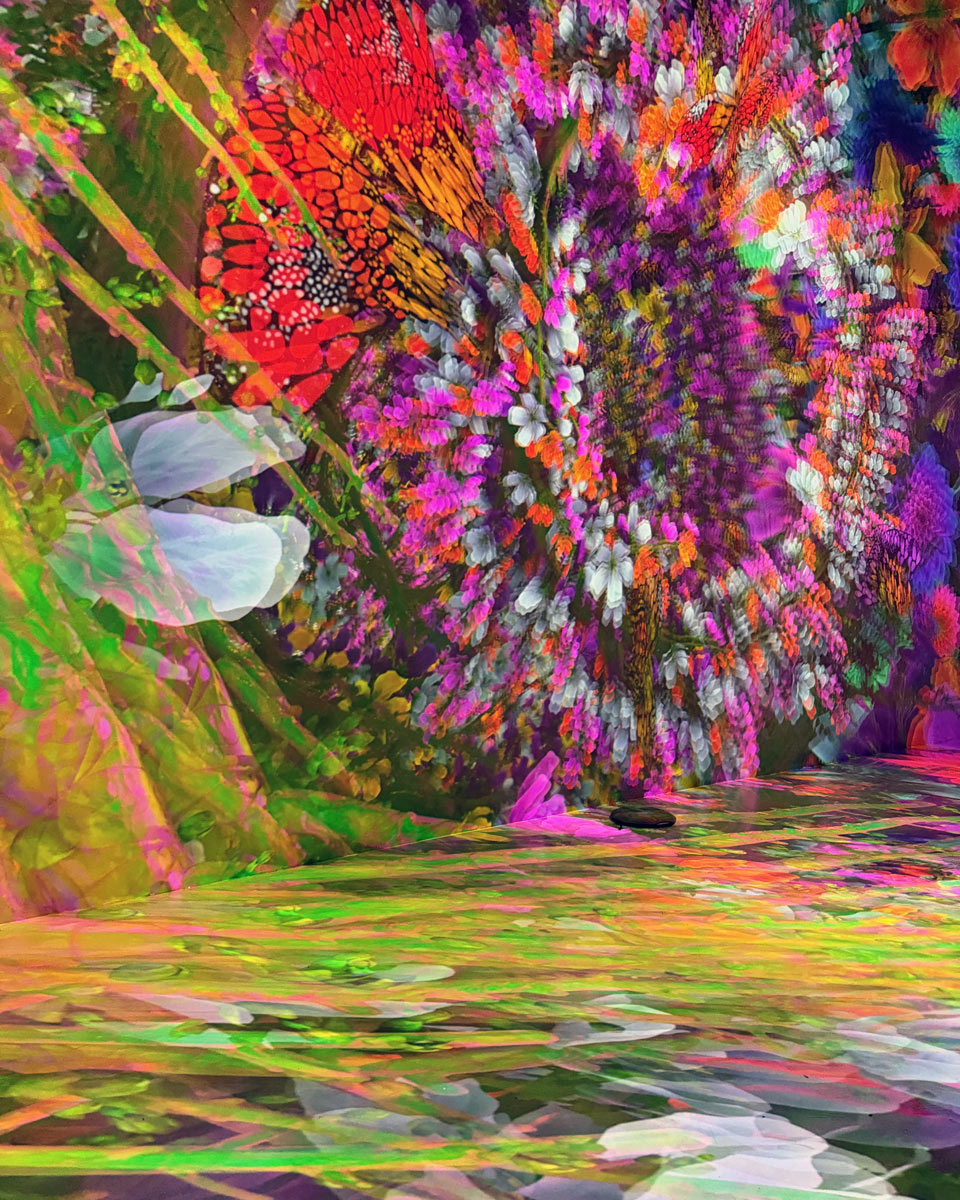
Blooming Field opens into light and play. Here, the experience softens bringing a joyful expansion. The flowers stretch endlessly, inviting you forward, and when you release butterflies into the digital air, there's a quiet thrill in shaping the scene yourself. It feels like crossing a boundary, where your physical presence begins to matter inside this artificial ecosystem.
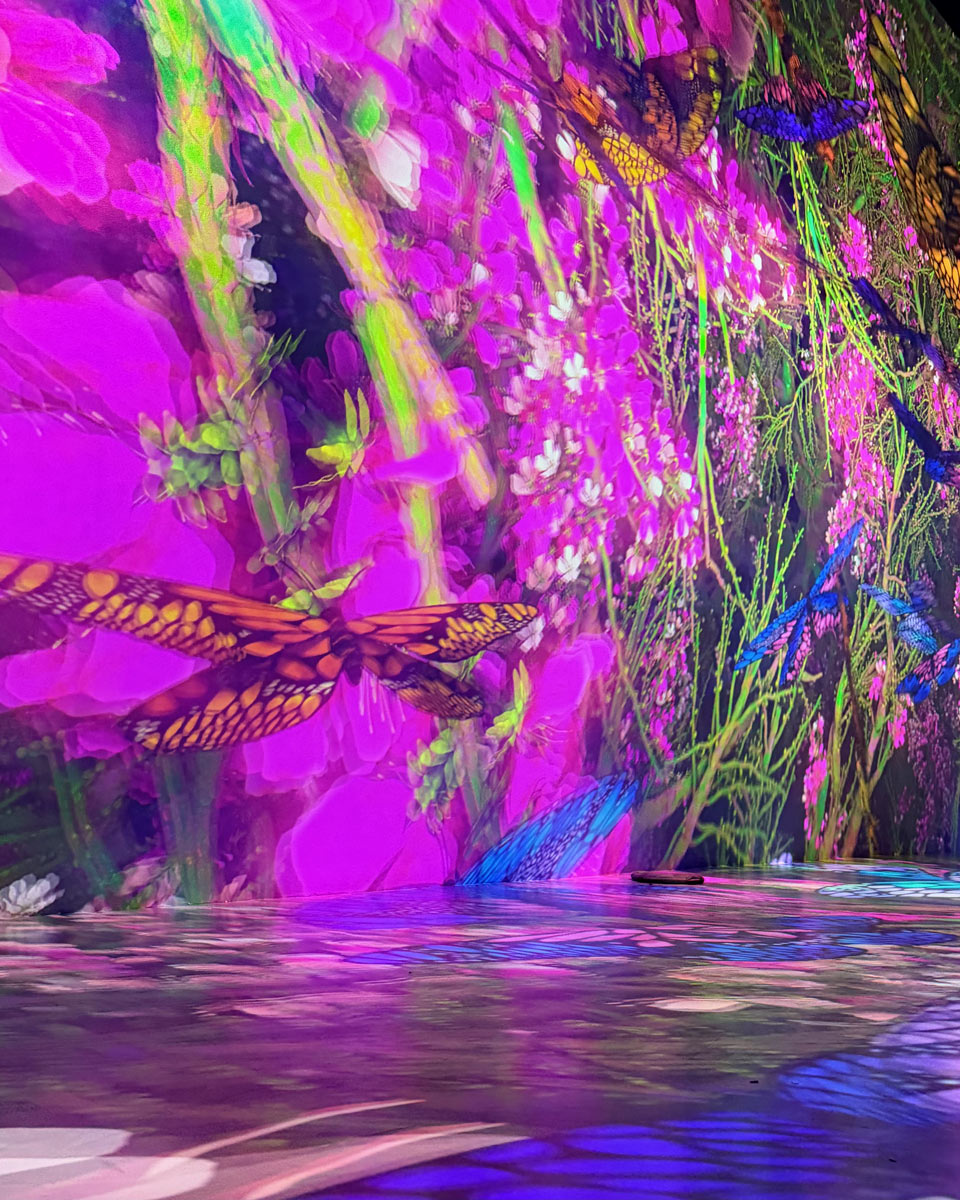
With Milkweed Accord, everything slows again. The stillness is delicate, almost sacred—until you move. Then suddenly, life reacts. Monarch butterflies scatter in a gentle, coordinated retreat, and you become aware of your own impact. It's subtle but powerful, leaving a lingering sense of responsibility, as if even in this simulated world, your presence carries weight. This idea connects directly to the looming reality of climate change. As temperatures rise, butterflies face shifting habitats, disrupted migration patterns, and mismatched seasonal cycles. Flowers may bloom earlier or later than expected, leaving pollinators without food at critical moments. Wind patterns grow more erratic, making flight more difficult. What feels harmonious and abundant inside the exhibit reflects a natural balance that, outside its walls, is increasingly under threat. It is just not a visual spectacle, but a quiet reminder of nature's vulnerability and our role in protecting it.
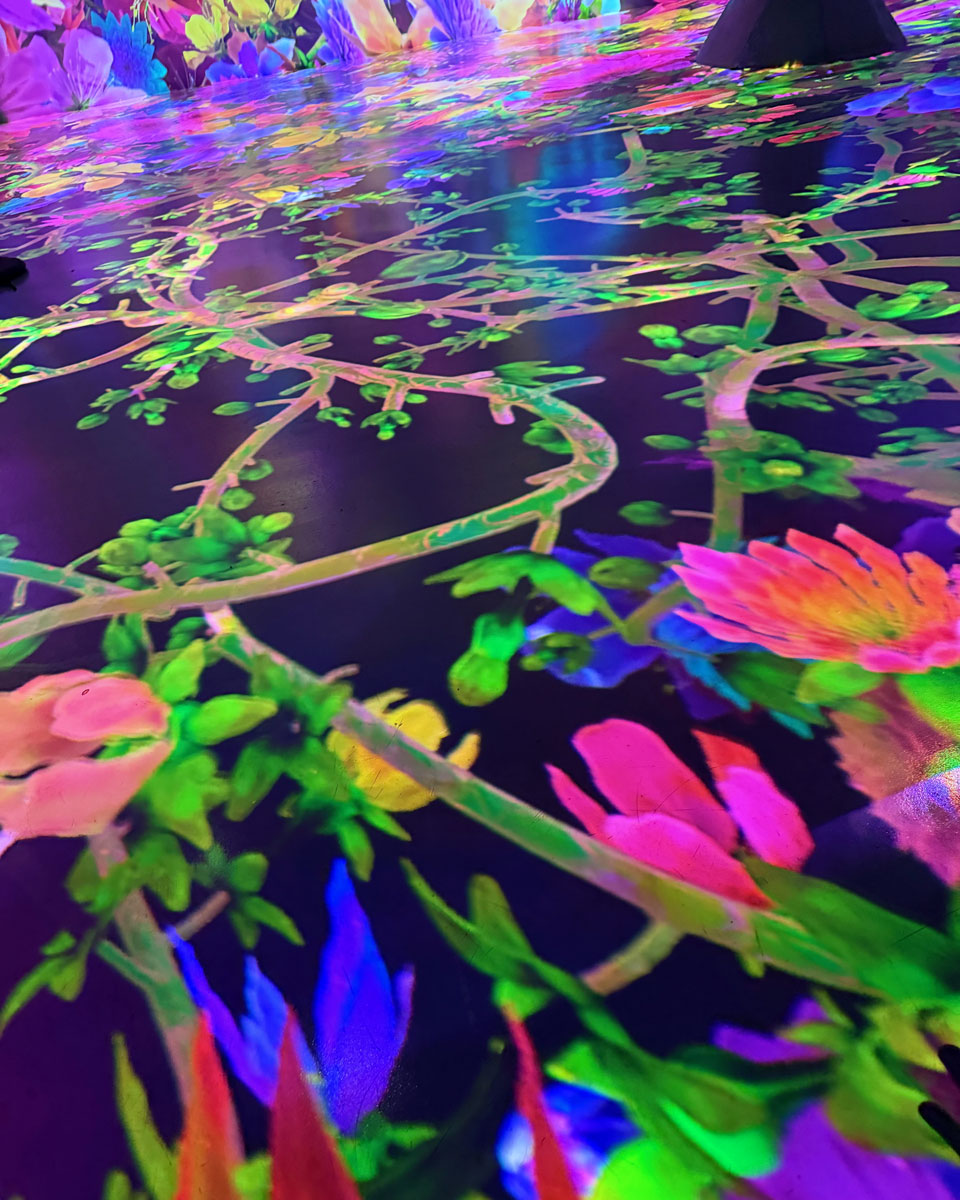
In Blooming Strings, the experience turns playful and expressive. Each step triggers sound and color, transforming your movement into music. There's a surprising joy in discovering that something as simple as walking can create harmony. It subtly echoes ancient ideas of patterns in nature—the notion that rhythm, symmetry, and order underpin the world around us. From the bilateral symmetry of butterfly wings to the mathematical harmonies once described by Pythagoras, patterns connect living things across time and form. Here, those patterns become something you can feel and create.
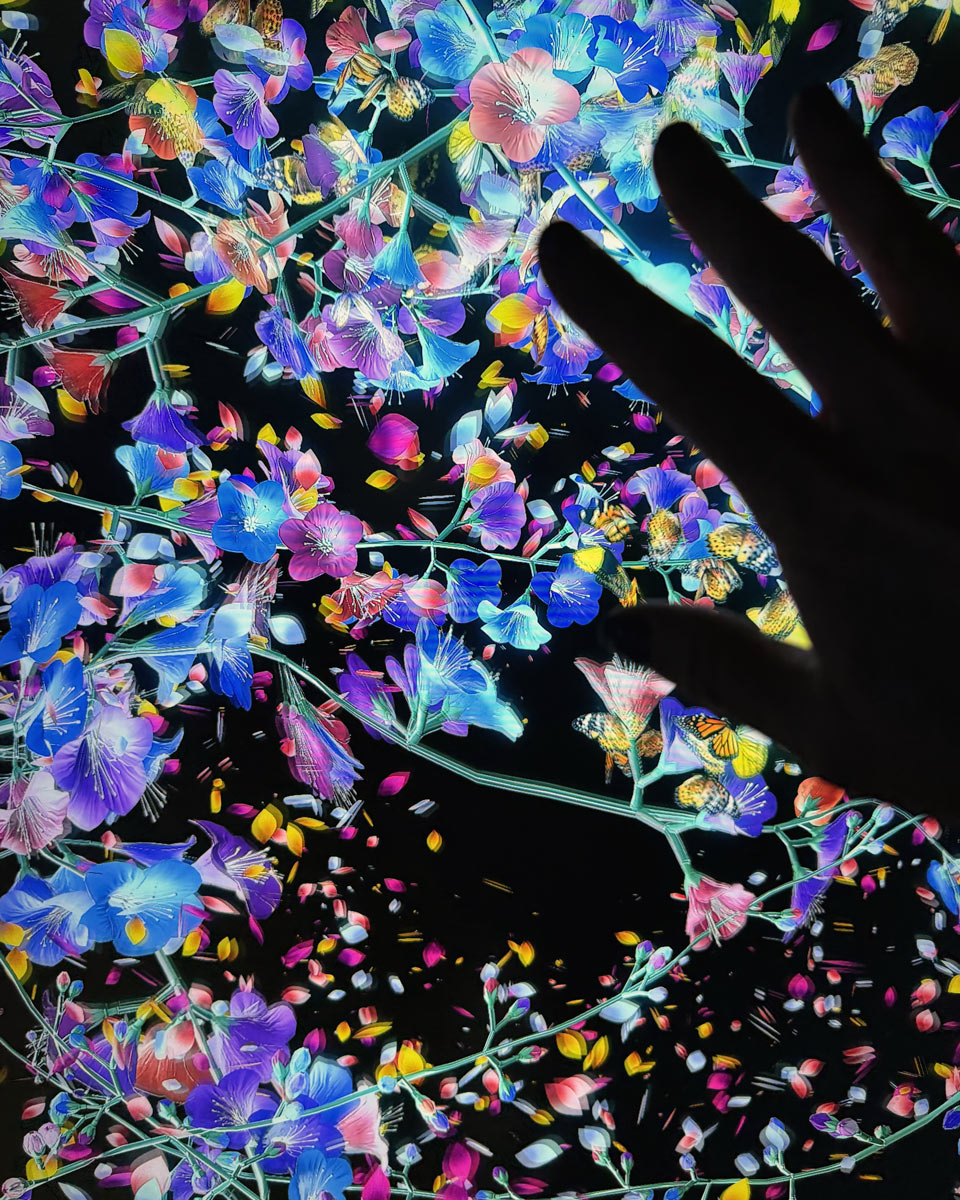
Finally, Digital Flower Experiments brings curiosity to the forefront. The space feels like a living laboratory, inviting you to observe, test, and shape what unfolds. It's a shift from pure wonder to understanding—a place where art and technology meet in quiet dialogue.
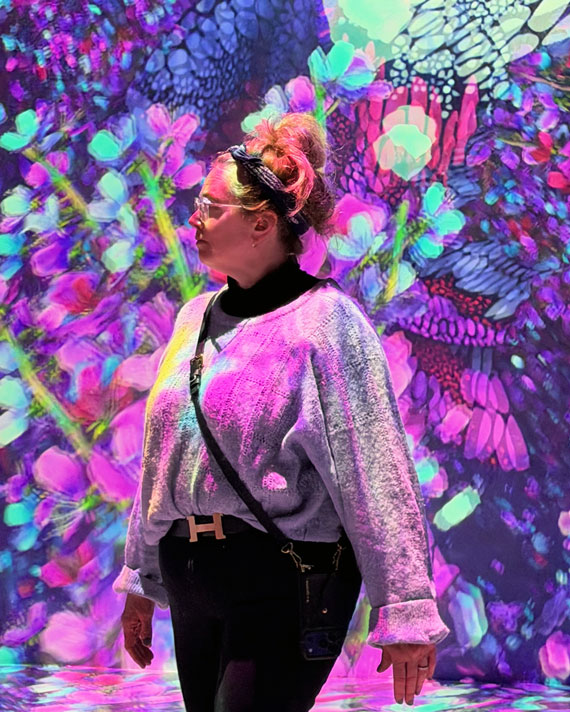
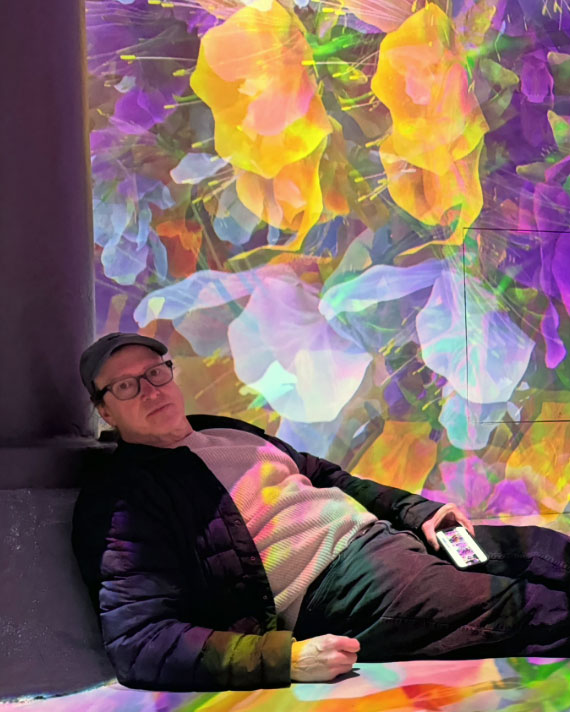
Taken together, the journey mirrors the rhythm of a season: cool stillness, blooming intensity, playful expansion, fragile balance, expressive energy, and reflective discovery. What lingers most is not just the beauty, but the awareness it leaves behind—that everything is connected, that balance is delicate, and that even the most breathtaking moments are fleeting.
You leave not just having seen something beautiful, but having felt your way through a world where nature, technology, and human presence blur into one continuous, luminous experience.
Highly recommend
This Article May Also Interest You: Mushroom Barley Soup for the Coldest Days
Simple, Seasonal, Special: Our Easter Brunch Tradition
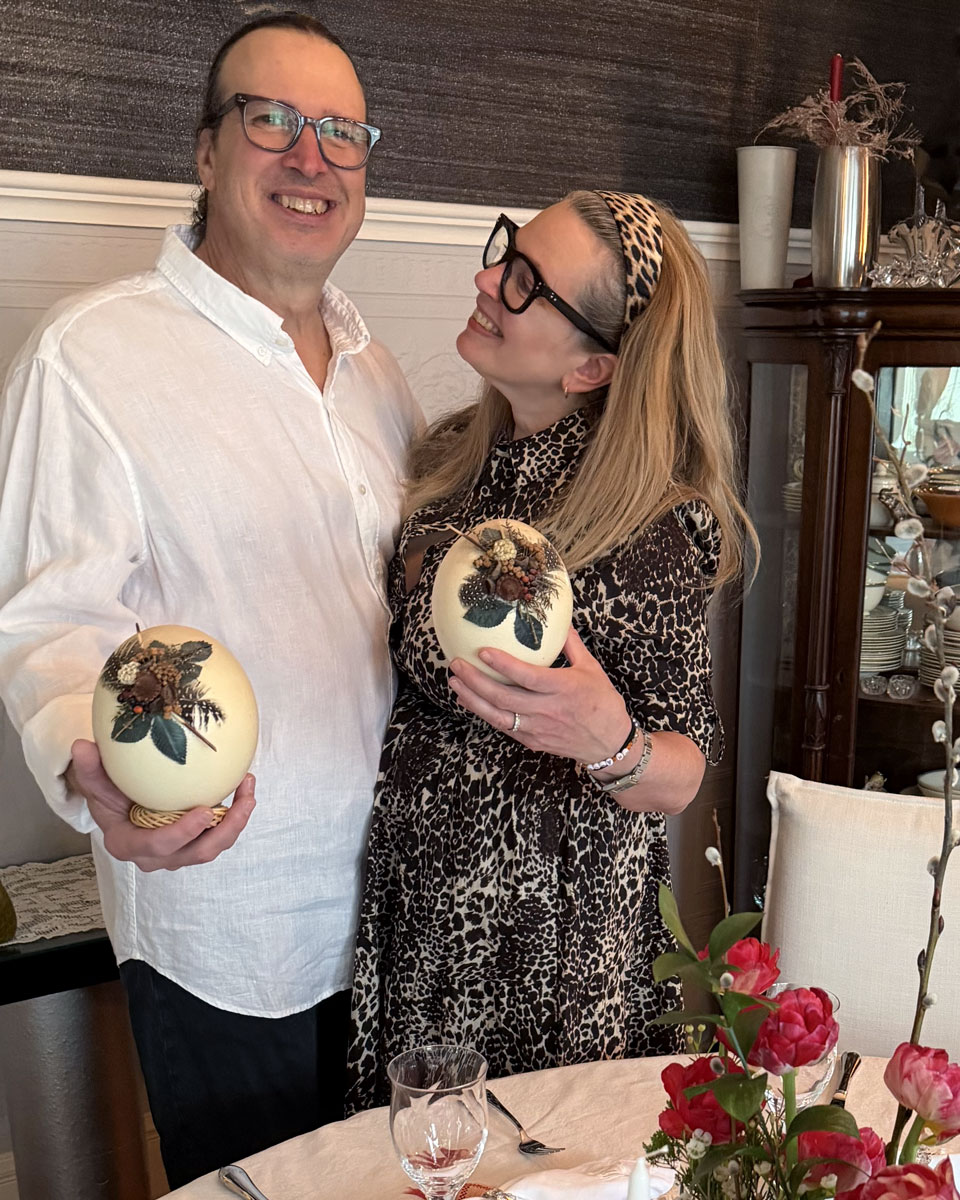
Easter brunch— it is a feeling we recreate each year around our table. What started as a simple gathering has grown into a meaningful tradition filled with good food and a celebration of spring renewal. We began hosting Easter brunch as a way to bring family together, slow things down, and create something memorable. It has become one of those moments everyone looks forward to—Tim’s amazing food and Heidi’s table-scape and blooms.
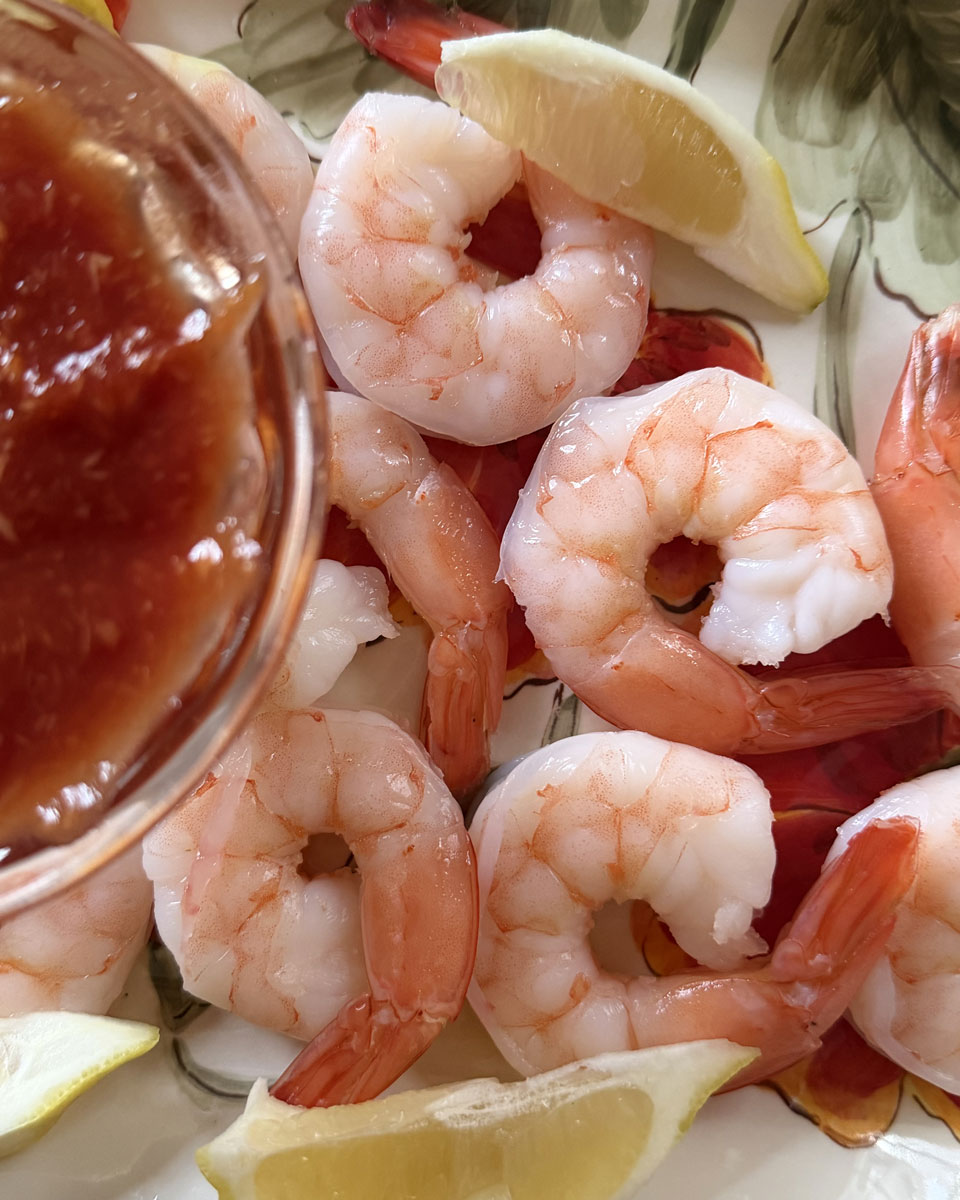
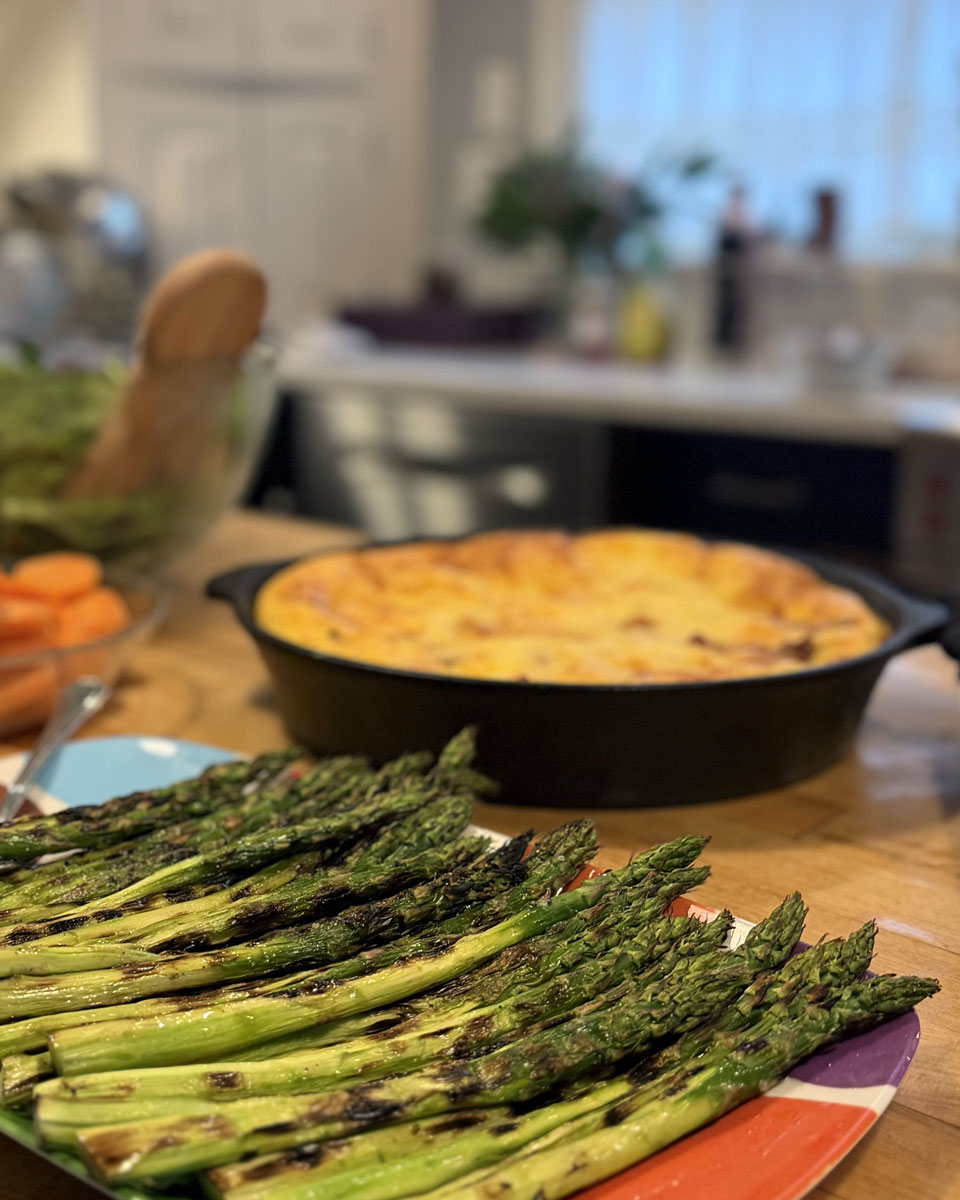
At the heart of our brunch is a menu that blends classic dishes with fresh, seasonal flavors. We start with shrimp cocktail. The vegetable frittata is always the star—perfectly hearty and packed with vibrant vegetables. To honor family favorites, we also prepare an uncured ham sourced from a local Vermont farm, striking that balance between tradition and thoughtful sourcing. On the side, we keep things simple and fresh with grilled asparagus and a farmer’s market salad.
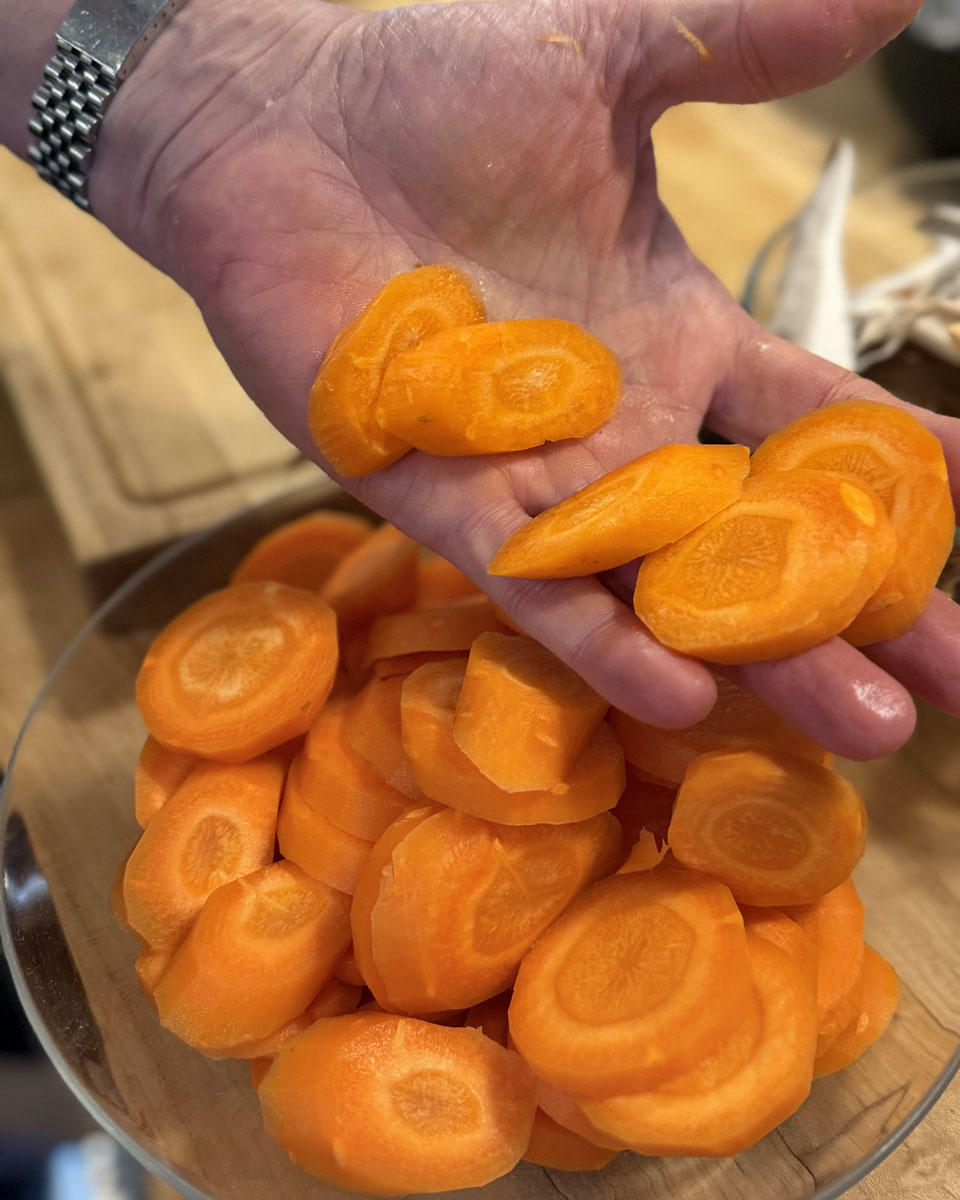
And then there’s our signature dish: Bonnie’s ginger carrots. They are wonderfully easy to make, subtly sweet with a hint of warmth, and always one of the first bowls to be emptied. A perfect nod to the Easter Bunny, they bring a playful, nostalgic touch to the table while still feeling right at home among our more traditional dishes.


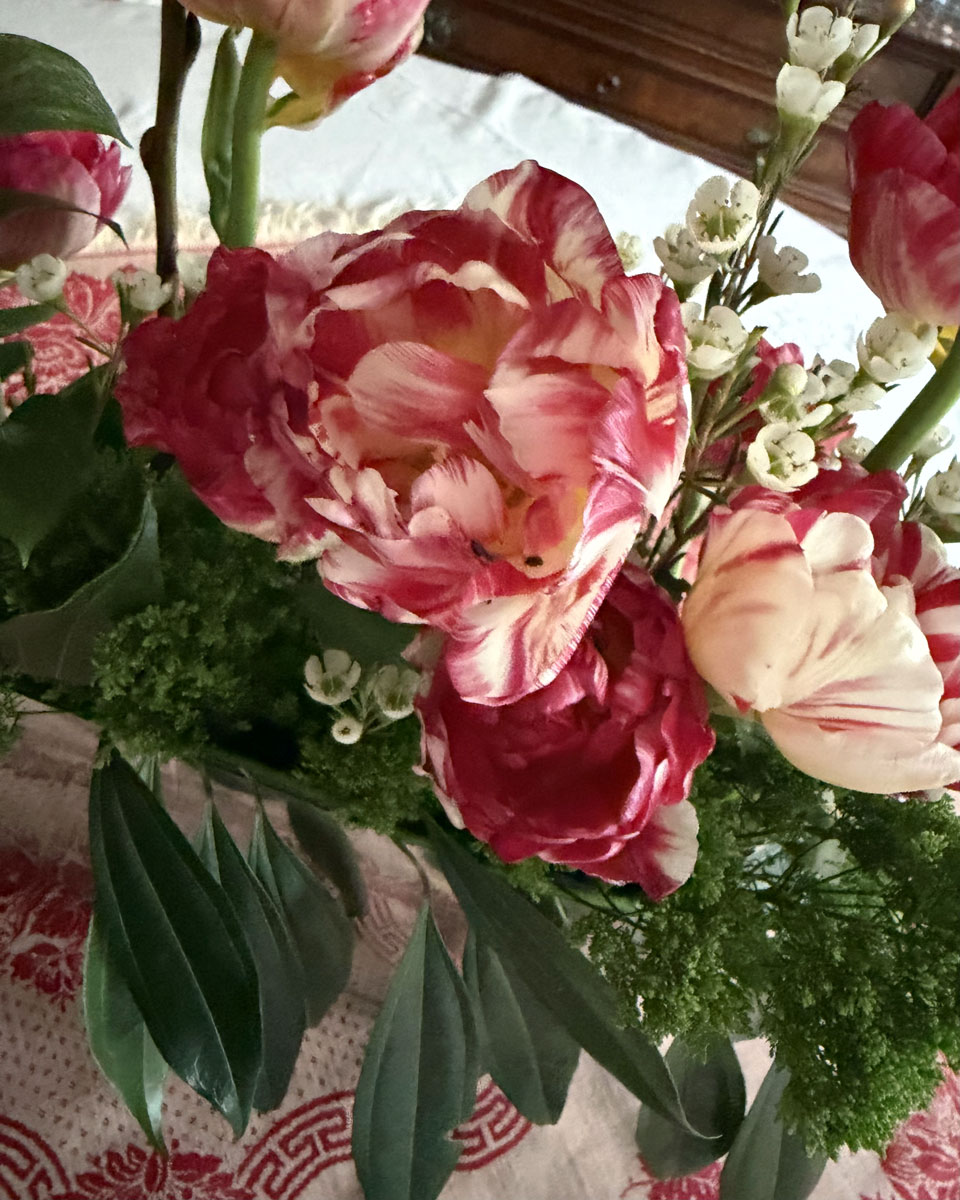
Of course, no Easter brunch of ours would feel complete without the family gathered around an effortless yet thoughtfully styled table-scape. Pops of color, natural textures, and a touch of spring whimsy help set the tone for the day. It’s these details—paired with the food, the company, and the tradition—that make it all feel so special.
And in the end, that’s what this brunch is really about: creating a space where simple moments become lasting memories.

May Day Magic
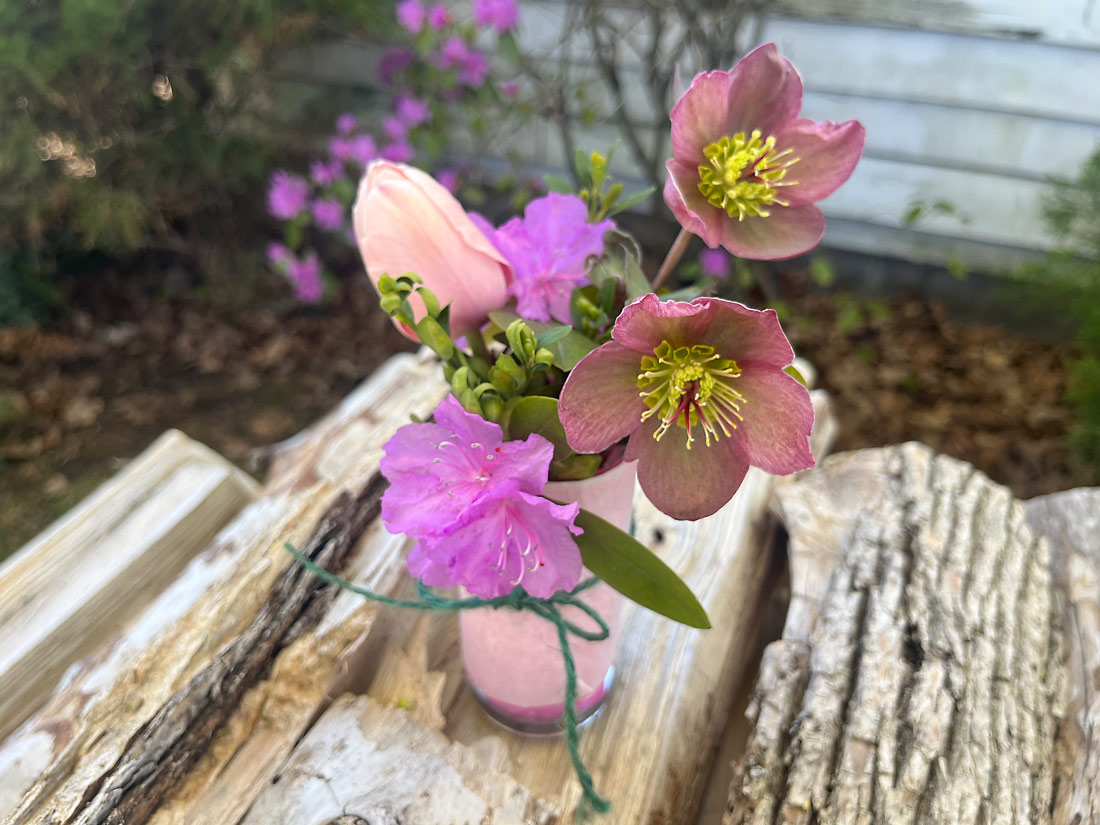
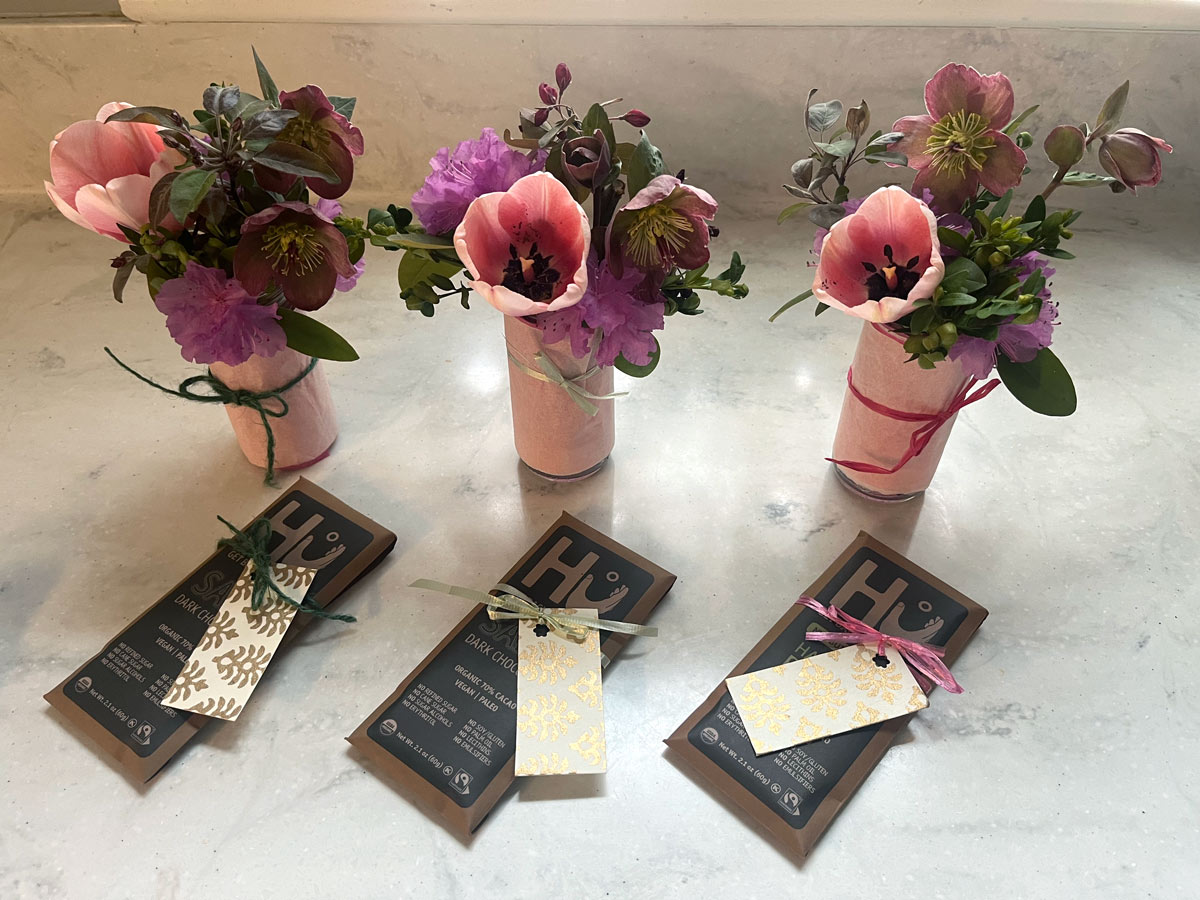
We are celebrating the halfway point to Summer today, May 1st. Lets take a step back in time when May Day was a much anticipated occasion to welcome the warmth of spring! In those days, villages came alive with ribbons, flowers, and laughter as people “brought in May” by collecting greenery, weaving garlands, and dancing around maypoles. People would secretly deliver May baskets to friends, neighbors and love ones-tiny bundles of spring flowers and sweets left on doorsteps with a knock and a giggle. In Victorian folklore, washing your face in the May Day morning dew brought beauty and good luck.
Some fun May Day facts:
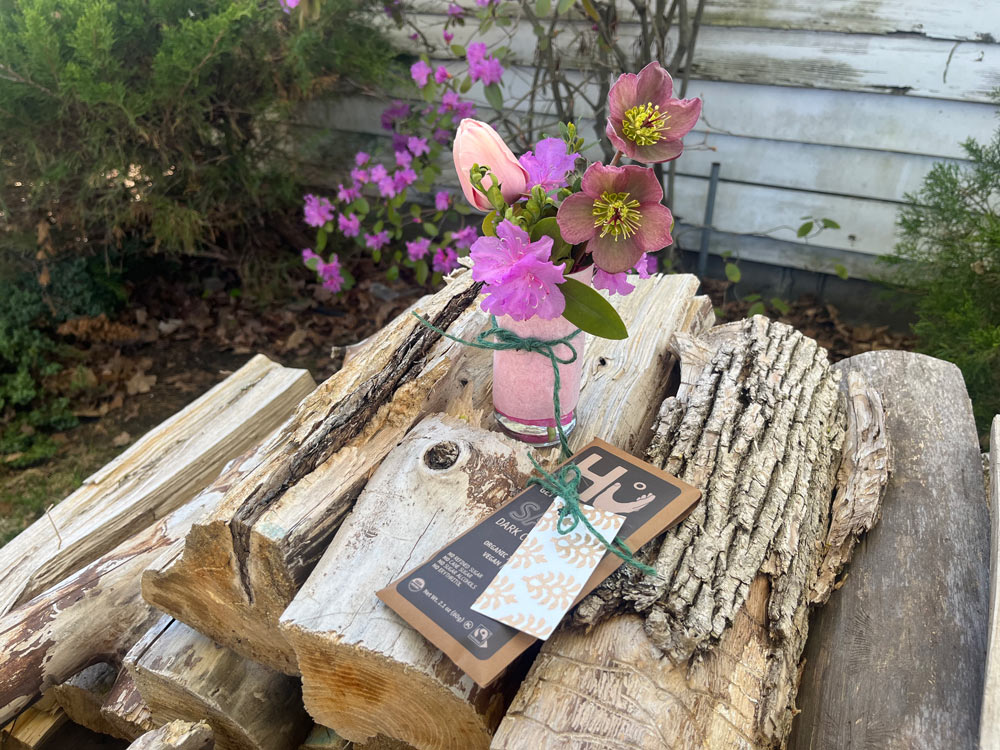
• Beekeepers traditionally moved bees on May 1
• Fishermen expect to catch fish on May Day
• Traditionally, Farmers planted turnips on this day. Other folklore has it that, to protect cucumbers from insects, they should be planted on May 1
• The Kentucky Derby starts off the month of May (the first Saturday of the month)
What does “Mayday!” Mean?
The term “Mayday!” is not related to the “May Day” spring festival, but instead comes from the French phrase “M’aidez!,” which means “Help me!” Pilots and sailors use it as a distress call—so if you hear it three times, someone really needs a hand (not a handful of daisies). So now you know May Day means both blooms and, in some cases, booms! Today we are sticking to the flower and sweet filled kind and celebrating with joy, and a whole lot of springtime spirit. We are sprinkling a little whimsy into our springtime and reconnecting with nature, flowers, and friends. H&T
This Article May Also Interest You: Mallorca: Where Every Turn Reveals Another Wonder

Our day at Mercer Lab: Museum of Art and Technology
As we celebrate our one-year anniversary here at Heidi & Tim’s Place, we wanted to share our recent experience at Mercer Lab in NYC. Located in the heart of Manhattan’s financial district at the corner of Church and Dey, Mercer Lab is a unique museum that blends art and technology. Opened just about a year ago, it’s the result of a collaboration between experimental visual artist Roy Nachum, best known for designing Rihanna’s Anti album cover and real estate developer Michael Cayre, the owner of the exclusive Casa Cipriani club. Together, they’ve created an immersive 36,000-square-foot space, featuring 15 rooms that showcase cutting edge, artist led exhibitions at the intersection of art and technology.
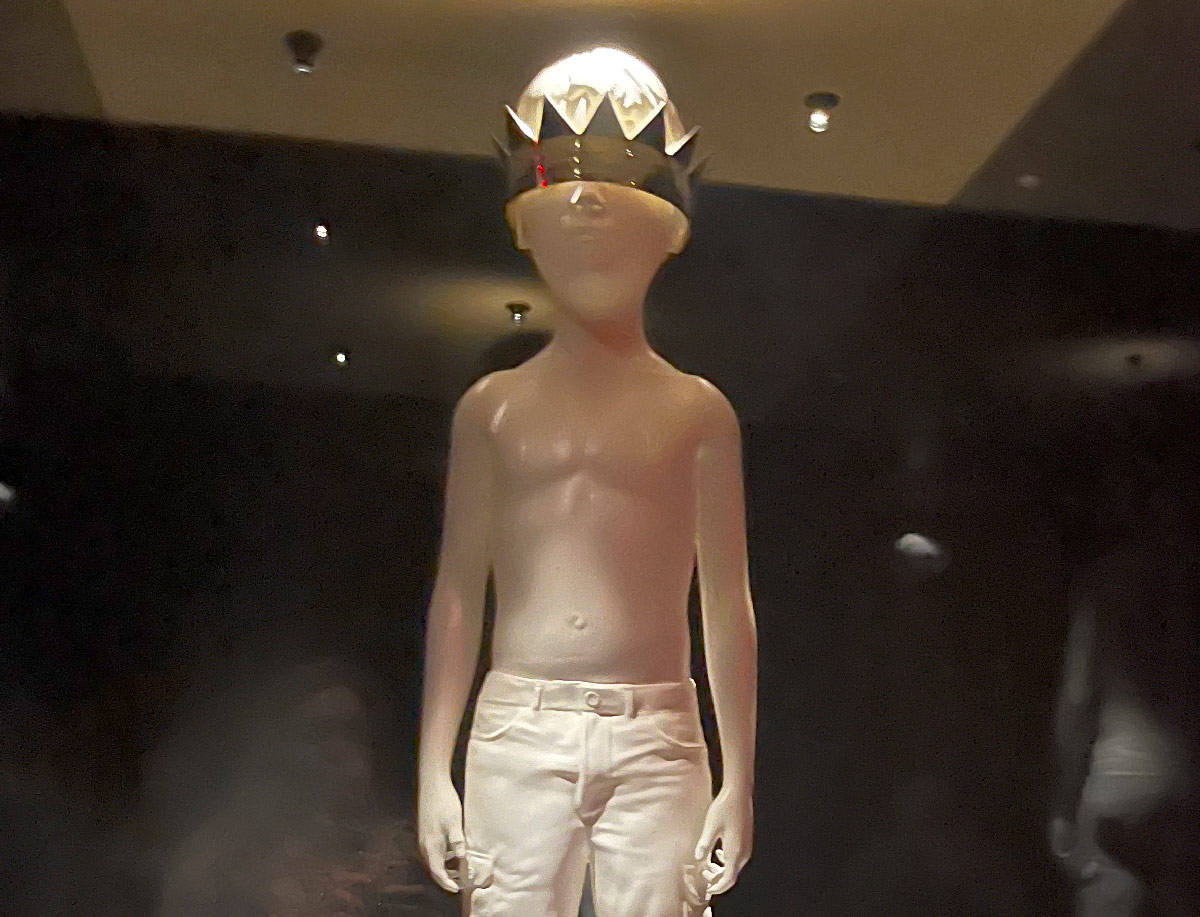
The museum offers two distinct presentations each day: Limitless, their daytime installation, and After Dark, their evening experience. We visited during the day, and while there are 15 rooms in total, we'd like to share our favorite seven with you. Roy Nachum, the experimental artist behind Mercer Lab, is known for his multidisciplinary approach, which spans painting, sculpture, architecture, installation, and technology. His work often features Braille and a recurring motif: a child wearing a gold crown. The crown symbolizes diversity, humility, and equality, while the Braille represents a form of communication and poetic expression. It serves to raise awareness, promote inclusivity, and pay tribute to those with visual impairments. The tactile quality of Braille allows for a level of interaction that's typically not possible in traditional art museums. By its nature, Nachum's work demands engagement, which aligns with Mercer Lab's mission: to make technology a tool for interaction, where viewers are invited to become part of the artwork itself.
The Map: Our First Room Experience
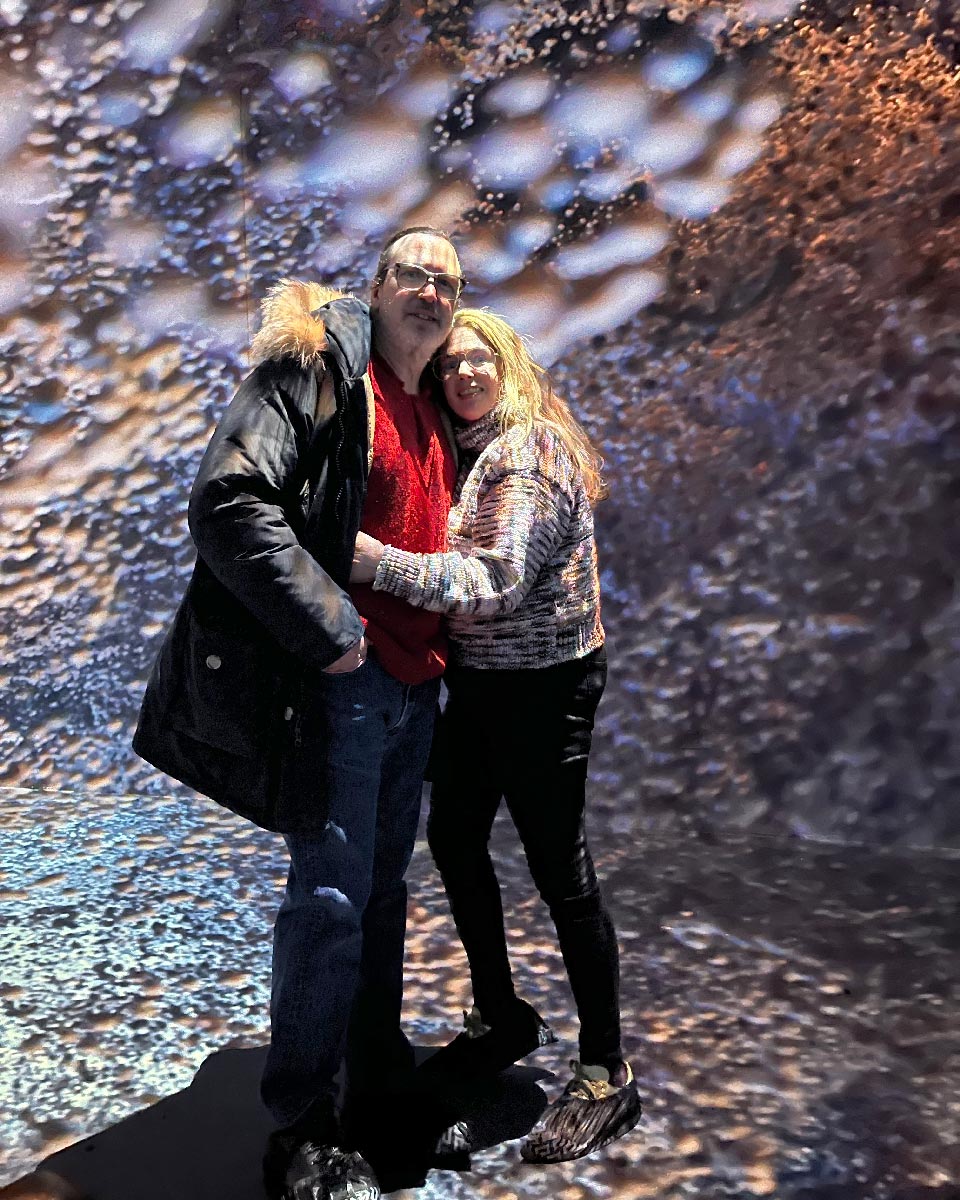
Walking into The Map, We are immediately hit by the sheer scale of the room, 5,000 square feet of space beneath a towering 40-foot ceiling. The air is buzzing with energy, as vibrant 16k laser projections light up the walls and floor in ever-changing patterns. It is almost like the room is alive, and the atmosphere pulses with audio from a cutting-edge sound system that seems to move around us as we walk. Some people are sitting quietly, taking it all in, while others are swaying from swings suspended high above, gazing out over the space as if they're part of the art itself.
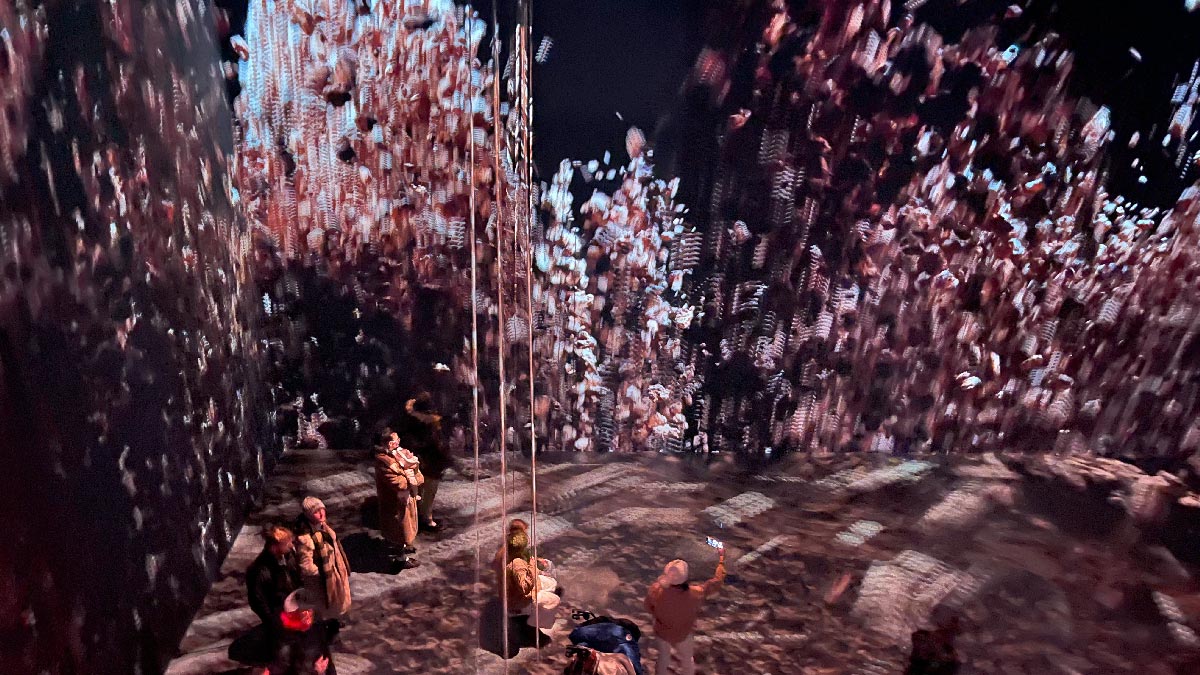
The sound here is unlike anything we have experienced before; directional beams shift and swirl, creating new layers of sound as we move through the room. It is as if the space is reacting to us, and with every step, the audio landscape changes. The projections of light are just as dynamic, constantly transforming into new forms that feel like a sensory meditation on the natural world. Life's sudden beauty is deconstructed and reimagined in real time, creating an abstract “new nature” that feels both familiar and supernatural at the same time.
The entire room feels like a playground—where light, sound, and motion collide to create a surreal world that invites wonder and curiosity. No matter where we are in the room, the experience adapts to us. Each moment is unique, a constantly shifting encounter between technology and the senses.
The Line: Room 2 Experience
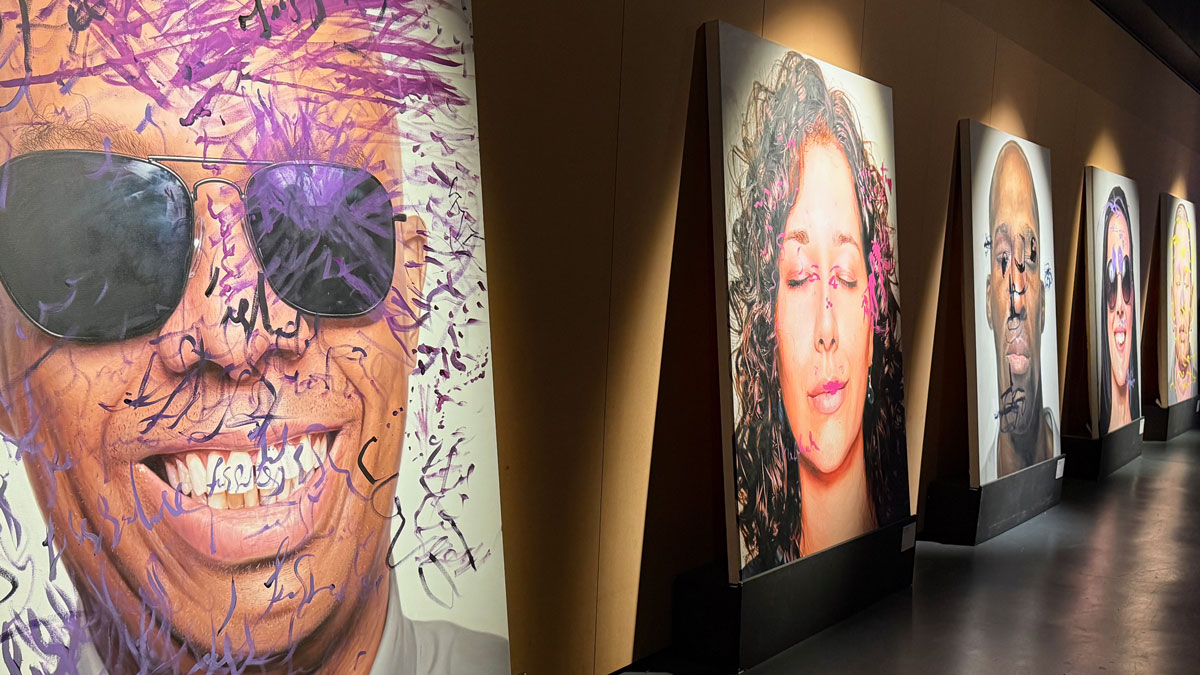
Stepping into The Line, a video immediately drew us in, showing Roy Nachum working alongside the individuals who would complete their portraits. Watching the process unfold before us was enlightening. It gave us a deeper understanding of the collaborative nature of the artwork. The video revealed how these visually impaired and blind collaborators added their own self-portraits over Nachum's hyperreal depictions, transforming the paintings into something far beyond just an artistic exercise. The footage added layers to their stories adding meaning, making us feel not only connected to the art but to the people behind it. We could sense the depth of emotion and purpose in their involvement, which made the experience all the more impactful as we stood before the finished works.

What we did not expect was how physically and emotionally involved we would feel with the art. The first part of the process is so labor-intensive and meticulous. Nachum paints each portrait in hyperreal detail, every brushstroke capturing the smallest nuances of the human face. We can feel the weight of his dedication with each portrait that is before us. They almost did not look like a painting but a photograph. In the second part of the process, Nachum invites his collaborators, visually impaired or blind individuals, to add their own self-portraits over the extraordinary images. It is an act of profound participation, where these individuals, by painting their likeness, infuse the portraits with their own essence, their own stories.
The result is nothing short of profound. It is as if these portraits, once completed, take on a soul of their own, shedding their polished, flawless surface for a raw, real presence. The absence of sight in the creation of the artwork only makes it feel more alive, more human. Each painting is a testament to the strength of collaboration, the unspoken bond between artist and subject, and the beauty of shared expression.
The 4D Sound: Room 3 Experience
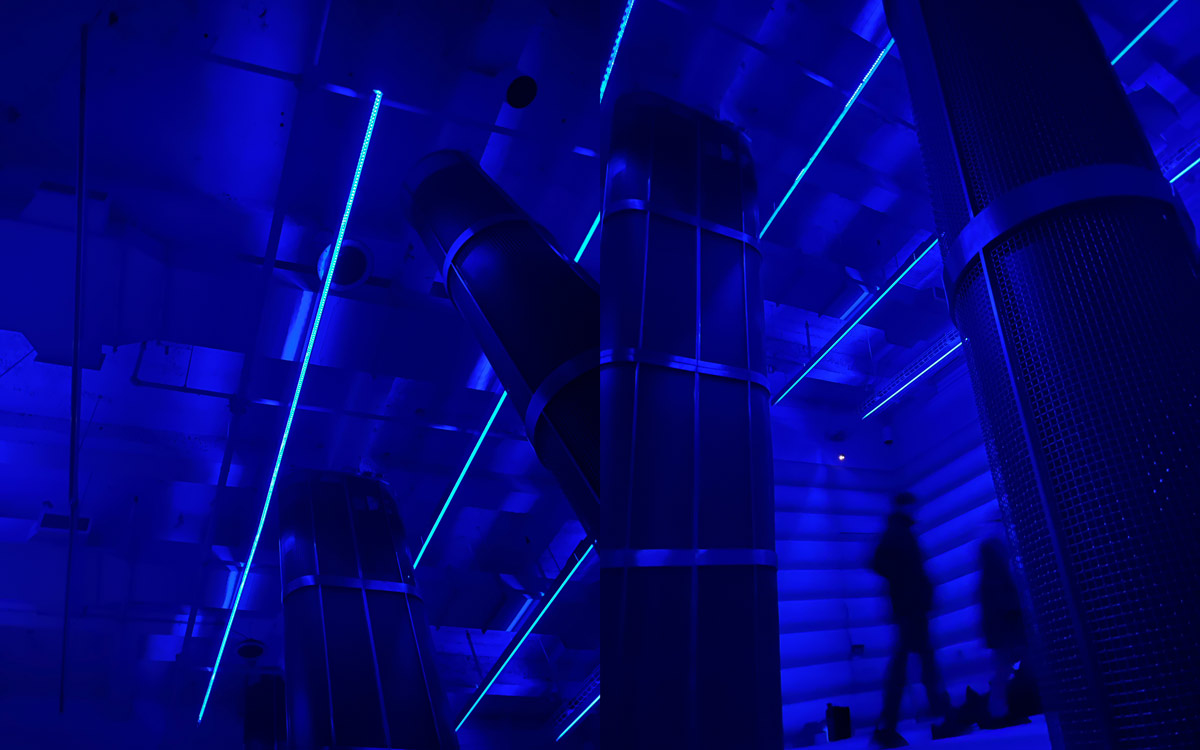
The 4D Sound room is once again unlike anything we have experienced before. Roy Nachum, known for his unconventional methods, blindfolded himself for seven consecutive days to experience the world without sight. This experiment, an immersive, deeply personal journey became the foundation for this extraordinary installation, created in collaboration with 4DSOUND and MONOM STUDIOS.
As we stepped into the space, we could feel the presence of sound. It was no longer just something we heard, but something we physically felt. 4DSOUND uses omnidirectional sound technology to create vivid, spatial sound holograms that wrap around you with incredible precision. The sound isn't merely background noise; it's an active force, moving through the room in ways that are almost tangible. With an advanced setup of omnidirectional speakers and low frequency sine wave vibrations beneath the floor, the room itself becomes an instrument, playing the body as much as the ears.
We chose to lie on the floor with our eyes closed, surrendering ourselves to the pure auditory experience. Vibrations from the sounds travelled up our spines, and suddenly, it felt like we were no longer in a room but in a completely different world. The sonic landscapes transported us to places; were we in a jungle, a safari, or floating in the middle of the ocean, listening to sea creatures? It was like chasing sound itself, moving through the space as the air shifted around us, full of life and motion.
“The Elements,” a series of five sonic films, Earth, Air, Water, Fire, and Aether, unfolded around us. This was more than just a listening experience; it was a deeply embodied journey. The elements that shape our world, elements that are as much a part of us as the air we breathe, sounded and vibrated through our bodies, connecting us to the forces that form the very essence of existence. The experience invited us to not only listen but to feel, to become one with the sounds, to engage our senses and our bodies in a way that felt intense and deeply connected.
This was a space designed for embodied listening, an invitation to tune into something larger than ourselves, to surrender to the elements that shape our world. In that moment, we realized how deeply the experience of sound and space can impact our collective well-being and sense of connection.
Infinite: Room 4 Experience
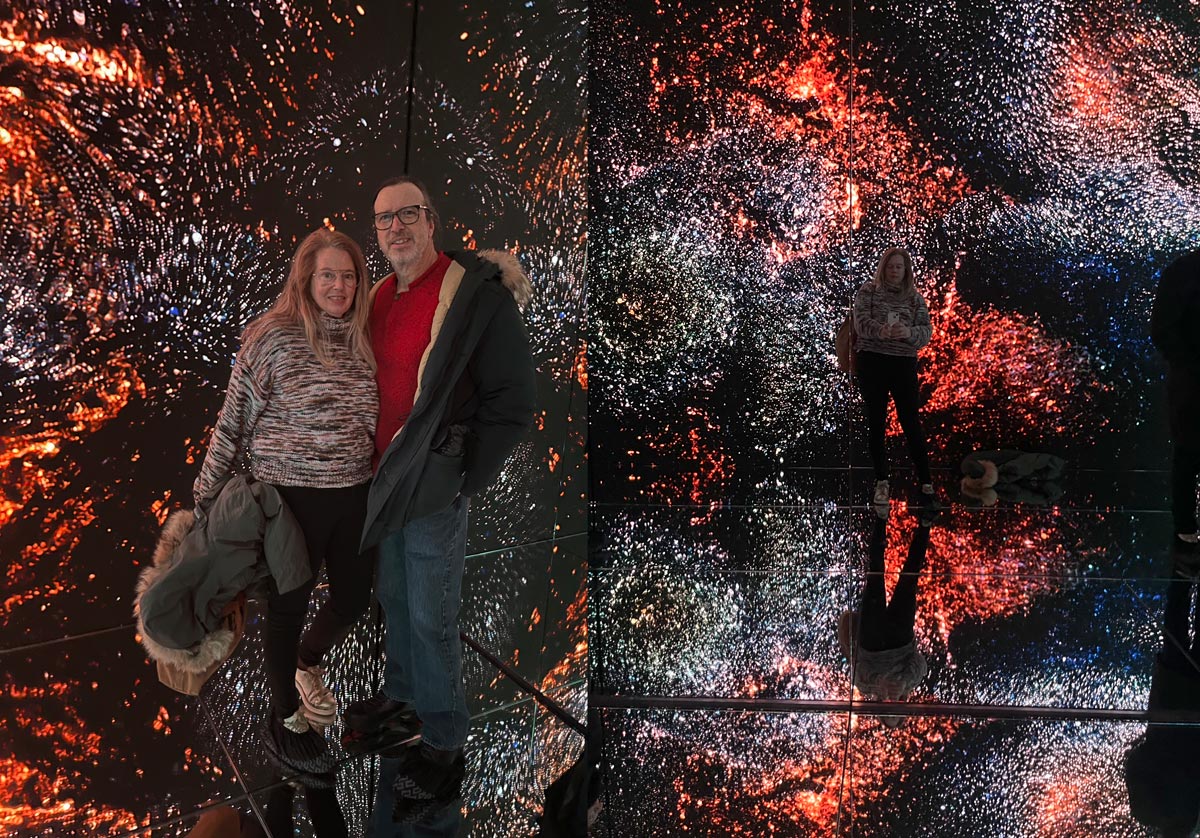
The Infinite room felt like stepping into another world, a place where the strange and the familiar converge to create mesmerizing, otherworldly compositions. The space itself is a dynamic, ever-shifting experience, with elements and patterns unfolding over time from countless perspectives. At the heart of it is a massive 14-foot by 40-foot screen, surrounded by a hall of mirrors, which adds to the sense of endlessness and movement. The screen's 1.5-pitch resolution creates stunningly detailed imagery that feels as though it could go on forever, extending the boundaries of what we perceive as reality.

Roy Nachum's Deep Water is the centerpiece here, pulling you into an immersive journey beneath the surface of the ocean, where the space between the sky and the earth blurs. In this work, boundaries fade, and the narrative unfolds in shapes and forms, leading you deeper into a world where illusion and perspective collide. As the hyperreal images swirl around us, the experience is like being inside the ocean itself, watching as the water breathes, ebbing and flowing with a life of its own. The medium amplifies nature's forms, transforming them into powerful, emotional landscapes that draw you into a deeper engagement with the natural world.
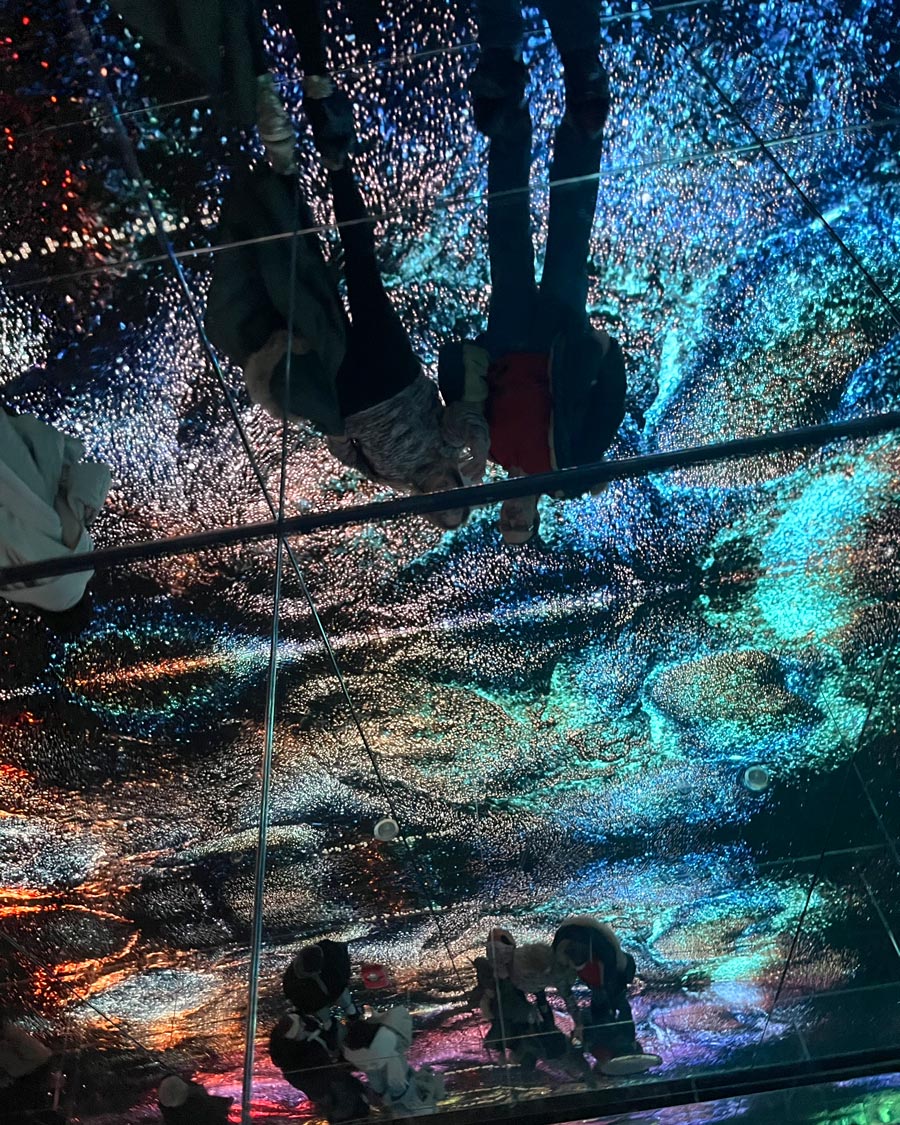
By far, this was the most exciting room to capture in photos. The constantly evolving visuals, the interplay of light and shadow, and the mind-bending reflections in the mirrors created an atmosphere so alive, it was almost impossible to stop snapping photos. But beyond the pictures, it was the feeling of being fully immersed in nature's raw energy, its rhythm and its motion. That made this experience unforgettable.
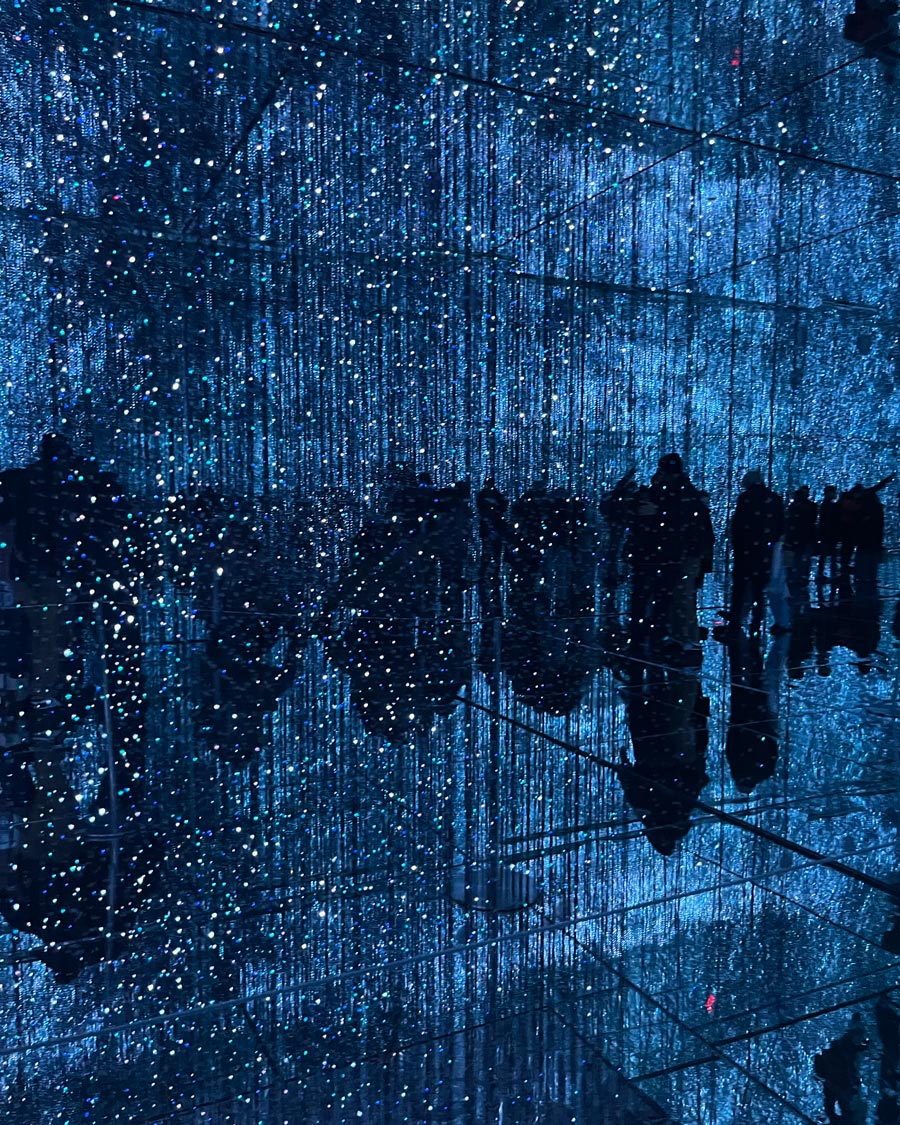
The Dragon: Room 5 Experience
Entering The Dragon, We were immediately struck by the mesmerizing play of light in space. The room uses volumetric lighting to create a visual experience unlike any we have encountered before, passing through beams of light that feel like navigating through a living, breathing hologram. The light itself is not just seen; it's felt. It takes on form, suspended in the air as luminescent particles that cascade and shimmer in infinite space. The technology behind it is astounding; advanced mirrors and synchronized LED pulses create a stunning effect, where each of the 507,000 tiny LED microchips move in harmony, bringing the space to life in a dance of light and shadow. The result is a kind of ethereal architecture, where the light particles are constantly shifting and transforming, offering an endless array of visual possibilities.
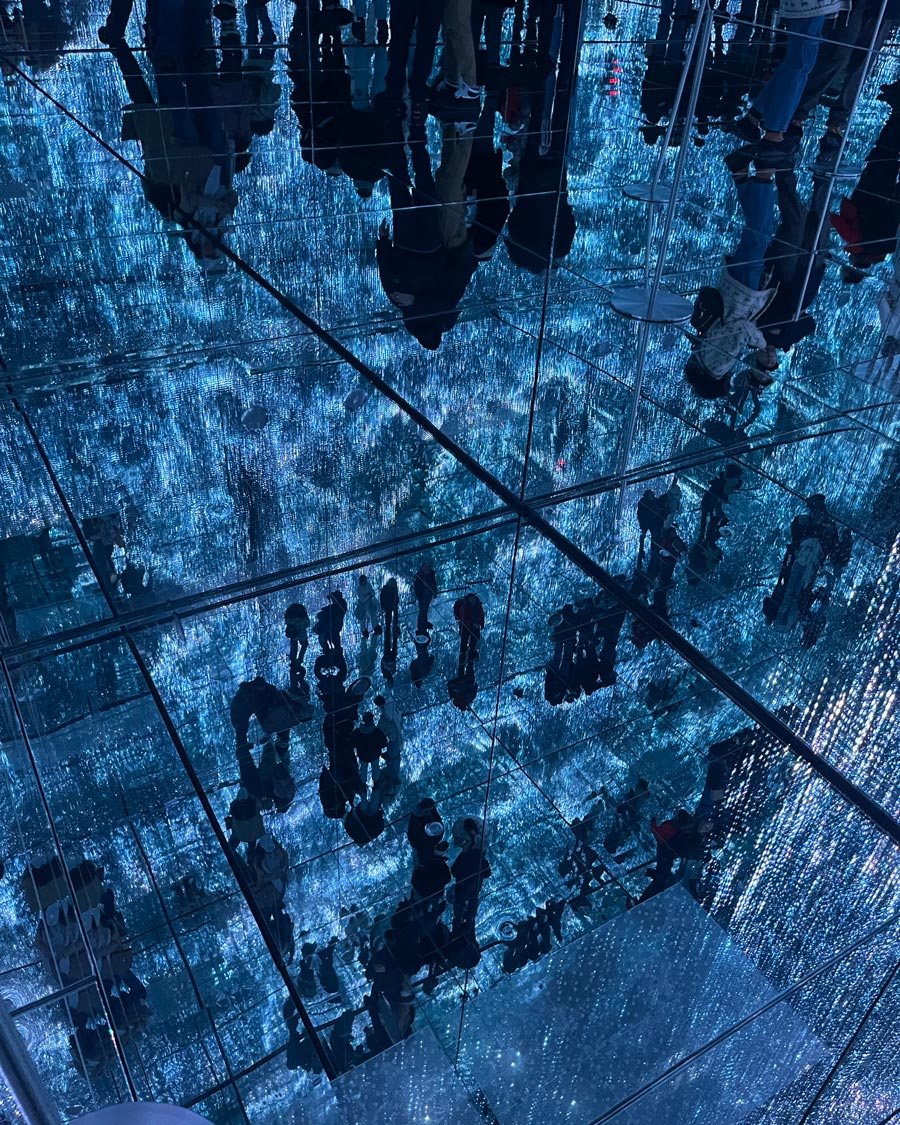
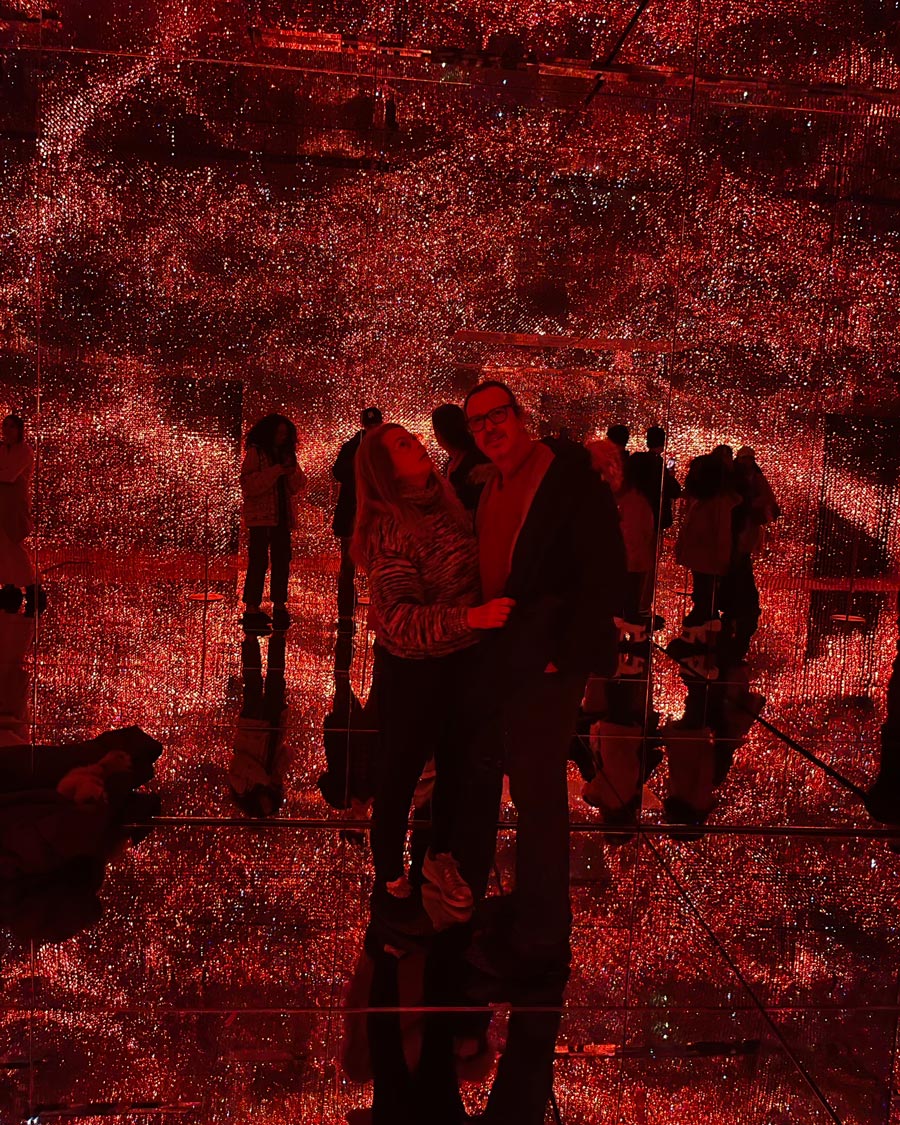
The installation, powered by Dragon 02 technology, is the largest of its kind, and it felt as though the room itself was alive, changing before our eyes, responding to our presence, and inviting us to move within it. The sheer scale and intricacy of the installation left us in awe. But it was not just the technology that made the room captivating, it was the emotional energy that it evoked. Nachum's New Nature is his interpretation of the romantic sublime, blending the elemental forces of nature with the introspective power of light. The installation uses light as a medium to evoke intuition, surprise, and symmetry; each shift in the luminous particles seemed to reflect something deeper, something beyond the visual. It was as if the light was telling a story, unfolding in real time.
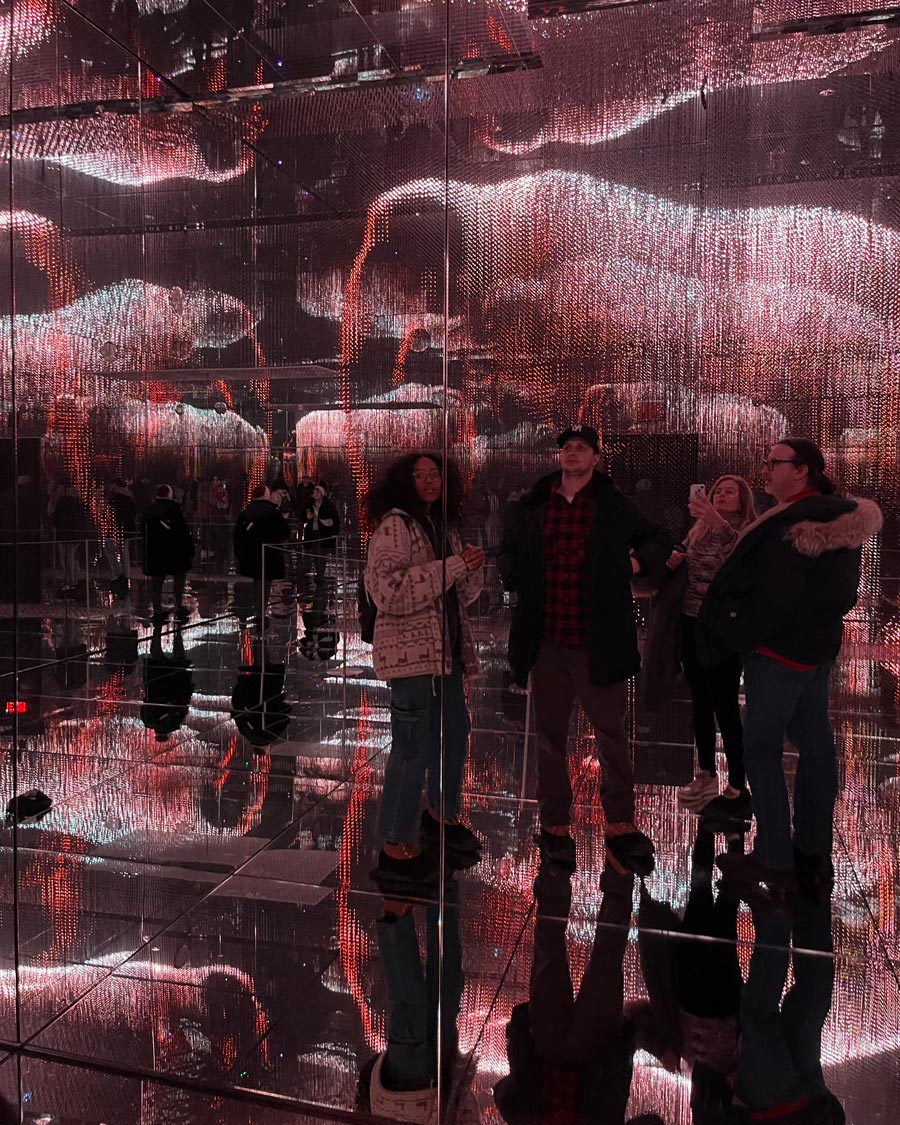
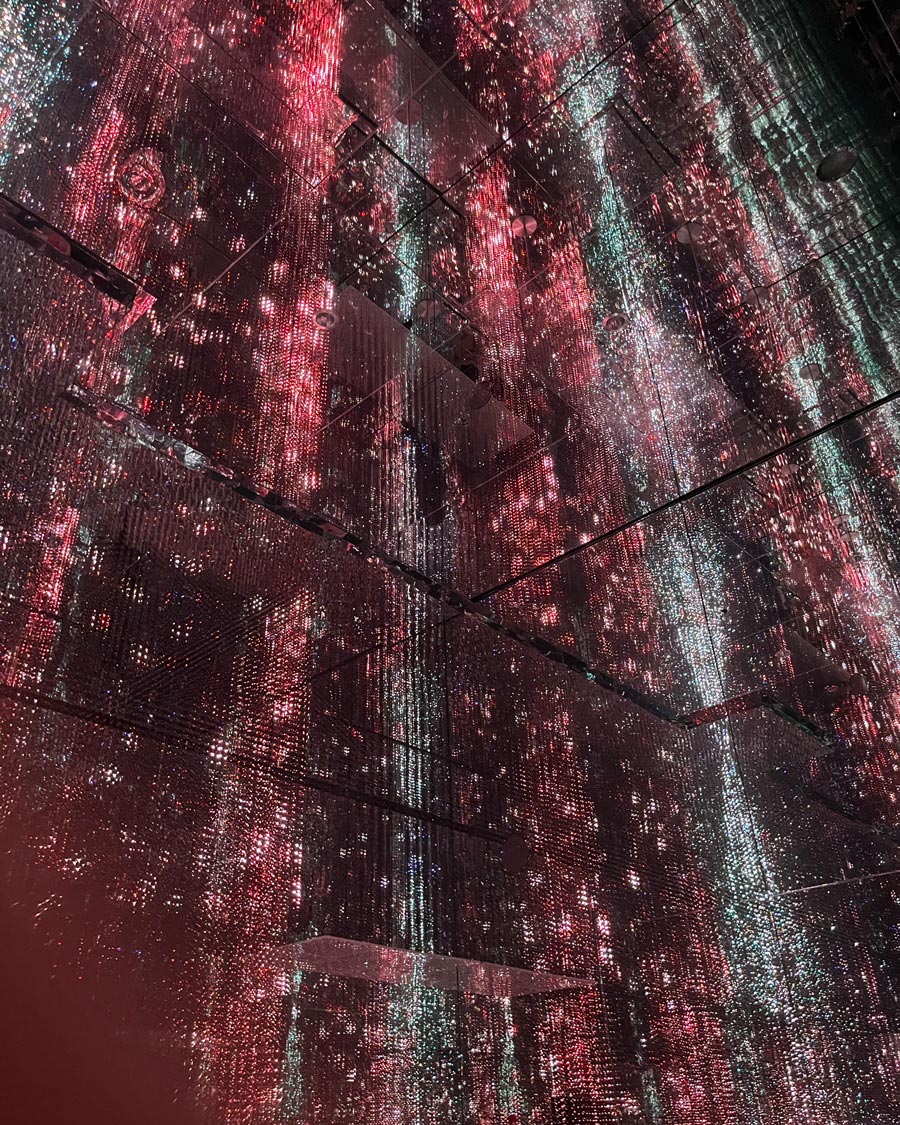
The relationship between sculpture and landscape in this work is complex and fluid, with the holographic light source transforming the space into something both natural and otherworldly. The atmosphere was hypnotic, meditative almost, as the light shifted in perfect synchronicity with the environment. Moving through the space, we felt transported, as if the room itself was a gateway to new worlds and alternate planes of existence. Nachum in this installation created a space where movement, reflection, and light converge, invited us to lose ourselves in the wonder of the unknown.
The Cave: Room 6 Experience
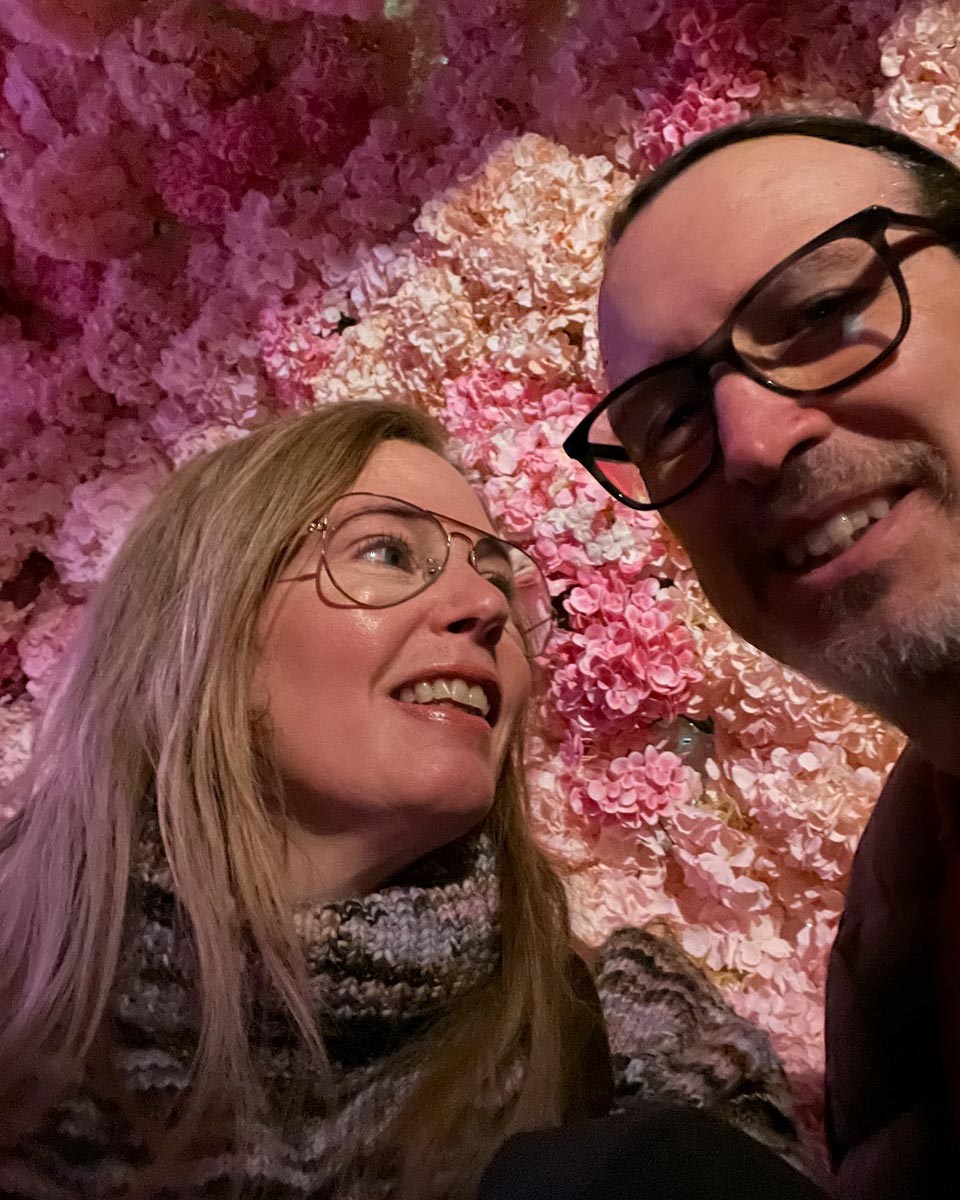
The Cave immediately presents itself as a space that invites pause and reflection, where the boundary between the natural world and the digital one becomes blurred. The room, dominated by lush hydrangea flowers covering every inch of the low ceilings and walls, feels like a physical embodiment of the tension between technology and nature. It's a space that encourages contemplation.
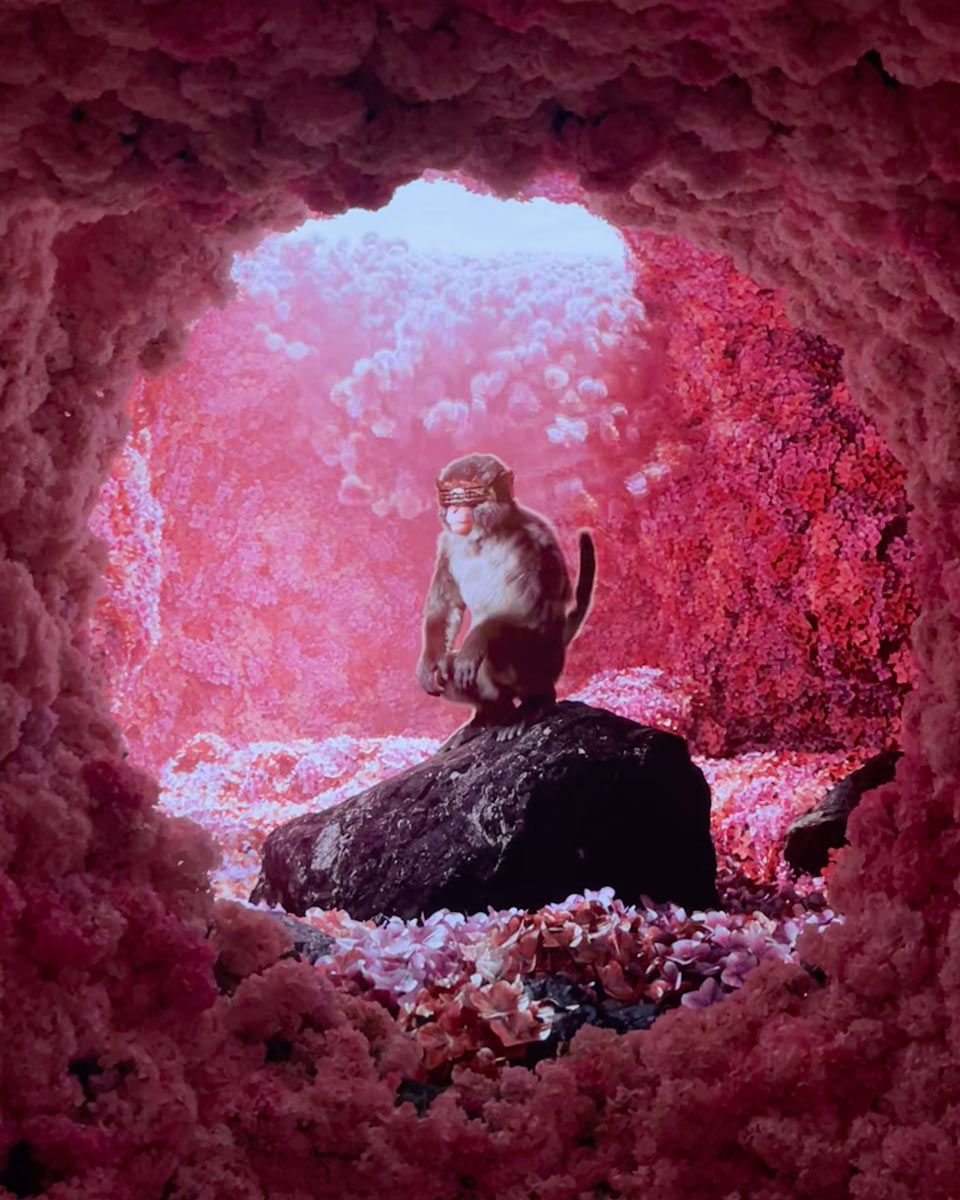
At the heart of the installation is Roy Nachum's Nature vs.Tech, a visual exploration of the contradiction between the inner world and the outer world. The room is both a sanctuary and a statement, where nature is reimagined through technology. Digital canvases showcase scenes of Nachum's crowned monkeys in their habitat, these digital images are not static; they shift and evolve in response to movement, making the art feel alive. The flowers, with their vivid pink hues, seem to soften the high-tech elements around them, creating a dialogue between the tactile world of nature and the virtual one of digital art.
It's a space that encourages you to consider the relationship between the physical and the virtual, and how they can blend to create a unique, evolving experience of meditation and reflection. We ended up spending quite a bit of time in this room.
Freedom: Room 7 Experience
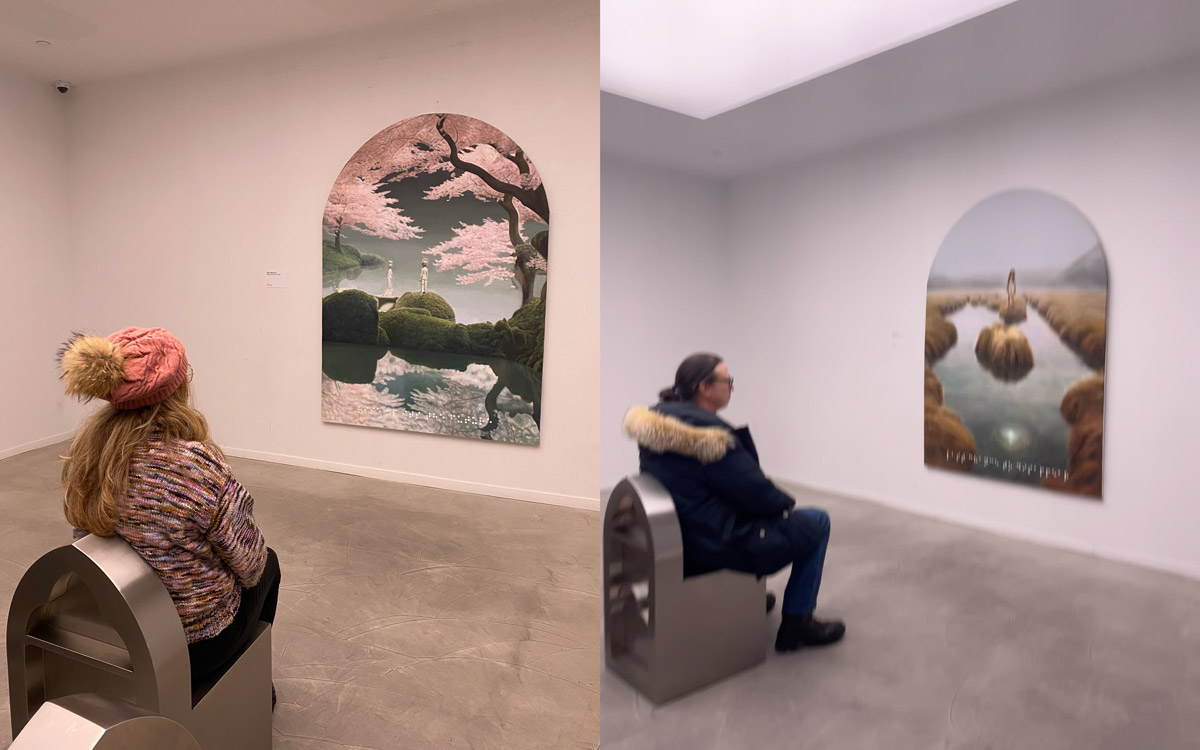
Room 7, named Freedom, offered a peaceful contrast to the high-energy, immersive environments of the Map, Infinite, and Dragon Rooms. This was a space that invited pause. A sanctuary where time seemed to slow down, allowing us to reflect and connect with the work on a deeper, more personal level. The room's serene atmosphere fostered an exploration of creative independence through introspection. At the heart of the space was A Moment of Clarity, an intimate exhibition of oil paintings by Roy Nachum. His labor-intensive process resulted in a series of emotional works that blended the arousing intensity and spatial awareness of Mannerism with photorealistic elements. His work touches on the senses, the absence of one creating the presence of another.

The monumental scale of the paintings, combined with their tactile quality, created a unique synergy between us and the artwork. Each piece seemed to pull us in, inviting us to confront our own existential questions while exploring Nachum's complex visual language. Through his use of texture, light, and form, the work spoke not just to the eyes but to the senses as a whole—where the absence of one sense, like sight, heightened the presence of others. It was here, in this quiet space, that we found a rare moment of clarity; a time to reflect, absorb, and breathe before moving on to the next room. The room's high-backed chairs, reminiscent of thrones, beckoned us to sit and reflect, offering a perfect pause to absorb the emotional weight of Nachum's work.
Each room at Mercer Lab offers a unique, immersive experience where art, technology, and human intersect to create something truly extraordinary. From the kinetic energy of The Map and Infinite rooms to the embodied listening experience in 4D Sound, to the transformation of light into a medium for exploring the sublime in The Dragon room, each space pushes the boundaries of artistic expression. In The Line, collaboration between artist and subject deepens the emotional resonance, while the Cave and Freedom rooms offer moments of quiet introspection. Mercer Lab fosters a dialogue between the tactile and the virtual, making it more than a museum. It is a living, evolving canvas that continuously redefines what art can be. H&T

A Thanksgiving to Remember: Gratitude, Tradition, and New Beginnings
As we reflect on this year, we are filled with gratitude for the journey we have begun with Heidi & Tim’s Place. Sharing our experiences and knowledge with all of you has been an incredibly rewarding adventure, and we’re so thankful for the support of our family, friends, and followers.

Thanksgiving is a time to come together, and as always, we love setting the perfect ambiance to entertain those we hold dear. This year, we kicked off the day with our Turkey Trot tradition in downtown Saratoga Springs—snow or shine, we showed up to carry the tradition on!
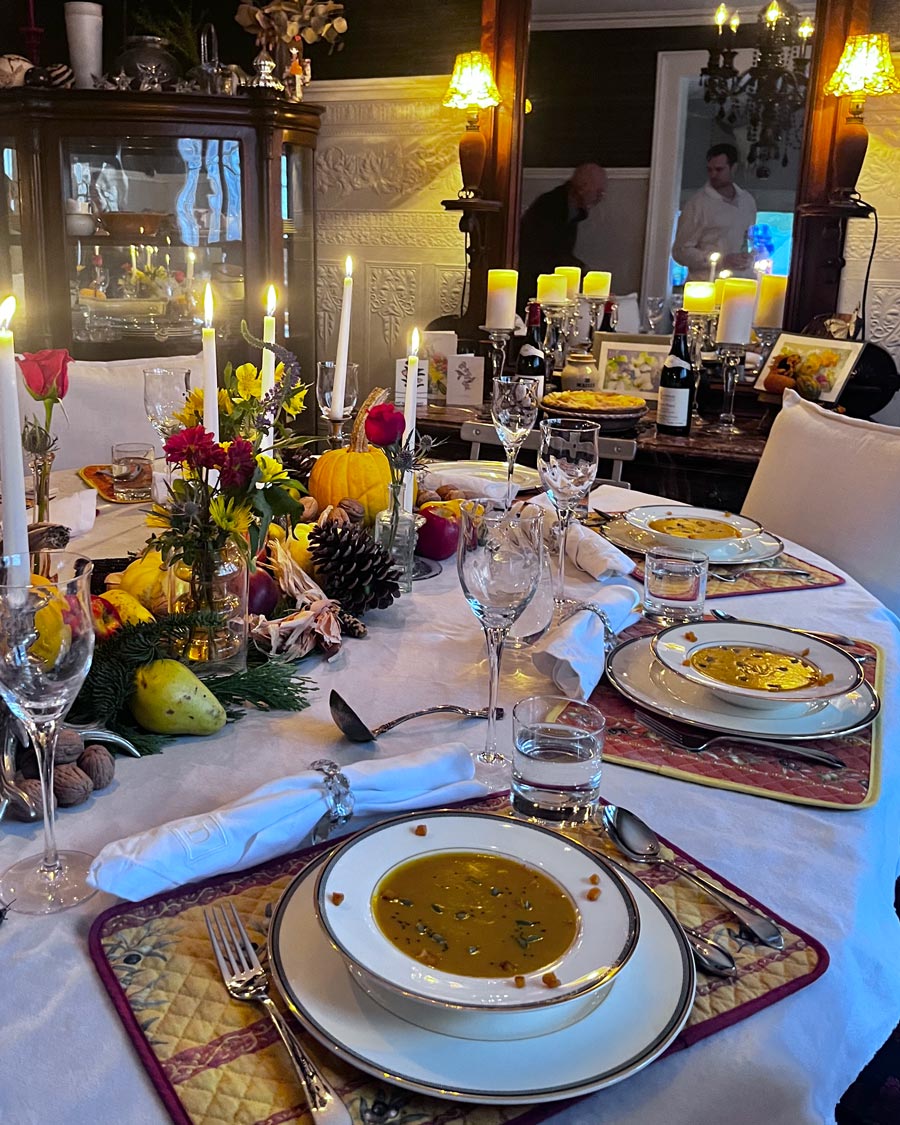
The heart of our celebration was the Thanksgiving chef’s table, a feast inspired by tradition and new flavors. We stayed true to the family recipe, basting the turkey with breakfast sausage, while also introducing a new dish: stuffed squash with a nod to indigenous ingredients. Side dishes included creamy mashed potatoes, a vibrant kale & brussels sprout mix, and sweet ginger carrots. Of course, no Thanksgiving is complete without dessert, and we finished the meal with our classic pumpkin and apple pies.
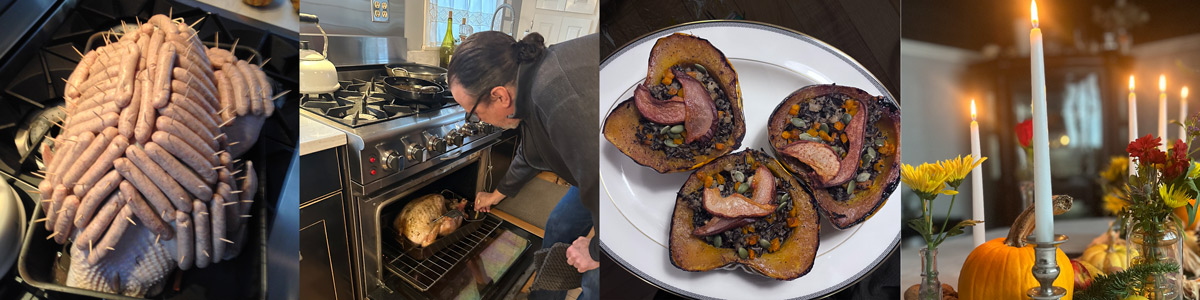
As we reflect on all we have this year, we are reminded of the importance of family, friends, and the joy of sharing meals and memories together. We are so thankful for each of you, and look forward to more shared experiences in the year to come.
Glassblowing: A Timeless Tradition Revisited
A fun and unique activity with deep historical roots in our hometown is glassblowing. This ancient art is believed to have originated in the 1st century BC, in what is now the Middle East. The Roman Empire, known for its innovations, was the first to establish large-scale glass workshops, spreading the craft across their territories. By 450 AD, glassblowing had become an art form in Venice, a city that would go on to dominate glassmaking for centuries. In the mid-1800s, glassblowing became an important part of the history of Saratoga Springs, New York, where glass bottles were hand-crafted to package the region’s famed mineral waters. Not far from there, in the wilderness above Greenfield, a glassworks thrived from the 1840s to the 1860s, employing hundreds of people.

Fast forward to a rainy, wet Saturday afternoon — perfect for an indoor adventure. What better way to spend the day than by getting hands-on with this ancient art? That’s exactly what we chose to do on this particular Saturday: a glassblowing session up in North Creek, New York, with a group of friends.
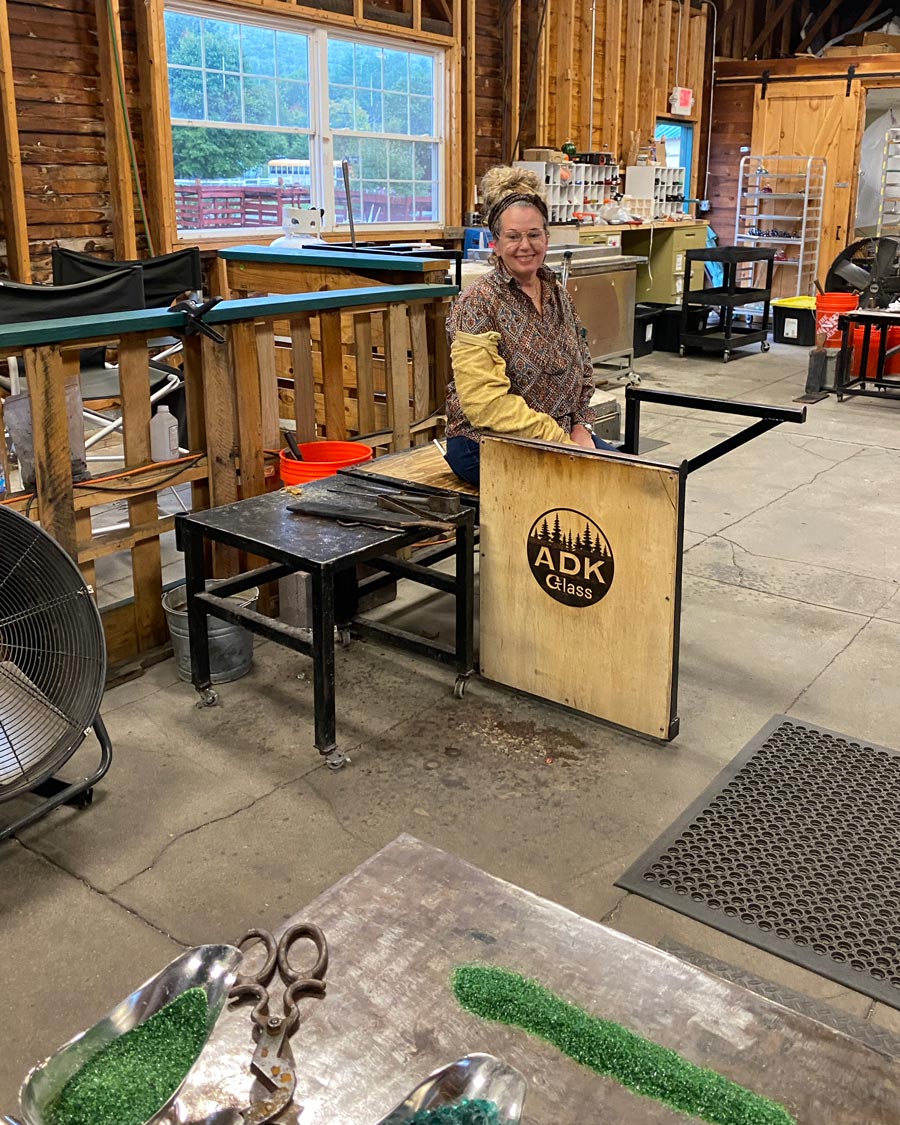
Upon arrival, we were greeted with safety instructions, followed by a fun part: choosing the shape and colors for our glass pieces. Each of us was paired with an instructor, ready to guide us through the fascinating process.
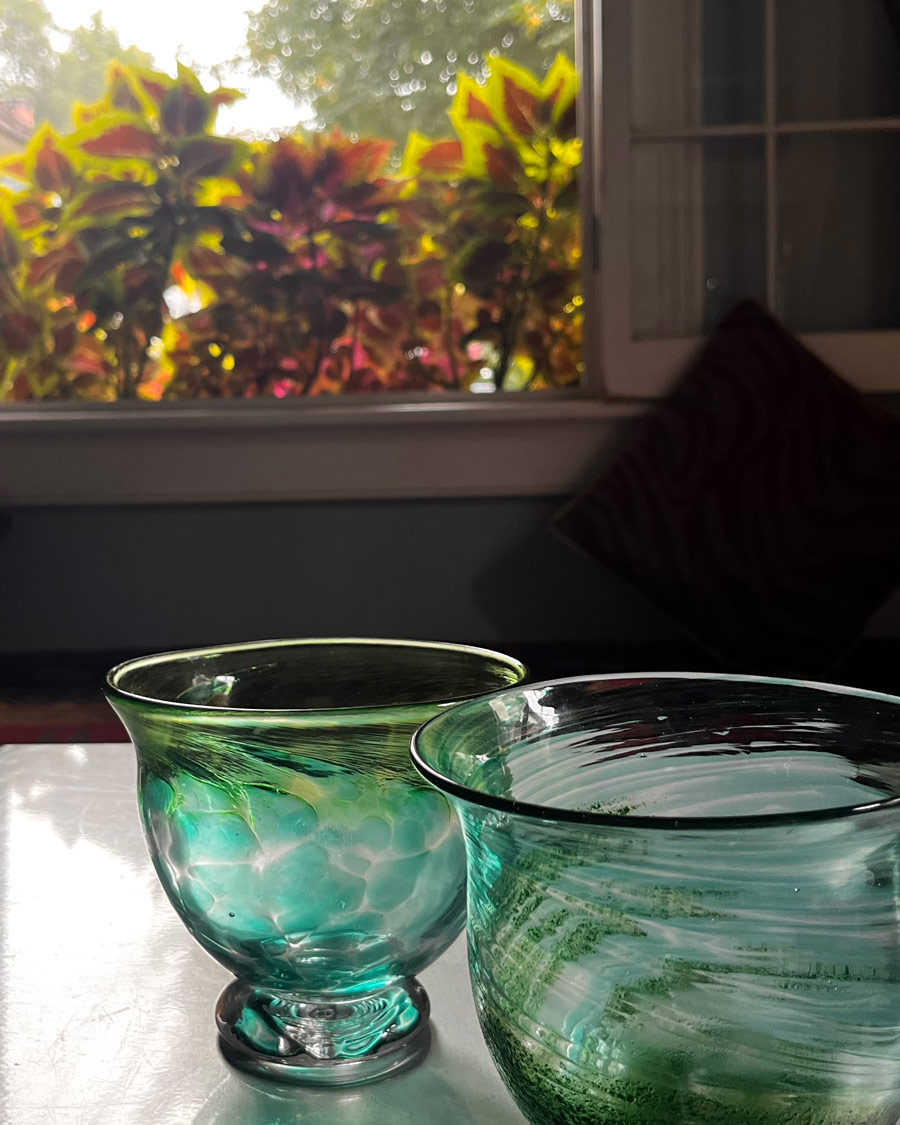
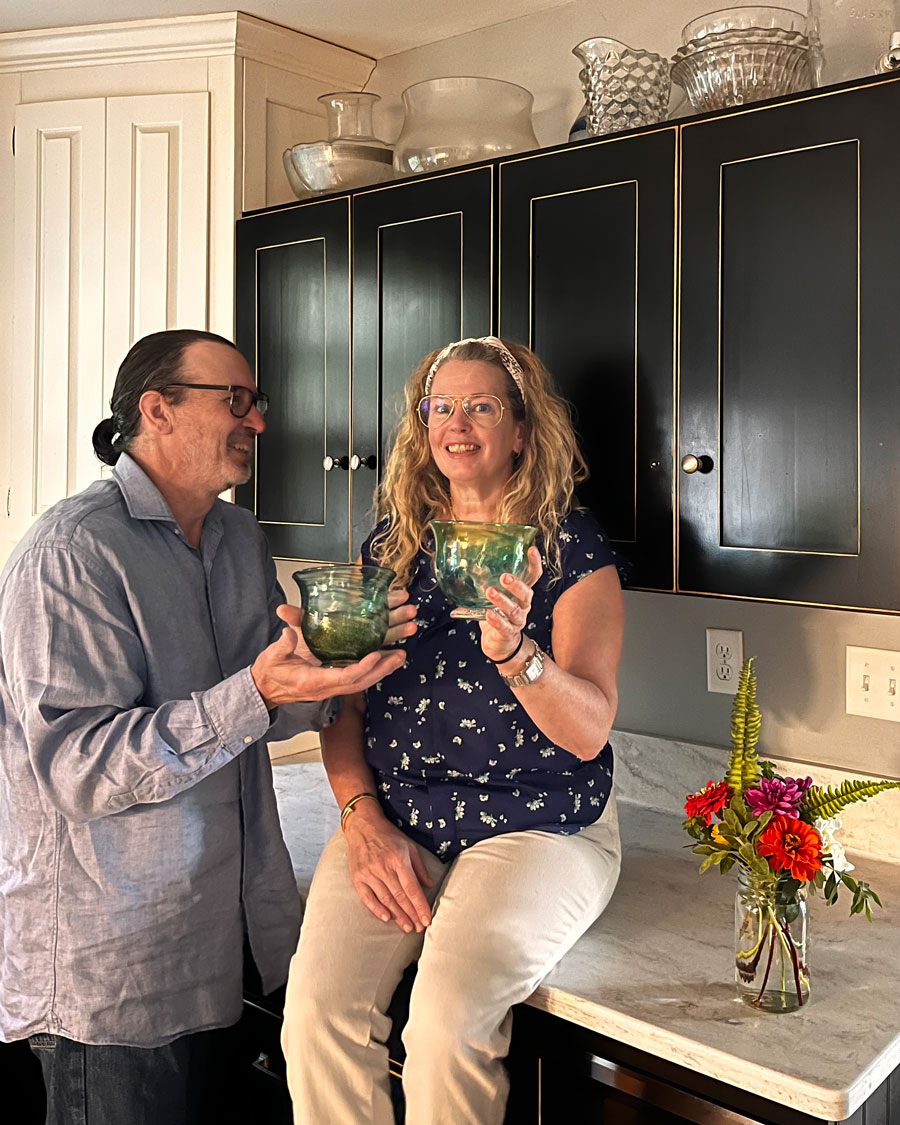
Heidi and Tim, as it turns out, both picked the same shape for their masterpiece—a bowl. (What are the odds, right?) Here’s a quick overview of the eight steps involved in making one of these beautiful glass bowls:

Step 1: Blowing the Bubble – Creating the hollow form of the glass
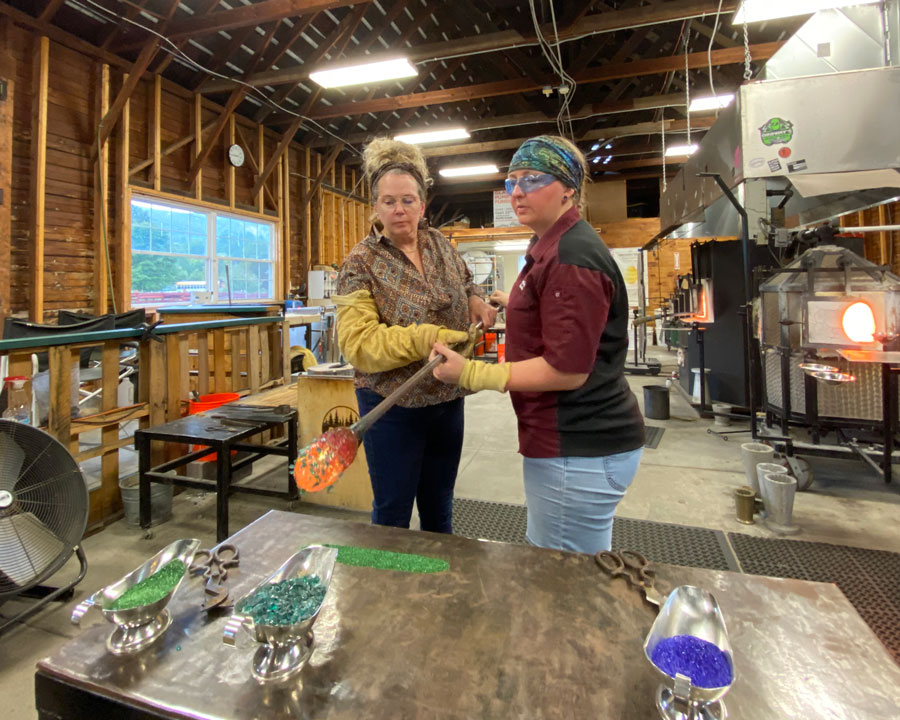

Step 2: Adding the Color – Adding vibrant pigments to the molten glass.
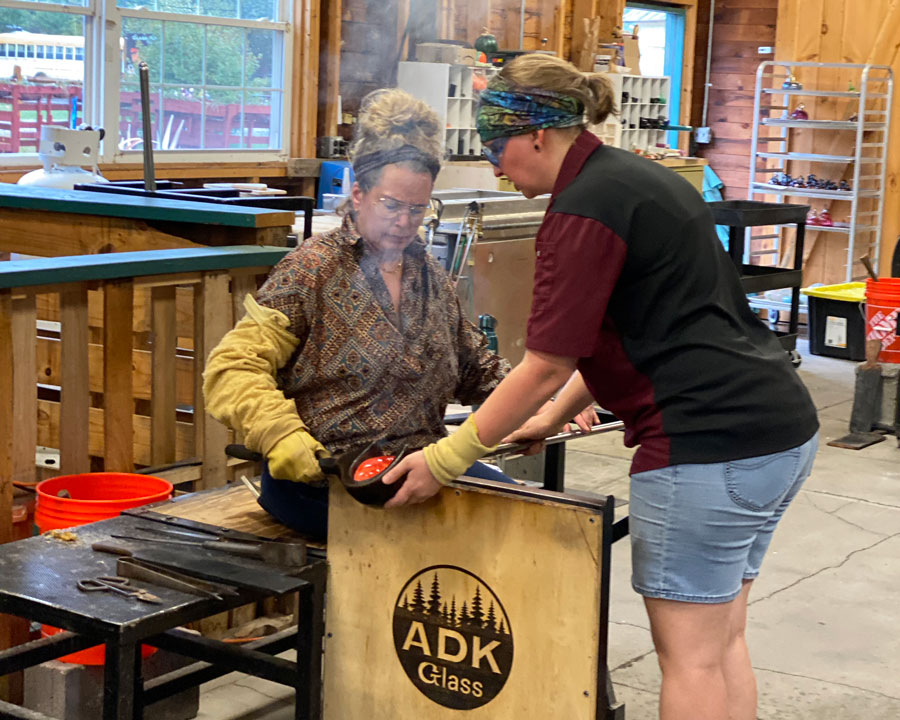
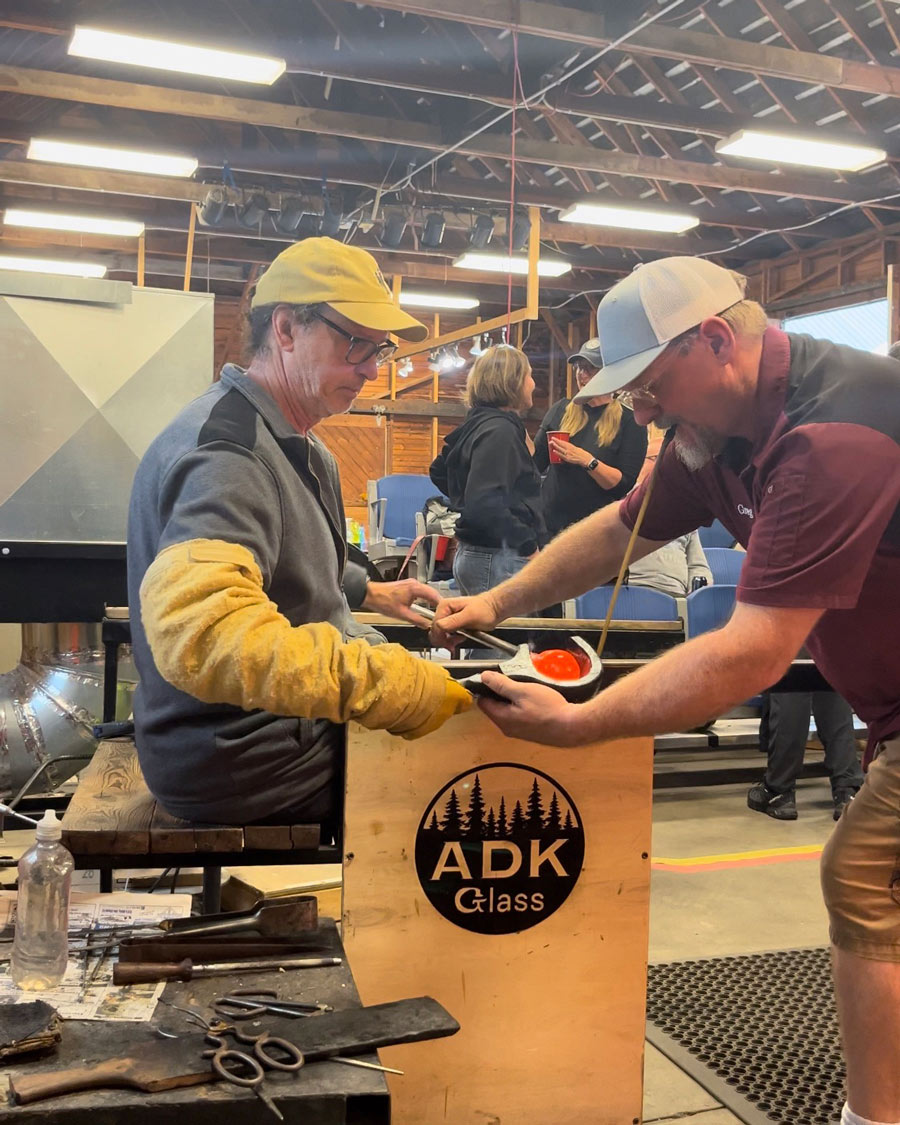
Step 3: Blocking the Glass – Shaping the glass with wooden tools.

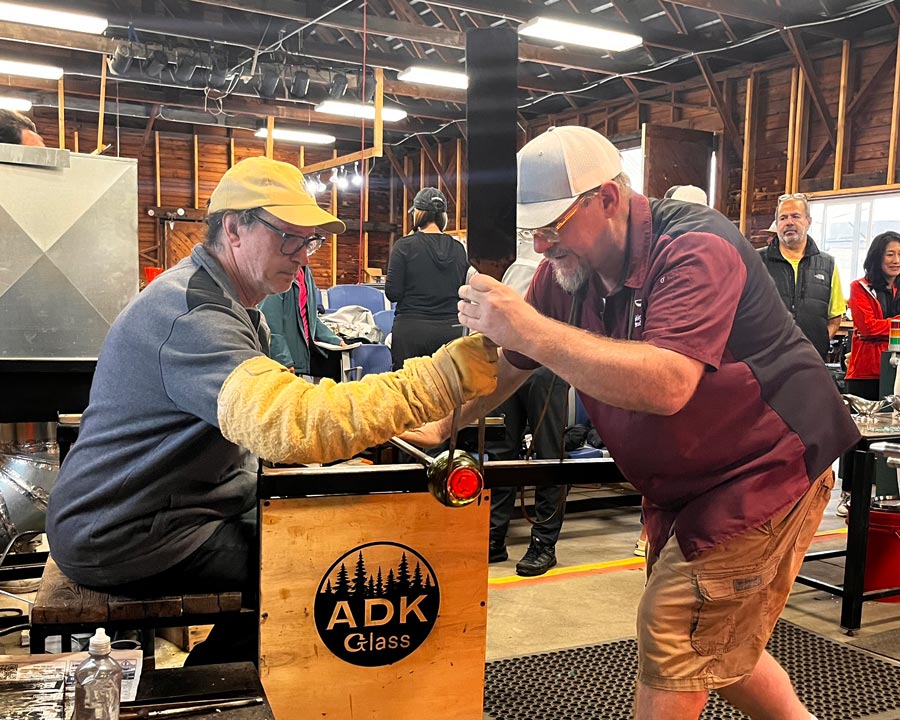
Spep 4: Using the Jacks – A tool used to refine the shape and create a clear line for the piece’s edge.


Step 5: Adding the Foot – Forming the base that the bowl will stand on.
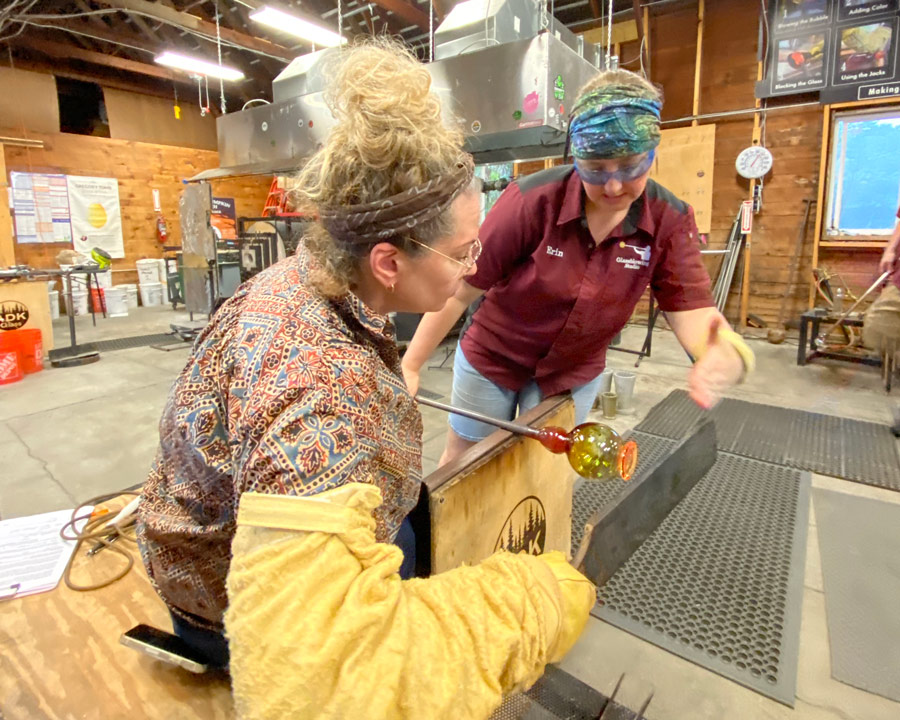
Step 6: Shaping the Foot – Perfecting the structure of the base.
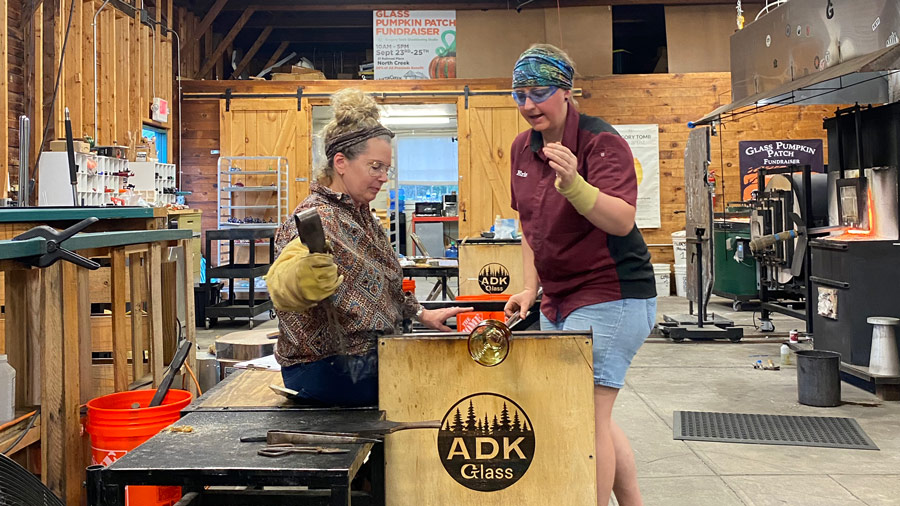
Step 7: Opening the Bowl – Widening the top of the glass into the final bowl shape.

Step 8: Finishing the Bowl – Polishing the edges and final touches before it cools.

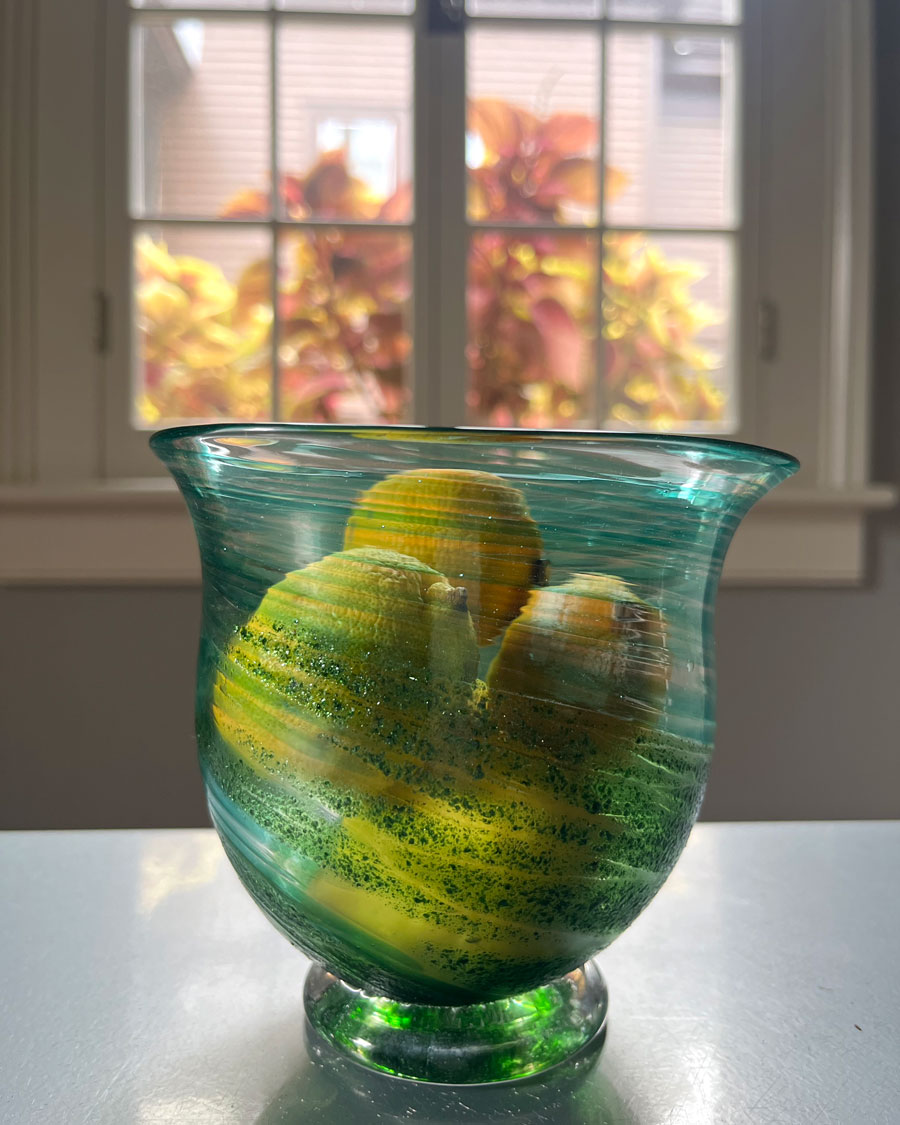
Once we finished, our creations were placed into an annealing oven to cool down slowly—a process that takes about 14 hours. A week later, our friend surprised us with the finished pieces. To our amazement, not only had Heidi and Tim chosen the same shape, but our color choices were similar as well! Talk about a match made in Heaven!
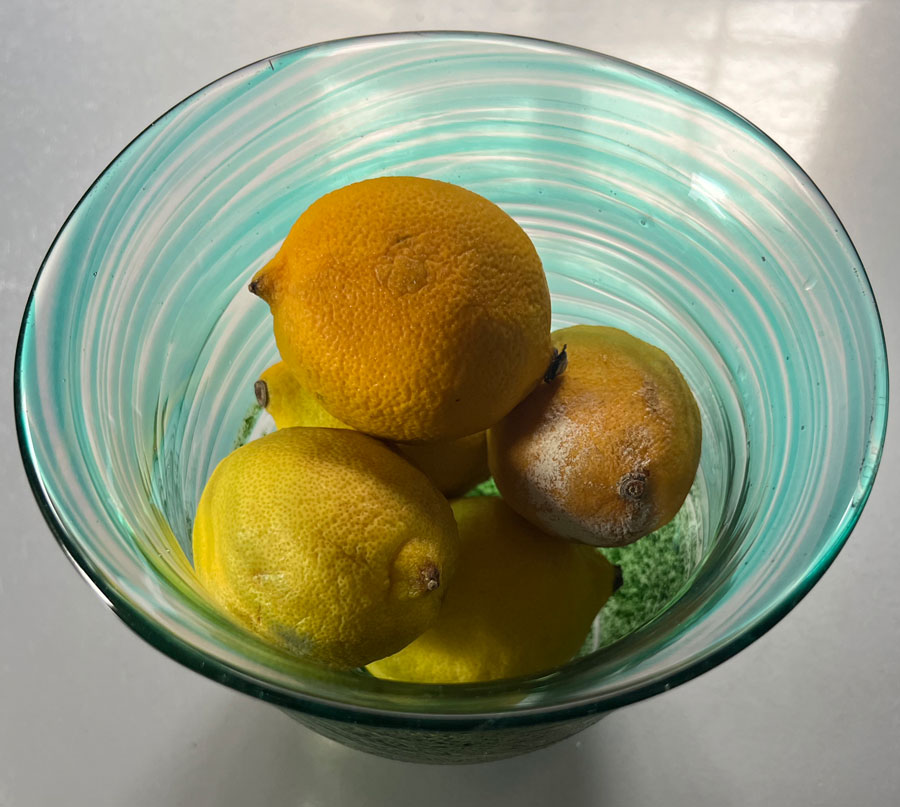
All in all, it was an incredible experience, and we highly recommend it to anyone looking for a creative, hands-on adventure.

Pie on the Sky Luncheon
Today we experienced The Great American Eclipse in our backyard. Here in Saratoga Springs we were in the 98.7% of totality at 3:26pm. The watch party began to occur at 2:12pm and ended at 4:36pm on April 8th, 2024. We have marked the occasion by making our own pizza pies to celebrate Pie on the Sky at Heidi and Tim's Place.
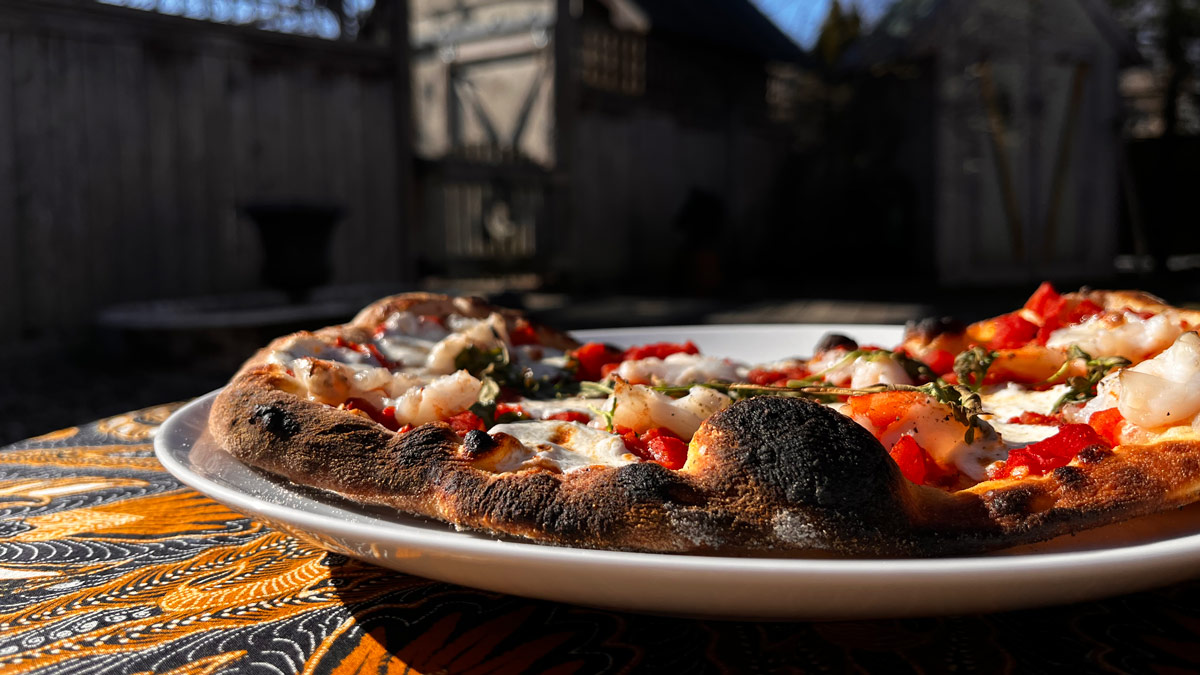
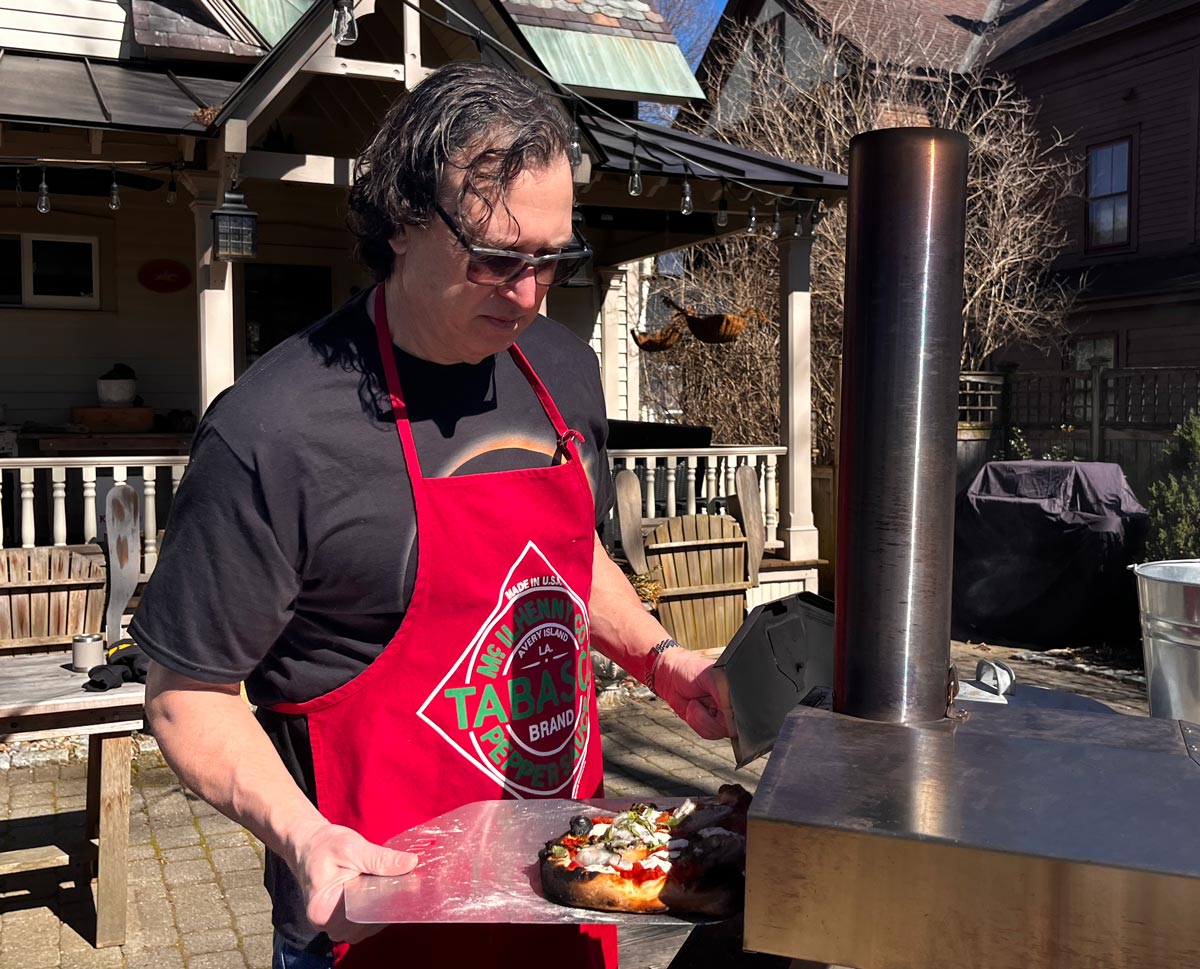
We started with a simple shrimp, roasted pepper, mozzarella, and arugula pie cooked in our Uuni wood pellet pizza oven. This is one of our go to pizza’s. Tasty yet easy and simple. Our second pie was a shrimp, mushroom, mozzarella, and again arugula. This pie was also very good and set us up for the show to begin.
The weather gods shined on us this afternoon, with a partly sunny sky and beautiful 70 degree temperatures. The eclipse seemed to start a few minutes early based on our research into the start time. Shortly after the interaction of the moon to sun we saw a military plane quite low taking in the obscure light of these celestial bodies. We were surprised at how much the sight of the moon crossing the sun would effect us. Through our safety glasses we witnessed the moon moving across the sun in a surreal dance that captivated us. About halfway through the eclipse, the temperature started to drop, cooling to jacket temps pretty quickly. At about 2:45 we started Pink Floyd's Dark Side of the Moon album which seemed to be written for this event. The final song on the album is called Eclipse, and luckily we timed it right, so we had that song play during the full eclipse creating a magical encounter.
The most breathtaking part of the eclipse started at about halfway when the light started to take on a blue hue and the birds seemed to sing profoundly. The light further shifted to an almost green hue that created highlights that seemed like shimmering silver creating a spectacular feeling.
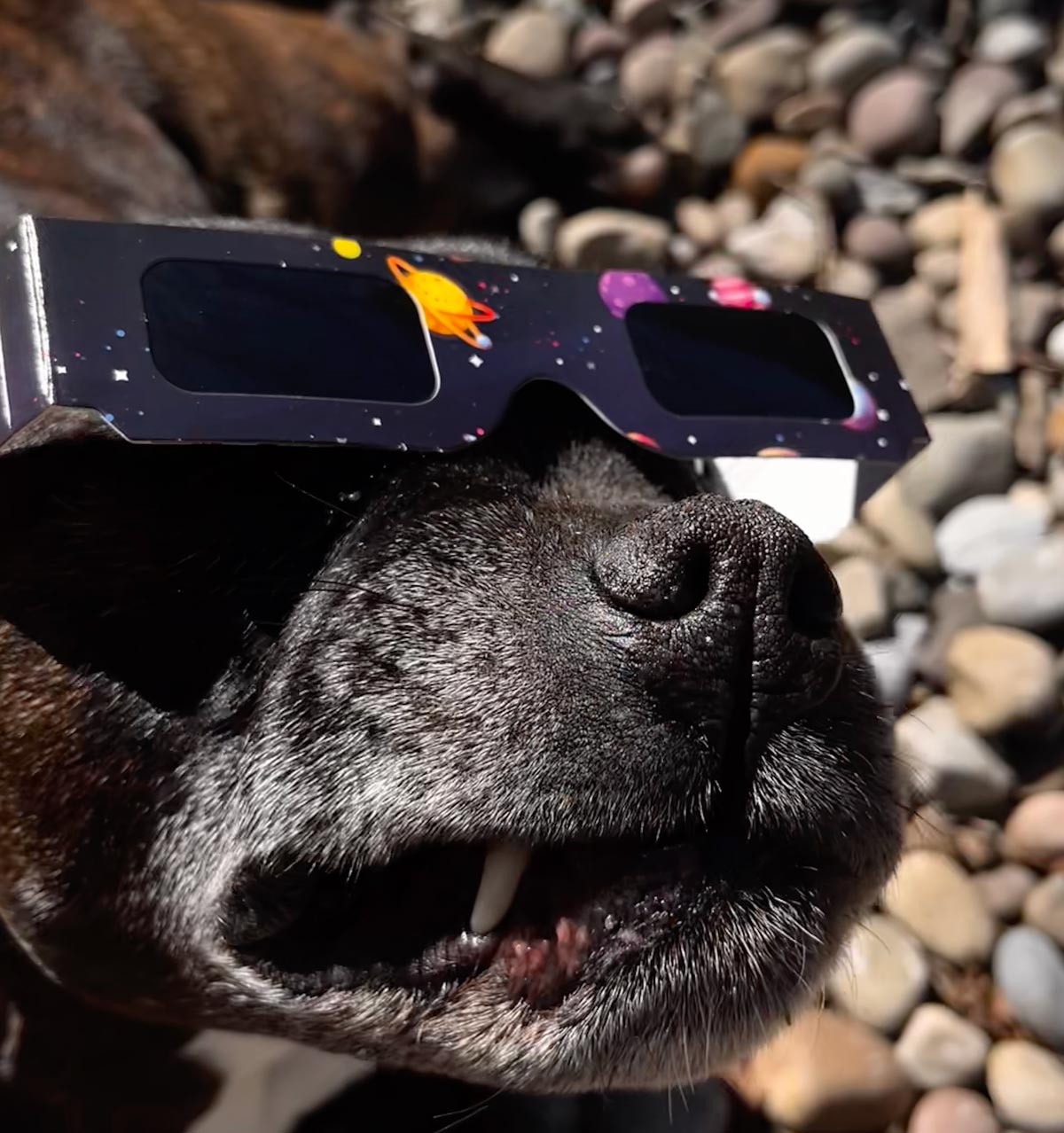
Our dog Dex enjoying the eclipse
While some people to the west had some cloudy sky to contend with, we largely had a clear sky and a great view of the eclipse. The post eclipse was marred with some clouds and about 20 minutes after full coverage, we lost the eclipse to the overcast skies rolling into Saratoga. Perhaps the best part of the day was that we did not sit in a traffic jam or were over run by masses of people viewing the event shoulder to shoulder. We understand eclipse's happen every 18 months or so. It was a pleasure to take time out for this hour and half and witness the interaction of our sun and moon from the viewpoint of our earth.
This Article May Also Interest You: Two Years, and the Journey Continues

Valentines Day 2024
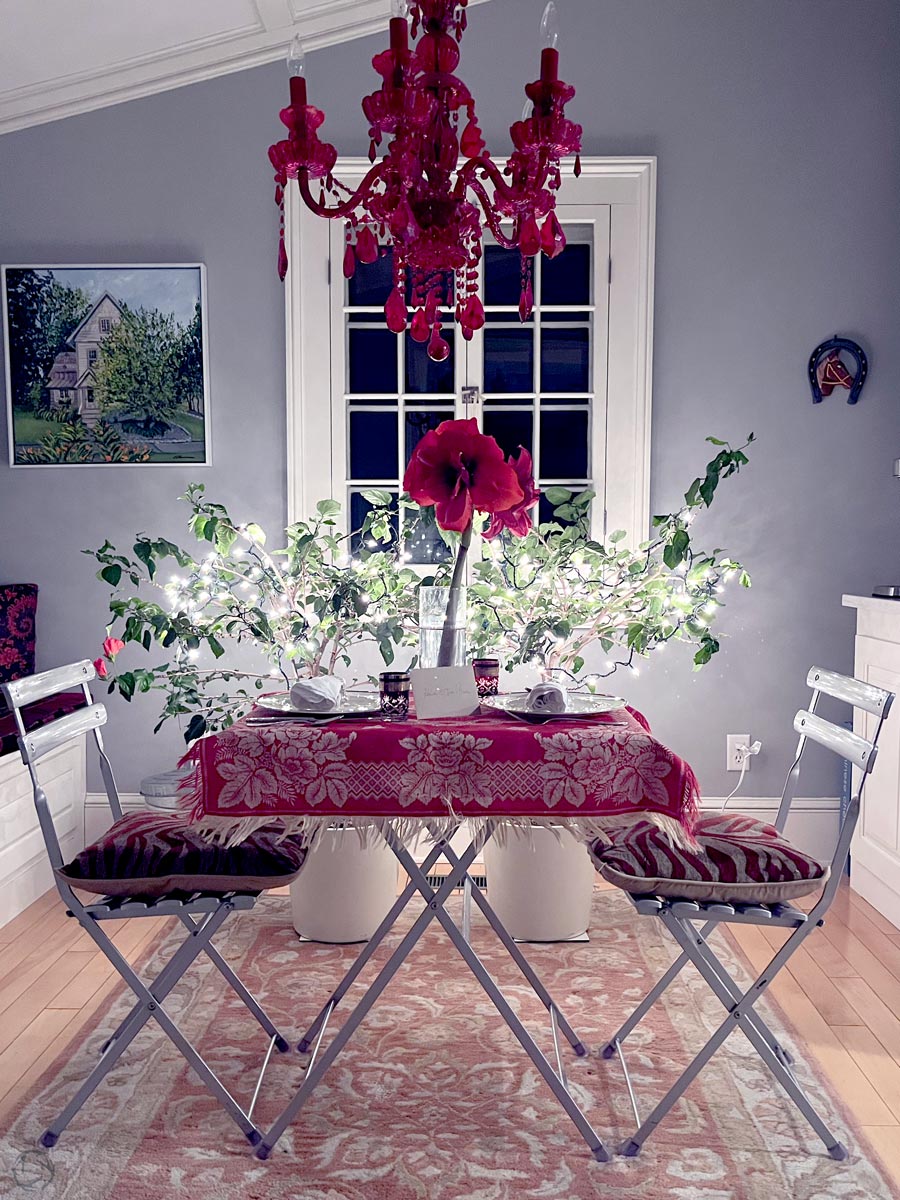
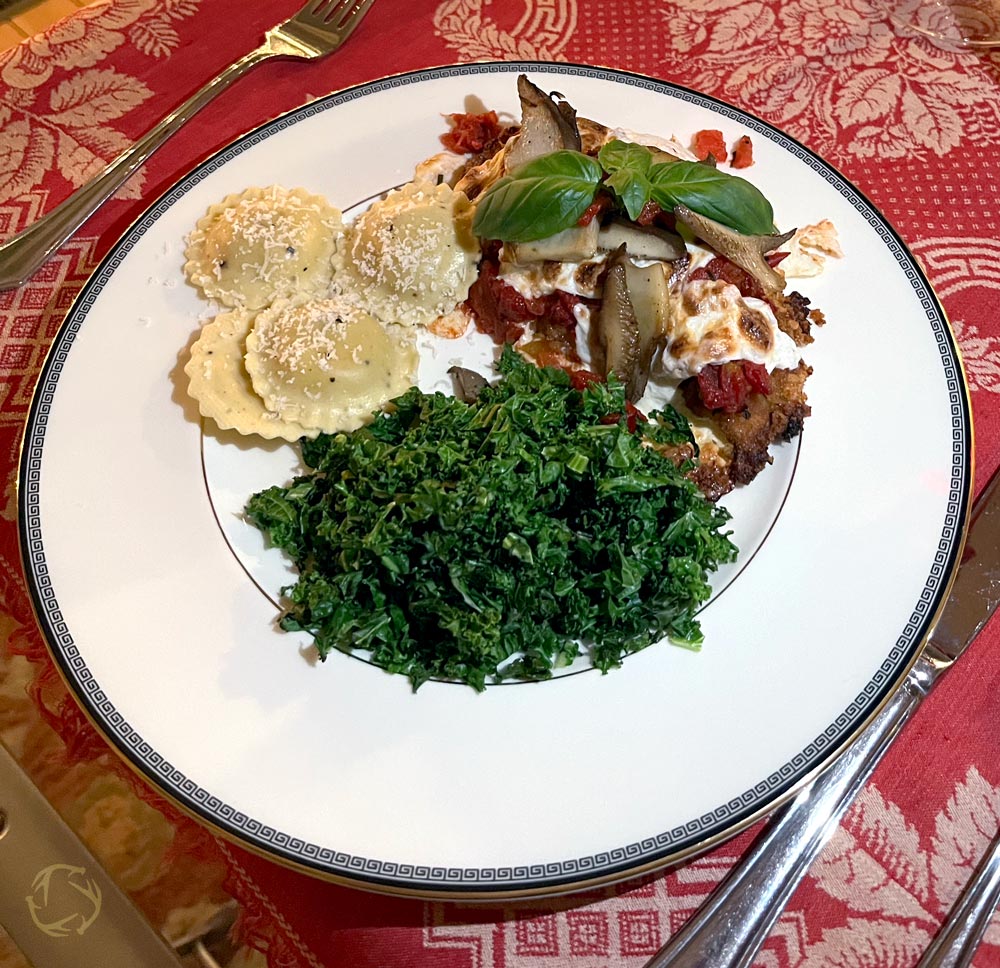
Valentines day is a day to celebrate each other. We have a romantic dinner every year with a bottle of our favorite wine and a special meal. This year we had a version of chicken parmesan that features a tomato and basil relish, sautéed fresh mushrooms served with fresh ravioli and sautéed kale. Here’s to love and laughter from Heidi & Tim’s Place.

Raclette (Melty Cheese)
Raclette, traditionally, is cheese melted by a fire and served with potatoes or bread with cornichons, pickled onions, or other snacks. Originating in the Alps in Switzerland, and the Savoy region of France, raclette became a staple for farmers migrating with their cows to the high pastures during the summer months. They would set a wheel of cheese next to the fire and scrape the melted cheese onto a plate and serve with bread or potatoes as an evening meal.
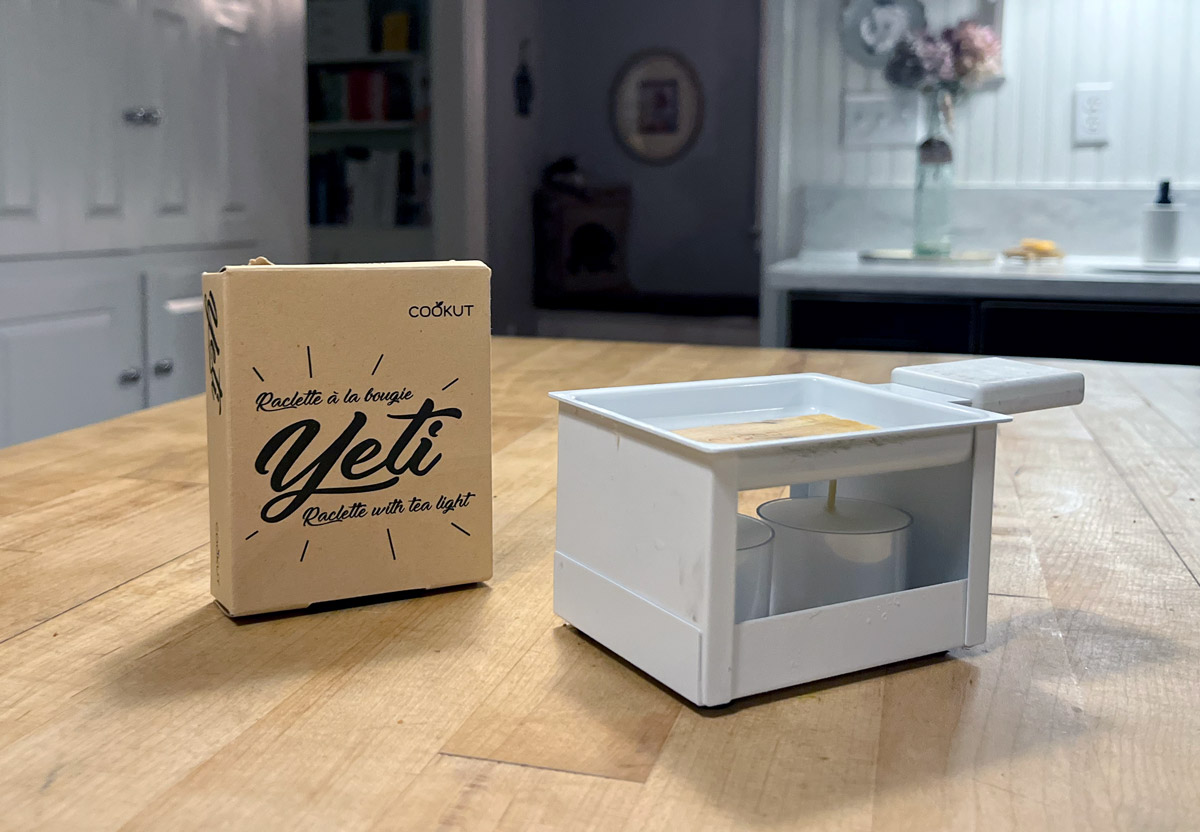
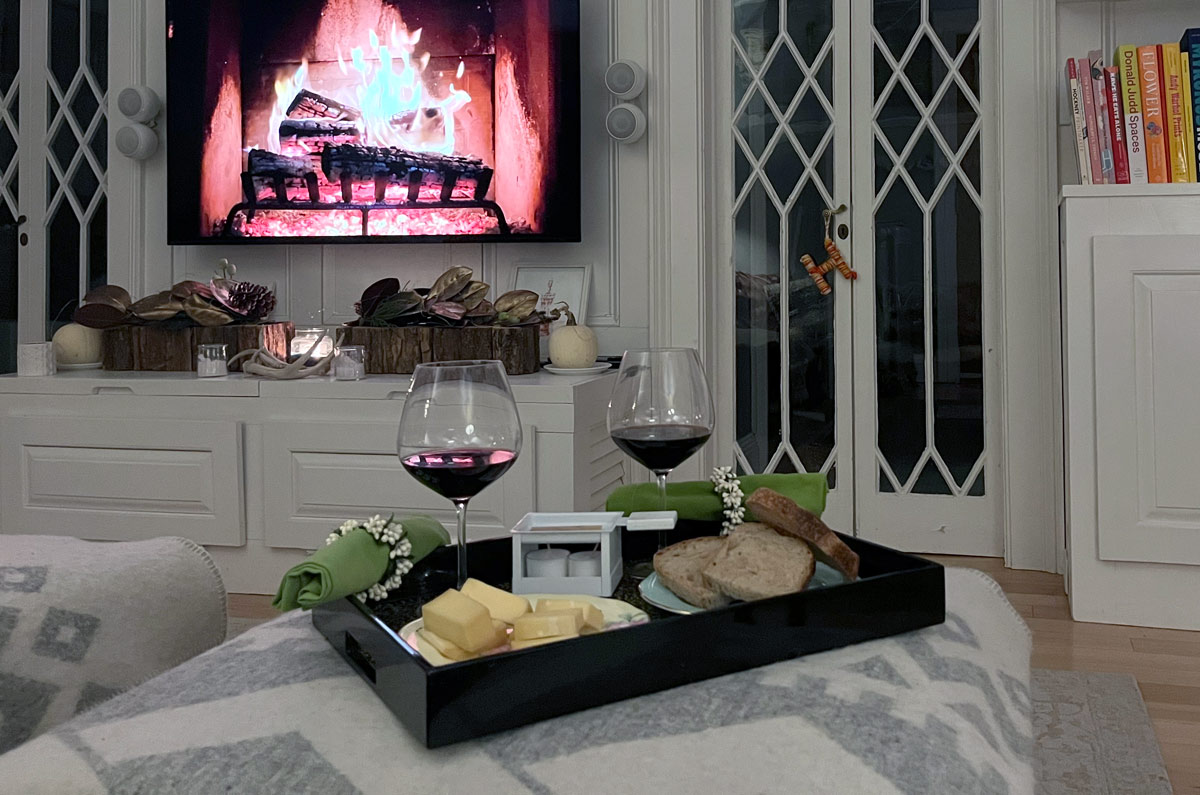
Our version of raclette utilizes a device from a French company named Cookut called the Yeti. The Yeti is a simple device made from enameled steel, using “Tea Candles” as a heat source to melt the cheese. The cheese is placed on a small tray with a handle that will heat and melt it leaving you with an easy way the enjoy the wonderful flavor of this traditional dish.

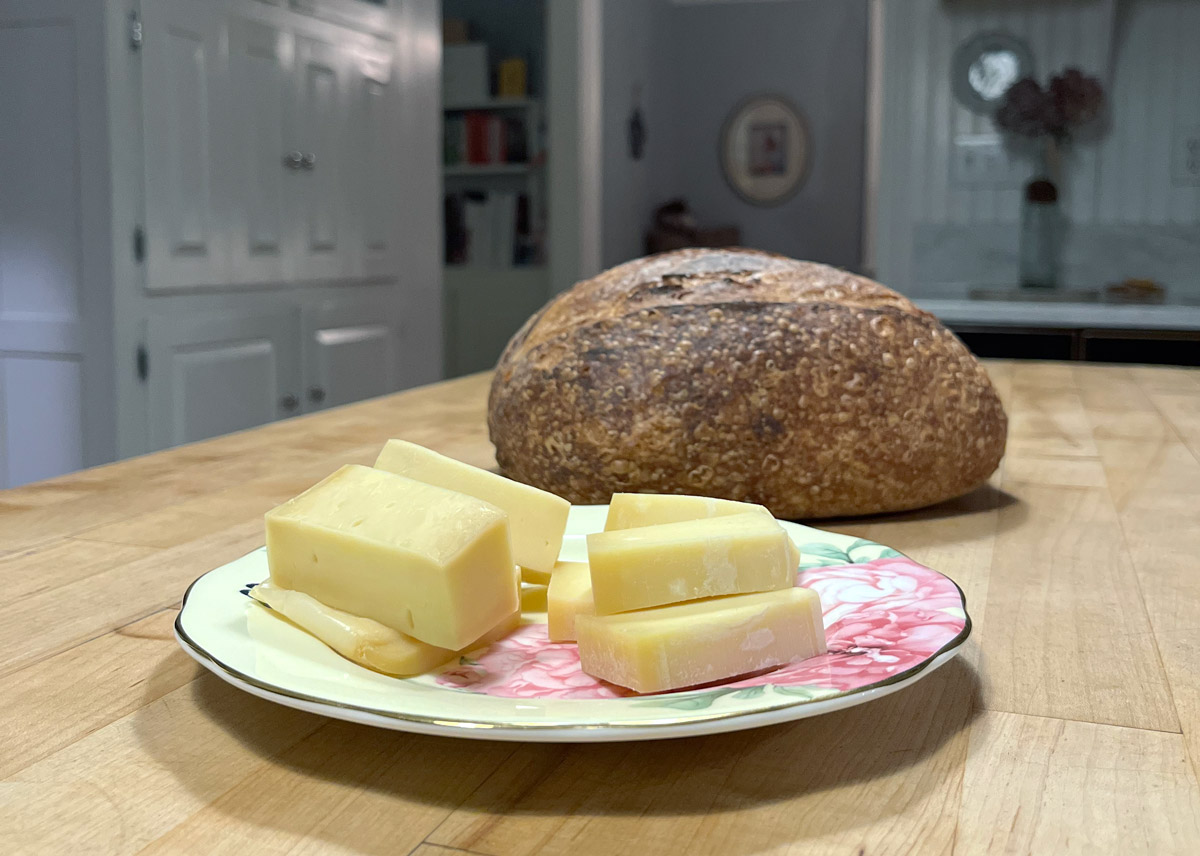
We have found that the cheese from the region where raclette originated works best for us. We use a combination of Gruyere from southern Switzerland, and raclette from the Savoy region in the French Alps. Our mixture is a fairly even mix of the cheeses, that we cut into single batch sized chunks. The bread for this dish is very important. We like to use a country style sourdough from a local bakery. This bread has some rye, and whole wheat flower to give it a hearty flavor.
 |  |  |
We will trim the rind of the cheese before melting. This step is not required, but helps the cheese melt more evenly in our Yeti device. |
Traditionally, black tea, or another warm beverage is a common drink to accompany raclette. The French have added white wine to their enjoyment of the dish. Our version of Melty Cheese is served with a glass of wine. Typically, we will have white, or Rose in the warmer weather, and a light red in the colder weather. The wine really brings out the flavors of the cheese and bread.
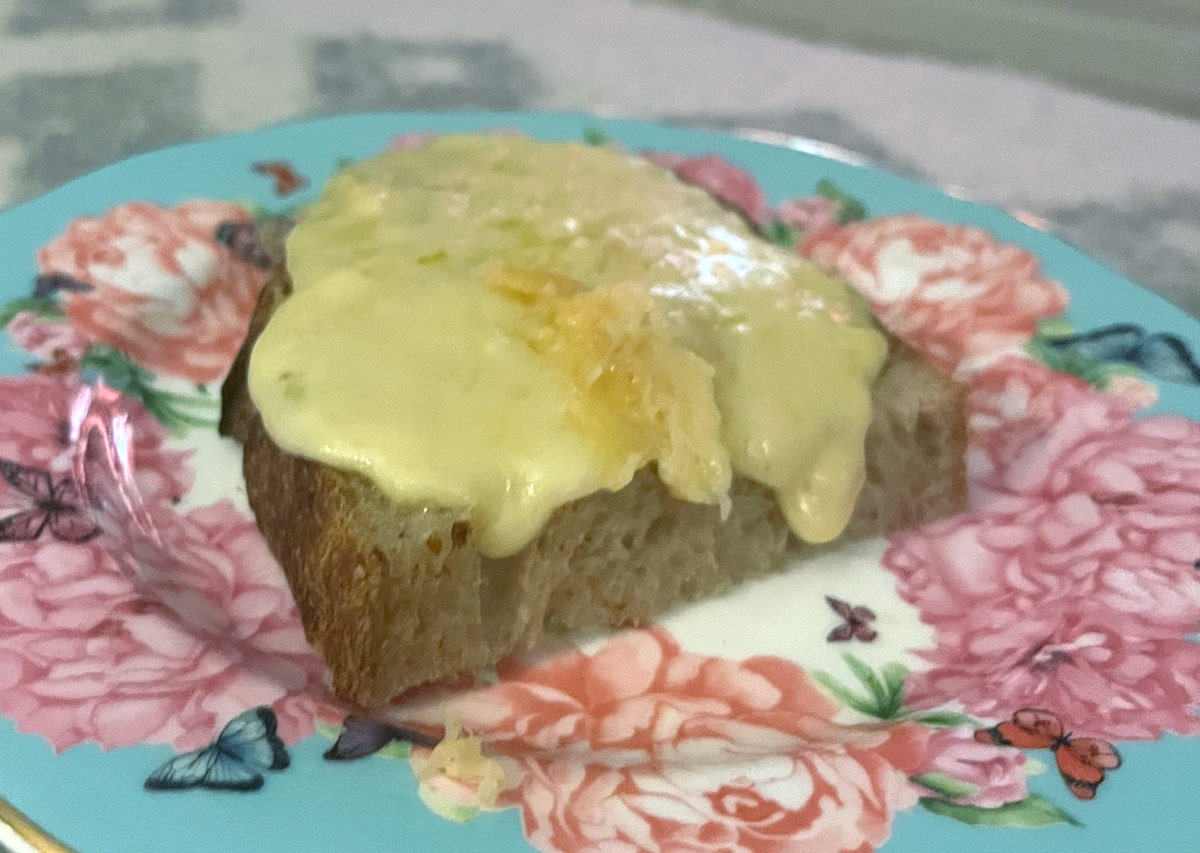
While raclette is a dish, or a method of preparation. We have found that it is very enjoyable and satisfying to make an event out of the snack. We will set out cured meat, fruit, and other simple snacks to have with our raclette. Collected on a tray, we can serve our melty cheese anywhere we are to enjoy.
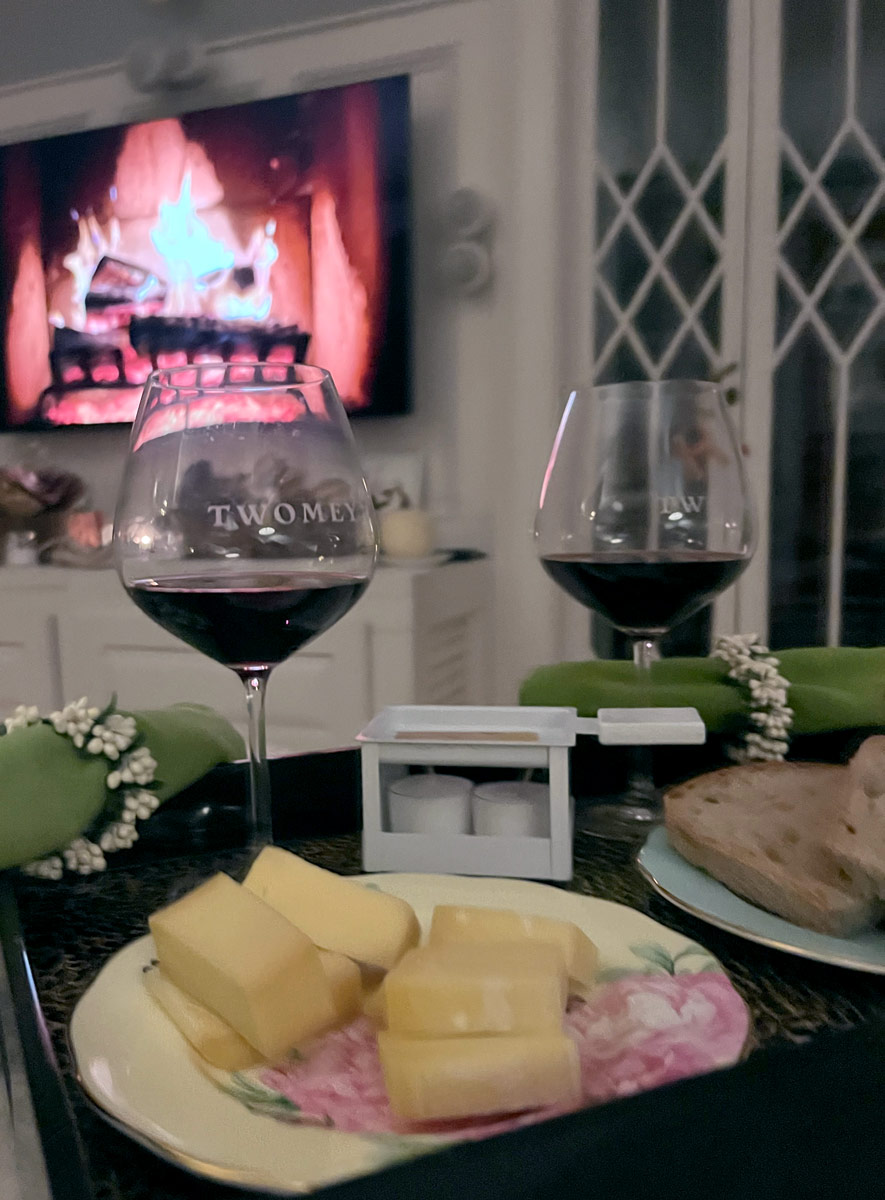
Occasionally by a campfire, or served on an ottoman in the living room, raclette is an alpine tradition that is definitely worth maintaining. Cheese and bread is a classic culinary combination just made better by melting the cheese.
This Article May Also Interest You: Blooming Wonders: A Celebration of Spring
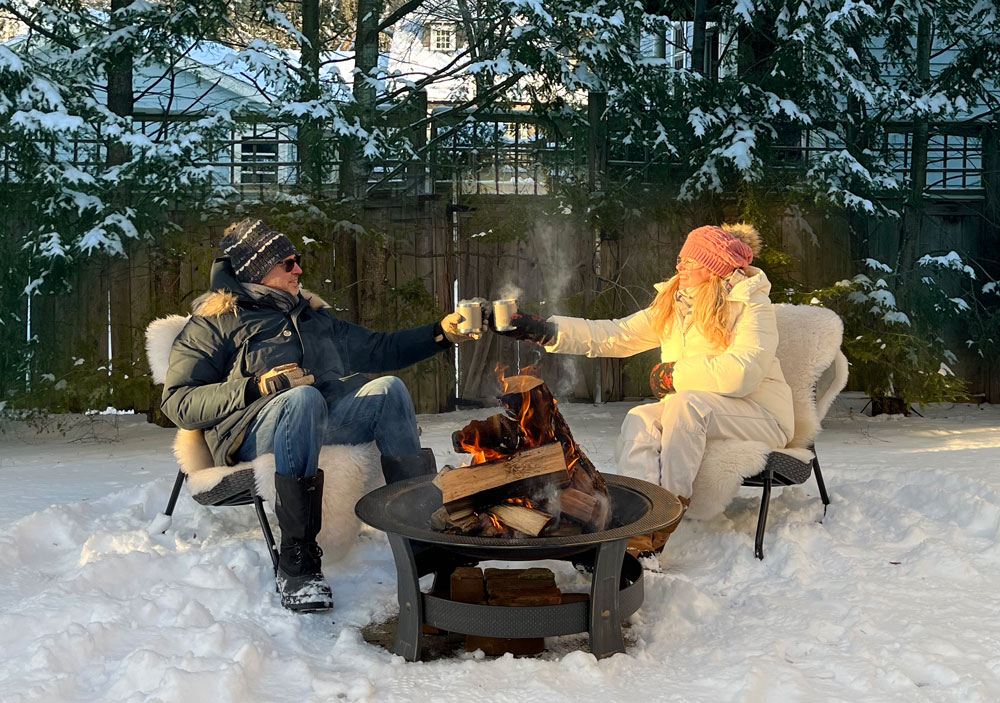
Cozy Campfire on a Chilly Winter Afternoon
Covid-19 and the shutdowns that came with it, had us re-evaluate our spaces. Both inside and out. During the cold winter months of 2020/21 a tremendous snow fall prompted us to transform our outdoor campfire space. We wanted to create a space that was accessible in the snow, but still provided a cozy and inviting atmosphere. Add a simple fire tray, winter safe outdoor chairs, and some luxurious sheep skins; and we were ready to go.
We started with a small, round, steel, trey style fire pit. Our choice is simple with low sides to allow the heat to spread at a lower level than some outdoor fire devices that are more suited to standing. Placed on a patio that is easier to maintain in the snow, our winter location is also close to our kitchen to make access to provisions easier in the our winter wonderland.
| | |
We discovered that we prefer to burn hardwood over pine or other types of wood. The hard wood (Oak, Choke Cherry, Maple, Ash, etc..) burns hotter and cleaner than other choices. |
The key to staying warm and comfortable in the cold weather enjoying your fire, are the cozy fur skins we cover our chairs with. The skins we use are double size sheep skins—two skins sewn together. There are several types of fur that would work great for your winter fire patio.
The pelts help solve one of the biggest problems with a winter fire, cold back and bottom and a hot front. With the warm insulated backing on the chairs it is comfortable to enjoy the fire and the winter wonderland. Just add some warm cocktails, and snacks to create a comfortable and warm winter outdoor room.
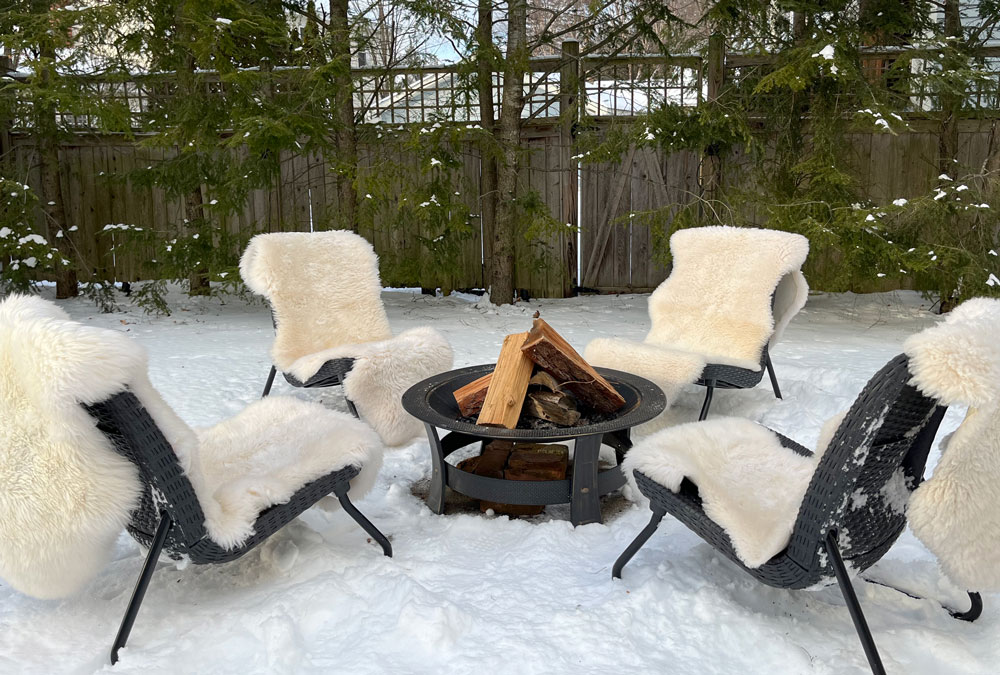
Winters in upstate New York can get very harsh, and outdoor furniture needs to be tough and durable. We have found that composite faux wicker furniture holds up well outside in the winter elements. Traditional materials tend to fair poorly in the freeze/thaw cycle.
With a little work and some simple elements you can build an outdoor winter space that will have you looking forward to snow and the unique beauty of your winter yard. Add your favorite music and some outdoor lighting to round out the new space, and you have a special place to relax and enjoy winter.
This Article May Also Interest You: Mallorca: Where Every Turn Reveals Another Wonder