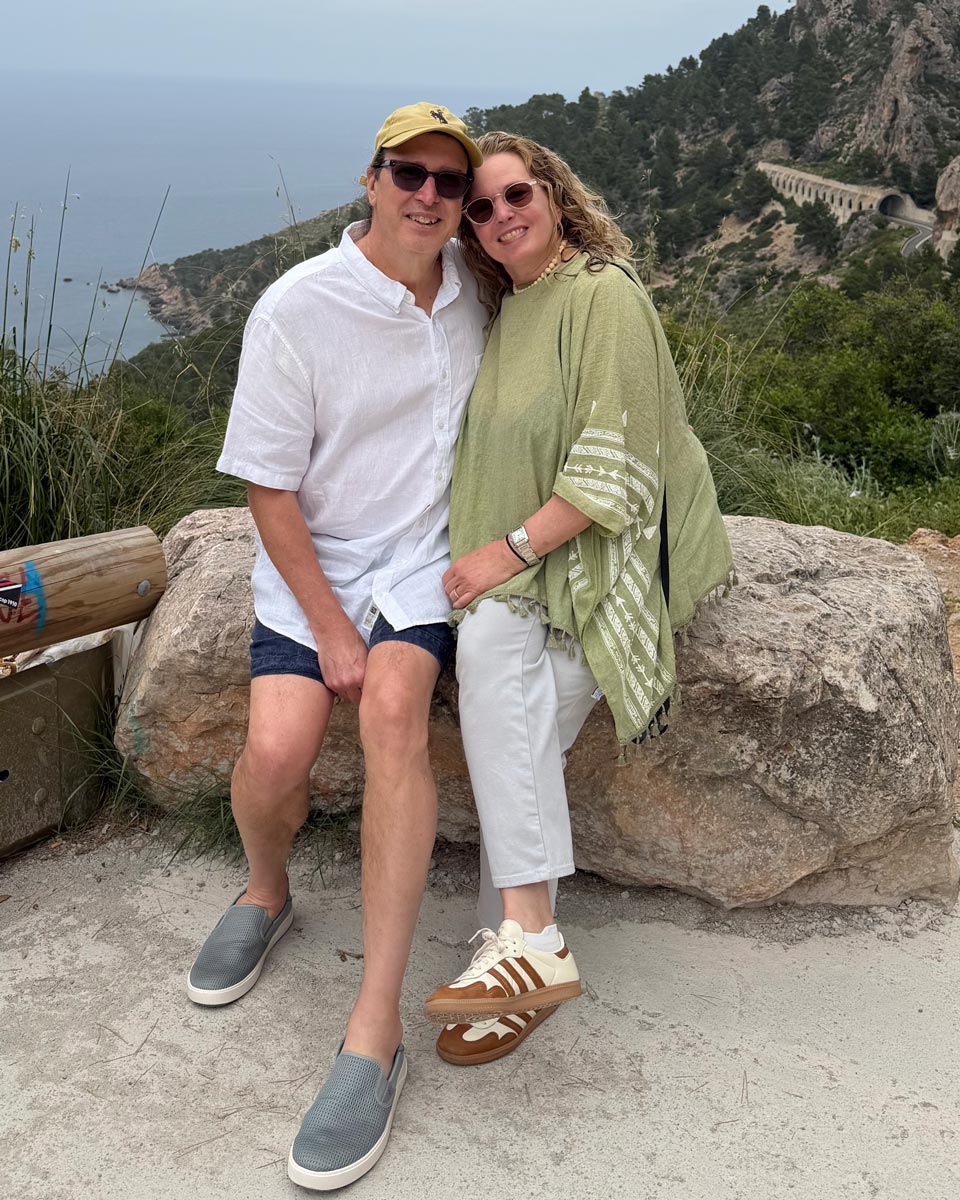
Mallorca: Where Every Turn Reveals Another Wonder
After leaving Porto, we flew to Mallorca, the largest of Spain's magnificent Balearic Islands, floating in the Mediterranean just off the eastern coast of mainland Spain.

From the moment we arrived, Mallorca felt like a place of contrasts with ancient stone villages and sophisticated seaside towns, rugged mountains plunging toward brilliant blue water, vineyards and olive groves stretching across the countryside, and winding roads that seemed to disappear into the landscape.
Mallorca as the world knows it today began to take shape in the middle of the twentieth century. During the 1950s and especially the 1960s, the rise of mass tourism transformed the island.
Yet there is another Mallorca. One that exists beyond the resorts, beaches and postcard images.That was the Mallorca we were about to discover. We stayed in a charming villa that became our home base, and each morning we climbed into our rental car with absolutely no idea what the day might bring. We simply chose a direction and went. What a way to discover an island.
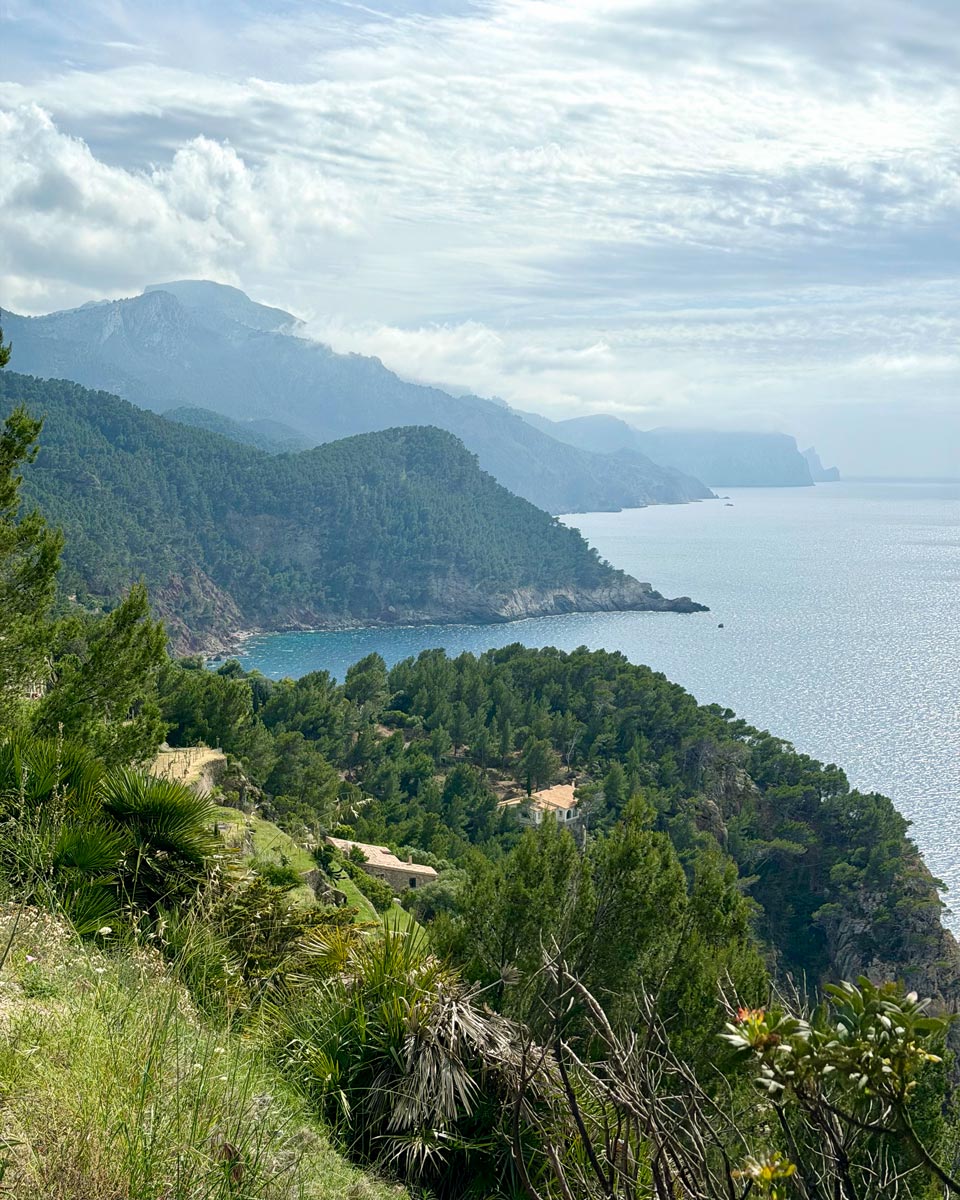
The Mountains — Our First Adventure
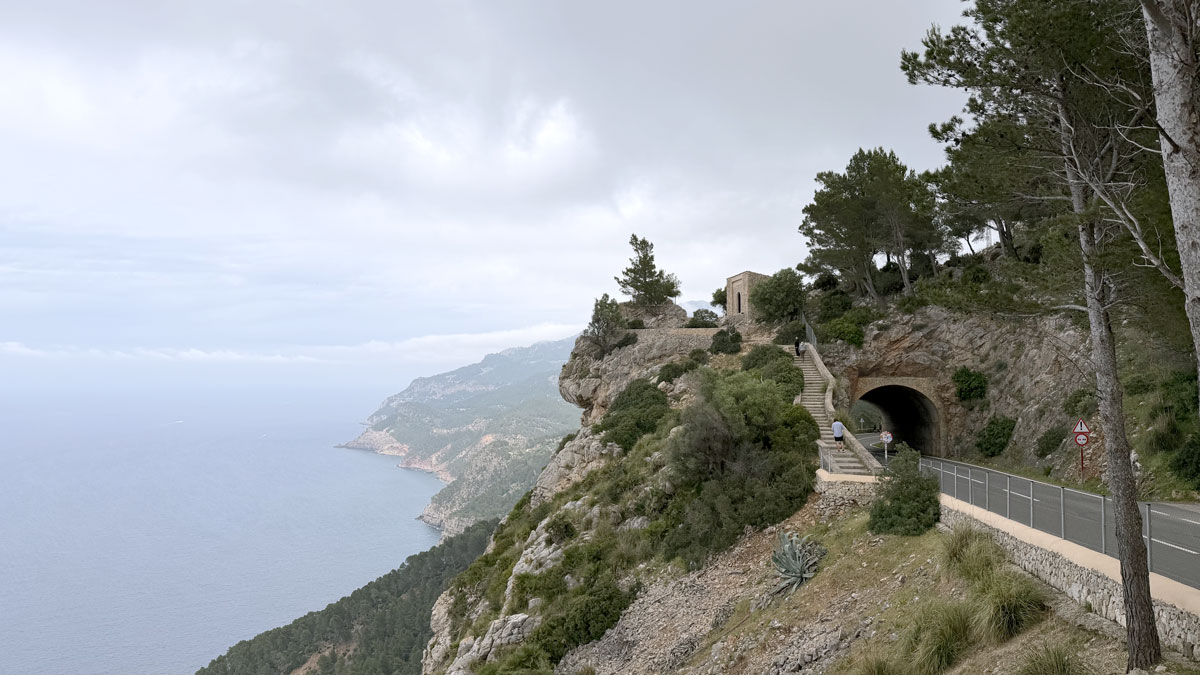
Our first adventure took us into the mountains, and we had no idea what we were getting ourselves into. We followed a never-ending, twisting road higher and higher into the Serra de Tramuntana. With every turn, the world below seemed to fall farther away. There were few buildings, little traffic and long stretches of nothing but mountains, sky, wildflowers and breathtaking Mediterranean views.
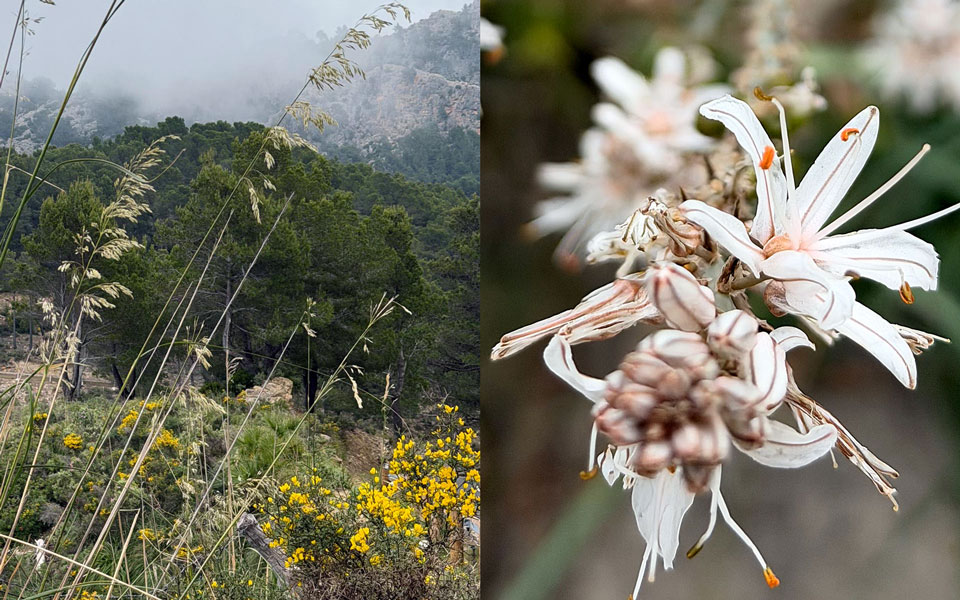
Every so often we pulled over, got out of the car and simply stared. Far below us, the Mediterranean stretched toward the horizon, its shades of blue changing with the light. The cliffs seemed to fall directly into the sea, while wildflowers added unexpected splashes of color to the rocky landscape.
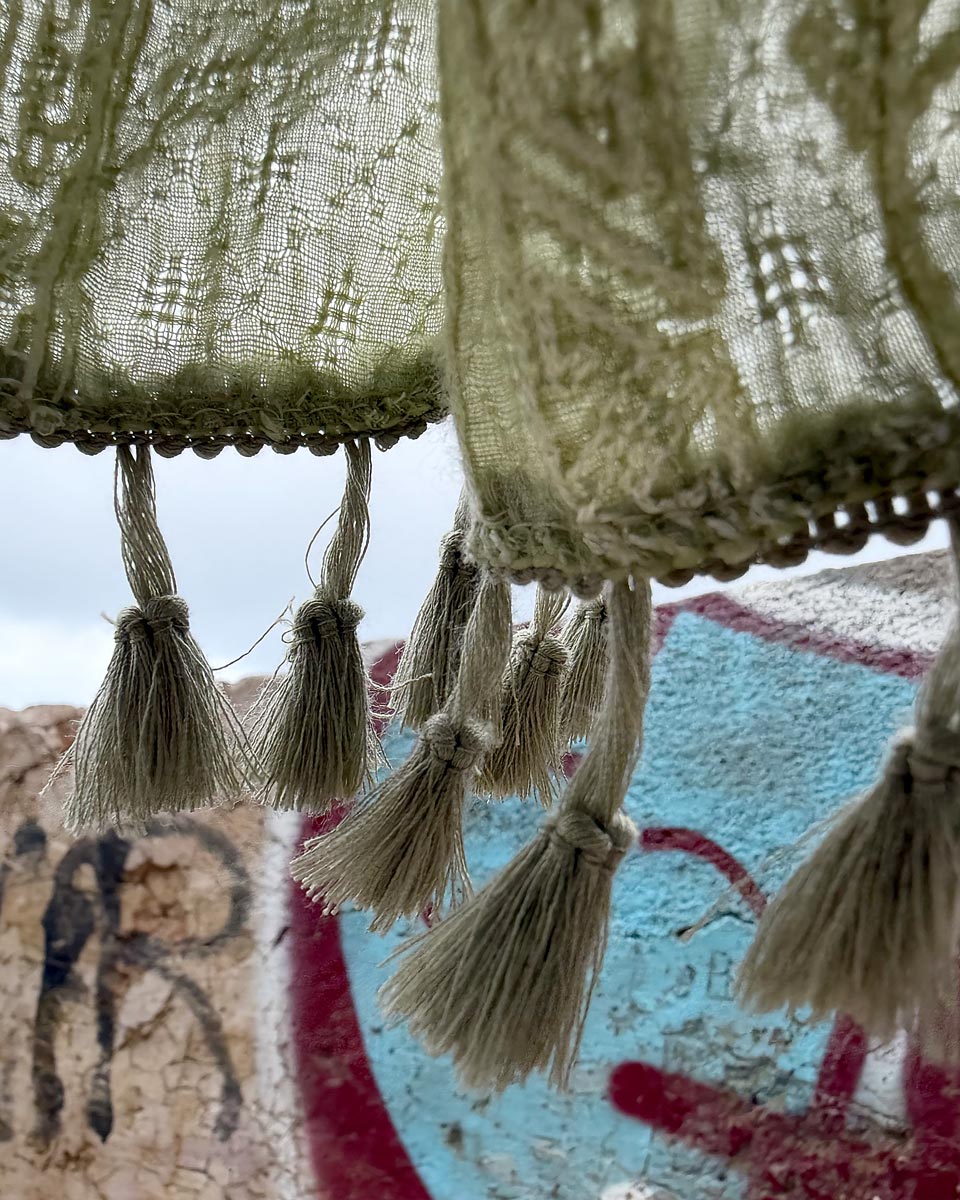
Eventually, we stopped at a small roadside establishment for a quick sandwich—and discovered a wonderfully eccentric little shop attached to it. Inside were shelves filled with olive-wood bowls and spoons, handmade ceramics, jewelry, scarves and all sorts of treasures.
Of course, we couldn't leave empty-handed. We found a beautiful vintage ceramic plate that we just had to bring home. Today it hangs in our bar, and every time we see it, we are transported right back to that mountain road, to the sunshine, the sea, the wildflowers and that wonderfully unexpected encounter with an artist playing guitar in the middle of the mountains. Sometimes the smallest treasures carry the biggest stories.
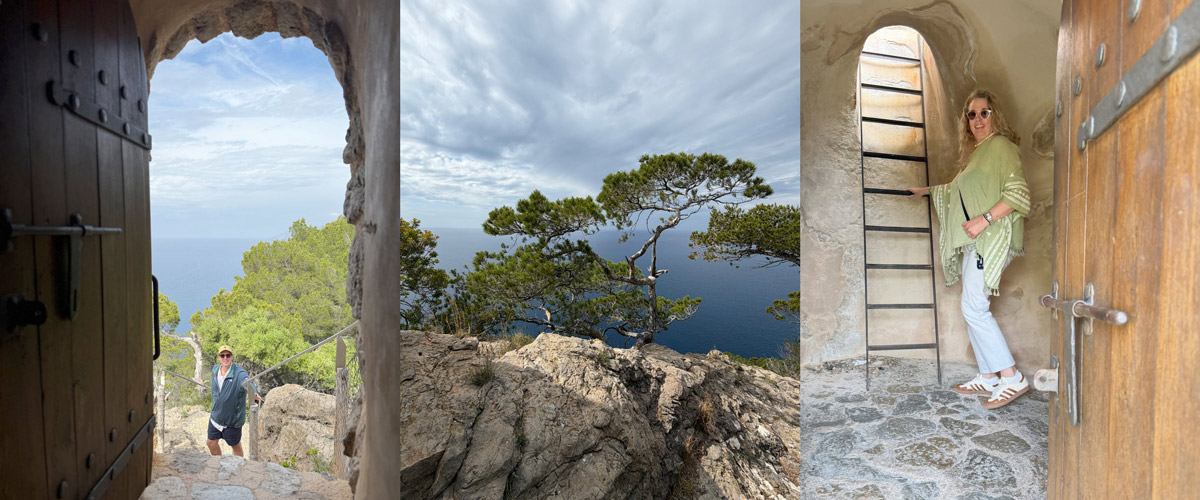
As we continued higher, we passed twisted trees and panoramic views before stopping at the ruins of an old castle. A massive wooden door provided the perfect frame for photographs, and the weathered stone and ancient trees made the scene feel as though we had stepped into another century.
Rounding another bend we suddenly found ourselves looking at Banyalbufar, a tiny village seemingly suspended between the Tramuntana Mountains and the brilliant blue Mediterranean.

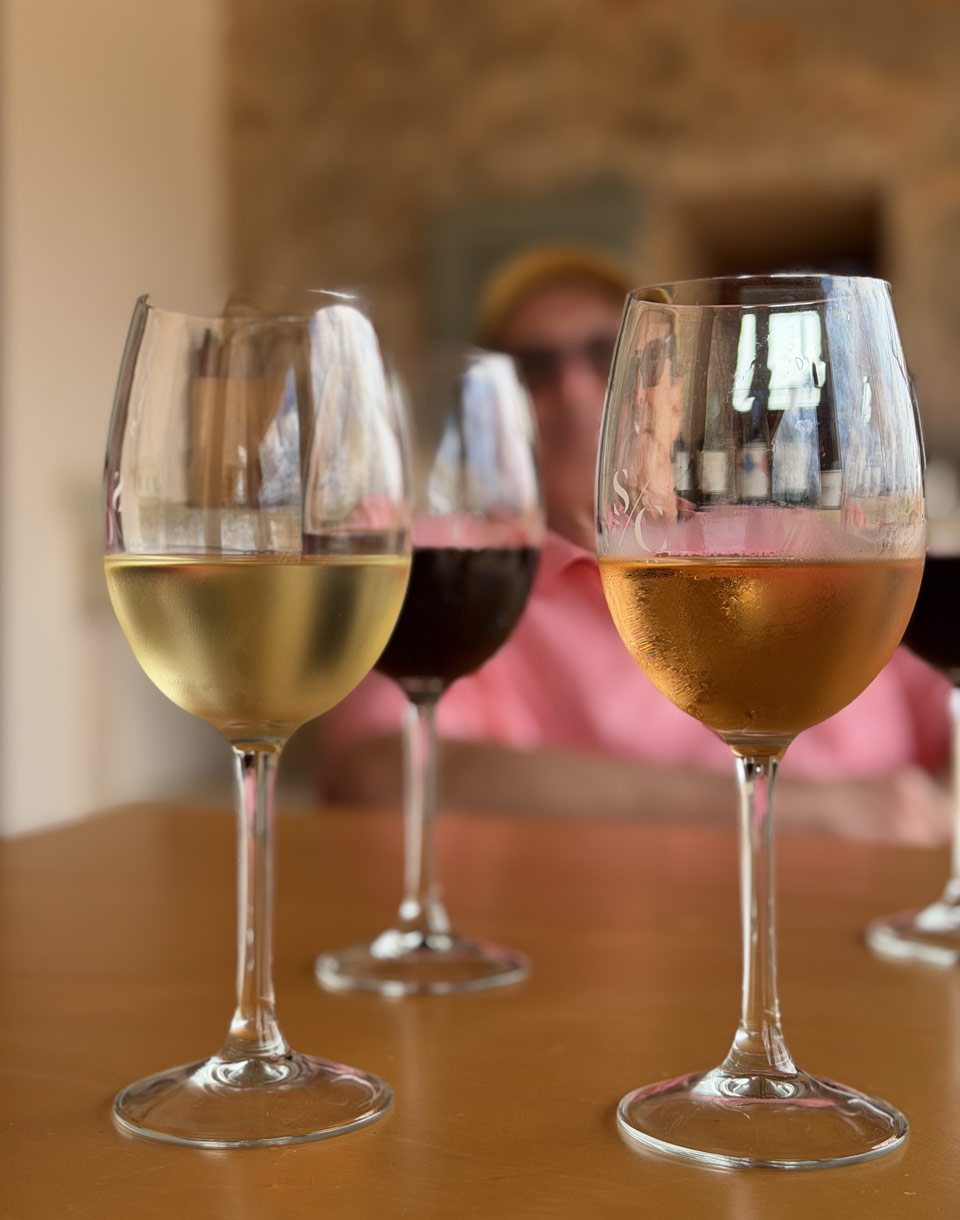
We wandered into Sa Baronia, a charming hotel nestled into the village, and found a beautiful stone patio overlooking the mountains and sea. We settled in for a glass of wine, and suddenly there was nowhere else in the world we wanted to be.
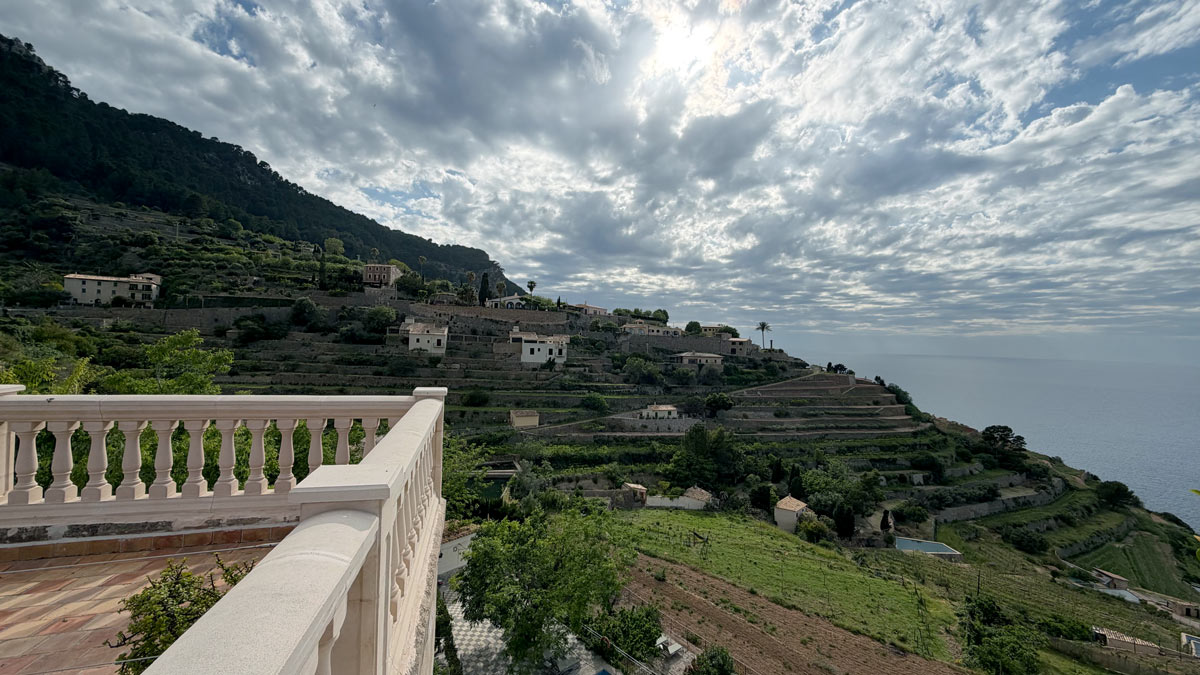
Banyalbufar is famous for its ancient terraces, where generations of farmers cultivated grapes and other crops on steep slopes overlooking the sea. Stone walls climb the mountainside alongside the village, creating a landscape that feels both cultivated and completely wild.

Bunyola — A Glimpse of Everyday Mallorca
Another day, we found ourselves back among the mountains, but this time our experience was very different.
We headed into the interior of Mallorca and stopped for lunch in Bunyola, a charming mountain town tucked beneath the Serra de Tramuntana. Almost immediately, the atmosphere changed by way of narrow streets, stone houses and mountain views. Bunyola has roots stretching back to Mallorca's Moorish period, and its old streets still carry that sense of history.
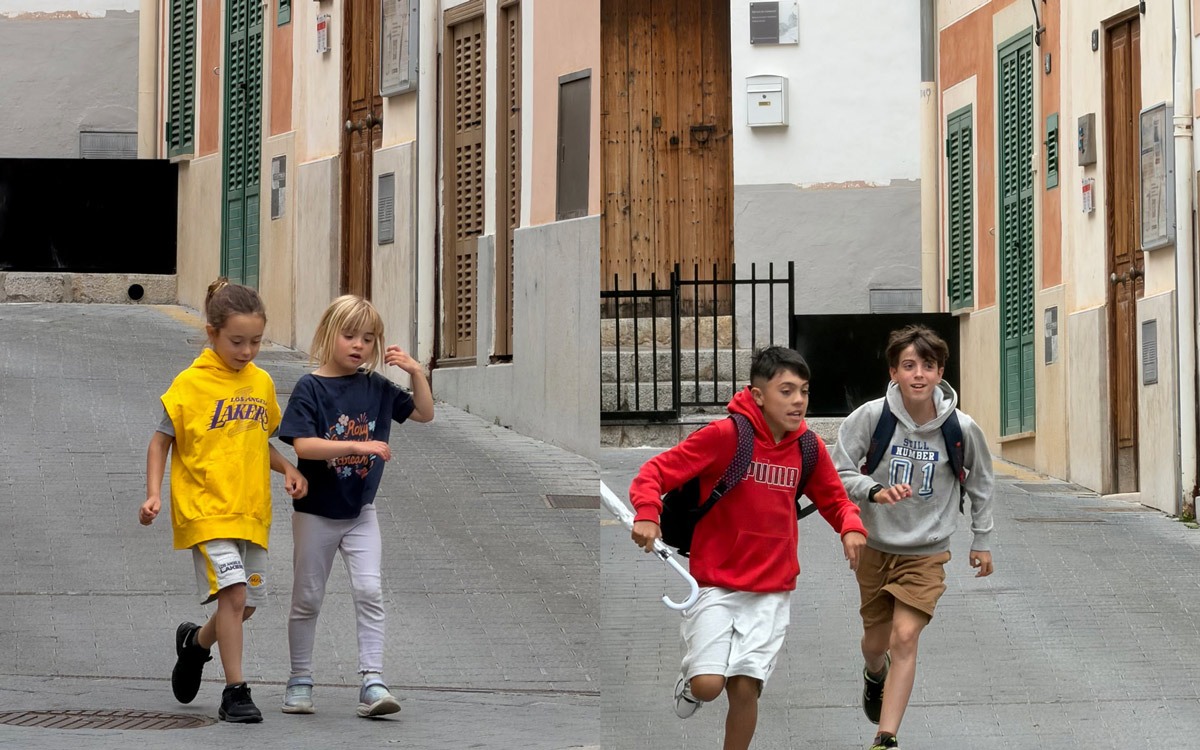
We found a lovely little square where we could sit outside for lunch, with several restaurants serving tables around the plaza. There was something wonderfully simple about sitting there and watching everyday life unfold around us. As we ate, schoolchildren began making their way home. We watched them turn the corner and come down the hill, some running ahead, others stopping to wait for their parents.It was such an ordinary scene, yet it gave us a glimpse into the rhythm of life in this small Mallorcan community.
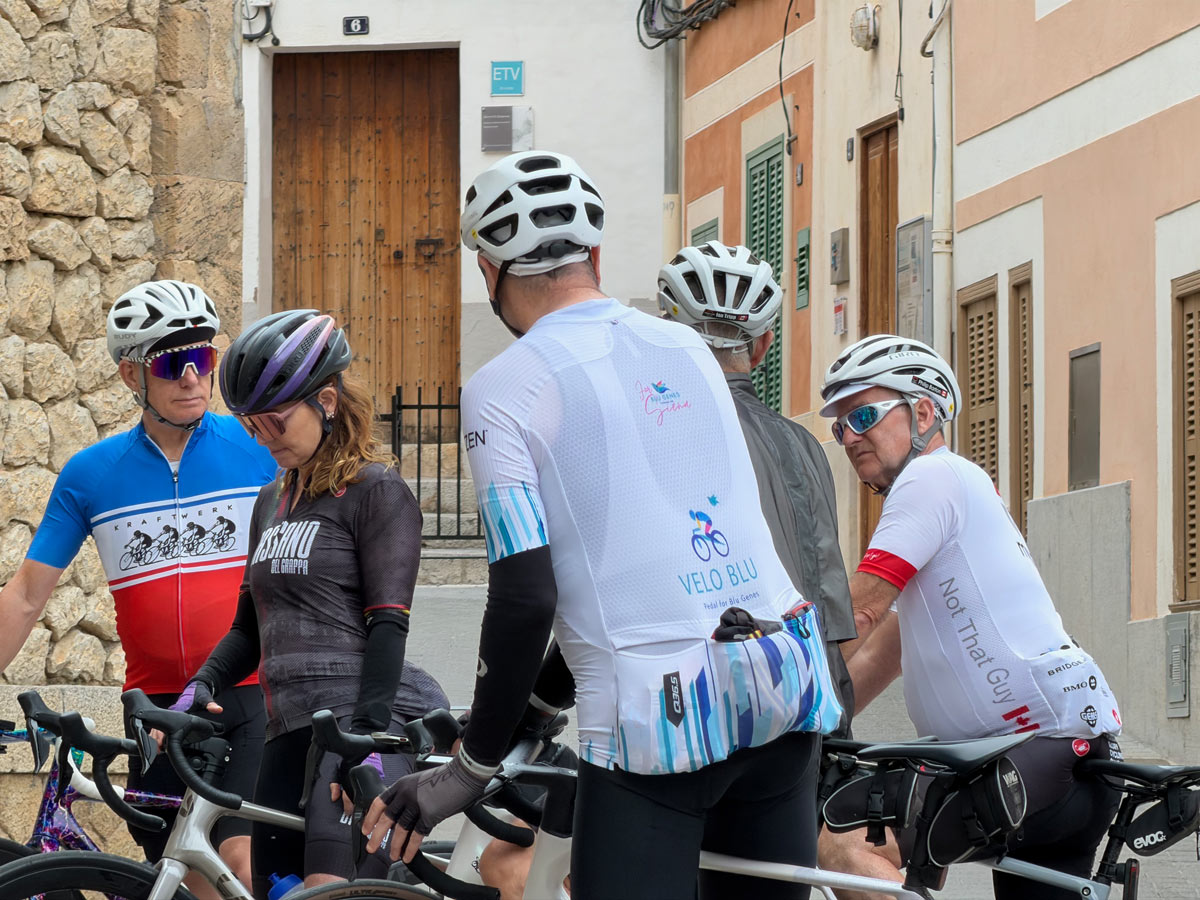
And then there were the cyclists. Many cyclists. We seemed to encounter groups of cyclists everywhere we went in Mallorca. Bunyola was another popular stopping point, with groups arriving for lunch after riding through the mountains. Mallorca is well known as a cycling destination, and the island's challenging mountain roads attract serious riders and cycling teams from around the world.We loved the contrast of the cyclists arriving with all their energy and purpose, while around them the village simply carried on with its day.
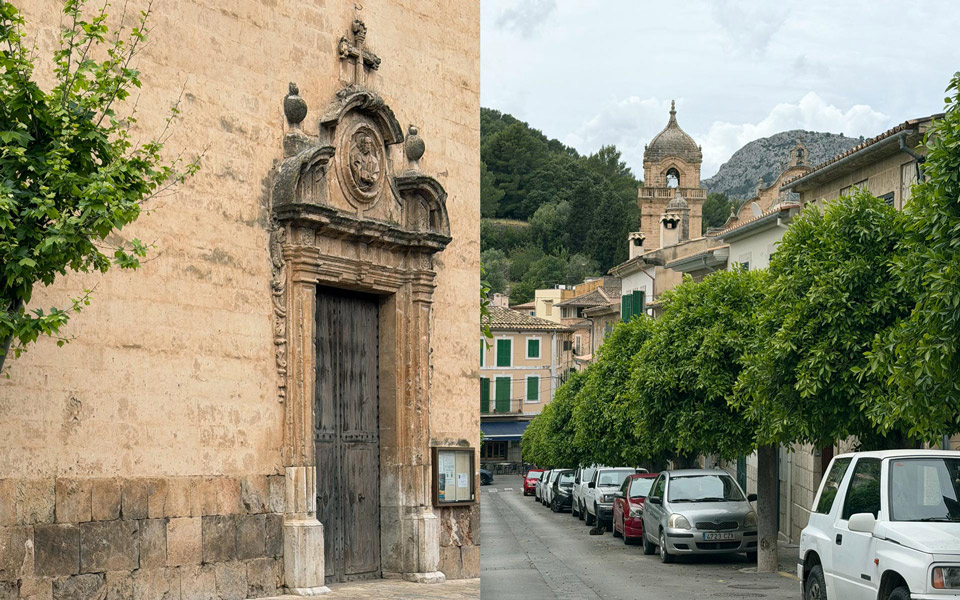
For us, Bunyola felt less like a place we had come to "see" and more like a place where we could pause, have lunch and experience a quieter side of Mallorca. Sitting in that little square, watching the children come home from school and the cyclists arrive from the mountains, we got a brief glimpse of everyday island life. Sometimes those are the moments that become the most memorable.
The Heart of Mallorca — A Day Among the Ancient Vineyards
Some of the most memorable days in Mallorca are the ones without much of a plan. We set off in the car with the vague idea of exploring the vineyards of central Mallorca, not really knowing where the roads would lead us or what we might discover along the way.What followed turned into one of those wonderfully unexpected days that stays with you long after you have returned home.

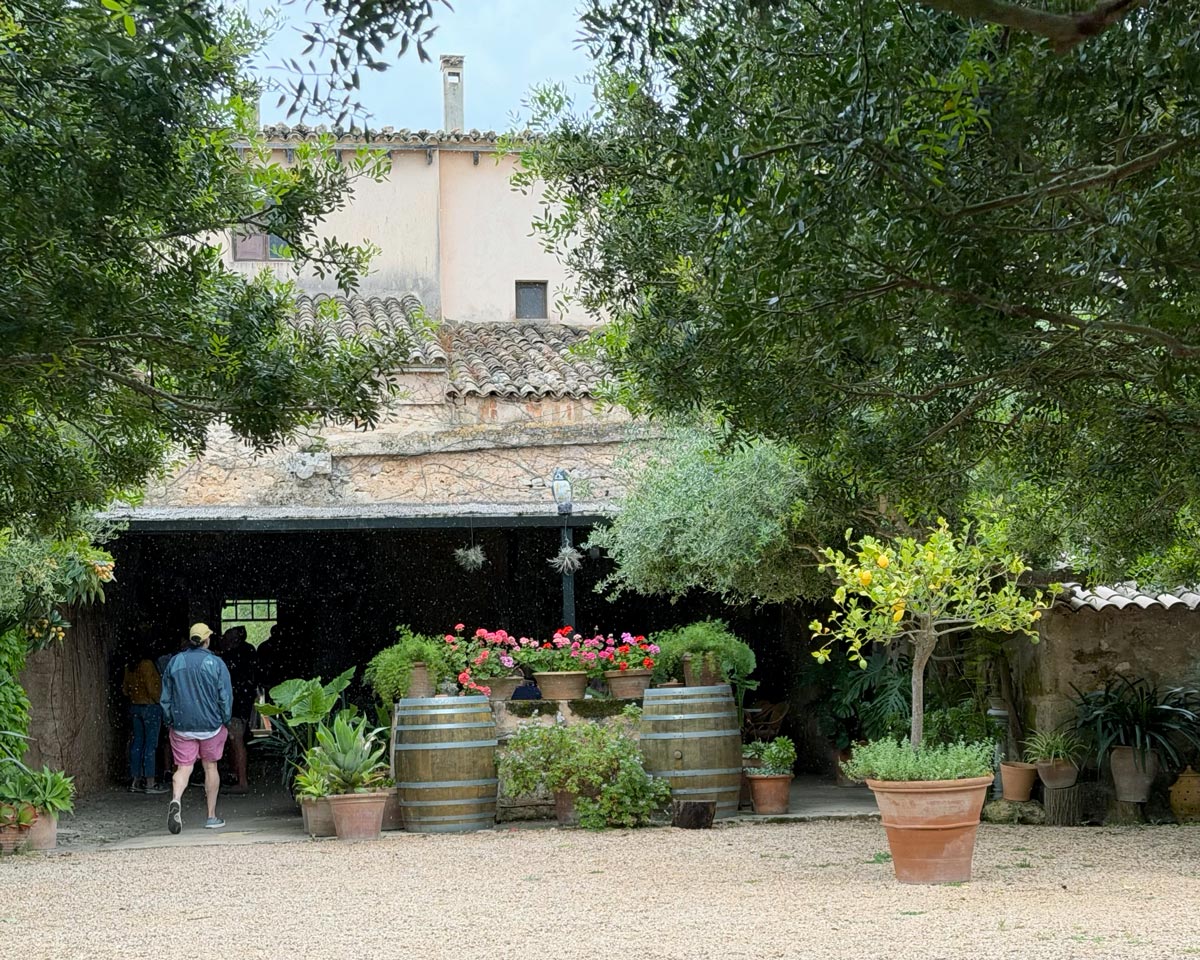
Our first stop was Oliver Moragues, and from the moment we drove into the estate, I knew we had stumbled upon a very special place. We parked right among the grapevines, with the peaceful rhythm of country life unfolding around us. Roosters wandered freely, children played nearby and, at one point, the roosters even seemed to have their own little game of soccer.
It was early May, the shoulder season, and we hadn't made a reservation. We felt particularly fortunate when they were able to welcome us for a wine tasting accompanied by some lovely local cheeses.There was an immediate warmth to the place. Everything felt wonderfully unhurried and authentic.
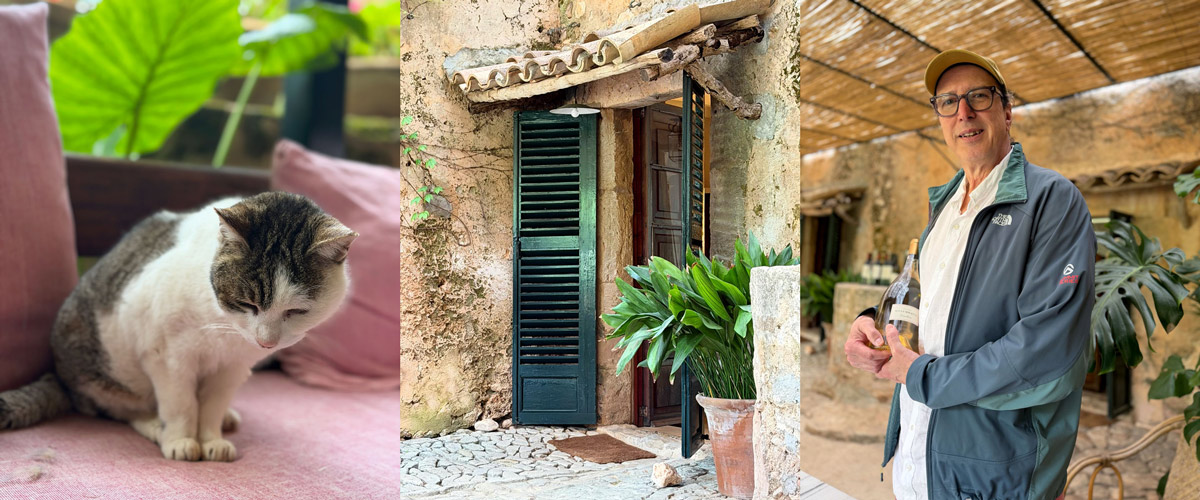
Our tasting took place partly inside an old stone quarter of the estate in a covered courtyard, surrounded by the kind of character that cannot be recreated. Cats stretched lazily in the sunshine, tropical plants softened the old stone walls, thick stone arches framed the space and bougainvillea climbed freely around us, adding splashes of color to the ancient surroundings. With a glass of Mallorcan wine in hand, it was incredibly easy to simply sit back and absorb it all.
The Oliver Moragues family has been connected to the estate since 1511, with more than fifteen generations preserving the land, the vines and the tradition of winemaking. The ancient vineyards are still cultivated by hand, with local grape varieties being lovingly brought back to life. It wasn't the history alone that captured us. It was the feeling of the place; peaceful, authentic and completely untouched by time.
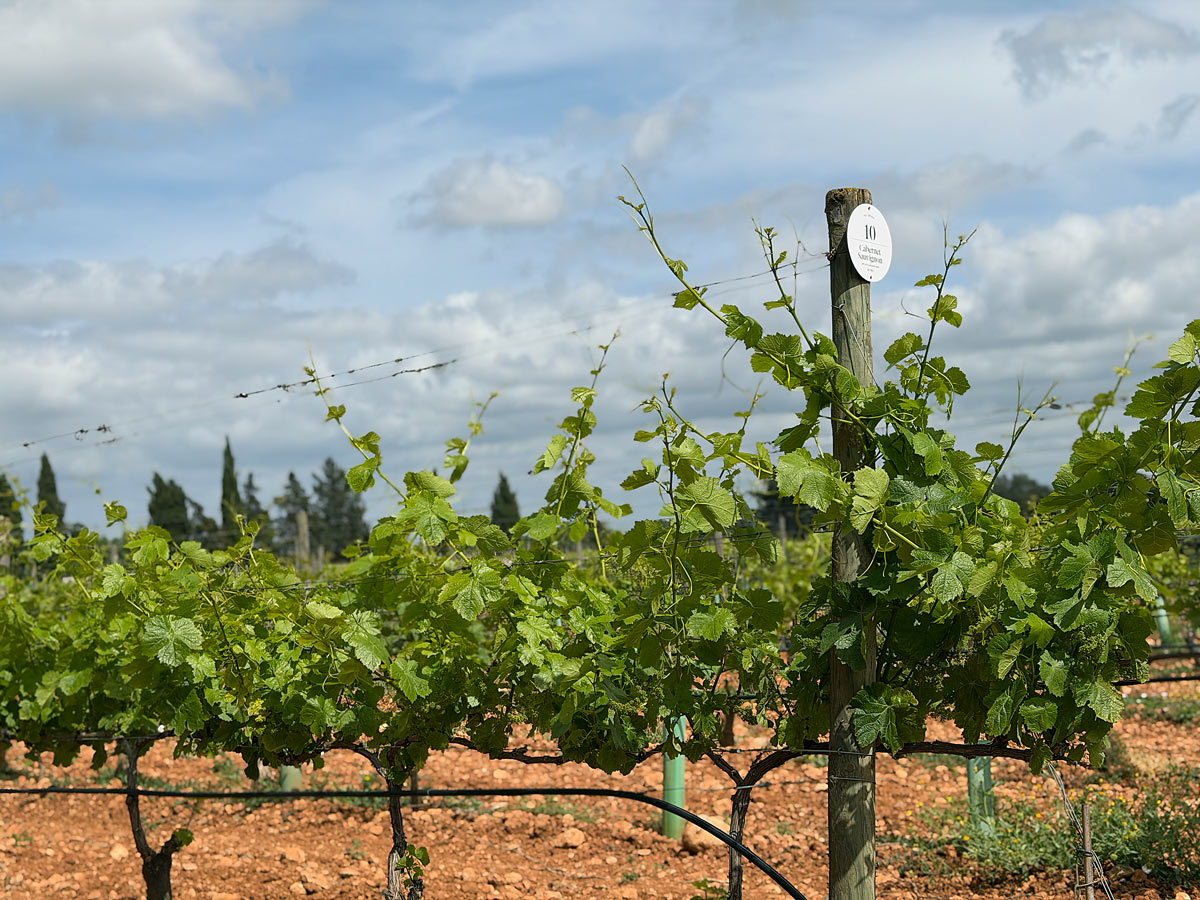
The estate also offers just ten exclusive rooms, surrounded by woodland and vineyards, with two swimming pools. We left Oliver Moragues thinking surely we couldn't find another place quite like it. Yet, somehow, we did.

Our next discovery was Sa Cabana, another beautiful old finca with an extraordinary sense of history. We arrived toward closing time, so our visit was brief, but even in that short time, we could feel the magic.
Dating back to 1578, the estate has remained connected to agriculture for centuries, with vineyards, almond, carob and fig trees forming part of the landscape. Today, the old buildings have been lovingly transformed into an elegant adults-only boutique retreat while retaining the soul of the original finca. Ancient stone walls, the old winery, quiet gardens and centuries-old agricultural buildings have all been meshed into something wonderfully sophisticated; without losing the feeling of the past. It was another completely unexpected find.

By the time we finally turned the car back toward our villa, the day had become so much more than an excursion through the vineyards. We had set out with an unknown itinerary and somehow found ourselves wandering through centuries of Mallorcan history, tasting local wines and being welcomed into two estates that felt wonderfully removed from the modern world. There was something magical about the contrast of ancient stone walls warmed by the afternoon sun, vines stretching quietly across the countryside, the scent of flowers in the air and the feeling that life here moves at a gentler pace.
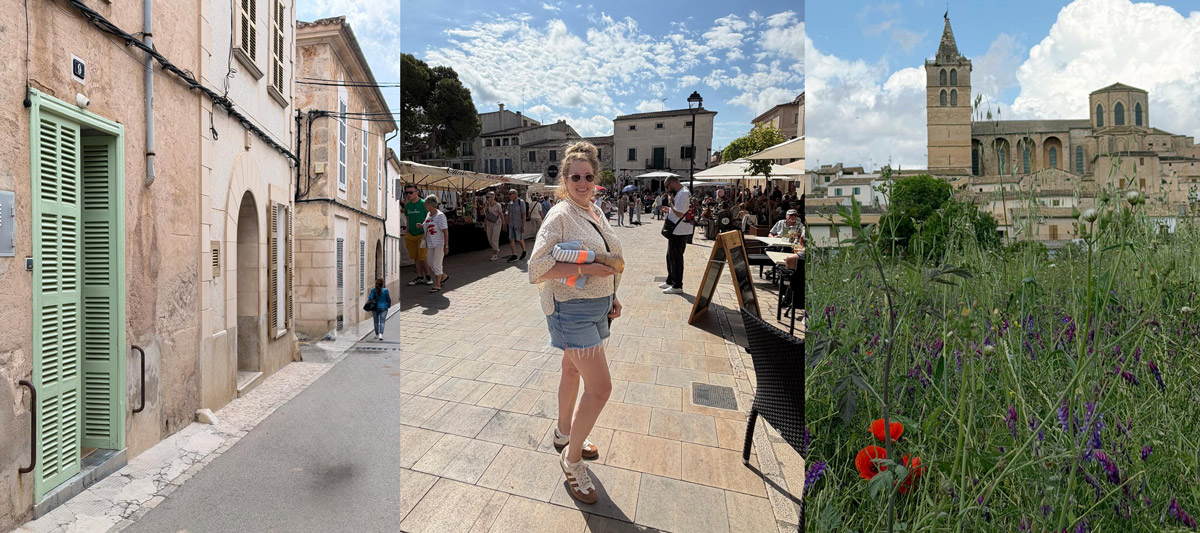
Sineu — A Morning at the Mercat
Our destination for this day was the Mercat de Sineu, a historic and distinctive market tucked into the heart of the island. Every Wednesday morning, the old town of Sineu comes alive. The market doesn't simply occupy one square or a single building; it spills through the ancient streets and charming little plazas, around corners and down narrow lanes, intertwining its way through the historic center. It felt as though the entire village had transformed for the day.
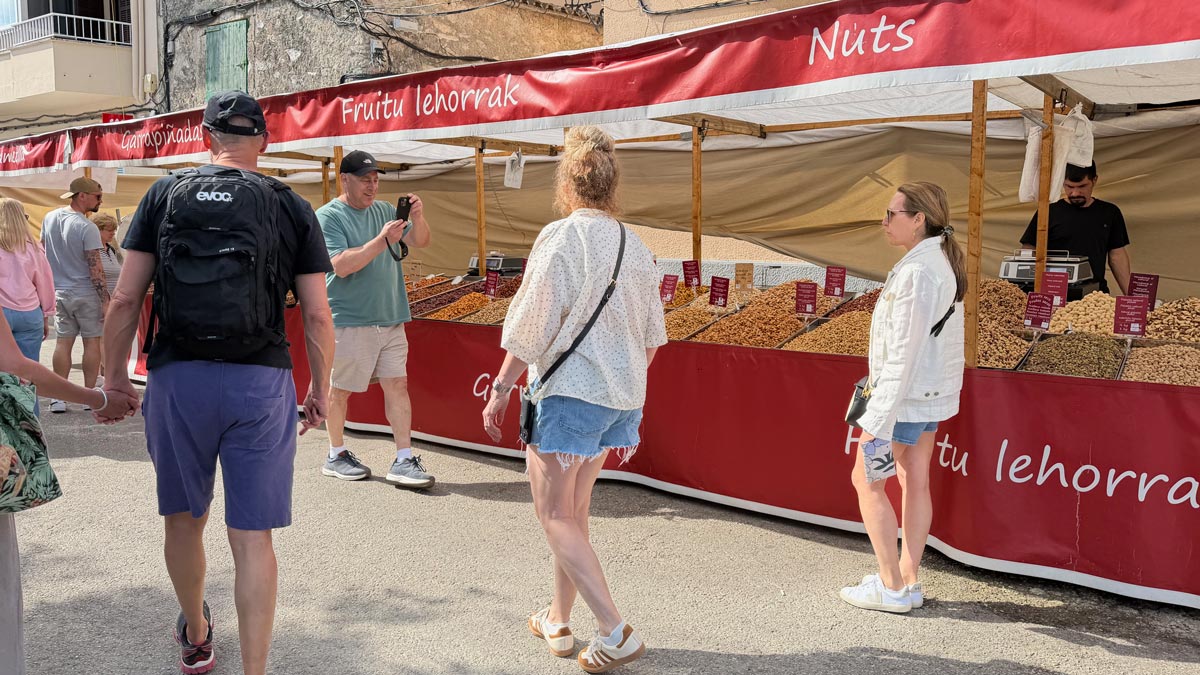
As we wandered, there was something new to discover at every turn. Stalls were overflowing with color and texture; baskets of sun-ripened fruits and vegetables, fragrant flowers, handmade crafts, leather goods, plants, textiles and agricultural tools.

The beautiful old stone buildings and church provided such a wonderful backdrop that even the walk from one stall to the next felt like part of the experience; musicians playing music at every bend and turn. Of course, we could not resist the shopping. We found beautiful handmade Mallorca shell bracelets, locally made ceramic dishes and vases, and wonderful island textiles fashioned into beachwear, pillow cases and adorable children’s clothes. There was also a straw bag that somehow seemed absolutely necessary, and naturally, it came home with us too. Then there was the food. We filled our bags with local fruits and vegetables, along with cured meats and Mallorca cheeses that we knew would make a perfect feast when we returned to the villa.
What makes the Mercat de Sineu especially fascinating is its connection to the island's agricultural traditions. The market has been part of Sineu's history for more than 700 years, dating back to 1306, when King James II formally established its market privilege. Even today, its agricultural roots remain wonderfully visible. It is the only weekly market in Mallorca where live farm animals are still traded, a tradition that makes the market feel very different from more tourist-oriented markets.
After a morning of wandering, shopping and soaking up the atmosphere, we felt incredibly fortunate to have encountered this very authentic piece of island Mallorca. What began as a morning excursion to see a market became one of our favorite days of the trip. Mercat de Sineu was invigorating, exciting and wonderfully unexpected, and for us, it felt absolutely fabulous.
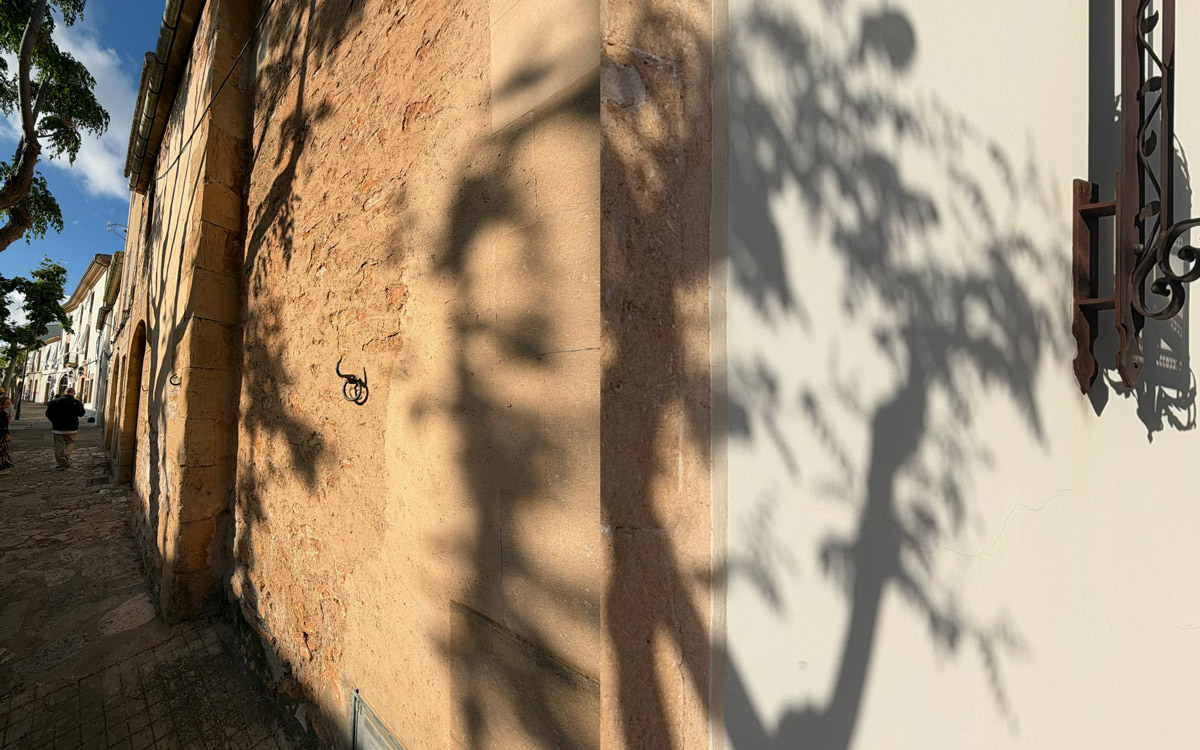
Campos — An Evening of Old and New Mallorca
After the energy and color of Sineu, our next discovery took us in a completely different direction. One evening, we found ourselves in the little town of Campos, where we had dinner at Tess de Mar, a restaurant recognized by the Michelin Guide. We were completely unaware at first that we were dining inside a beautifully restored piece of Mallorca’s history.
Tess de Mar is part of Sa Creu Nova Petit Palais Art & Spa, a boutique hotel created from three old Mallorcan houses, with origins reaching back to the 18th century. The restoration has preserved so much of the soul of the original buildings; the warm island stone, graceful arches and old wooden beams; while art, contemporary furnishings and beautiful design have given the property an entirely new life.
Walking into the hotel and restaurant felt like discovering one of those special places Mallorca seems to reveal, even when you are not looking for them. There was an elegance to it, but it never felt as though the history had been erased. Instead, the old Mallorca and the new Mallorca seemed to exist beautifully together.

Then there was dinner. Tess de Mar's cuisine celebrates the Mediterranean and the island itself, taking local ingredients and traditional Mallorcan flavors and giving them a creative, contemporary interpretation. Our dinner was fantastic; beautifully presented, imaginative and full of those wonderful flavors that make a meal part of the memory of a place.
We loved discovering that what appeared to us simply as a wonderful restaurant was actually part of something much larger; a lovingly restored historic property, now transformed into a small boutique hotel filled with art, design and the spirit of Mallorca.
By now, we were beginning to realize that some of our favorite Mallorca experiences were the ones we hadn't planned. We simply followed the road, chose a restaurant or wandered into a village; and somehow found ourselves stepping into another piece of the island's history. Palma would offer us that same feeling, only on a much grander scale.
Palma — Where History Meets the Sea
Mallorca has a fascinating history that reaches far beyond its reputation as a sun-soaked holiday destination. Palma, the island’s capital, has been shaped by centuries of Mediterranean civilizations, with Roman, Moorish and Catalan influences woven into its streets, architecture and culture. Today, Palma is the cultural and economic heart of the island, sitting beautifully along the Bay of Palma.
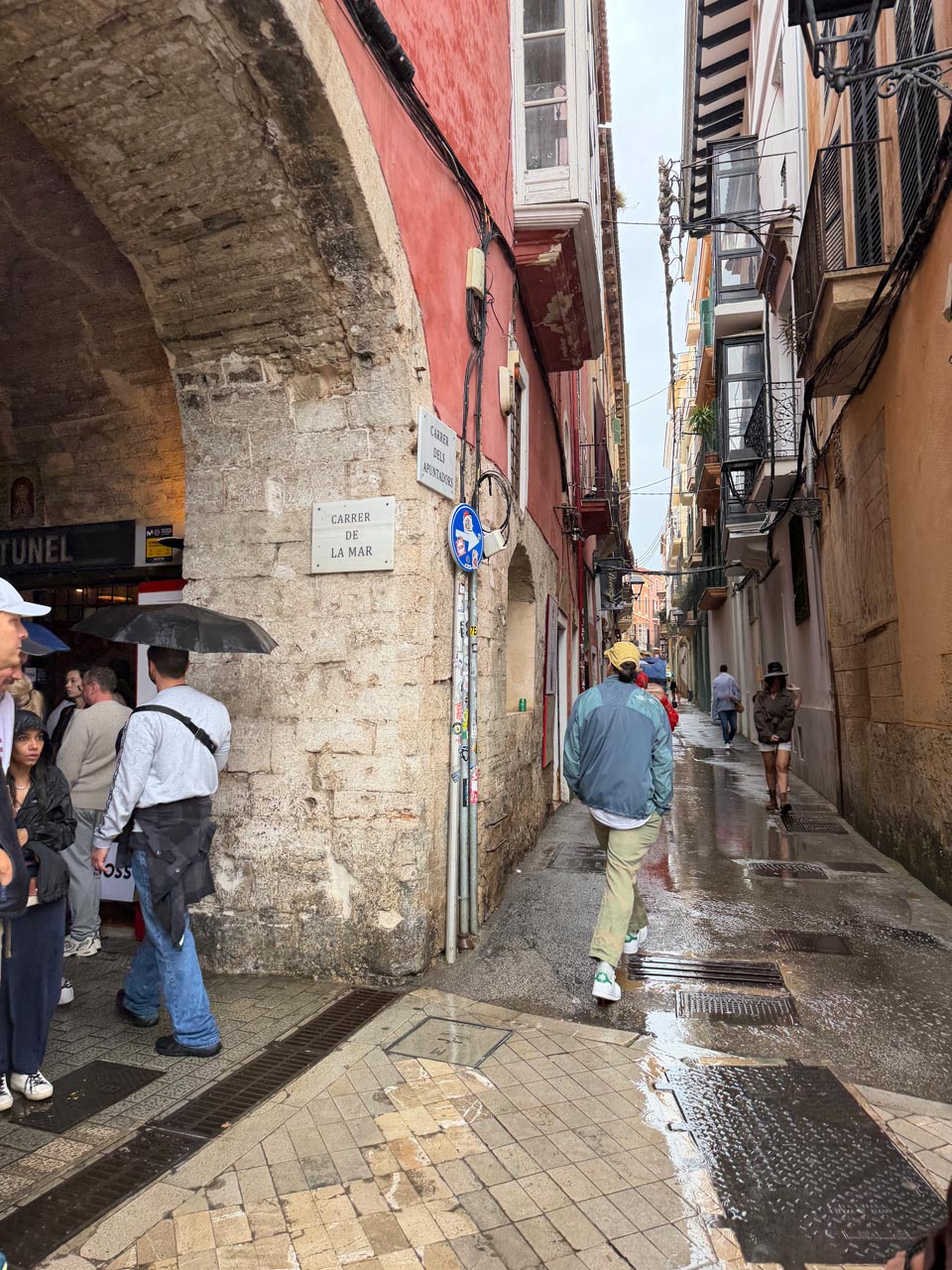
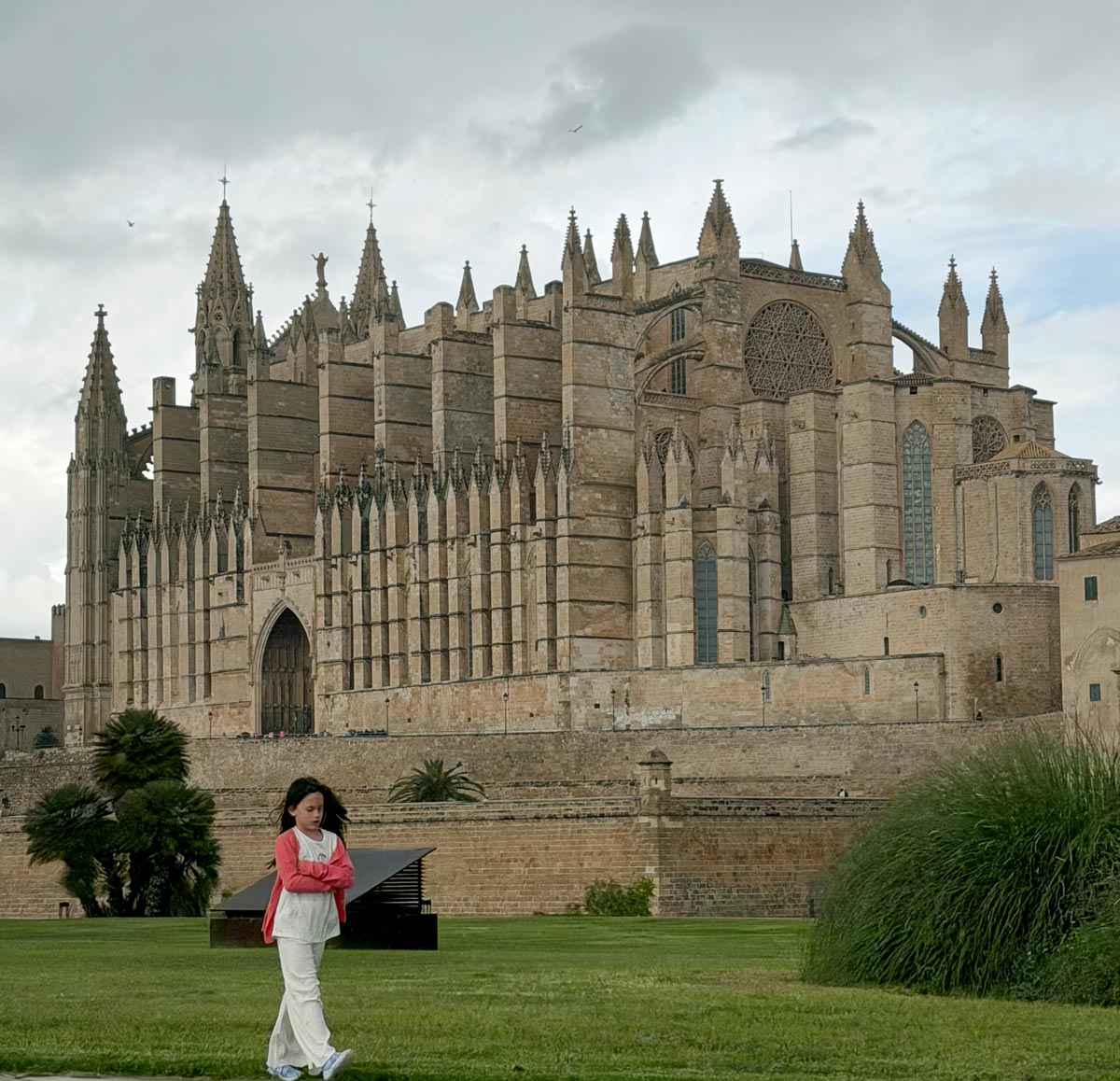
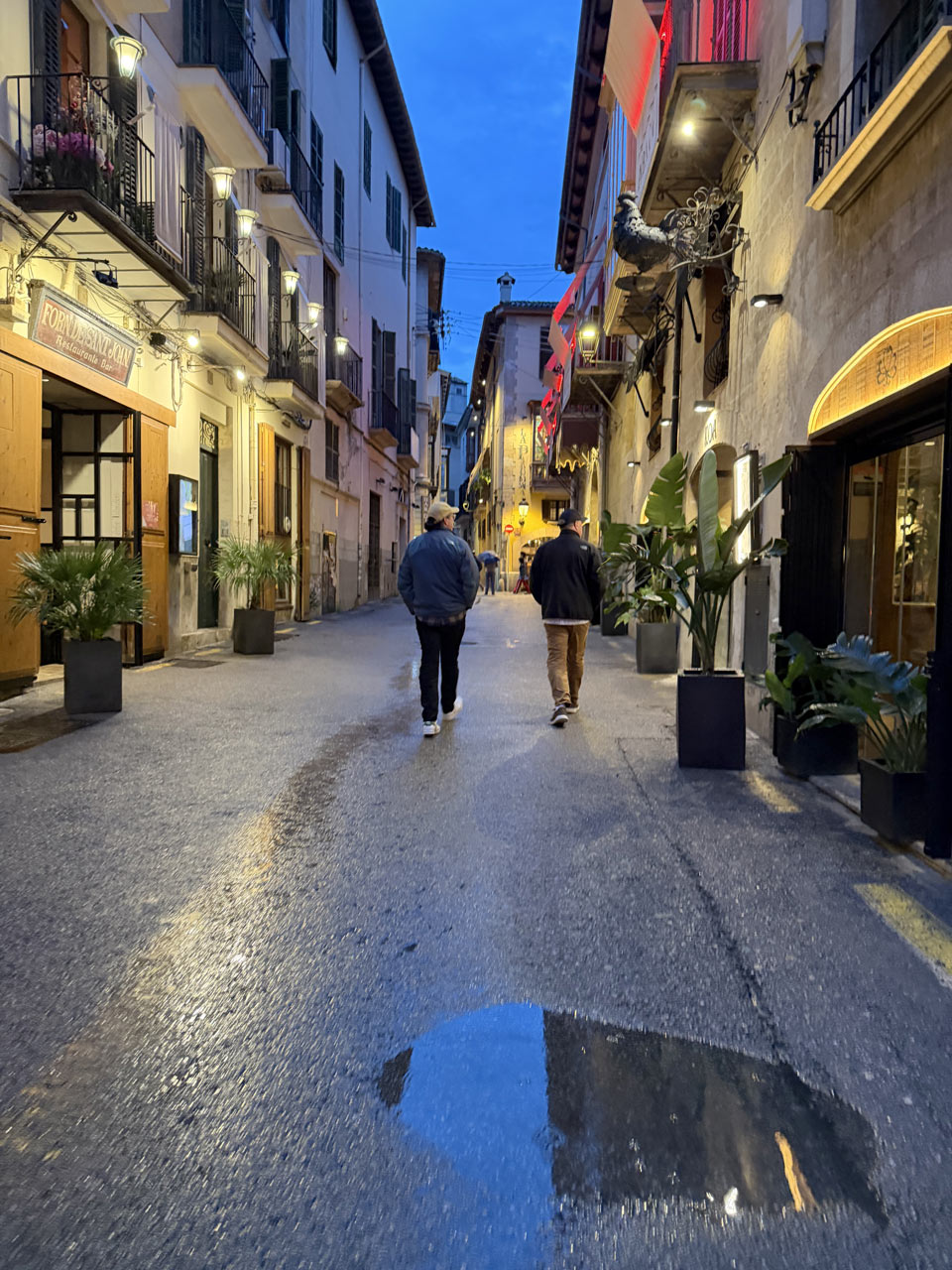
The days we chose to venture into Palma were rainy, but the weather never managed to disappoint us, or ruin the day. If anything, the clouds and occasional showers gave the city a special atmosphere and enhanced capturing the perfect photograph.As we drove into this beautiful waterfront city, we were immediately captivated by the views. The Mediterranean stretched alongside us, while ahead rose the magnificent Cathedral of Mallorca and Parc de la Mar.
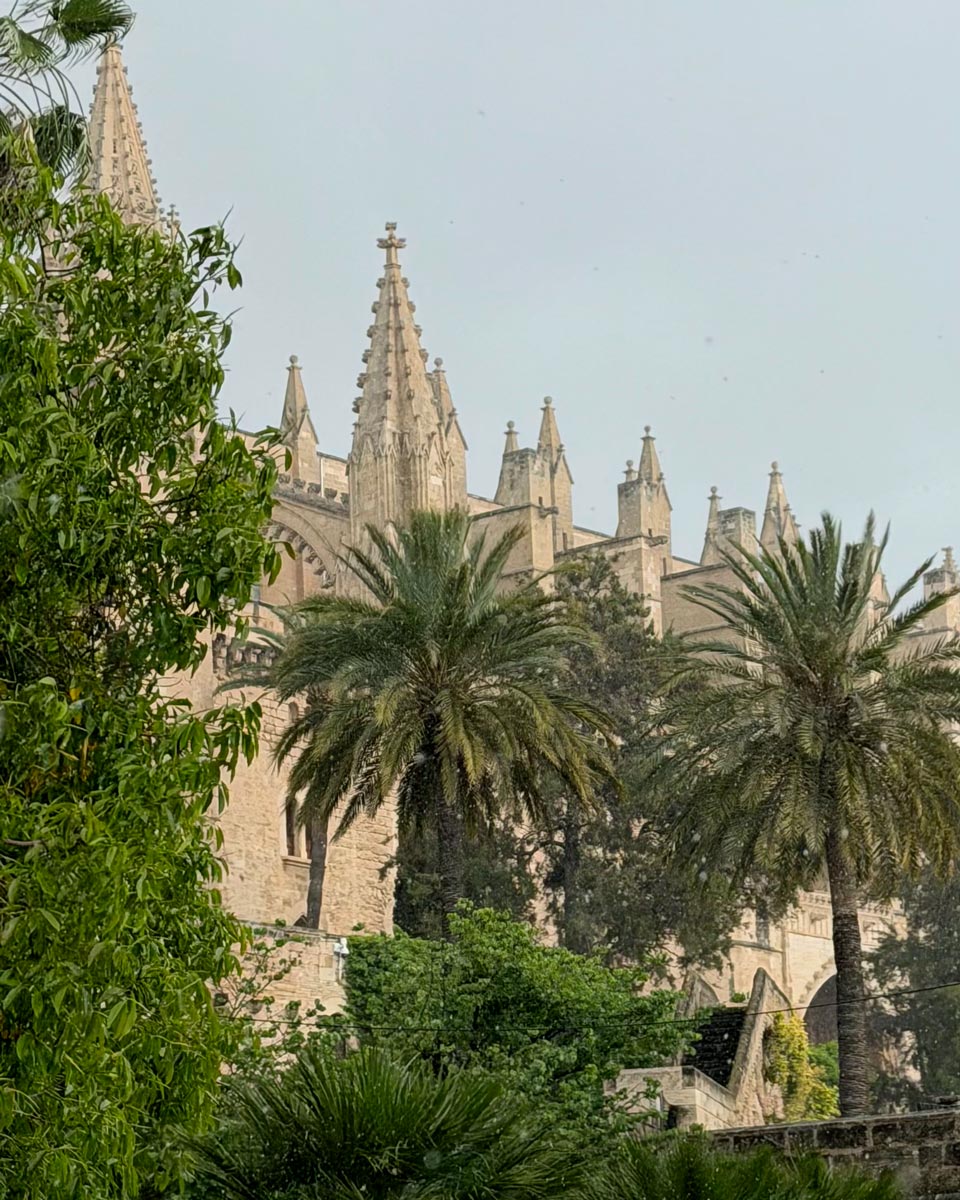
Parc de la Mar and La Seu
Our first glimpse of Palma's historic heart was Parc de la Mar, the waterfront park below the cathedral. Although it looks modern, the area has a fascinating connection to Palma's past. For centuries, the Mediterranean reached right up to the city's medieval walls. The large artificial lake in the park was designed to recall that historic relationship between the city and the sea, and on a calm day it can beautifully reflect La Seu.
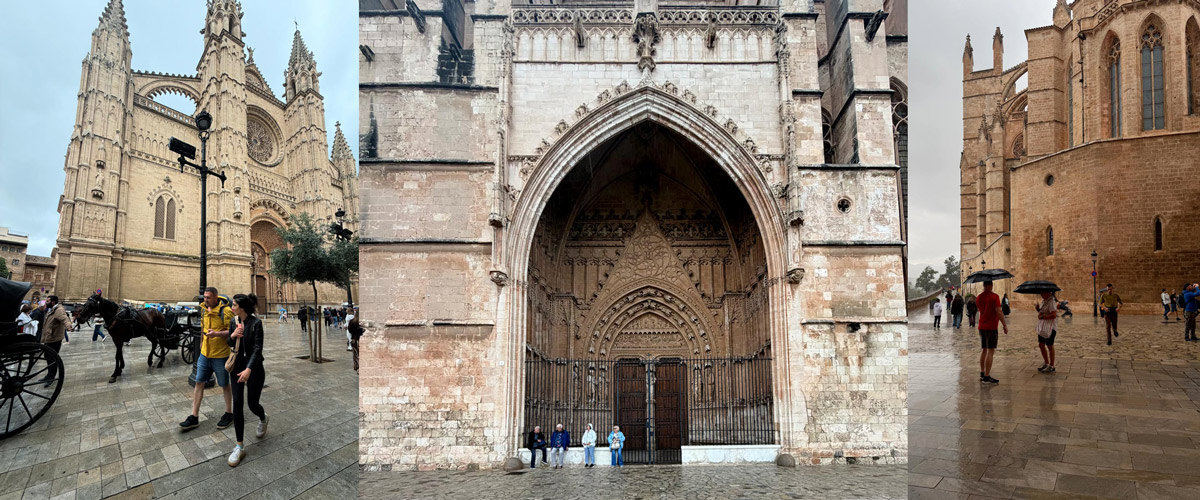
Then there was the cathedral. In our opinion, Palma Cathedral “La Seu” is the defining landmark of the city. Construction began following the Christian conquest of Mallorca in 1229, on the site associated with the city's former mosque. Built over several centuries, its enormous Gothic presence dominates the waterfront. Inside, La Seu is often called the "Cathedral of Light," thanks to its magnificent stained-glass windows and enormous rose window. For us, it was the setting that made the greatest impression. Rising above the old city walls, with the Mediterranean beyond and Parc de la Mar below, La Seu seemed to embody Palma itself.
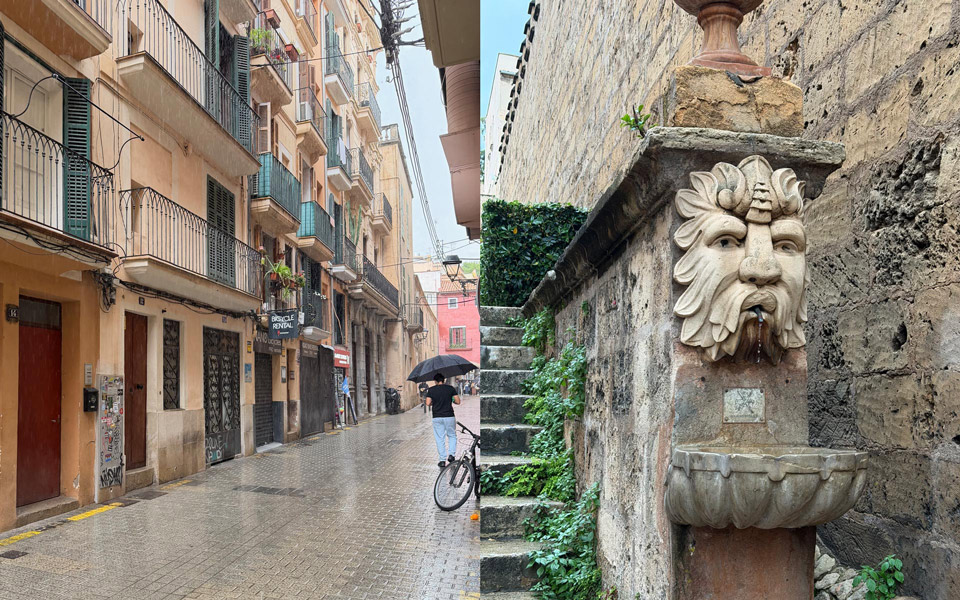
Wandering Ancient Palma to Ábaco
As afternoon turned toward evening, we wandered through the winding streets of the old city. Narrow lanes led between beautiful stone buildings, with restaurants, bars and little storefronts tucked beneath arches and behind heavy wooden doors. Balconies, hidden courtyards and centuries-old architecture seemed to appear around every corner. Eventually, our wandering led us somewhere completely unexpected.

That evening we discovered Ábaco, a bar inside an old Mallorcan mansion in the La Lonja area. We entered through a large, thick wooden door and had no idea what awaited us. After waiting a few minutes, we were seated at the bar on the right on the first floor, where we settled in with a lovely flow of martinis.
The drinks were almost secondary. The mansion itself was the experience. Flowers seemed to fill every corner, while fruit and vegetables were displayed throughout the rooms. Antique furniture, paintings, sculptures, ceramics and candlelight created an atmosphere that felt somewhere between a grand old home, a museum and a theatrical set. It was beautiful, extravagant and completely unexpected.
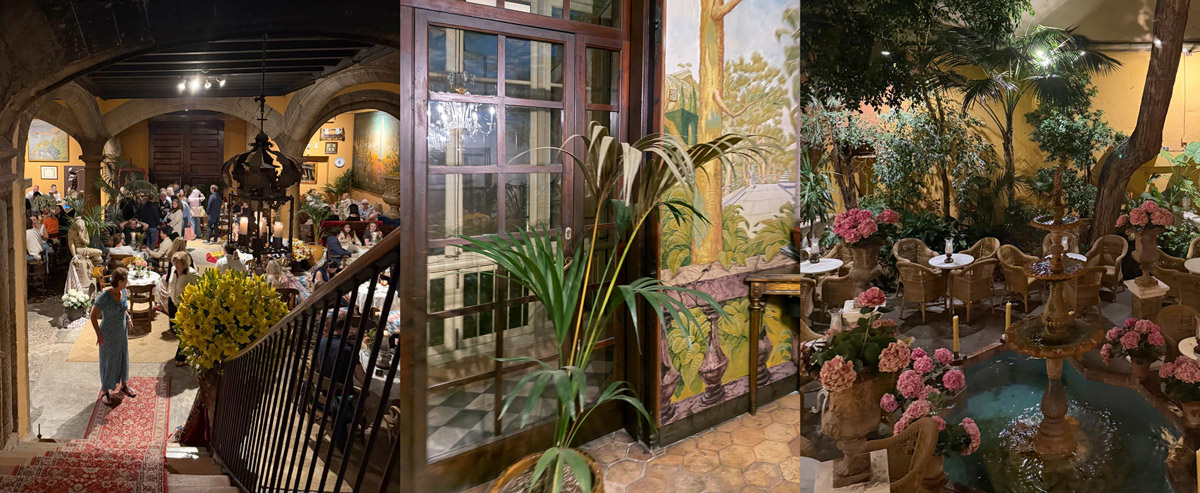
We wandered through the mansion, taking in all the details, before returning to our martinis. The classical music, candlelight and abundance of flowers and fruit made it feel as though we had stepped into another era. On Friday evenings, rose petals are scattered from the upper floors into the garden below. On this rainy evening, we missed them drifting down. Perhaps that was simply another excuse to return someday and experience this wonderfully romantic tradition for ourselves.
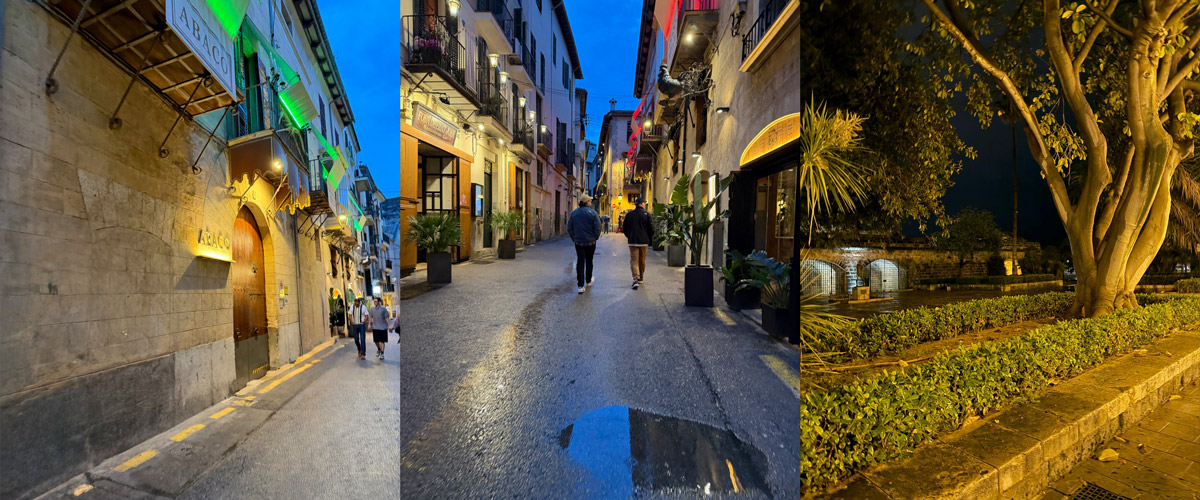
While we didn't experience the brilliant sunshine makes Mallorca famous, we were able to see the city beneath moody skies, passing showers and shimmering streets. We walked beside medieval walls, stood beneath the grandeur of La Seu, wandered through the old city and ended our evening with martinis inside an extraordinary old mansion. Palma gave us more than beautiful sights. It gave us an experience; and some wonderful stories to bring home.

Alcúdia — A Day Made for Photographs
Alcúdia gave us yet another view of Mallorca. Located on the island's northeastern coast, the area is surrounded by the Mediterranean and has a history that reaches back to the Romans, with the ancient city of Pollèntia nearby. The historic walled town, with its stone streets and medieval character, tells one story of Mallorca.

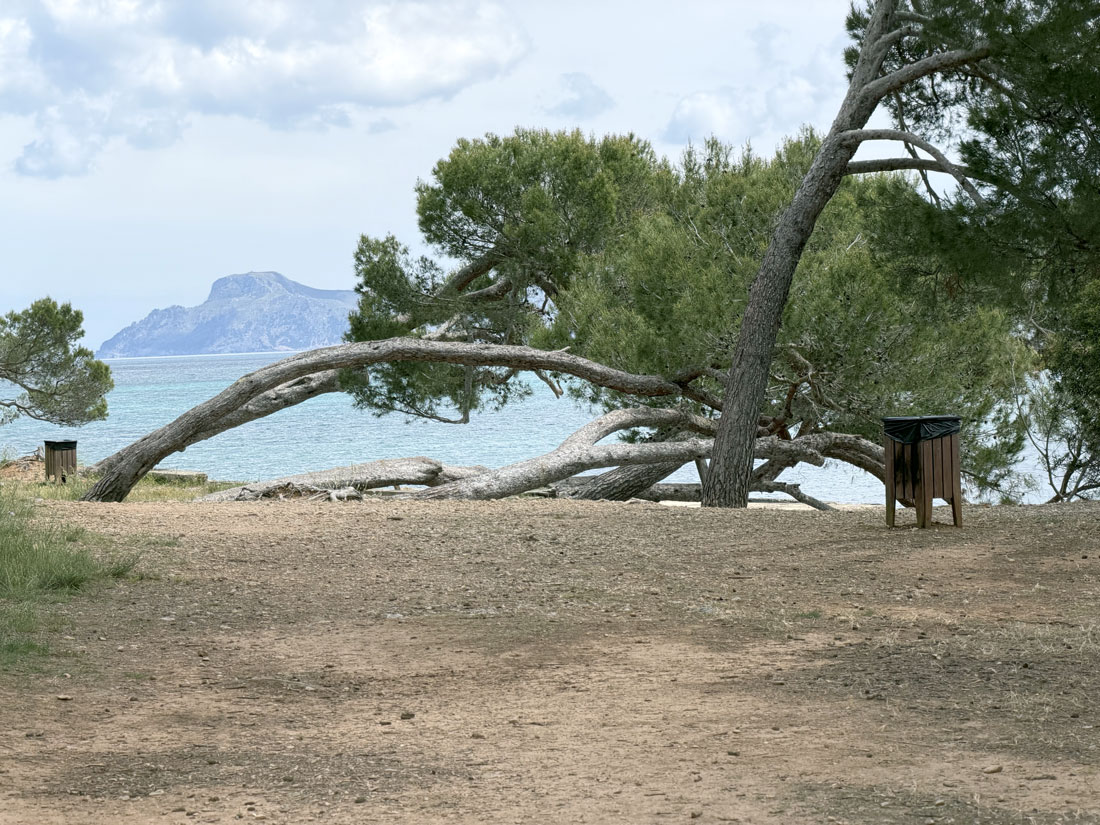
But for us, it was the shoreline that became the real attraction. We walked along the water to and from La Terraza Restaurant & Lounge, taking our time and stopping often to admire the scenery. We remember thinking that this was one of our favorite days for taking photographs. The landscape seemed to change with every few steps.

Trees formed natural arches over the pathway, framing glimpses of the brilliant blue water beyond. The sky was sunny but scattered with clouds, creating constantly changing patterns of light across the Mediterranean.The contrast of the crystal-blue water against the greens and earthy browns of the shoreline were beautiful.What caught our eye most were the textures, the twisted roots of trees, weathered trunks, branches reaching toward the water and bursts of tropical flowers tucked into the landscape.There was something almost sculptural about it all.

For us, Alcúdia stayed with us because of the little things I saw along the way; the shape of a tree, the texture of a root, a flash of flowers, clouds drifting across a blue sky and the Mediterranean stretching out behind it all. It was one of those days when Mallorca seemed to be saying “slow down and take it all in”.

Mallorca — The Joy of Not Knowing What Comes Next
Looking back at our time in Mallorca, I think one of the things we loved most was that we rarely knew exactly what the day would bring.We had our villa, our rental car and a general idea of where we wanted to explore; but much of the time, we simply followed the road.

That led us to mountain villages suspended above the sea, an artist playing guitar beside a roadside shop, quiet lunches in village squares, vineyards that have belonged to families for generations, a market bursting with color, rainy afternoons wandering the streets of Palma and long walks along the Mediterranean where we captured photographs.
Mallorca gave us grand cathedrals and ancient stone walls, but it was just as memorable for the ordinary moments; the schoolchildren heading home, cyclists stopping for lunch, cats sleeping in the sunshine, roosters wandering through a vineyard and flowers growing against an old stone wall. Perhaps that is what made the island so special for us.We were not simply checking places off a list. We were discovering Mallorca one unexpected turn at a time. Everywhere we turned, there seemed to be another reason to stop, look around and take it all in. Highly recommend this island filled with history.

Porto, Portugal — A Brief Encounter
Situated in northern Portugal on the Douro River estuary, Porto is one of the oldest metropolitan areas in Europe and Portugal’s second-largest city after Lisbon. Settlement of Porto dates back to the second century BC by the Roman Republic. The name is derived from Celtic-Latin origins and was originally Portus-Cale, and is considered by some to be the origin of the name Portugal through translation and oral history.
Our stay was a bit short for a city like Porto. There is literally something around every corner to explore: cathedrals from the twelfth century, winding streets that have been a commerce hub for nearly a millennium, monuments, and squares that are everywhere you walk. We stayed on the edge of the Ribeira neighborhood, one of the oldest areas in the city, in a district called Bolhão. Bolhão seemed to be from the nineteenth century and reminded us of parts of Paris or older sections of New York.
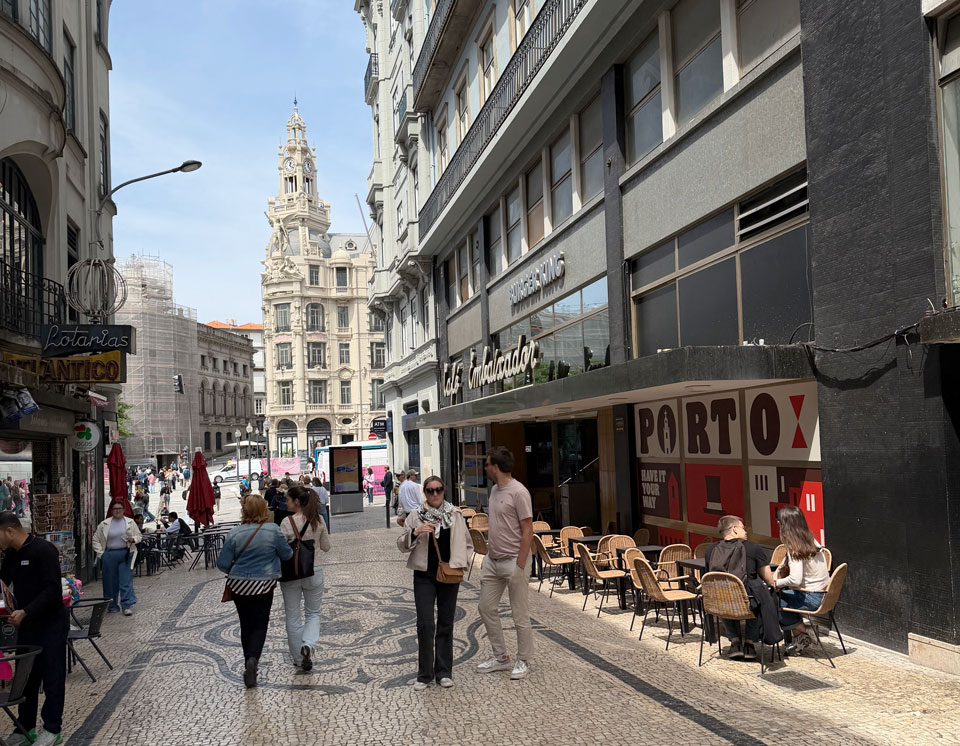
We arrived in the late afternoon and initially set out to explore our immediate neighborhood. The Bolhão Market was next door. A large, open market inside a pavilion, Bolhão Market seemed to have a bit of everything. We could get wine, cheese, meat, fish, vegetables, cured meats, pasta, oils, nuts, and a variety of prepared foods. Everything was fresh and looked and tasted wonderful. We happened to be on the edge of a market area and could easily find any kind of shop. This convenience made our explorations easier as we could stock up on water and snacks to carry with us on our wandering around this beautiful place.

On our first evening, we found a small restaurant near where we were staying named Ameja. Ameja is owned and run by a husband-and-wife team dedicated to sustainable local ingredients and a casual, but elevated experience. We sat at one of the tables in an alcove front window that was a bit tight, but a fantastic spot to experience the local foot traffic. The place was bustling, but not overcrowded. The food, along with the wine recommended, was excellent, featuring some surprising combinations that turned out to be exquisite dishes. It was an incredible start to our exploration.

After dinner, we explored the area a bit and retired to the apartment we had arranged. The place was really exceptional. Modern in design with fantastic attention to detail, the apartment had everything we would need for our stay. We spent our first evening on a mezzanine that featured three windows opening to a shallow balcony overlooking the street. We were close enough to feel the crowds, but private enough to go unnoticed. The weather had cooperated with us, and we enjoyed our first evening completely.
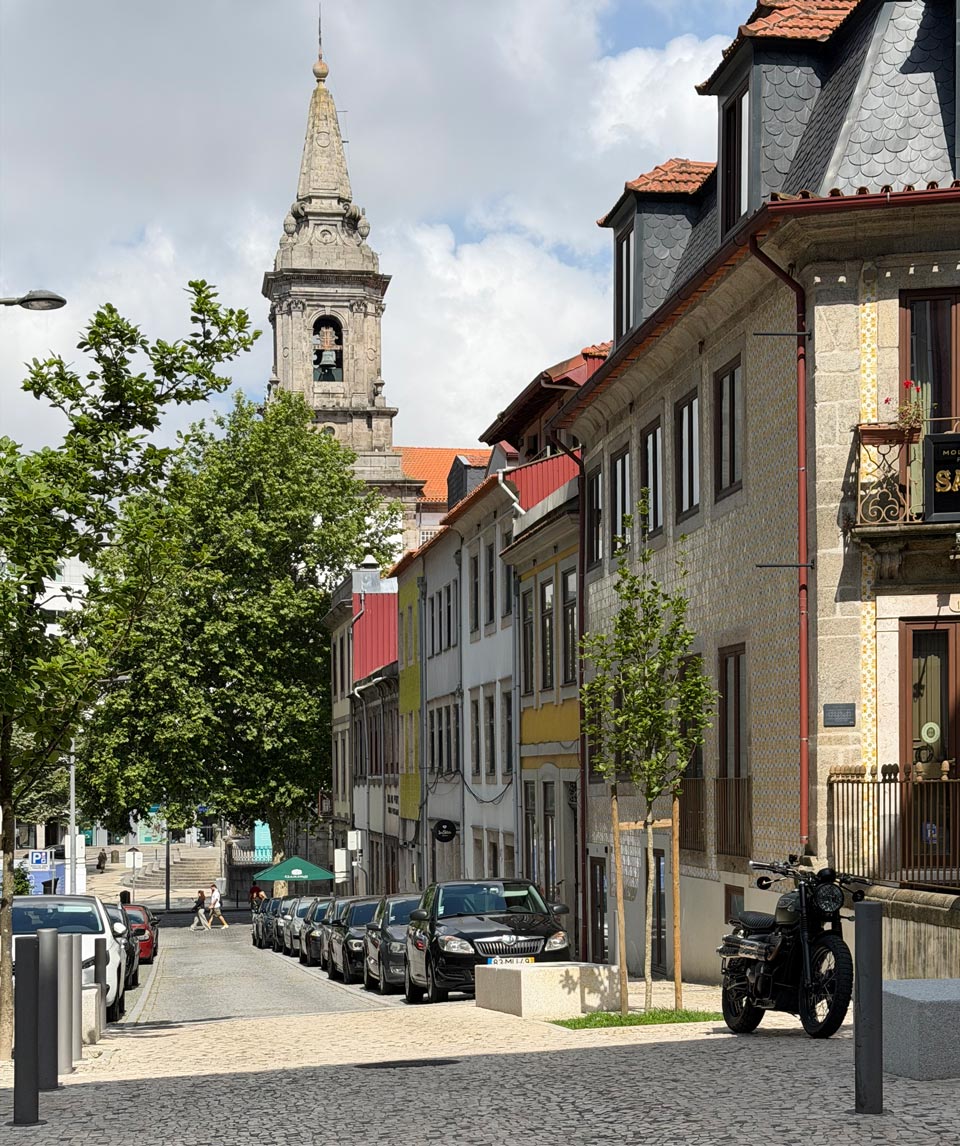
In the morning of our only full day in Porto, we began at a neighboring coffee shop. A bustling place with hordes of people starting their day, the Delta Coffee House proved to be a great start. There were a couple of different shops offering coffee and breakfast, each with several different origins and roasts. The feel was casual, the food was order-and-pickup, and the coffee was excellent.

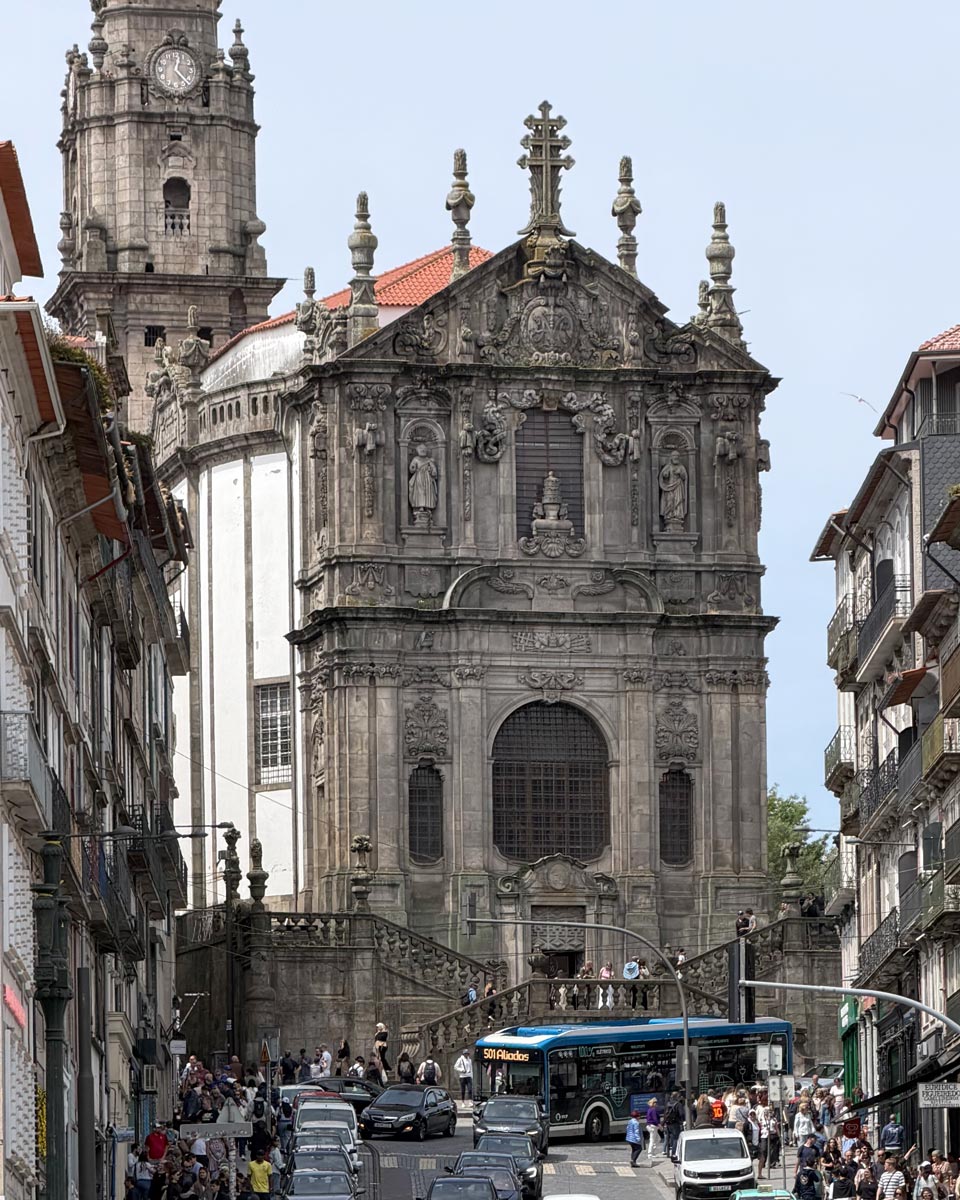
We really didn’t start with an itinerary, and just started wandering toward the older Ribeira area. We did have some items that we looked for, and in a couple of cases chose to bypass due to lines and crowds. As we wandered, we looked for a historical antique bookstore, and instead ended up in an ancient cathedral on a self-guided tour that was incredible. This became our experience repeatedly in Porto. There are so many things to explore that you can literally walk an extra minute and find several alternatives to any attraction.
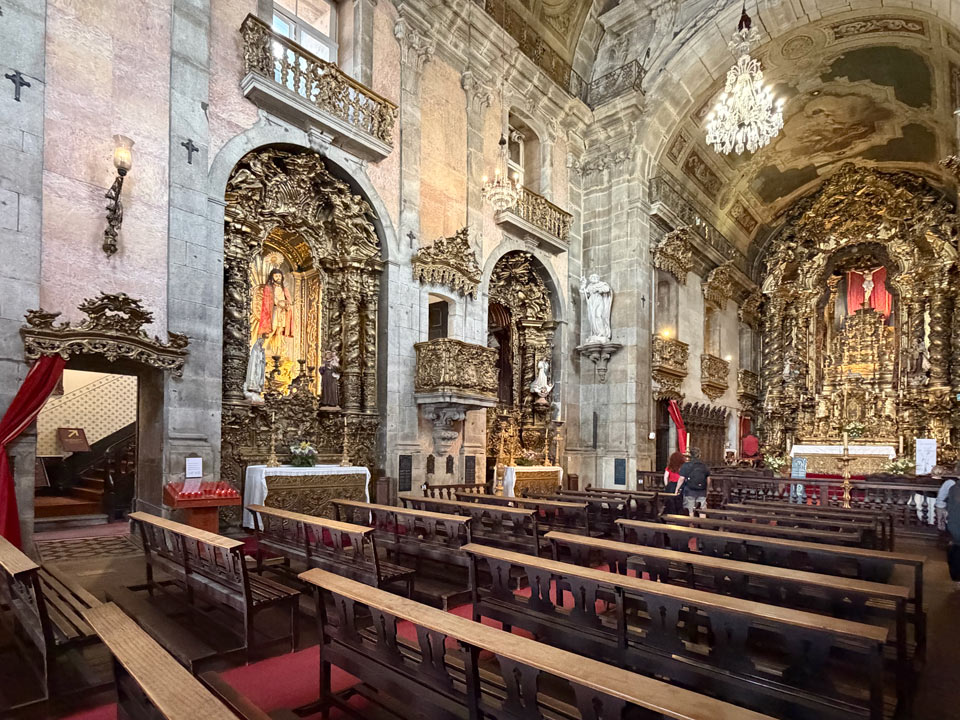


Our self-guided tour of the cathedral was low-pressure and allowed us to stop and check out the items that interested us, as opposed to following a group around. We began in the ancient rectory section of the cathedral. It was seemingly carved into the side of the building, featuring steep stairs and deep, 3- to 4-foot window wells. Behind the altar was a fascinating look at the functioning sections of the cathedral behind the scenes. The pathway then took us to an area accessed up on the roof of the building where we could look out over the city. From here, we were guided through rooms containing artifacts from the history of the cathedral. The path terminated in a cloakroom that featured centuries of the robes and coats worn by the priests. These beautiful garments were presented in a spectacular changing room adjacent to an old library that housed the annuals compiled over the centuries of the cathedral. Finally, we were guided down a gorgeous spiral staircase that ended the tour in the gift shop.
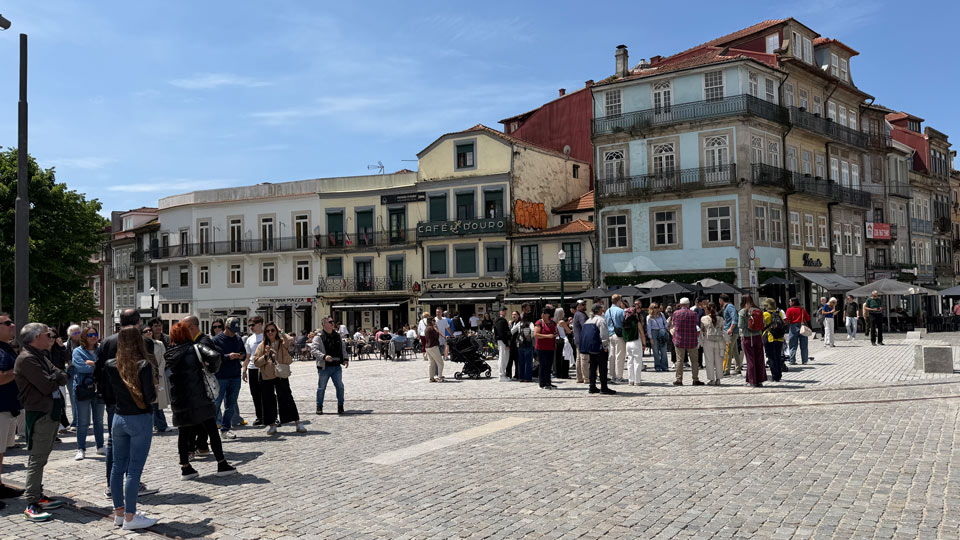
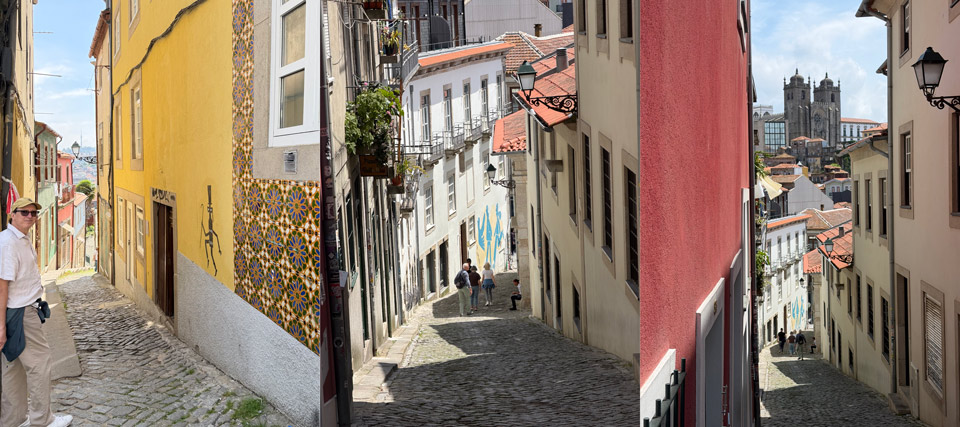
Our next move was to head in the direction of the river. The streets devolved into a maze of medieval paths and alleys. The hills also became more pronounced, and the buildings took on the unmistakable look of a medieval town.
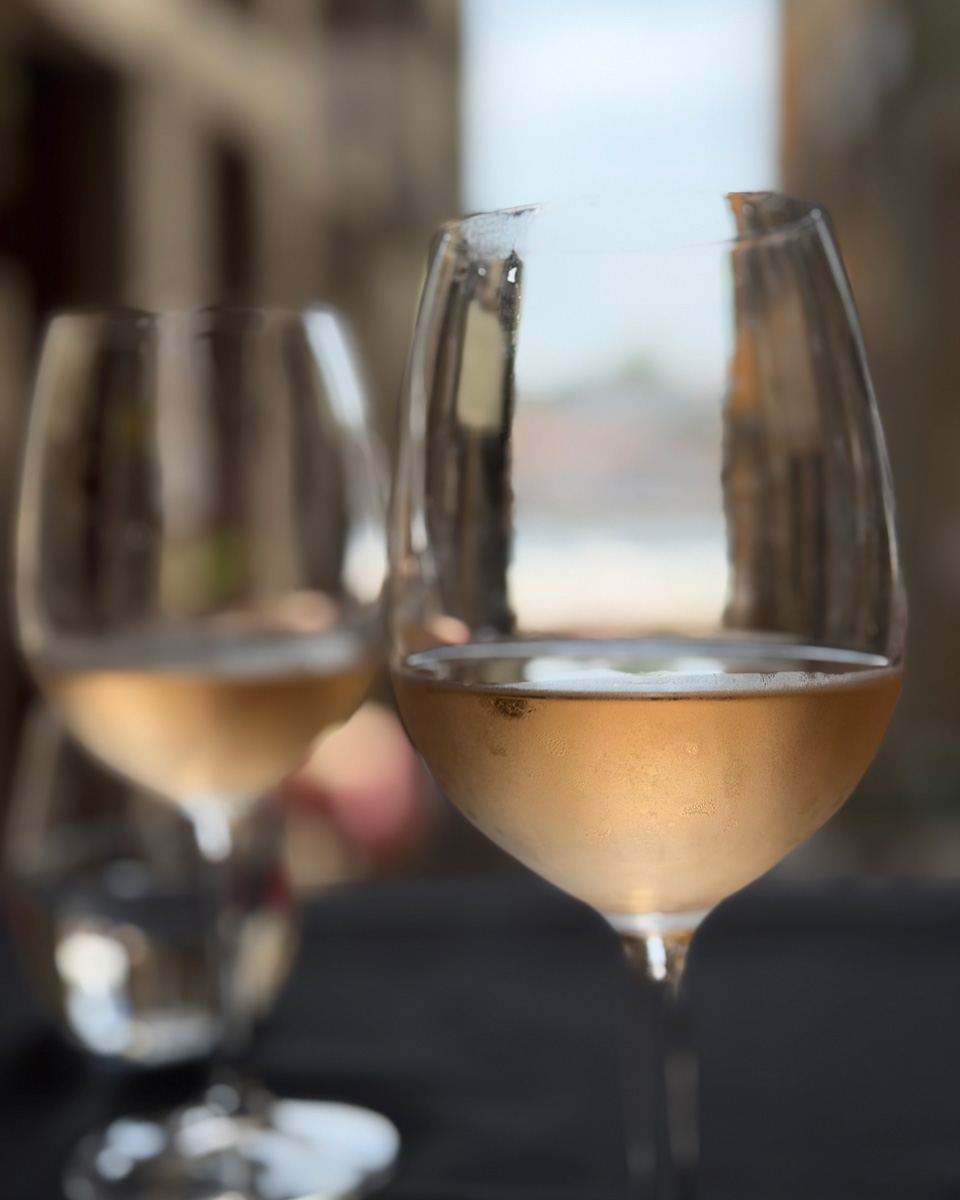

As we made our way to Ribeira’s waterfront, we passed through canyons of medieval structures replete with hanging laundry and vibrant colors. Once we made it to the river, we found a place for lunch just up from the bustle on a quiet side street. Taberna o Papagaio offered outdoor seating on the alley and served as the perfect rest to have a glass of Douro rosé and a light lunch.
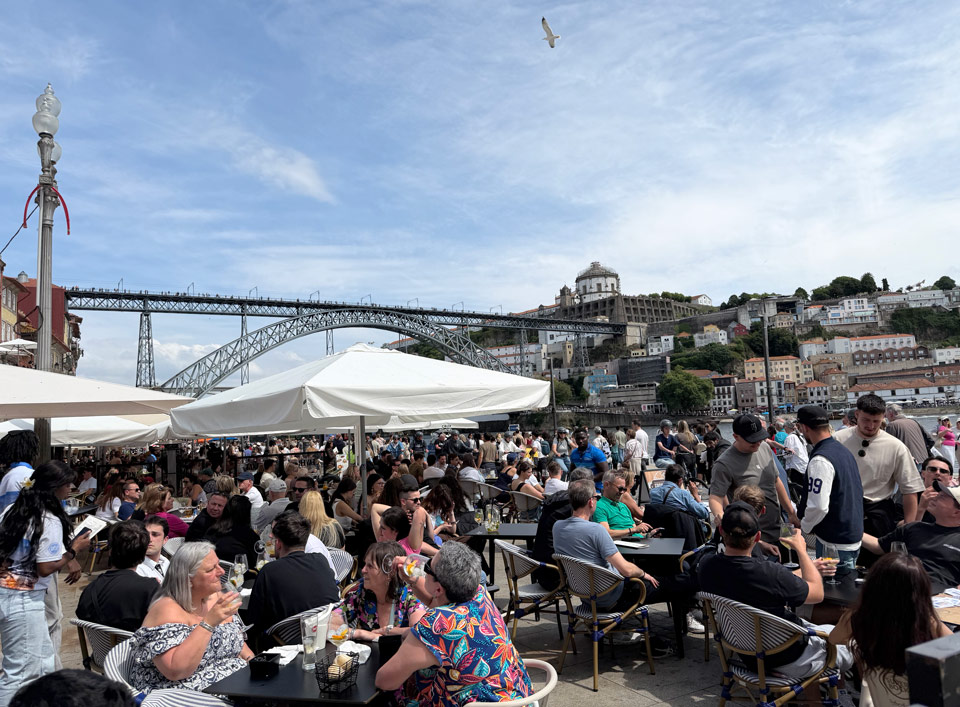
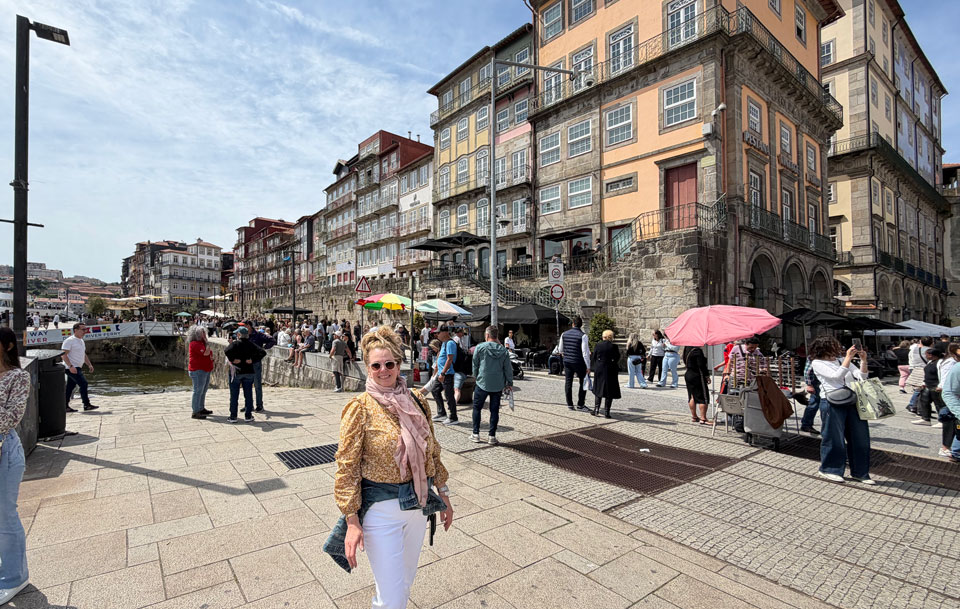
Wandering out into the square that comprises Ribeira do Porto is amazing. We came from a narrow alleyway, and the views just erupted when we arrived at the end of Rua dos Mercadores. With the Ponte Luís I bridge overhead on our left and the vista of the square surrounding us, it was a fantastic sight to behold.

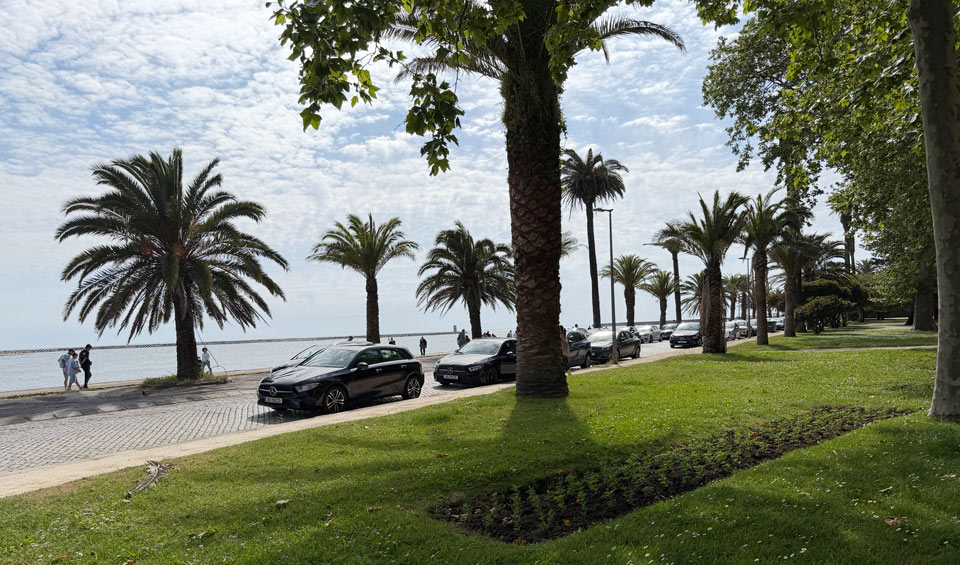
We continued our exploration and found Tram 1, which runs between Ribeira and the coastal area of Porto. The wait was only a few minutes, and the tram rolled along the riverbank on its way, offering wonderful views of this part of the city. The tram terminates at the base of a large park that runs up to the seawalls protecting the river entrance. While there are beaches within walking distance, we chose to explore the park and its surrounding area. Our wait for the returning tram was interesting as we sat in a James Bond-themed cafe and shop for a glass of wine. The shop featured some very nice pieces that were featured in the various movies.

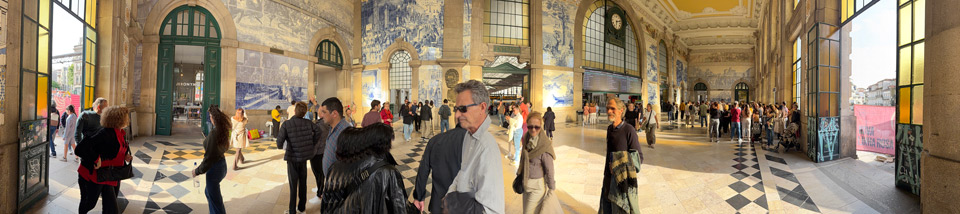
From the tram, we began our return to our apartment and wandered back up the hill past some historic sites, antique buildings, and very interesting shops. Our last stop was the train station, which was only a few blocks from where we were staying. São Bento, while under construction, features a spectacular lobby with giant tile murals welcoming the arriving trains. It was an interesting combination of commuters and tourists admiring the beautiful lobby.

As our whirlwind journey came to a close, we both lingered on a bittersweet realization. One fleeting day felt less like a visit and more like a brief introduction to a city that demanded more discovery. Porto is a masterclass in contrasts—where ancient Roman roots and medieval mazes bleed effortlessly into vibrant local life, modern design, and timeless hospitality. We left wanting more, and a shared promise to return, knowing full well that a single day could only ever scratch the surface of Porto’s extraordinary soul.
This Article May Also Interest You: Mushroom Barley Soup for the Coldest Days
Sintra, Portugal: A Day Inside a Fairytale
Whenever someone asks me what my favorite city was during our two-and-a-half-week Iberian adventure, I always give the same answer.
I don’t have one.
What made this journey unforgettable wasn’t discovering one destination that outshined the other. It was experiencing how different each place felt. Every city had its own personality, its own history, and its own story to tell.
Yet if you asked me about my favorite day, my answer comes much more easily.
That day was Sintra.
For just one magical day, Tim and I traded Lisbon's lively streets for mist-covered mountains, fairy-tale palaces, hidden gardens, and mysterious tunnels. Although it was only a forty-minute train ride from Lisbon, arriving in Sintra felt like stepping into an entirely different world.
Leaving Lisbon
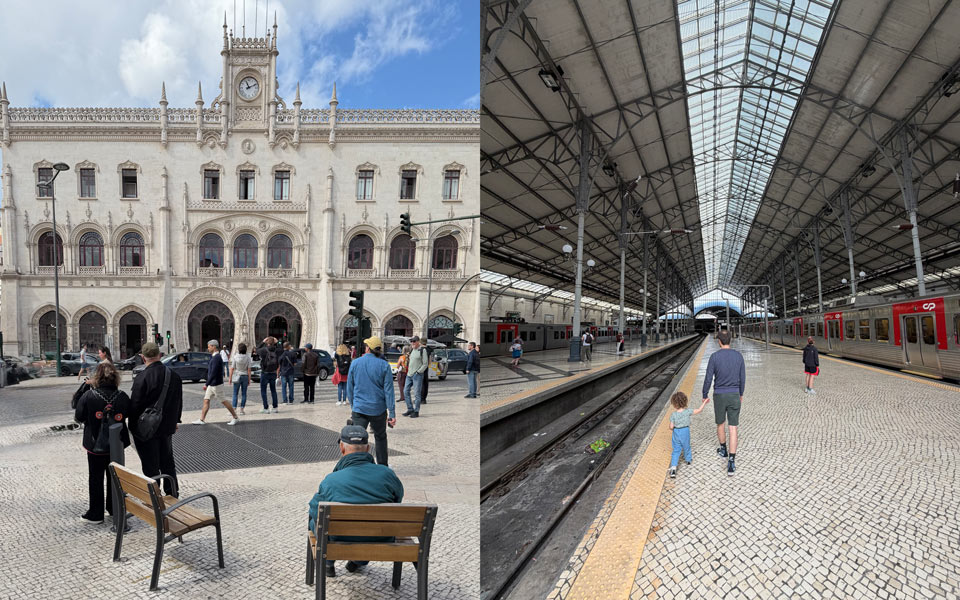
Getting to Sintra could not have been easier. From Lisbon’s historic Rossio Railway Station, the journey takes just under forty minutes by commuter rail.
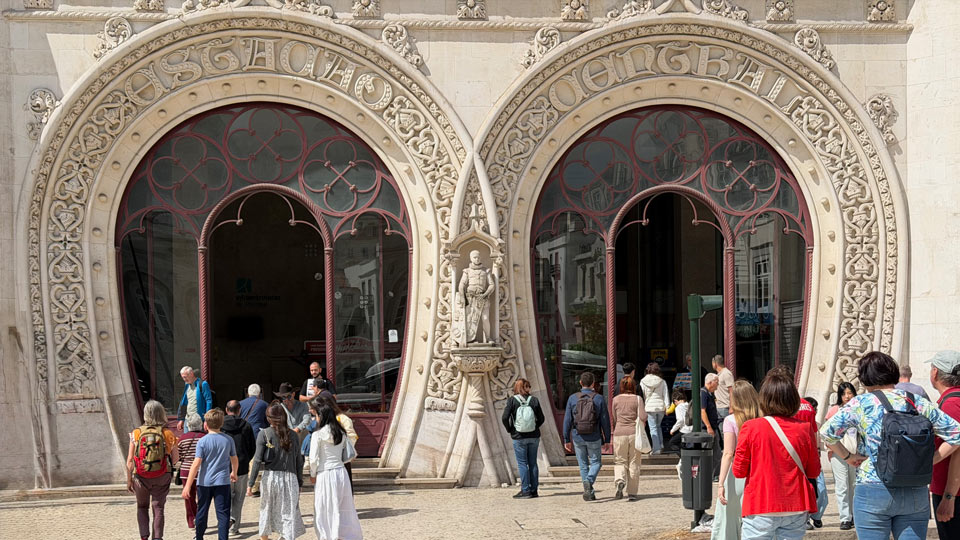
Rossio Station is a destination in itself. Built in the late nineteenth century, its magnificent Neo-Manueline façade is one of Lisbon’s architectural treasures. Twin horseshoe-shaped entrances welcome travelers beneath intricate stone carvings inspired by Portugal's Age of Discovery. Inside, modern trains depart from platforms cleverly constructed above street level, seamlessly blending historic grandeur with contemporary convenience.
As our train rolled northward, Lisbon’s bustling streets gradually gave way to rolling green hills until we arrived in another world.

First Impressions
Stepping off the train, we were immediately welcomed by Sintra’s charming railway station. The modest station is decorated with beautiful multi-colored Azulejo tiles depicting scenes of Portuguese history, rural life, and local landmarks. Even before leaving the platform, it felt unmistakably Portuguese while hinting at the magic waiting beyond its doors.
From the moment we arrived, Sintra seemed wrapped in mystery.
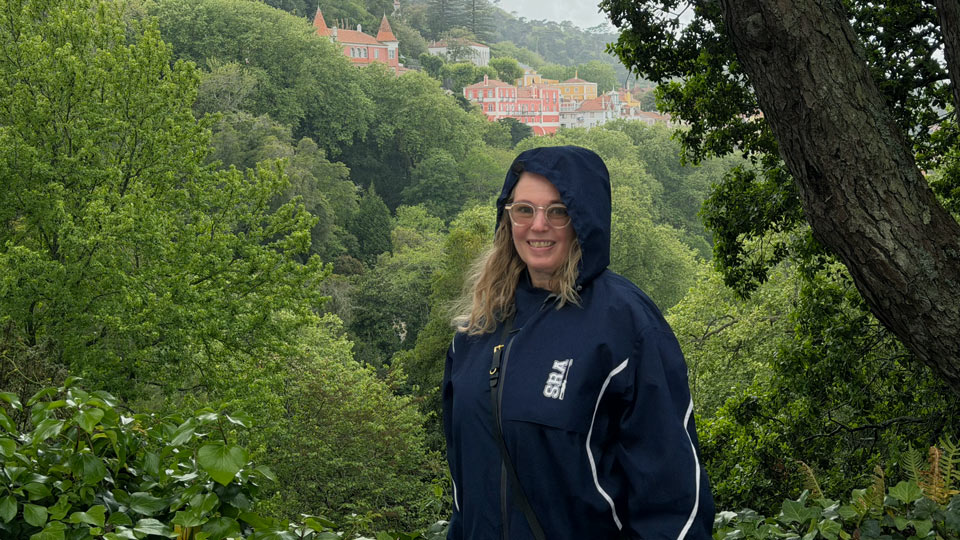
A soft mist drifted through the hills while towering pines and tropical trees disappeared into the clouds above. Colorful palaces peeked from distant ridge lines, hidden behind ancient forests and stone walls. Winding roads climbed effortlessly through the mountains, revealing elegant villas, ornate gates, and secret gardens around nearly every bend.
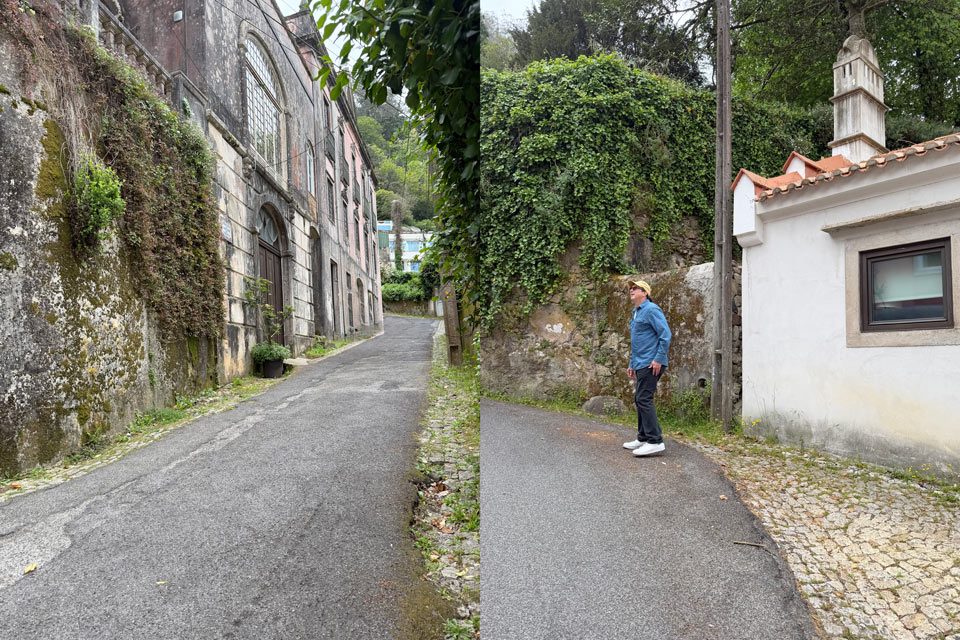
It’s easy to understand why Sintra has inspired artists, poets, and dreamers for centuries.
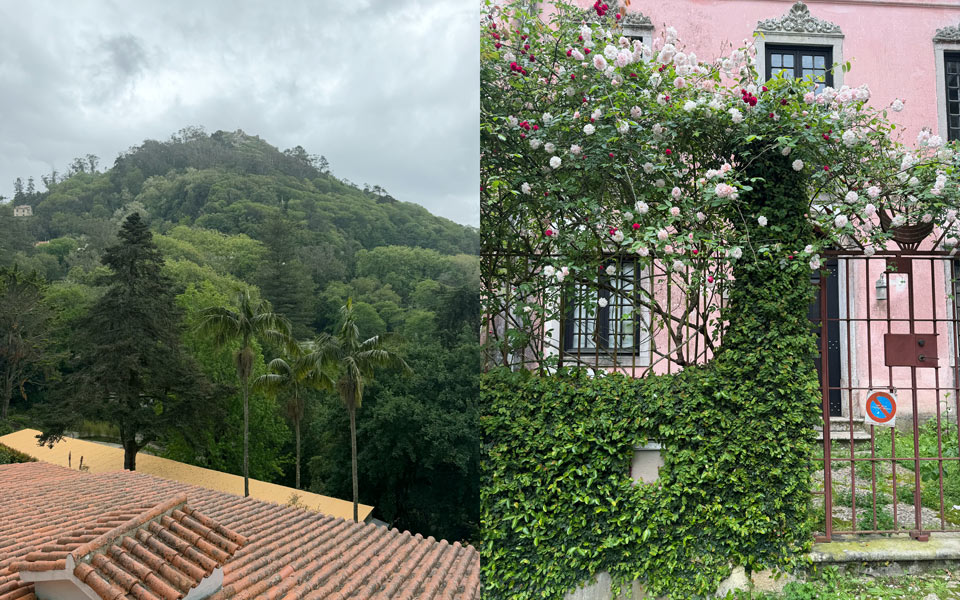
Recognized as a UNESCO World Heritage Site, this historic mountain town served for generations as the summer retreat of Portuguese royalty, wealthy merchants, and aristocratic families. Nestled among the Sintra Mountains along Portugal's Atlantic coast, it is home to magnificent estates, medieval castles, extravagant palaces, and one of Europe's most enchanting historic centers.
The best way to experience Sintra is on foot.
Fortunately, that’s exactly what we had planned.
A Garden Hidden Along the Way
Before tackling the uphill walk to Quinta da Regaleira, we stopped at a tiny café called Salsa for coffee.
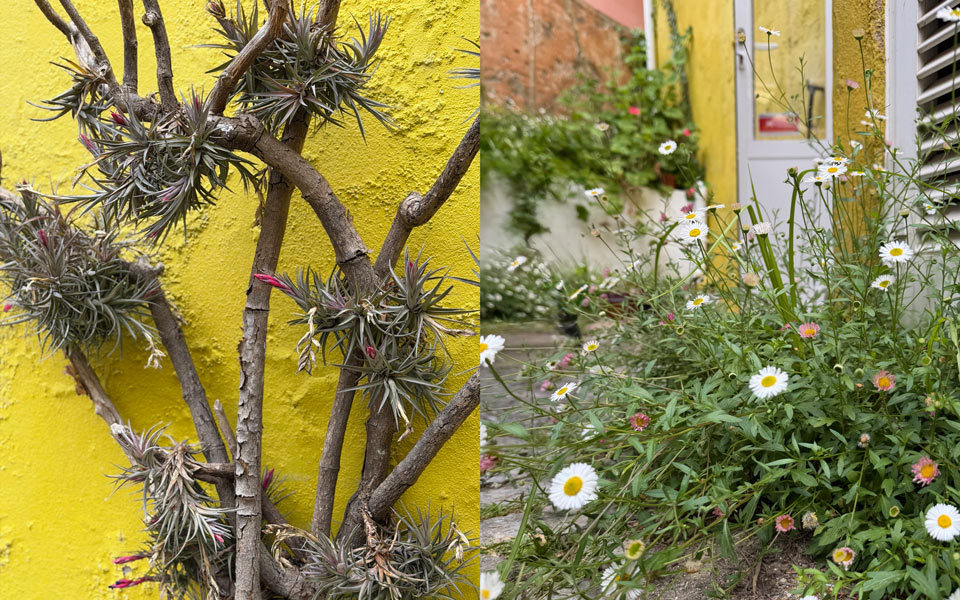
Its quirky garden felt like a secret oasis tucked away from the crowds. Wildflowers spilled across every corner while tropical plants stretched overhead beneath the soft mountain mist. My favorite detail was a collection of air plants artfully mounted on weathered driftwood, suspended against an electric yellow wall that seemed to glow beneath the gray skies. The vivid colors transformed an ordinary courtyard into something delightfully unexpected. A place where we happily lingered over coffee before continuing our climb.
The Walk to Quinta da Regaleira
The thirty-minute walk to Quinta da Regaleira became part of the adventure itself.
Unlike many of Sintra’s attractions, city buses don't stop directly at the estate, leaving visitors to arrive either by foot or by car. We happily joined the steady stream of travelers making the gradual climb through the winding mountain roads.

Every few minutes another breathtaking estate appeared.
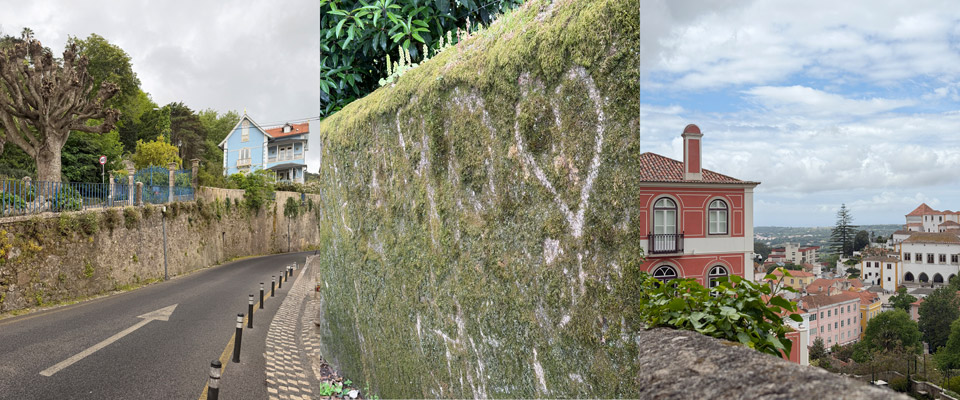
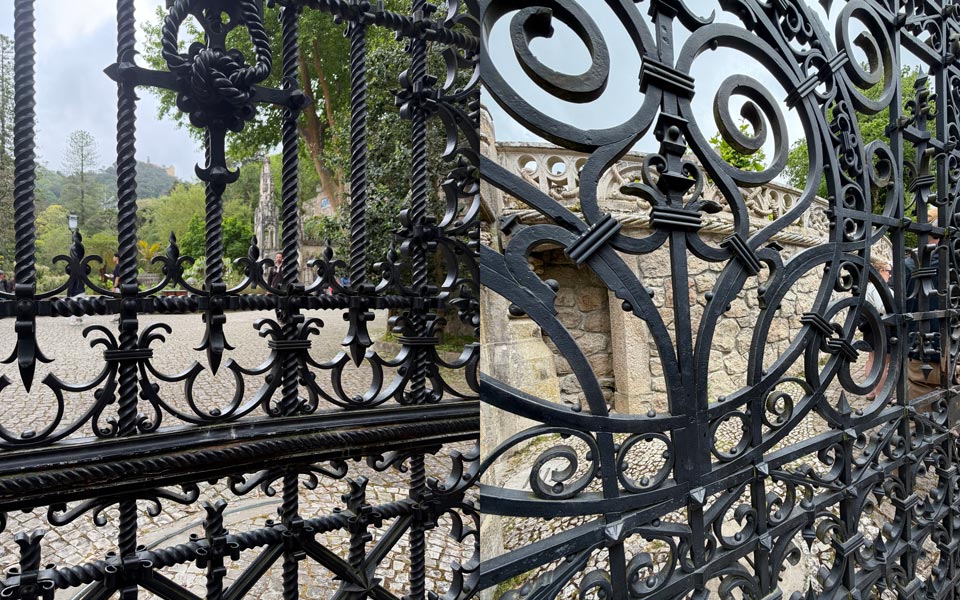
Elegant stone walls disappeared behind towering cypress trees. Massive wrought-iron gates hinted at private gardens hidden from view. Ivy draped across centuries-old villas while elaborate balconies overlooked lush valleys below. Many homes resembled miniature castles themselves, each with ornate towers, carved archways, colorful tile work, and beautifully manicured gardens that seemed lovingly tended for generations.
Even the doorways were works of art.
Every curve in the road offered another postcard-worthy view.

Then suddenly, almost unexpectedly, we spotted the stone wall marking the side entrance to Quinta da Regaleira.
We rounded the final corner with growing anticipation, climbed the last stretch of hill, and soon found ourselves standing at the entrance to one of Portugal's most extraordinary estates. What a romantic palace indeed!
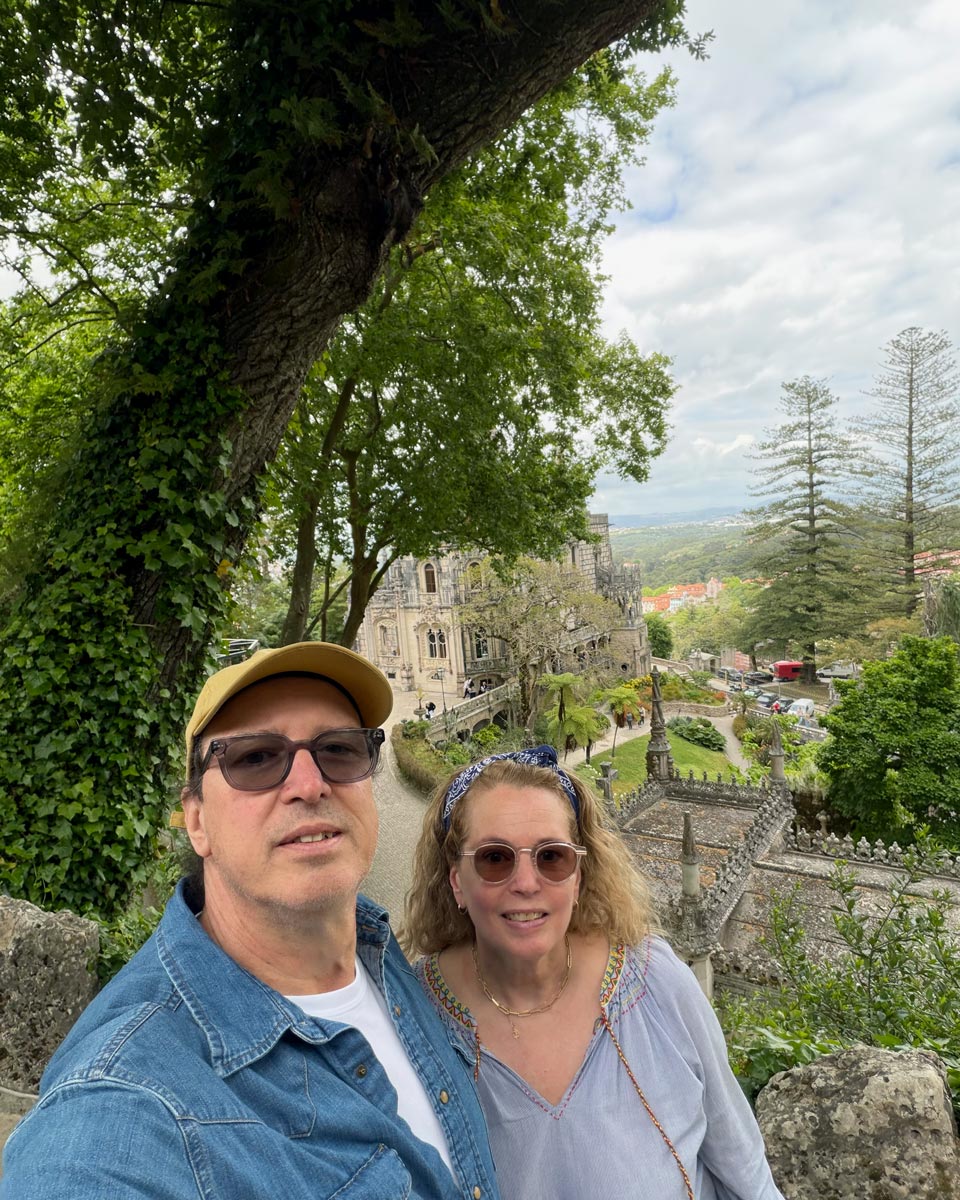
Quinta da Regaleira
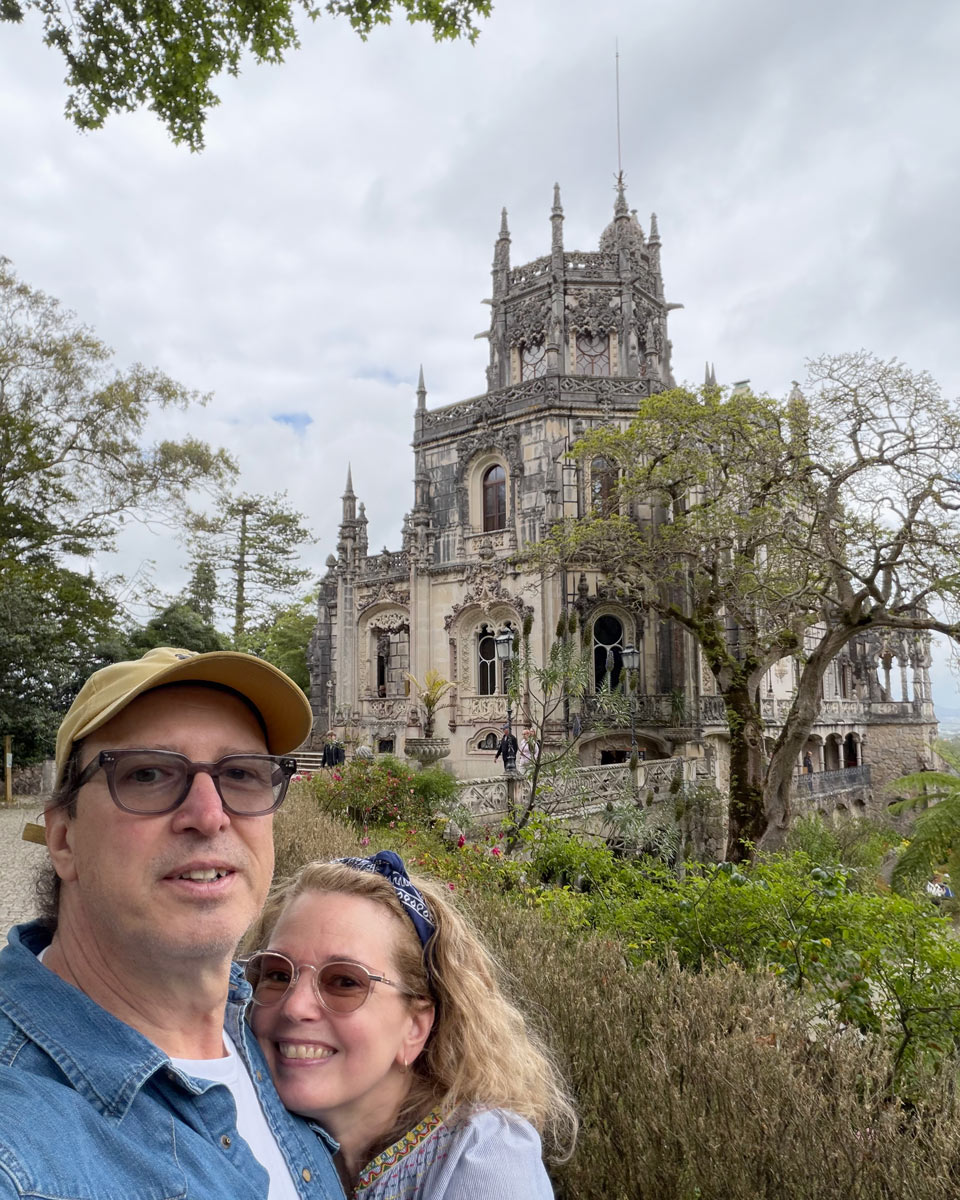
Built between 1904 and 1910 for wealthy businessman António Augusto Carvalho Monteiro, Quinta da Regaleira is unlike any palace I've ever visited.
Monteiro hired Italian architect Luigi Manini to design an estate filled with Gothic, Renaissance, Manueline, and Romantic influences, while landscape architect Francisco Xavier Reis de Lima transformed the surrounding grounds into an elaborate landscape of symbolism and mystery.

Today, the ten acre estate is owned by the Municipality of Sintra, which carefully restored the property before opening it to the public in 1998. Visitors explore the grounds through self-guided tours, with timed entry helping manage crowds. We purchased our tickets online while waiting at the train station that morning. This decision saved valuable time once we arrived.
From the moment we entered, it felt less like touring a historic property and more like wandering through an elaborate fantasy novel.
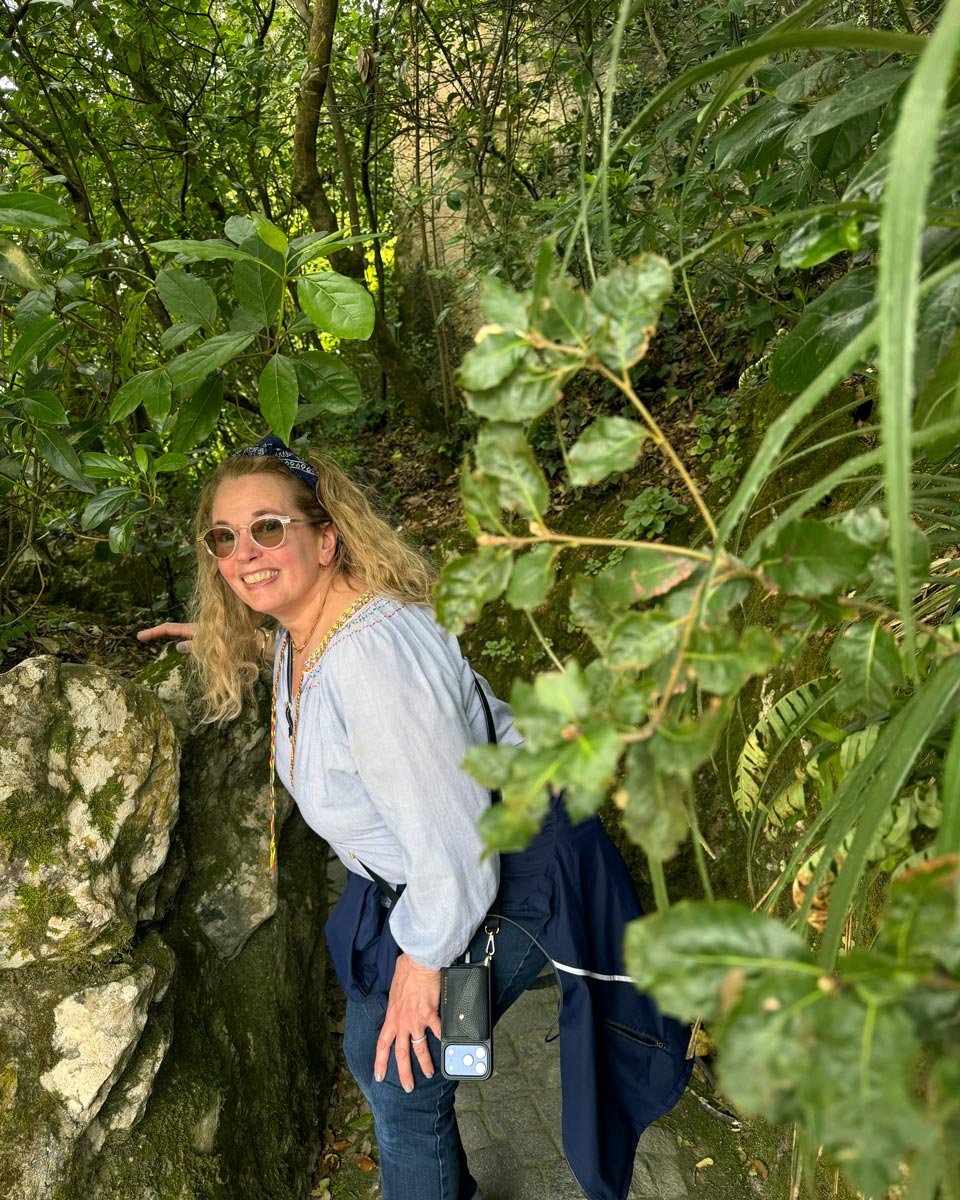
Gardens of Mystery
We began exploring the sprawling gardens first.
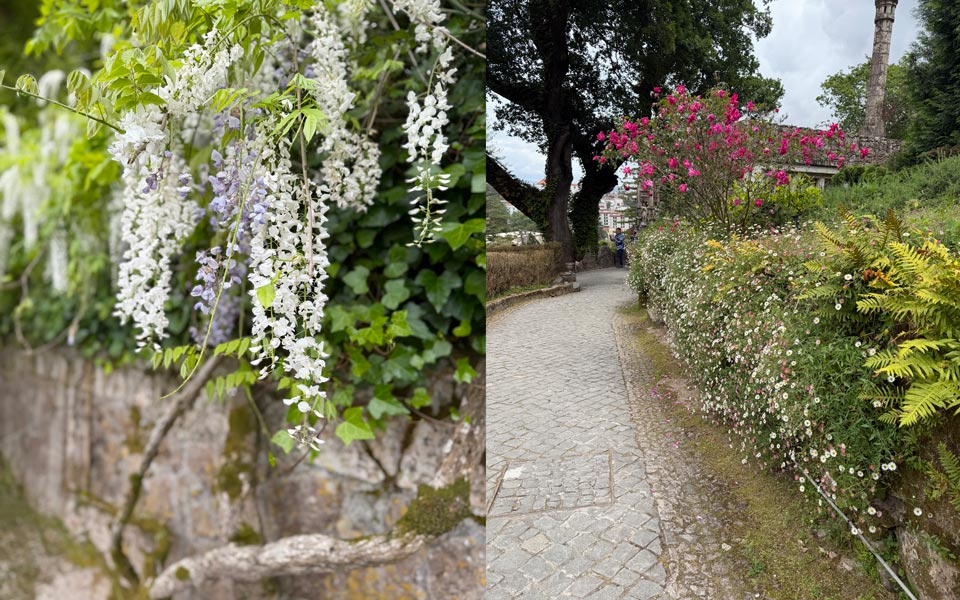
Lower pathways wound through beautifully manicured woods while the upper hills became increasingly wild, reflecting Carvalho Monteiro’s fascination with untamed nature. Hidden grottoes, ornate fountains, mysterious towers, secret tunnels, and unexpected sculptures appeared without warning, rewarding anyone willing to simply wander.
Every pathway seemed designed to encourage curiosity.
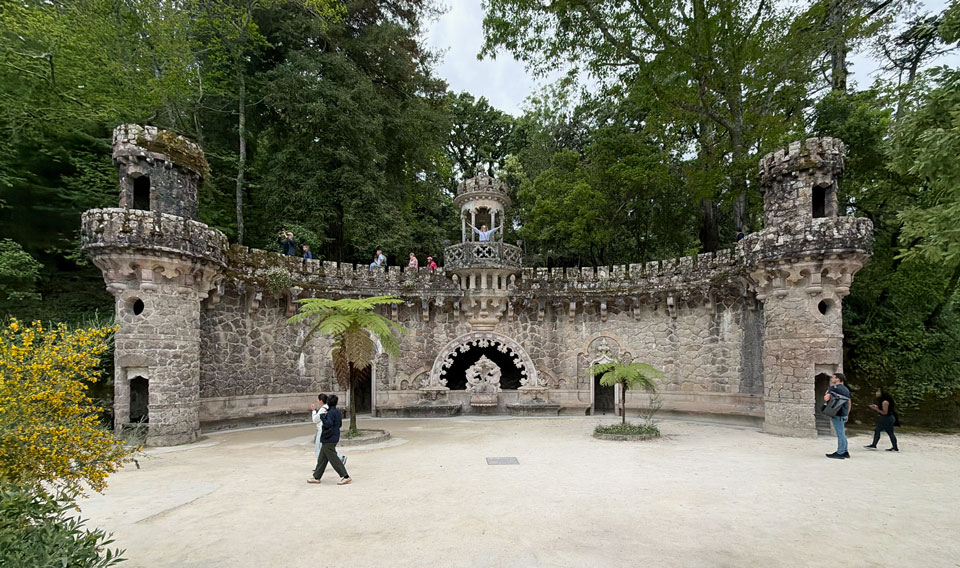
One of our favorite discoveries was the Portal of the Guardians, an impressive curved stone structure overlooking the gardens. More than simply decorative, it cleverly conceals one of the underground entrances leading toward the famous Initiation Well below.
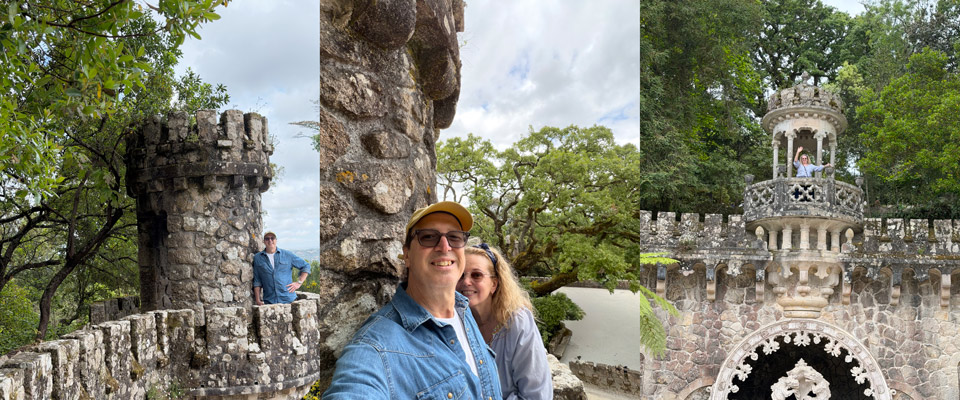
Naturally, we couldn’t resist climbing to the top.
Standing on its weathered stone walls overlooking the gardens below, we laughed while pretending to be Portuguese royalty surveying our kingdom. Nearby, tucked above Leda’s Grotto, stood a whimsical turret rising from a leafy terrace. With its narrow spiral staircase, ivy-covered walls, Gothic windows, and panoramic views stretching across Sintra’s hillsides, it looked as though it belonged in the pages of a medieval fantasy.

Descending Into the Earth
Soon we joined the line leading to the estate’s most famous attraction—the Initiation Well.
As the mist quietly drifted through the trees, the atmosphere became almost surreal.
Unlike a traditional well, this remarkable structure was never intended to collect water. Instead, it descends nearly ninety feet into the earth through a magnificent spiral staircase lined with carved stone arches and symbolic landings.
No one knows exactly how it was used.
Many historians believe it served ceremonial purposes connected to the Knights Templar, Freemasonry, or other philosophical societies that fascinated Carvalho Monteiro. Others see symbolism relating to spiritual rebirth. A symbolic descent into darkness followed by a return to light.

Whatever its original purpose, standing at the top and looking down into its endless spiral is unforgettable.
Descending its winding staircase felt both mysterious and strangely peaceful.
Through the Hidden Tunnels
At the bottom of the well, our adventure continued underground.
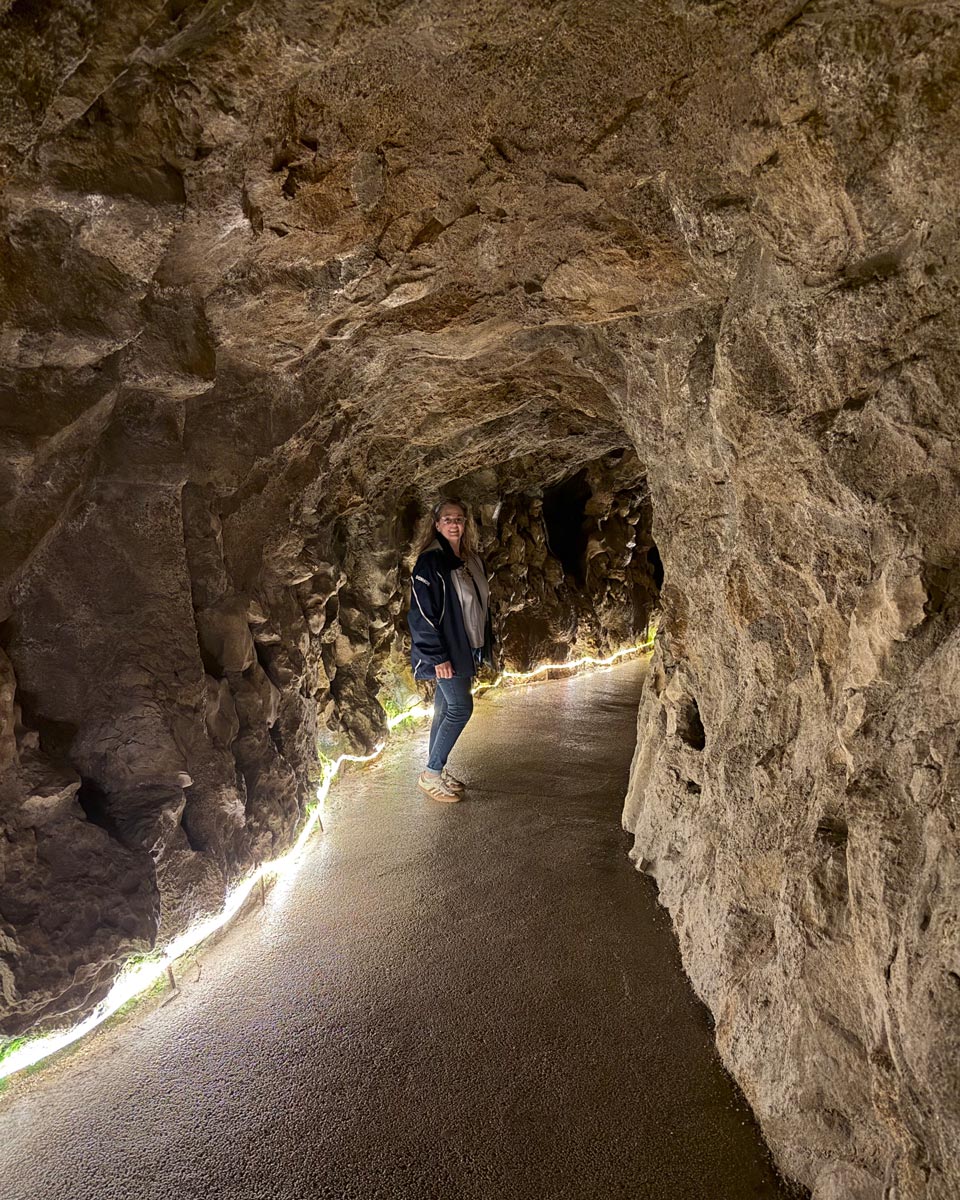
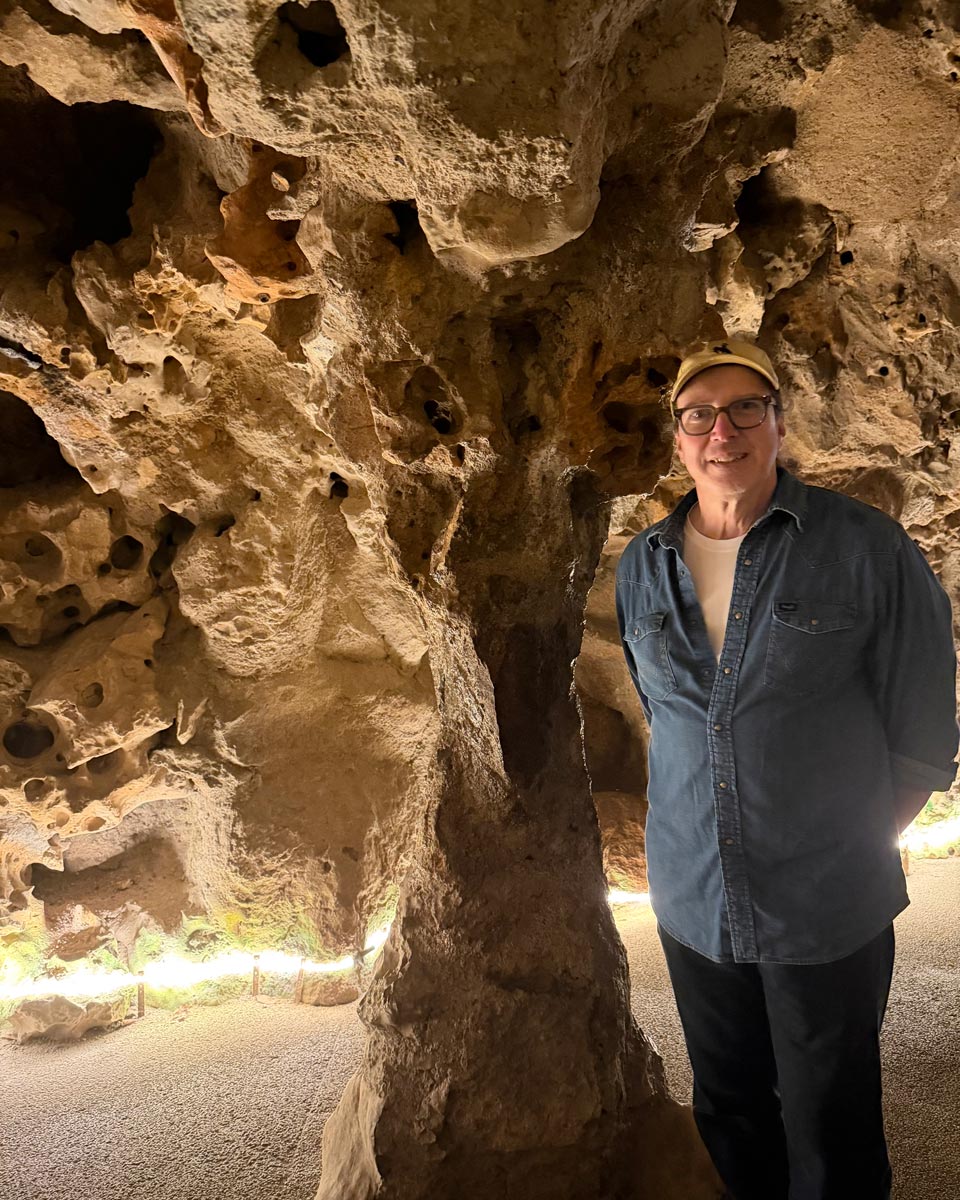
A network of dark volcanic-stone tunnels winds beneath the estate, connecting wells, grottoes, caves, and gardens through narrow passageways lit only by scattered lights.
Following the tunnels felt like participating in a treasure hunt.
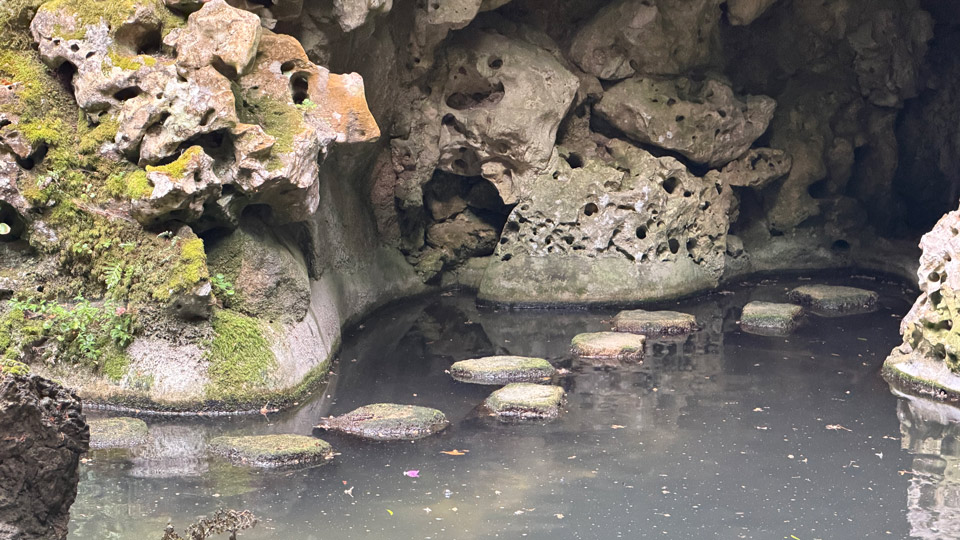
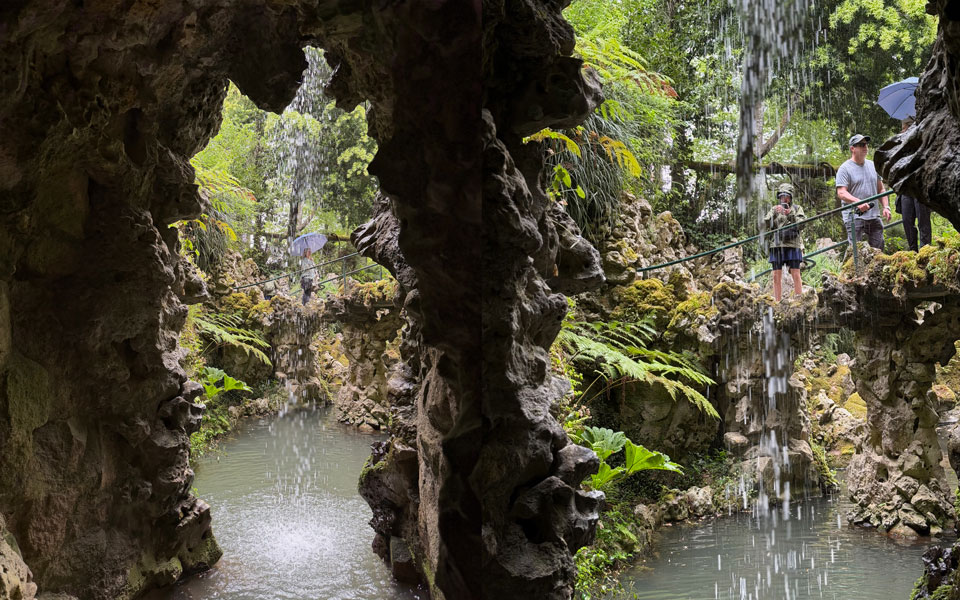
Eventually, daylight appeared ahead as we emerged beside Lago da Cascata. Stepping from the darkness into this peaceful clearing was magical. Water gently cascaded over moss-covered rocks into a tranquil pond crossed by stepping stones, while lush greenery framed the small waterfall like a living painting. The entire scene seemed designed to reward explorers who ventured through the hidden labyrinth below.
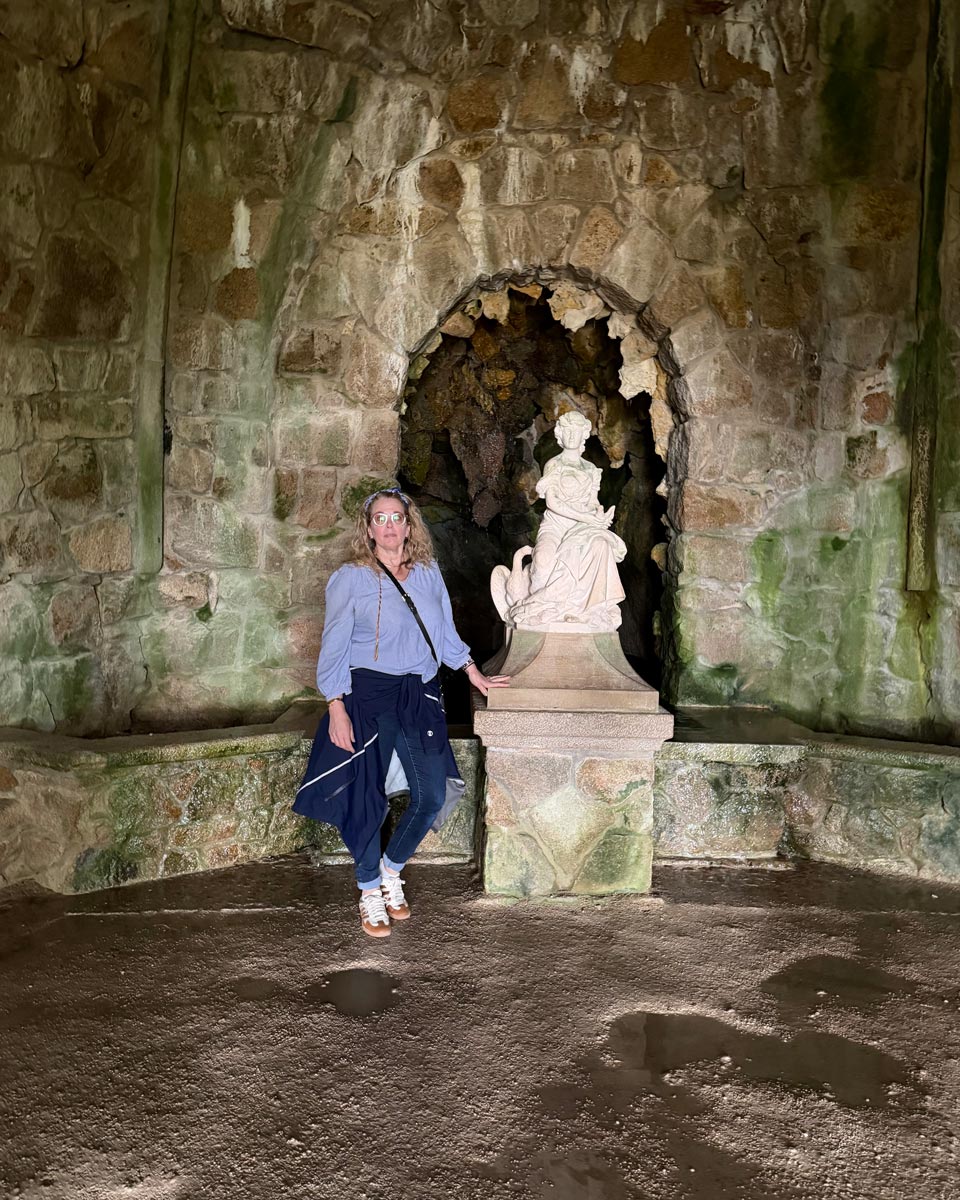
Leda’s Grotto
Nearby sits Leda’s Grotto, one of the estate’s most symbolic spaces.
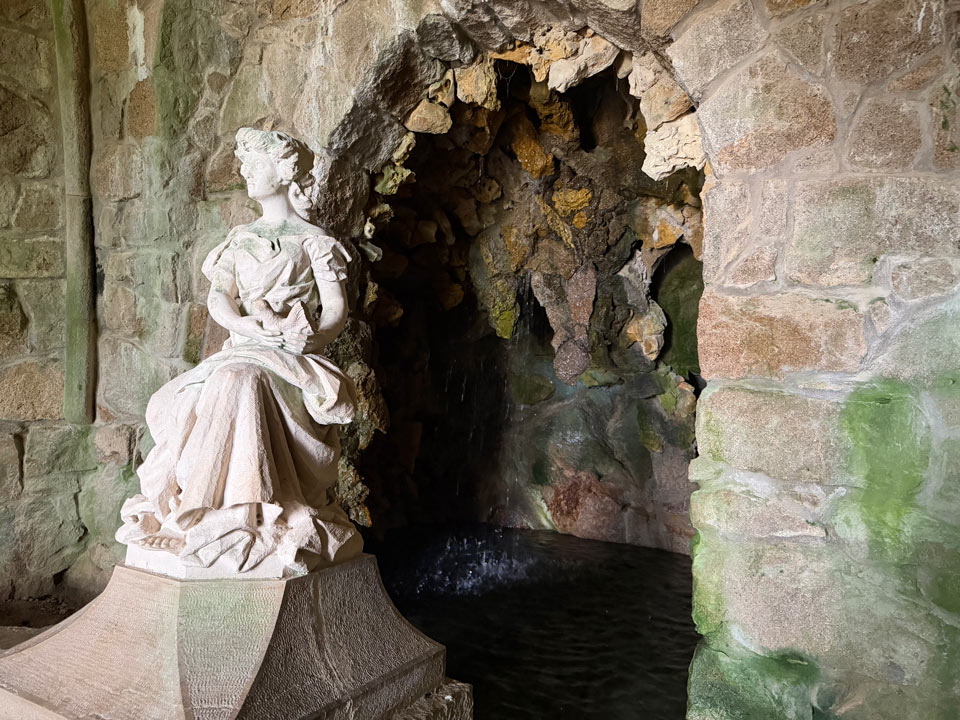
Hidden among the tunnels, this hexagonal grotto houses a marble sculpture depicting the Greek myth of Leda and the Swan, representing the meeting of the divine and earthly worlds. Like so much of Quinta da Regaleira, it reflects Carvalho Monteiro’s fascination with mythology, philosophy, alchemy, and spiritual symbolism.
Even visitors unfamiliar with the mythology can appreciate the quiet beauty and mystery surrounding this secluded corner of the gardens.

The Palace
Eventually we made our way to the Regaleira Palace itself.
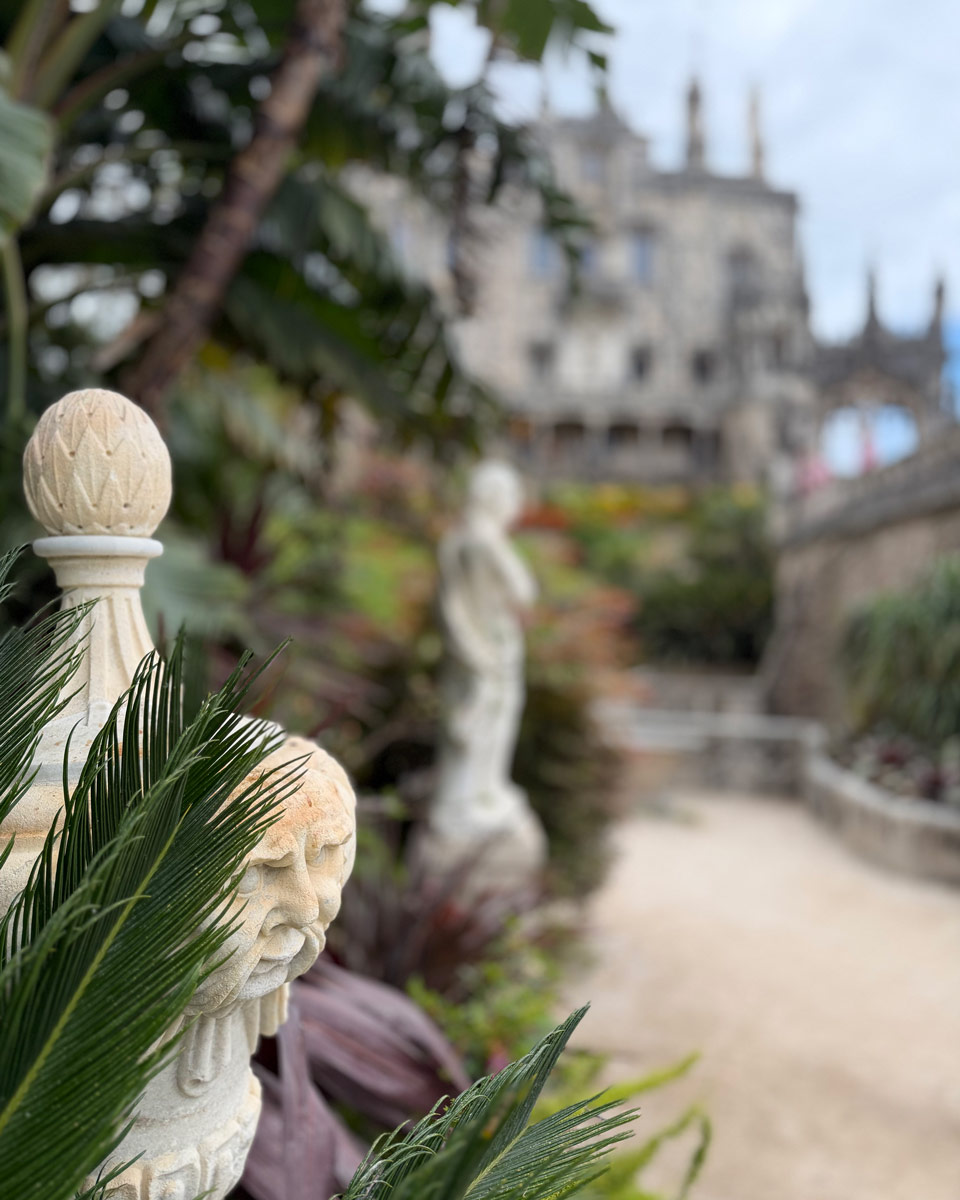
Its exterior is breathtaking, filled with Gothic pinnacles, gargoyles, carved balconies, delicate stone tracery, and ornate towers that continue the estate’s storybook appearance.

Inside, beautifully restored rooms showcase the elegance of early twentieth-century aristocratic life.
One of the highlights is the Sala da Caça, or Hunting Room. Richly paneled in carved wood, the room celebrates the noble pastime of the hunt through elaborate craftsmanship. Its remarkable parquet floor incorporates hunting motifs into the intricate woodwork, while an impressive carved fireplace depicts woodland scenes and game animals. The room served as both a gathering space and a reflection of Monteiro’s appreciation for artistry and symbolism.
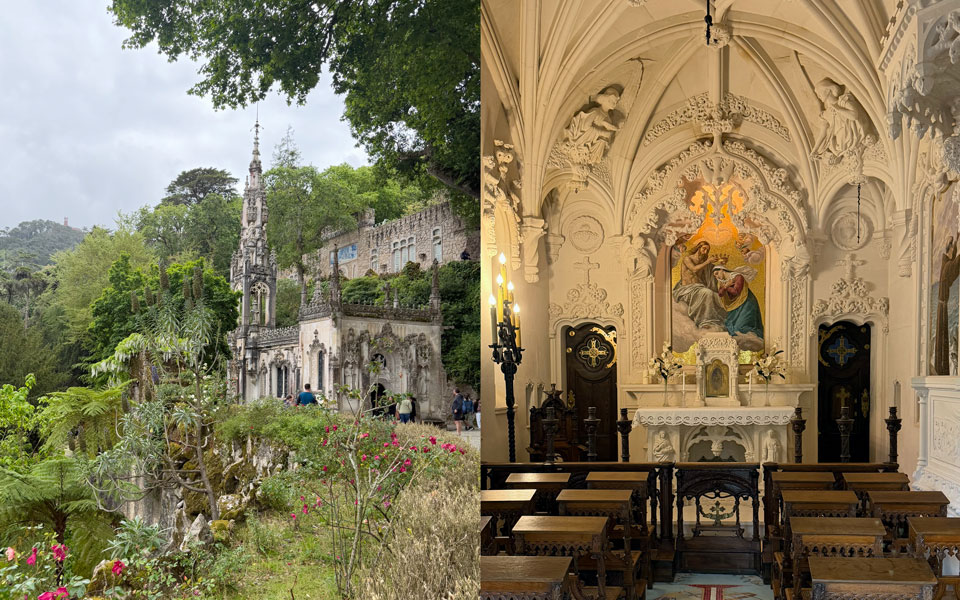
Nearby, the beautifully decorated chapel continues the estate’s mystical themes. Stunning stained glass, detailed frescoes, ornate stucco work, and symbolic floor mosaics featuring the armillary sphere, the Cross of the Order of Christ, and pentagrams blend traditional Christian imagery with the esoteric symbols that fascinated Carvalho Monteiro throughout the estate.
Every room, every carving, and every architectural detail seemed to reveal another layer of meaning.
Wandering São Martinho
After leaving Quinta da Regaleira, we wandered into nearby São Martinho.
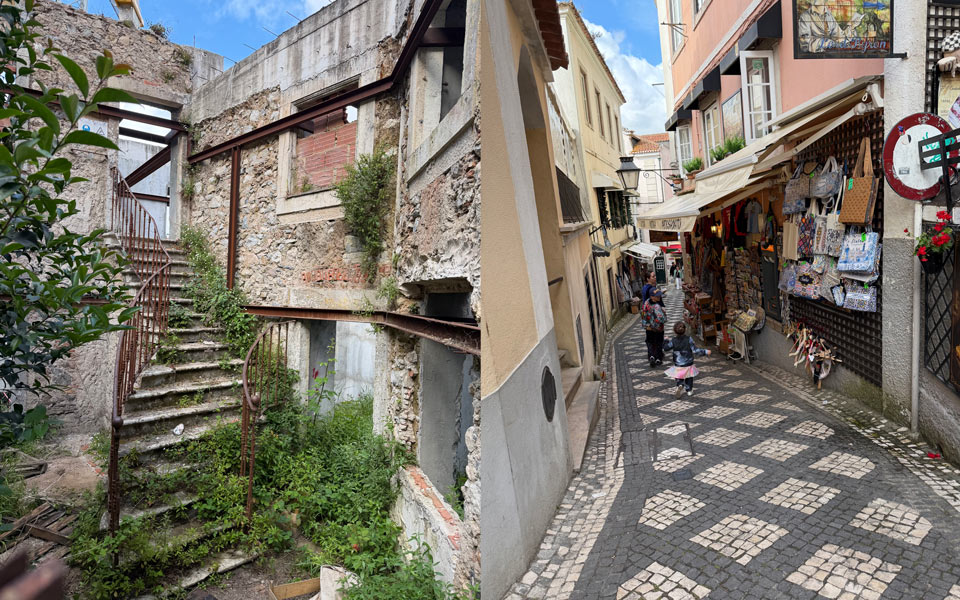
Perched along the mountainside, this charming village is filled with narrow pedestrian streets lined with small galleries, artisan boutiques, cafés, wine bars, and inviting restaurants. We ducked into several little shops where local artists enthusiastically shared the inspiration behind their handcrafted jewelry. It felt wonderfully authentic and refreshingly unhurried. A perfect contrast to the grandeur and mystery of the estate we had just explored.
Before boarding our train back to Lisbon, we settled onto the patio of the Lord Byron Inn with a glass of Portuguese wine in hand.
Watching fellow travelers and locals drift through this enchanting village while the afternoon mist settled once again over the mountains provided the perfect ending to our day.
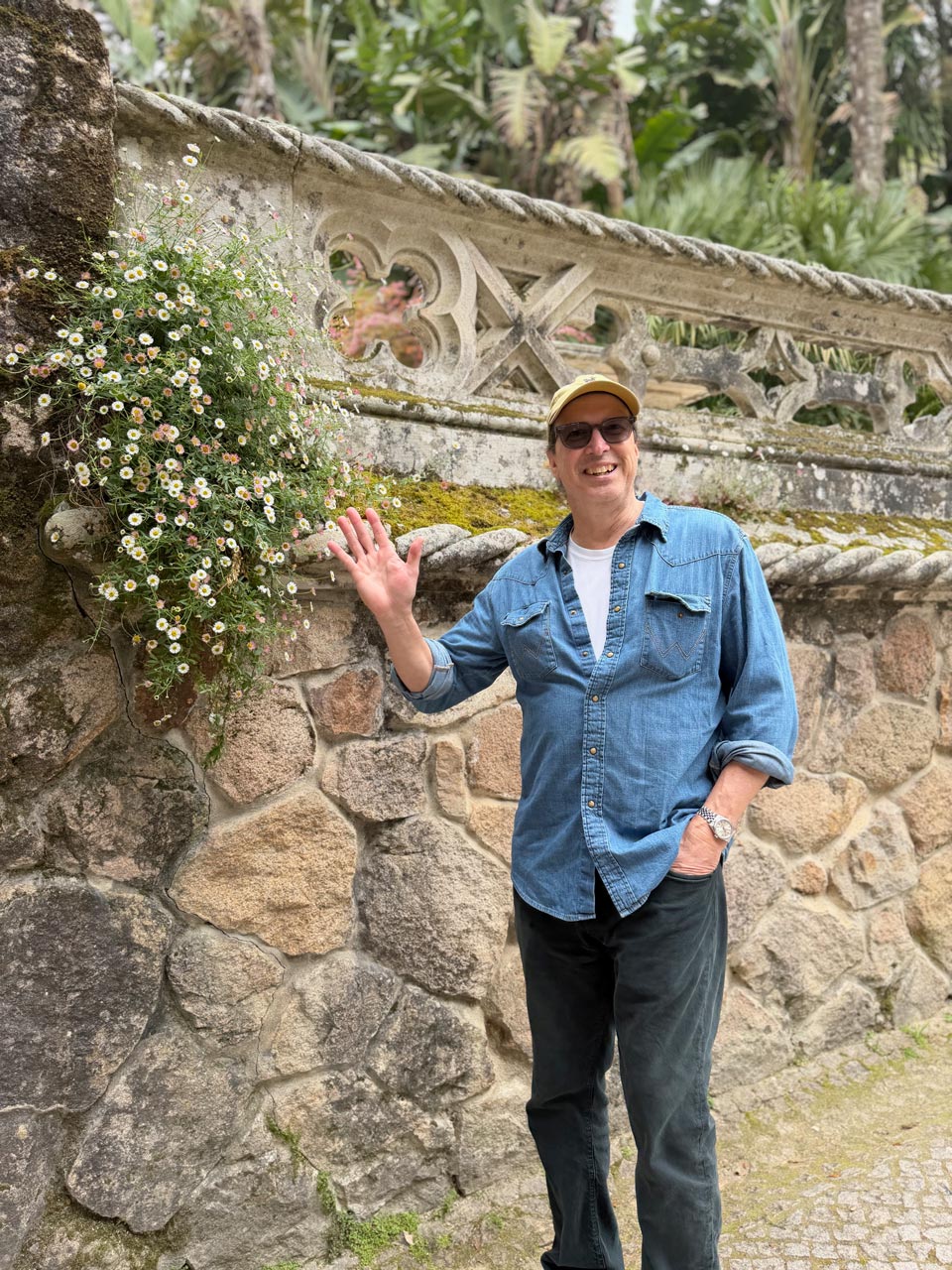
Reflections
Looking back, Sintra wasn’t simply another stop on our Iberian itinerary.
It was an experience.
It was mist hanging between ancient trees, hidden tunnels beneath fairytale gardens, castles emerging from the clouds, and quiet cafés overflowing with tropical plants and wildflowers. It was history intertwined with mythology, architecture wrapped in symbolism, and landscapes that seemed almost too beautiful to be real.
Although we returned to Lisbon that evening, a part of me wished we had stayed just one more night. Sintra has a way of slowing time and inviting you to wander a little longer, to look a little closer, and to believe, if only for a day, that fairy tales might actually come true.
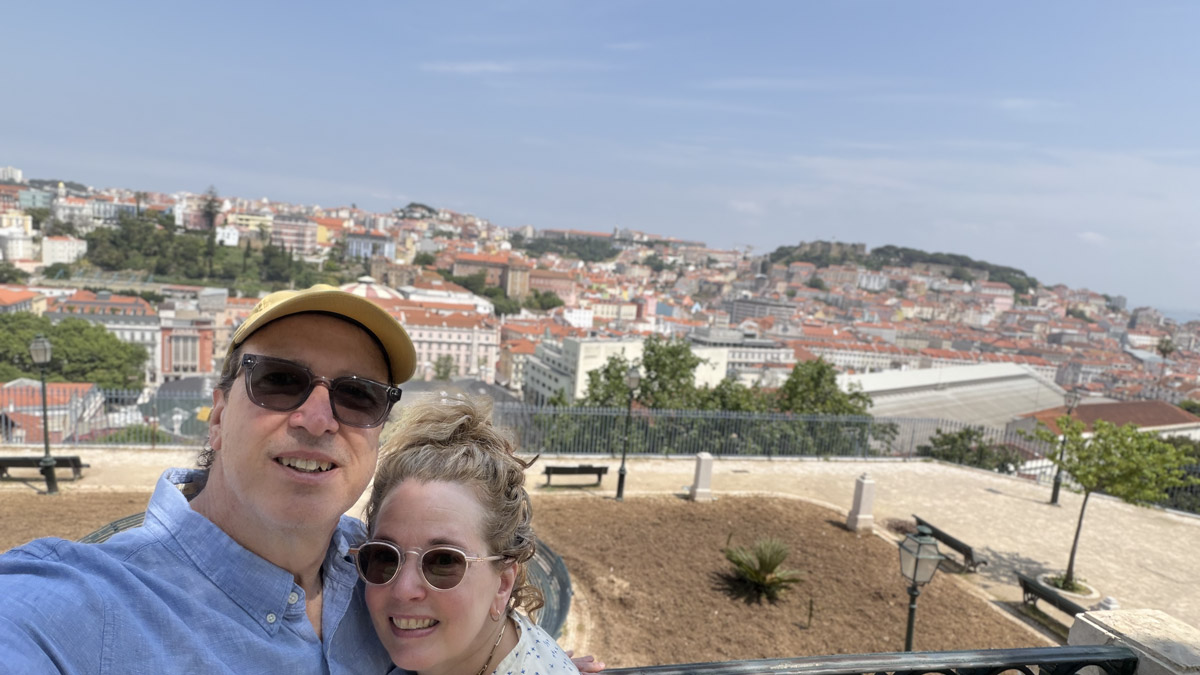
Discovering Lisbon: A City of Hills and History
Lisbon is one of Europe’s oldest and most strategically vital cities. Positioned at the mouth of the Tagus River, it has served as a major commerce hub since 800 BC. Over the centuries, civilizations from the Phoenicians and Romans to the Moors shaped this remarkable landscape, which later thrived as the seat of the Portuguese Empire during the Age of Discovery.
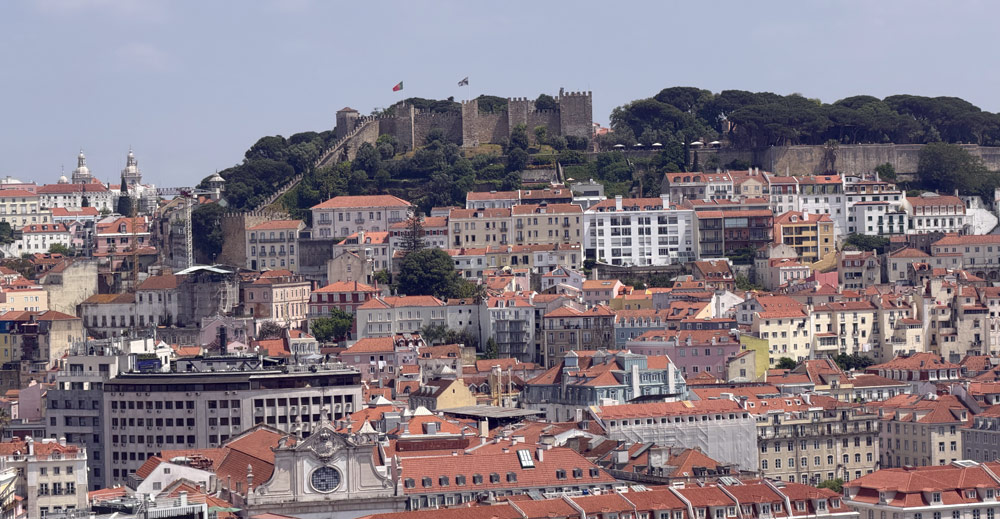
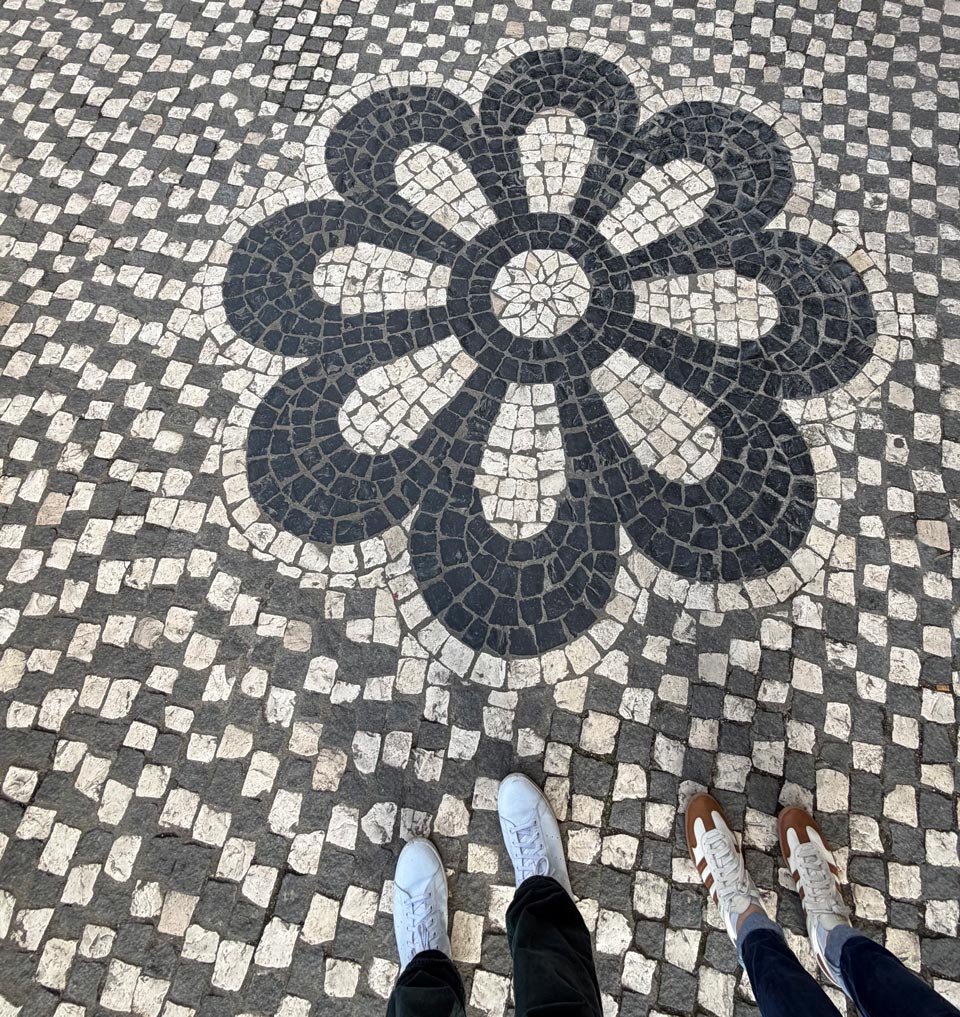
Today, Lisbon rewards visitors with stunning World Heritage sites, castles, and spectacular vistas. Our first observation upon arrival was simple: this city is steep. Built across dramatic hills and valleys, Lisbon's maze of ancient streets challenges your legs. Sidewalks paved with intricate, slightly uneven 3×3-inch cobblestones weave past tram tracks and historic storefronts.
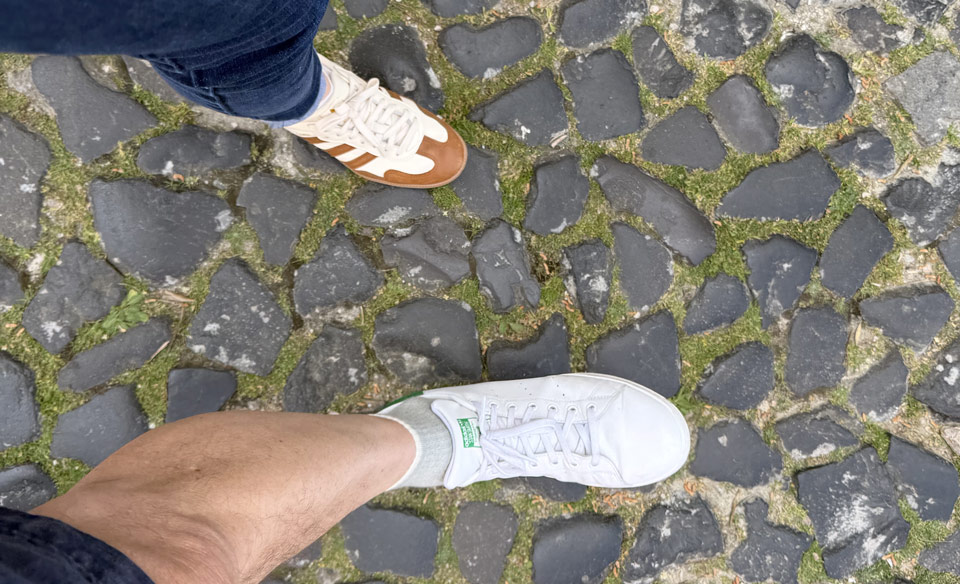
We quickly learned that the shoes of choice here are classic, thin-soled sneakers like Adidas Sambas or Stan Smiths—they allow you to feel the texture of the stones, making the walking over the uneven surfaces much easier.
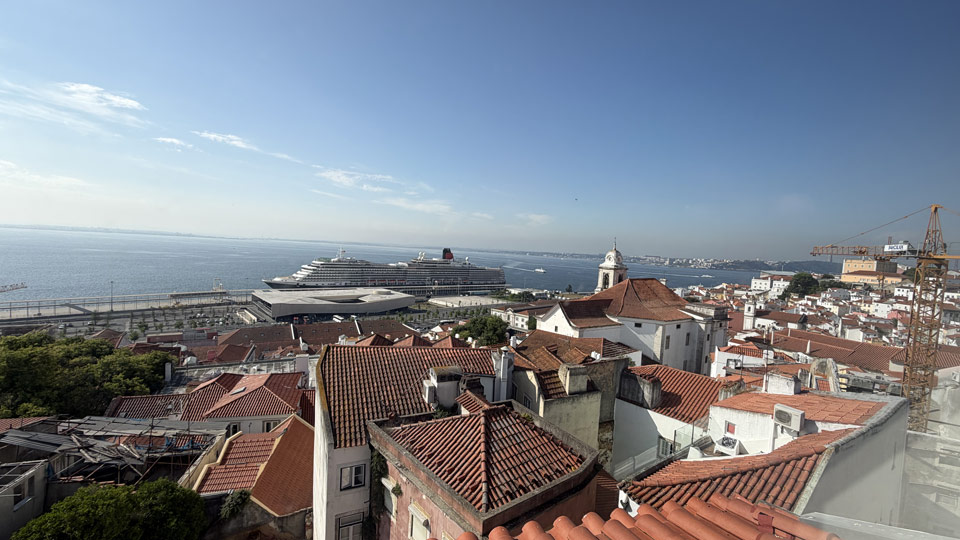
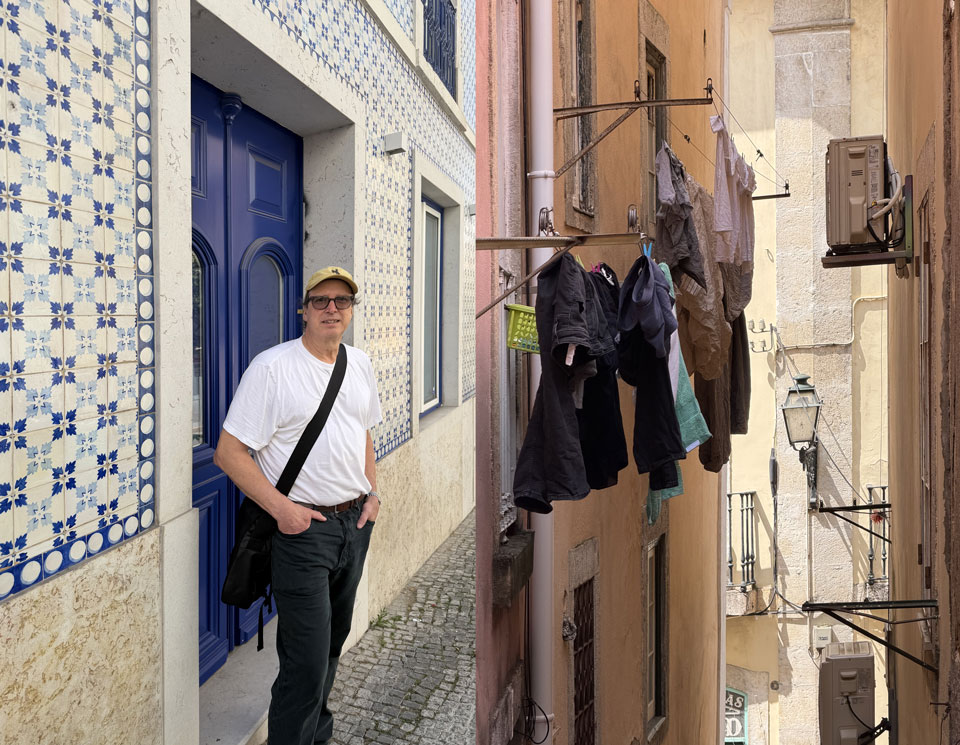
From our sixth-floor Airbnb walkup (aptly dubbed "A Room with a View"), we spent our days wandering through vibrant neighborhoods where colorful, Moorish-inspired ceramic tiles decorated building facades and laundry fluttered from balconies above as we explored.
 |  |  |
Luggage Storage We arrived in the late morning at the Santa Apolónia train station. To avoid hauling large bags up several hills and five flights of stairs, we looked for storage. While station lockers require 24-hour renewals, we found baggage storage sites all over the city using LuggageHero. We stored our bags at a nearby bodega. Though Heidi was initially skeptical, the vendor worked perfectly and was fully vetted by the platform. |
Day 1: Exploring Alfama
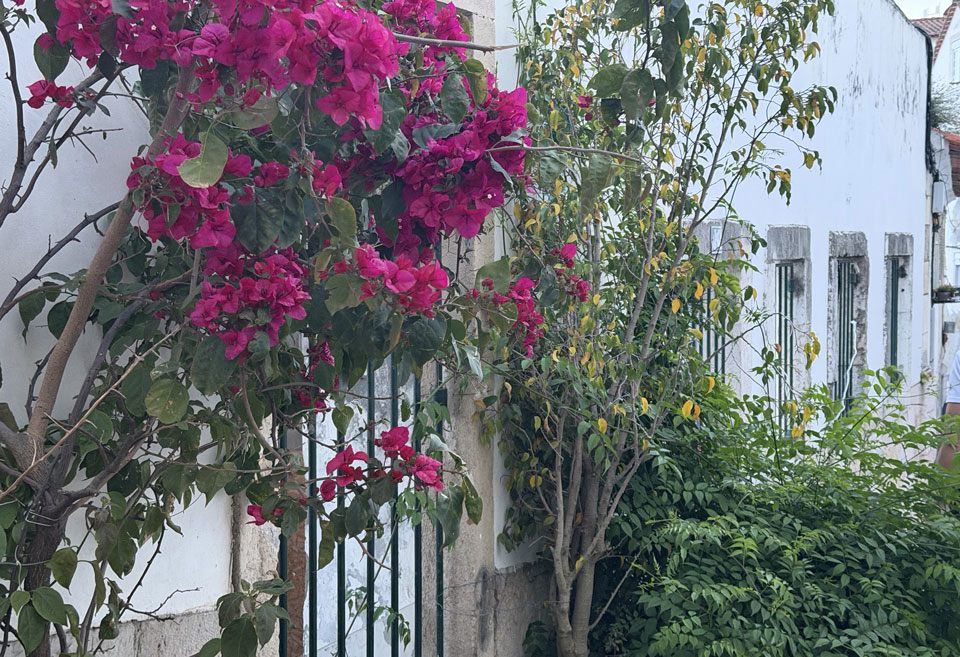
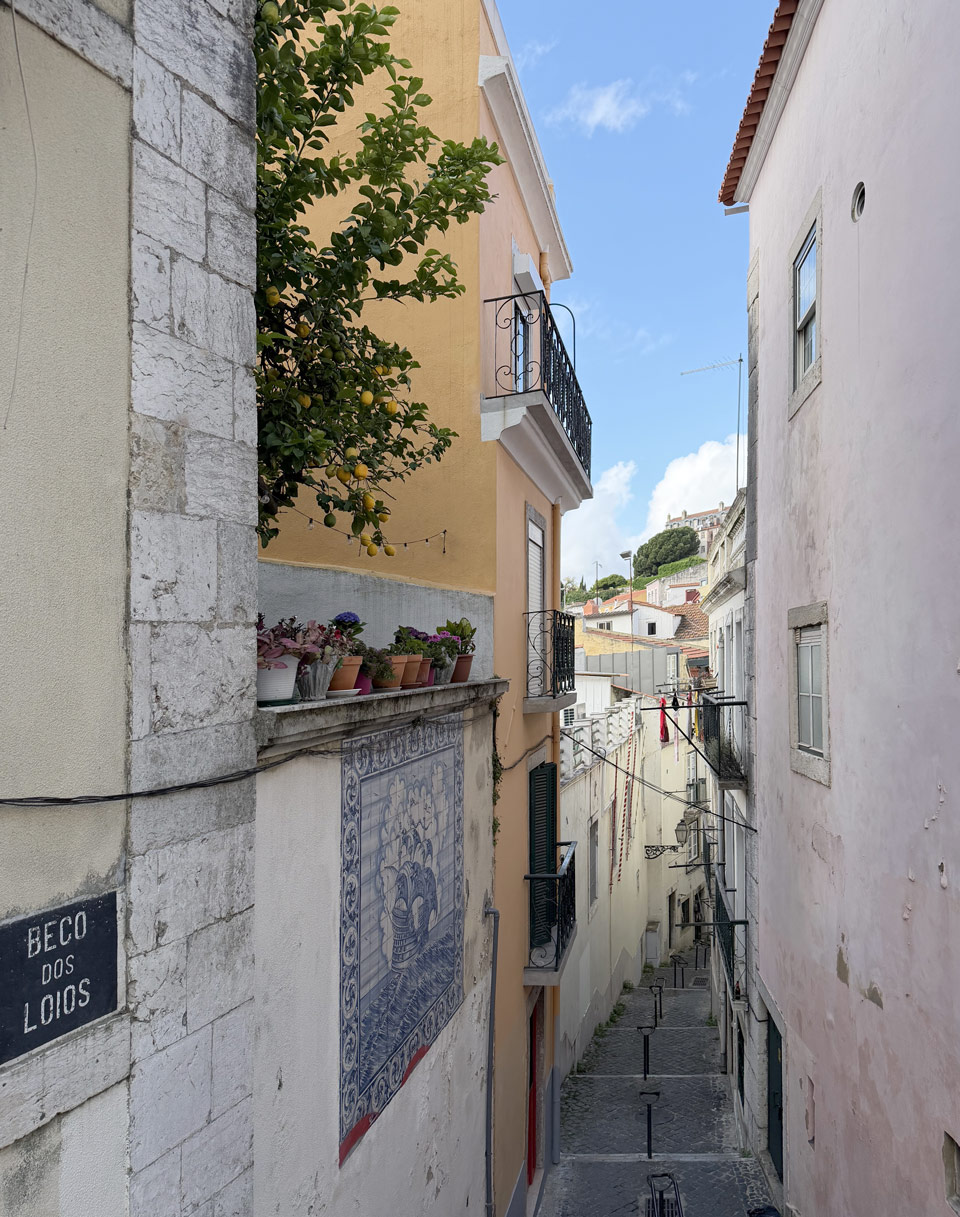
We spent our first day getting acquainted with the Alfama district, a historic neighborhood characterized by narrow, winding streets and houses seemingly built right on top of the roadways. Around every corner, we discovered tile artist studios, wild citrus trees growing in small alcoves, and breathtaking glimpses of the water below.
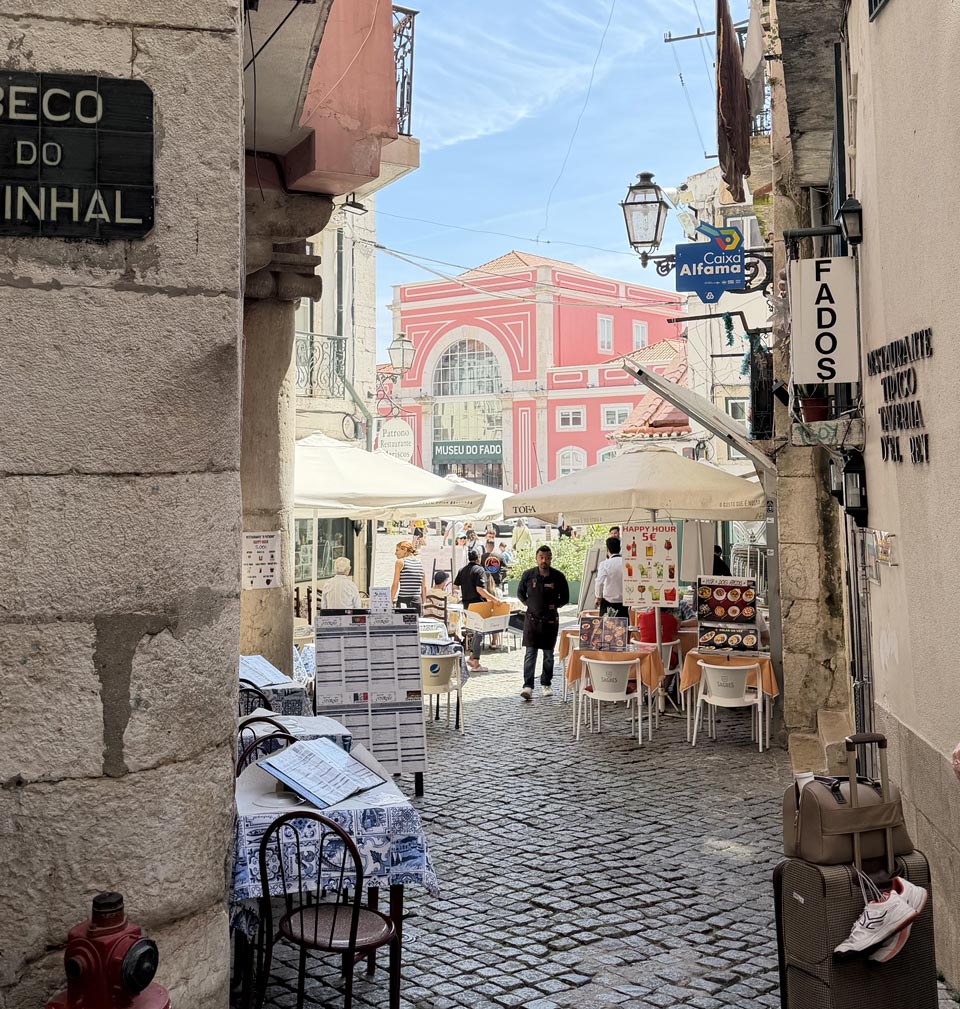
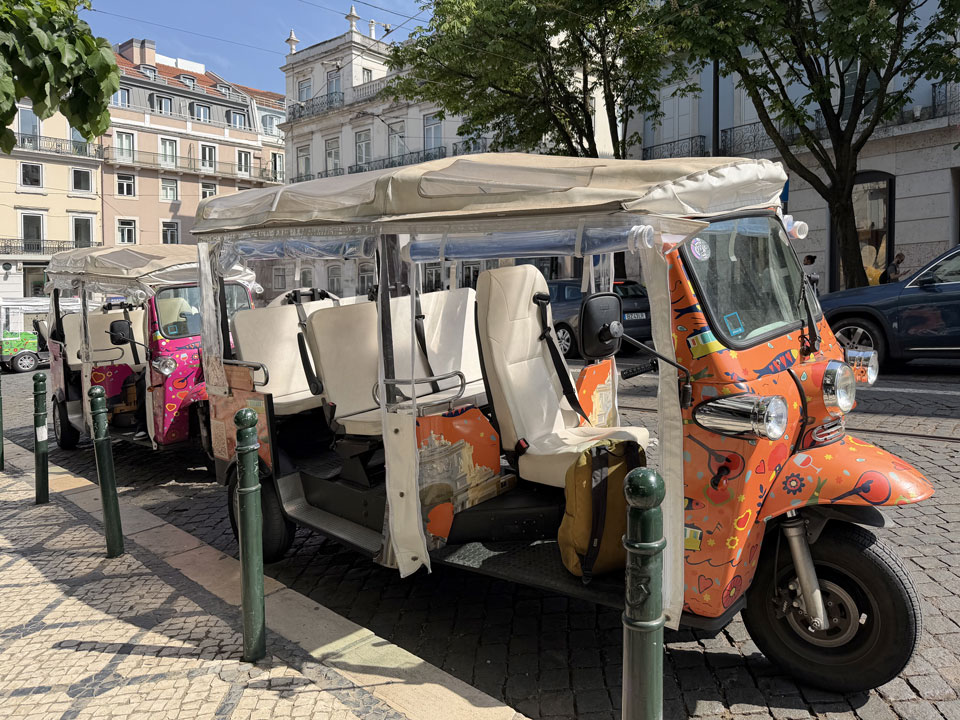
We stopped for brunch at a lovely little hole-in-the-wall appropriately called The Hideaway, enjoying excellent coffee and snacks that cured our jet lag. From there, we walked down to the bustling, tourist-heavy waterfront near the cruise ship docks, where outdoor restaurant hosts vied for our attention alongside a fleet of Tuk Tuks (small, golf-cart-sized vehicles offering guided city tours).
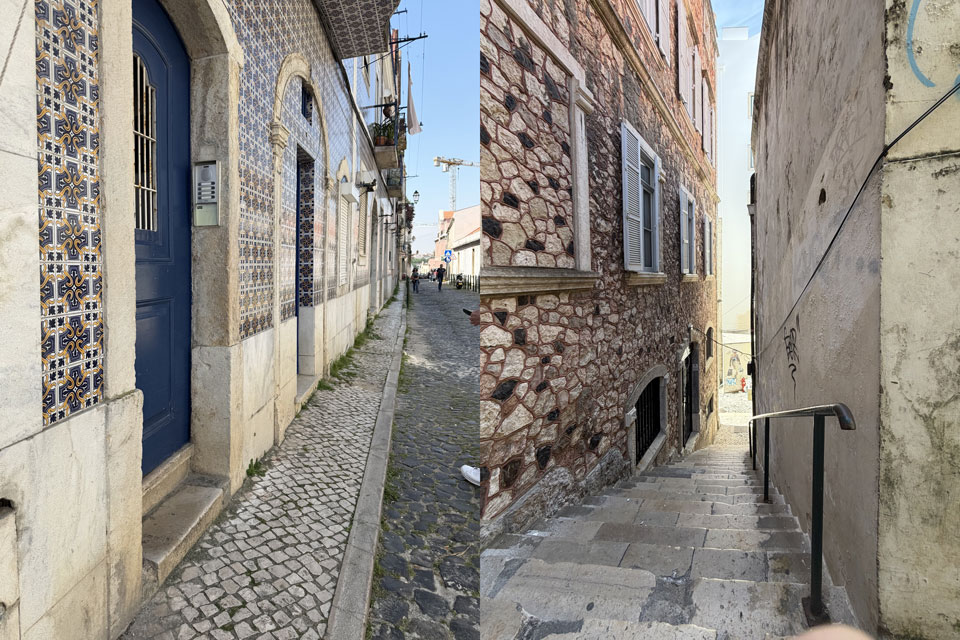
Ancient Streets and Ceramic Tiles
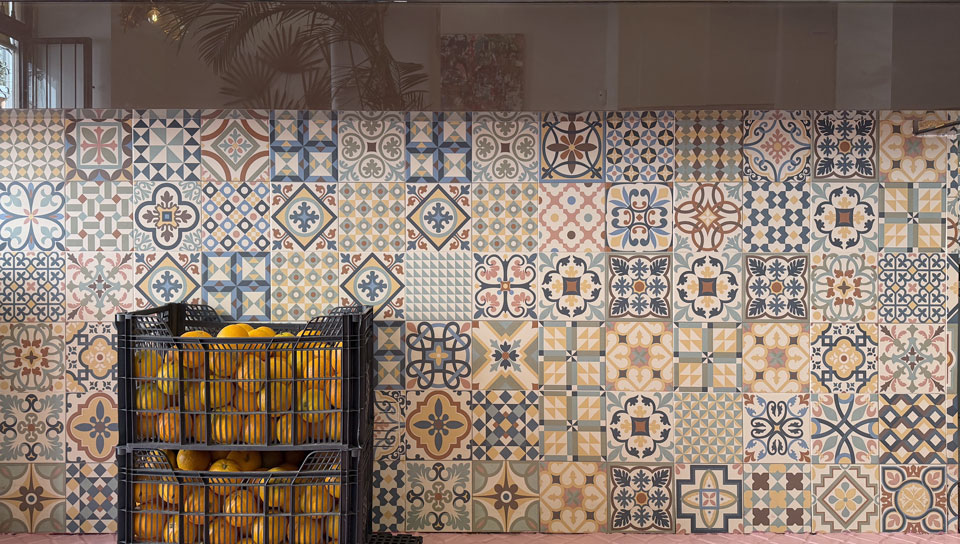
We continued our exploration, wandering the ancient streets and finding a seemingly endless supply of historic castle walls, cathedrals, and cozy restaurants tucked into nearly every open space. This was our first real exposure to the azulejos—the ceramic tiles that adorn almost every building facade in Lisbon. While they occasionally share similar patterns, no two buildings ever seem exactly the same. Some feature bold, contrasting colors, while others showcase subtle, soft tones or elegant monochromatic designs.
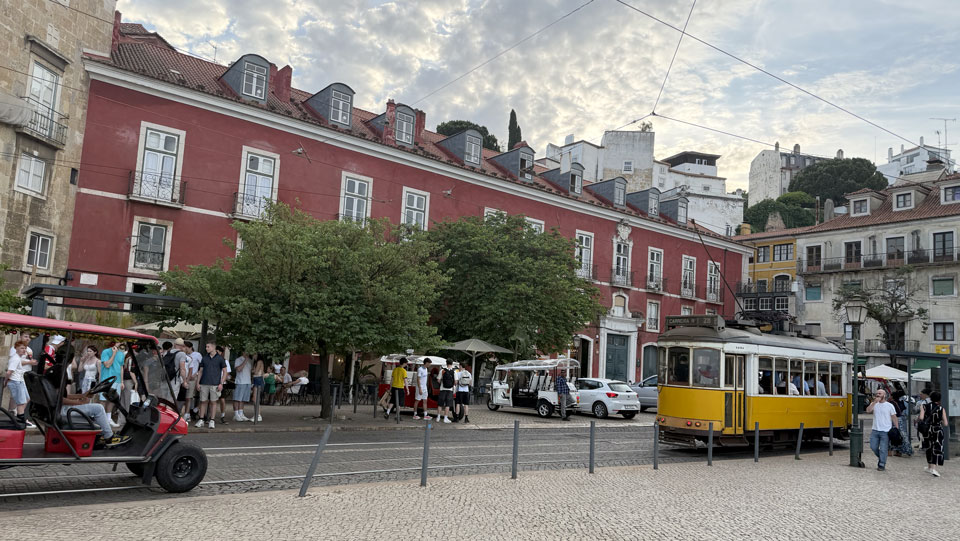
Our apartment offered a stunning view of the city, and we noticed a large crowd gathering on a terrace uphill. Intrigued, we walked up to the Miradouro das Portas do Sol, a fantastic terrace overlook perched right on the path of the famous No. 28 tram.
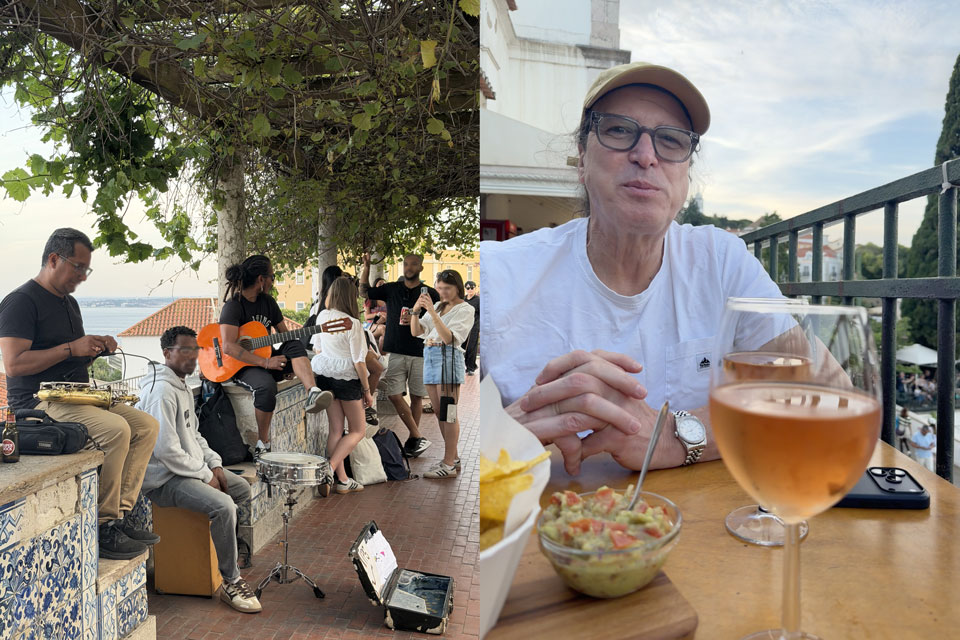
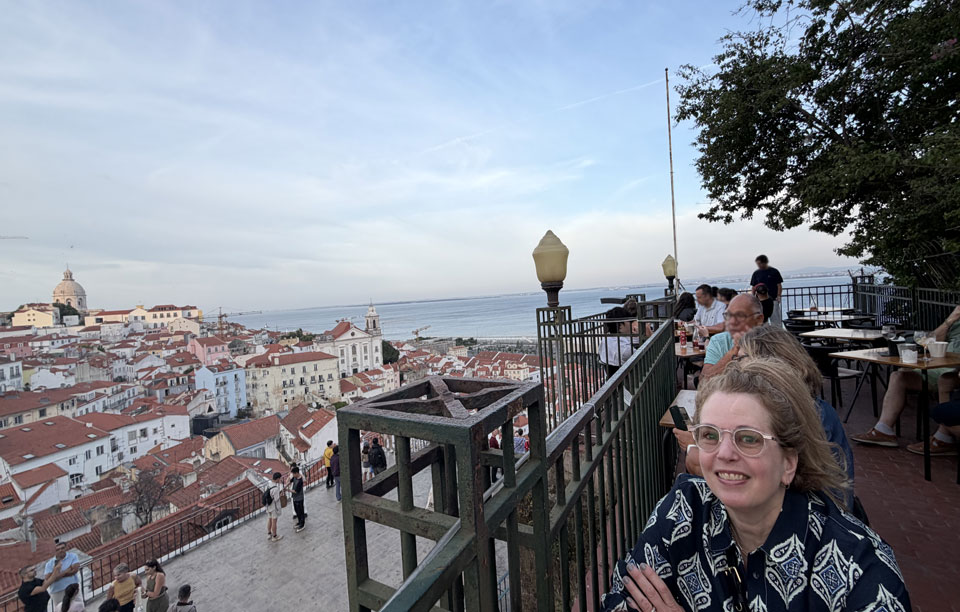
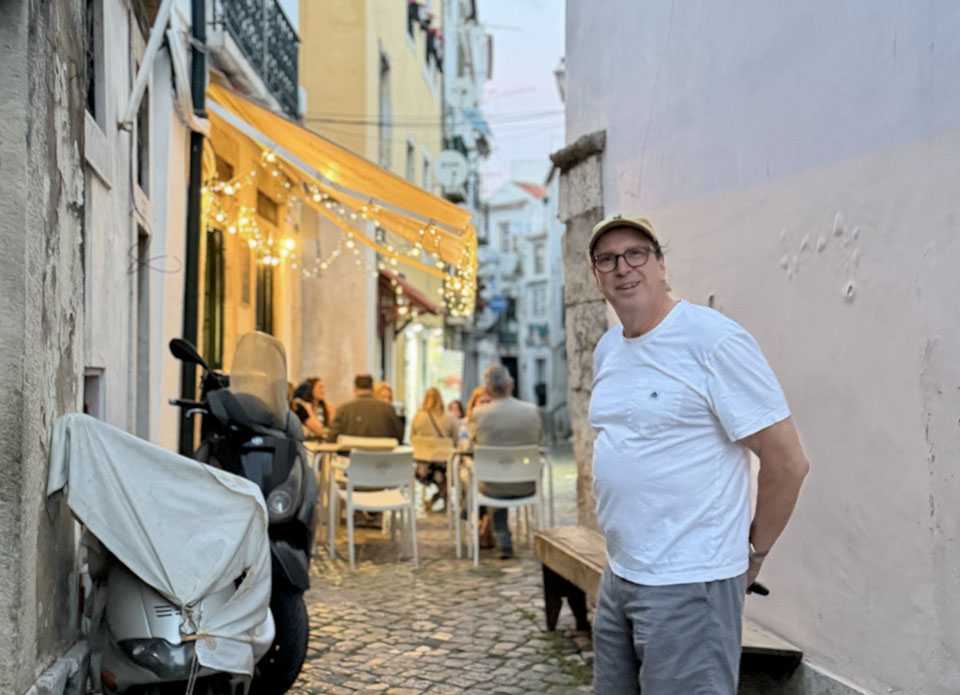
Nearby, we visited the beautiful gardens of the Santa Luzia church and enjoyed a quiet glass of wine at a terrace bar tucked just behind the church, and situated above the crowds. At dusk, we descended a maze of walkways, and several flights of stairs to find Osteria Bellosguardo, a hidden Italian gem where we savored fantastic house-made pasta at an outdoor table as the sun set.
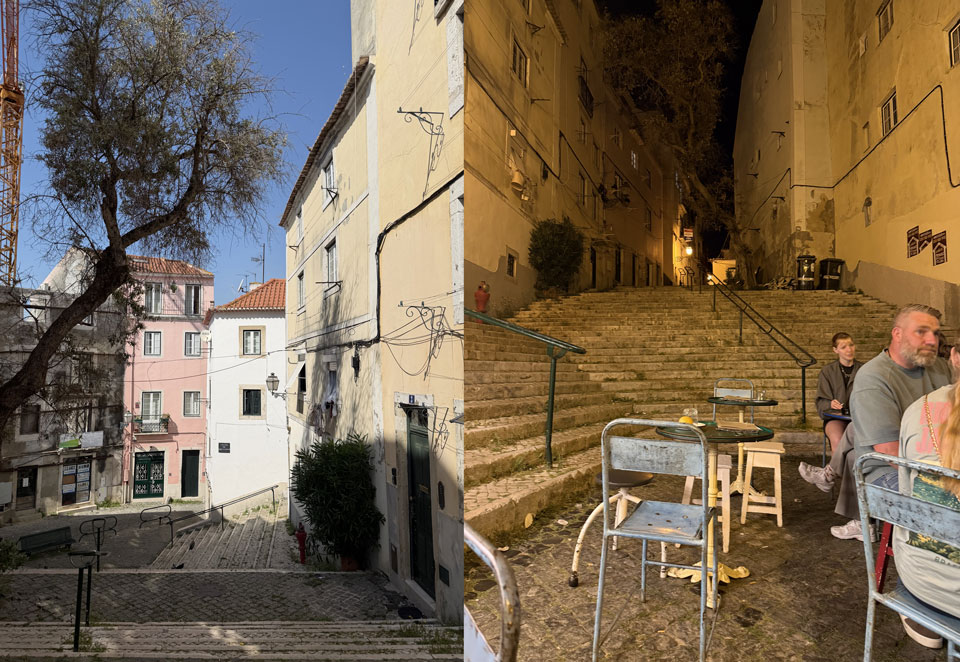
Returning to our neighborhood, we found a delightful transformation: a tiny pop-up café had appeared in the small courtyard at the base of our apartment stairs. We grabbed a table and toasted to a perfect first day.

Day 2: From Castles to Plazas
We began our second day walking toward the São Jorge Castle, detouring down the narrow, car-free alley of Rua do Salvador. Near the top, we discovered Quase Cafe. Sitting outside in the 70-degree weather, we enjoyed an impeccably prepared breakfast with fantastic cappuccinos.
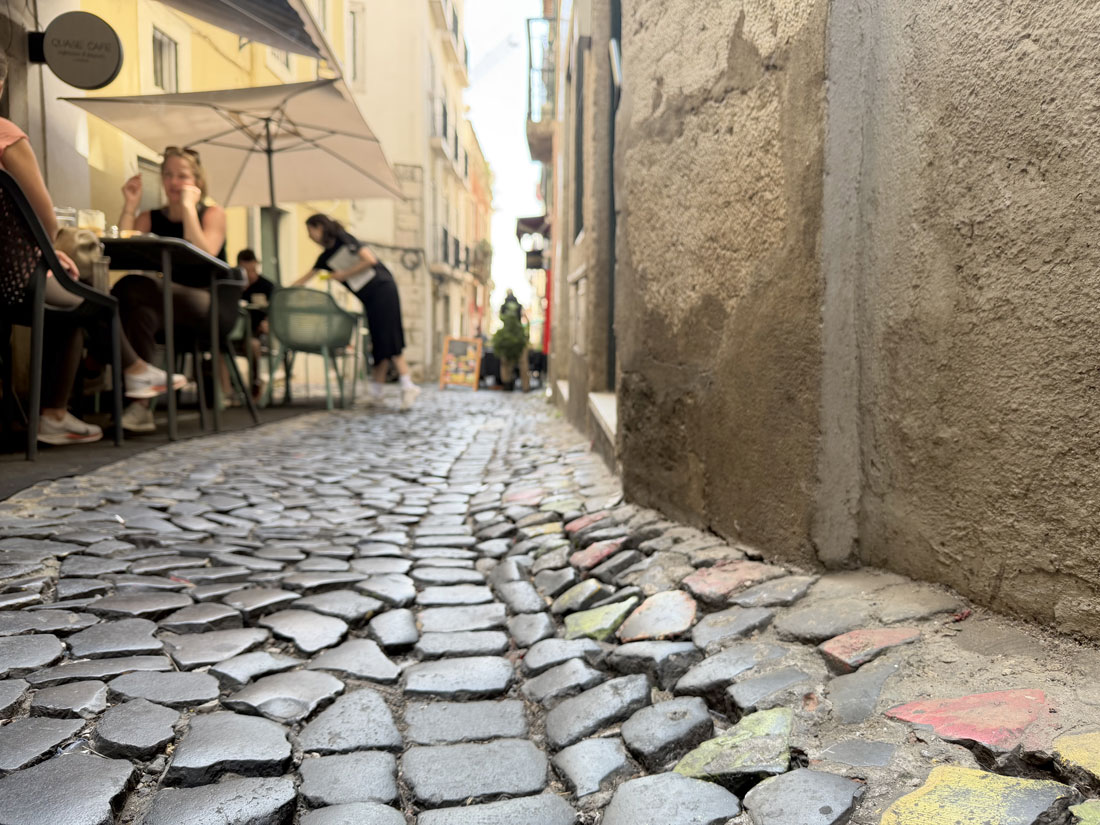
Quase Cafe was a fantastic spot for an outdoor breakfast. Nestled at the very top of a steep, cafe-lined alley, it features just six outdoor tables—perfect for enjoying the breezy, 70-degree weather. The menu is simple but impeccably prepared with fresh ingredients, friendly service, and exceptional cappuccinos. It quickly became one of our absolute favorite spots, so much so that we returned for a final breakfast here before catching our train to Porto.
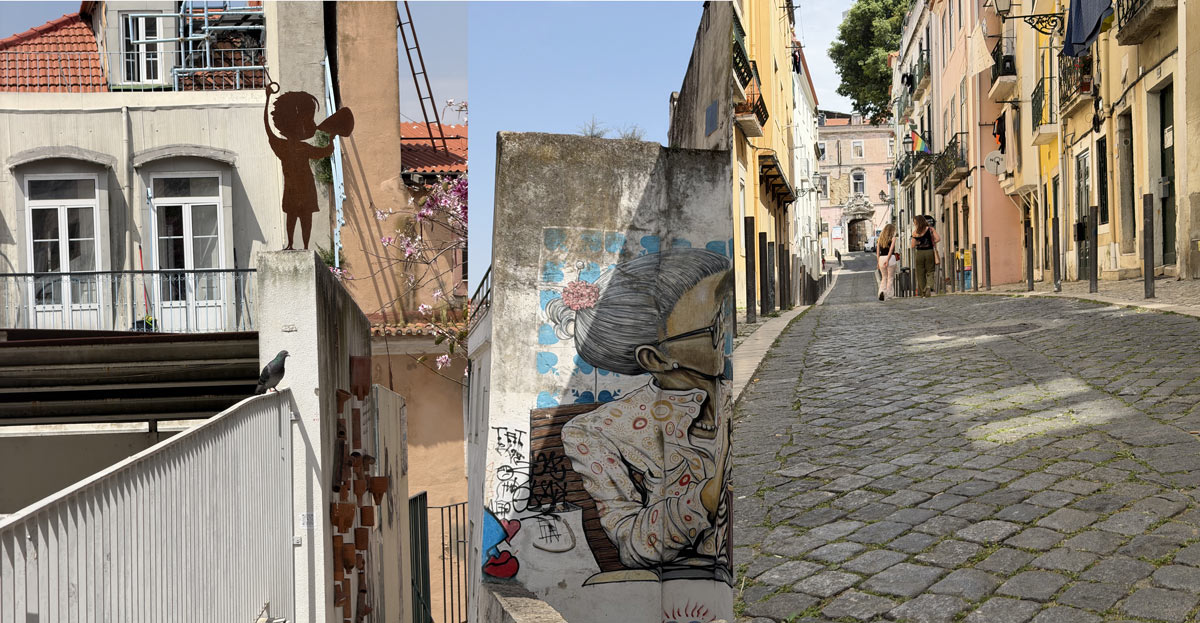
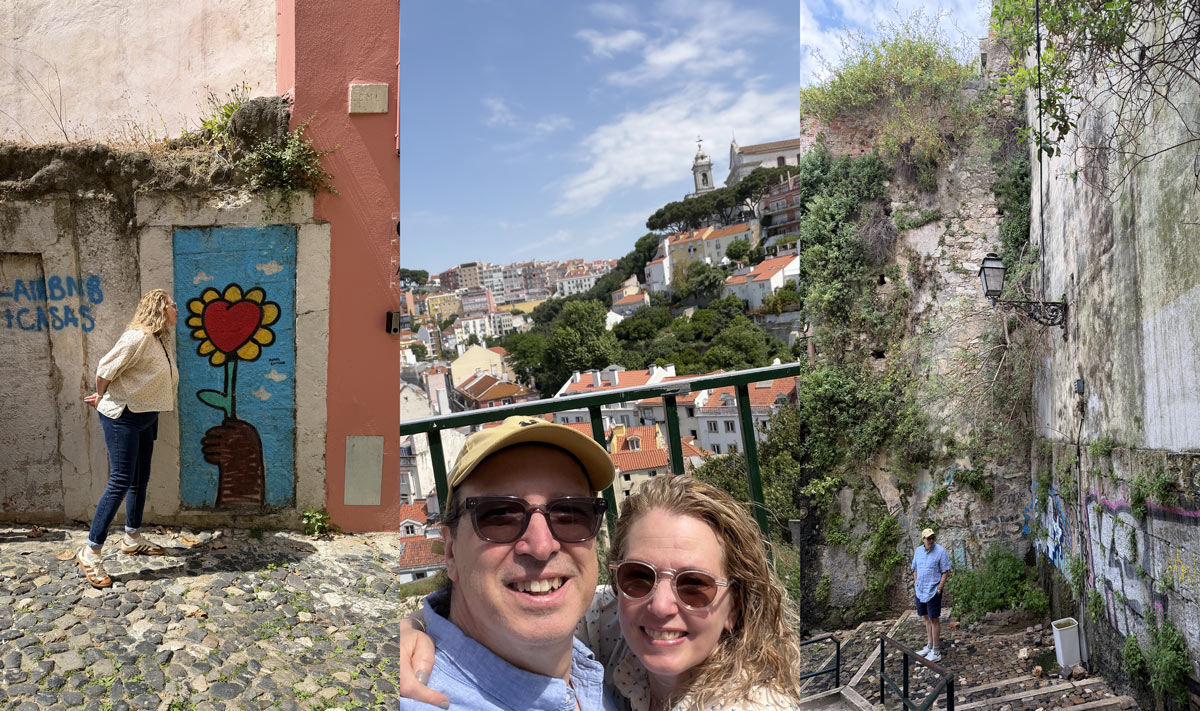
Leaving the cafe, we attempted to climb up to São Jorge Castle, but after failing to find an open entrance, we pivoted and headed down into the historic Moorish quarter. The winding streets revealed stunning views of the inner city, beautiful tile facades, and hidden gardens. The final stretch of stairs feels as though it carves directly through buildings built on ancient foundations, eventually delivering you to a wide courtyard bustling with local shops. While lively, this area felt less like a tourist hub and more like a vibrant resource for the neighborhood’s residents.

The Grandeur of Baixa
Adjacent to the Moorish quarter lies Baixa, a neighborhood of grand plazas and imposing architecture rebuilt after the devastating 1755 earthquake. We stopped at a historic cathedral to marvel at its massive, restored stone arches, then browsed the local flea markets.

To reach the trendy Bairro Alto and Chiado districts, we climbed a massive staircase, stopping for coffee along the way. This part of the city features a modern grid layout, with many streets closed to daytime traffic.
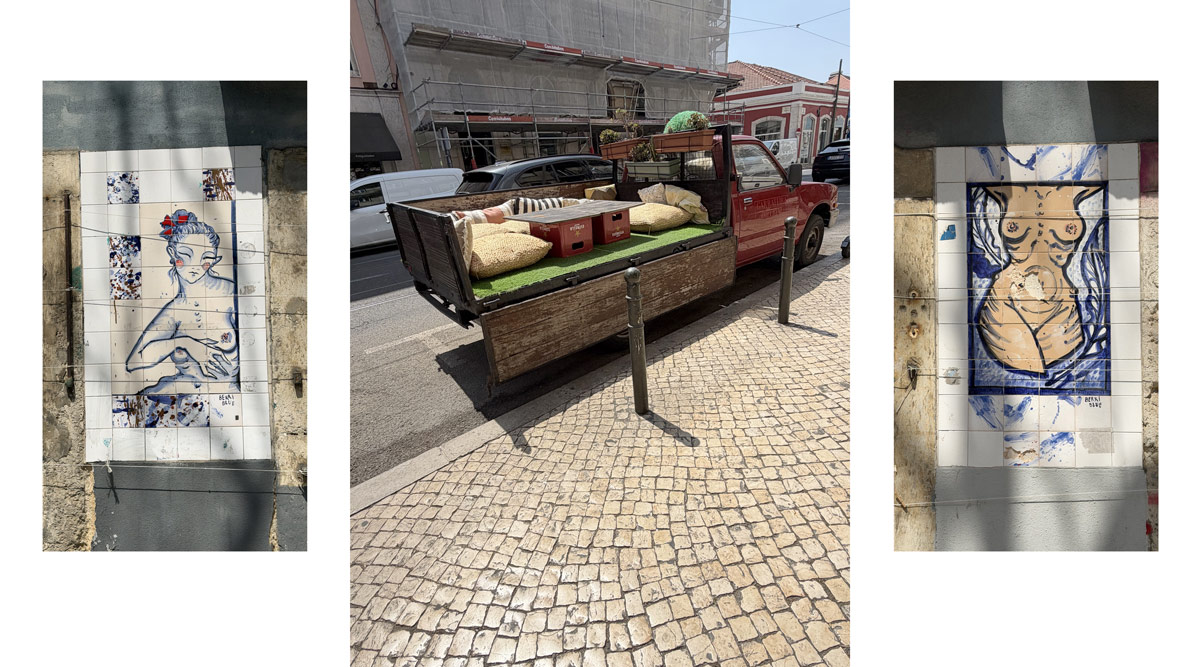
Our destination was Flabelus Lisboa, a Spanish shoemaker specializing in colorful, modern adaptations of classic ballet flats. Tucked near the municipal gardens, the vibrant shop was crowded and fun; and we successfully escaped with only one pair.

Wandering Toward Chiado
Because this area felt highly residential with businesses quiet before the after-work rush, we began making our way back toward the bustling waterfront. We walked down a long, straight street restricted to local traffic, watching countless restaurants set up their outdoor tables. From there, we navigated to Rua do Diário de Notícias, following its narrow path for dozens of blocks. While tight by US standards, the street felt downright spacious compared to the labyrinth of Alfama. Eventually, we paused our walk to enjoy a glass of wine at Estrela do Bairro, a charming outdoor café lining the street.
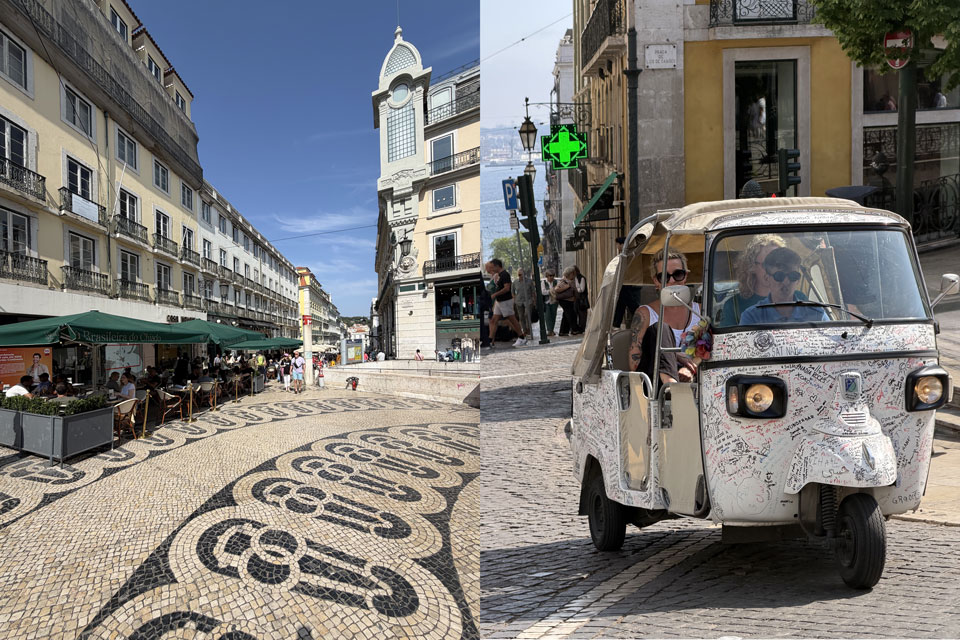
After our break, we wandered down to Praça Luís de Camões, a bustling plaza at the heart of Chiado that serves as a transition point between quiet Bairro Alto and the city’s high-end shopping district. Meandering downhill back toward Baixa, we passed an endless array of luxury storefronts. Here, even the sidewalks were a work of art—featuring intricate, decorative cobblestone patterns that seemed designed to compete with the high-fashion window displays.
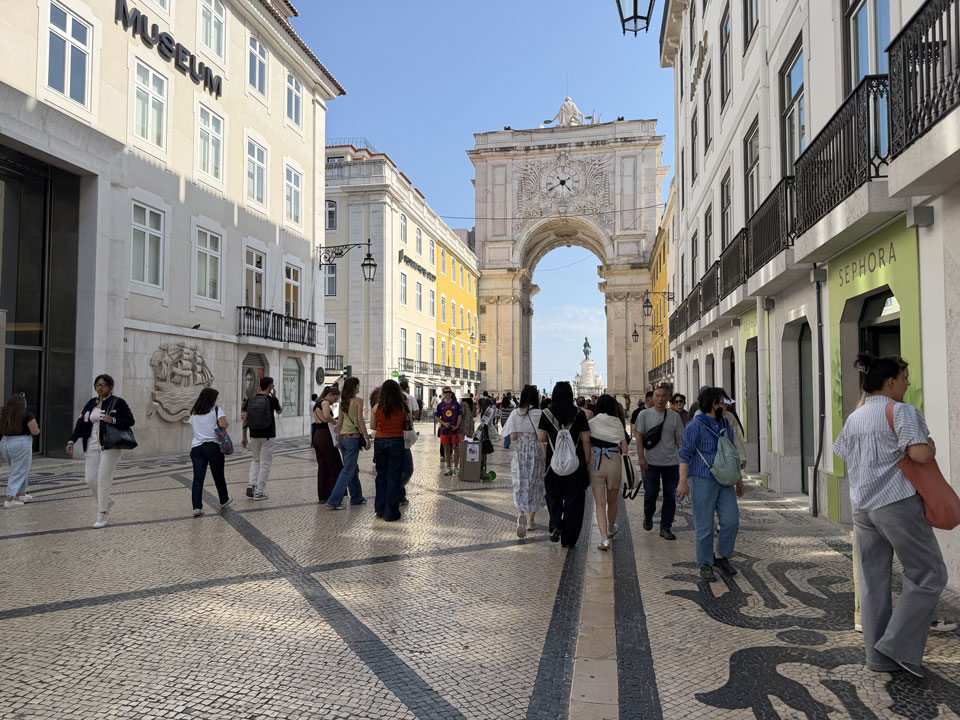

We walked back toward the water along Rua Augusta, a grand pedestrian boulevard that runs through the triumphal arch into the spectacular Praça do Comércio on the waterfront.
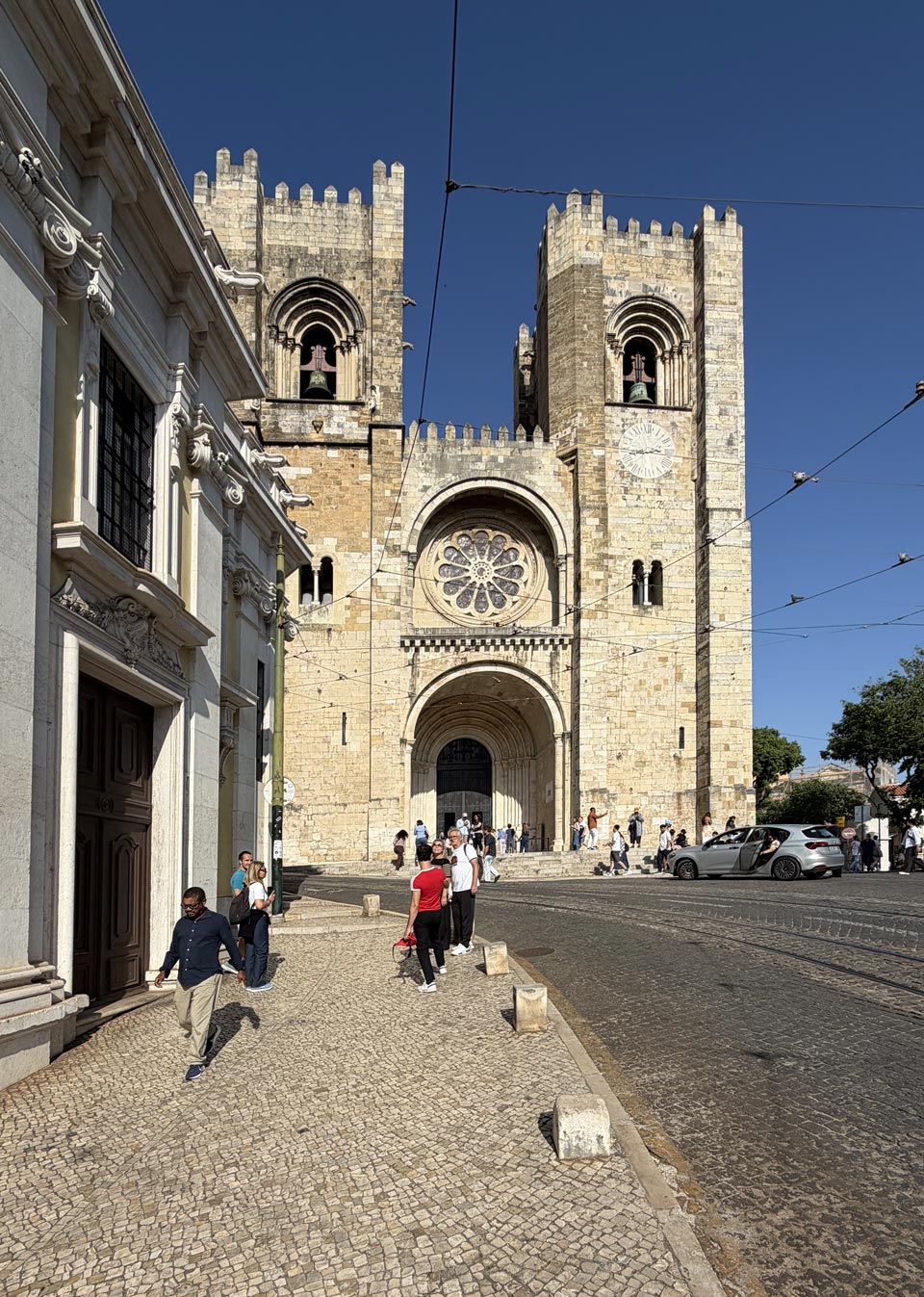
Heading back toward Alfama, we stopped by the historic Sé de Lisboa (Lisbon Cathedral) and explored its old stables (now a gift shop), which still feature original carved stone feeding troughs, and stalls. We climbed back past the Santa Luzia gardens to freshen up for dinner.
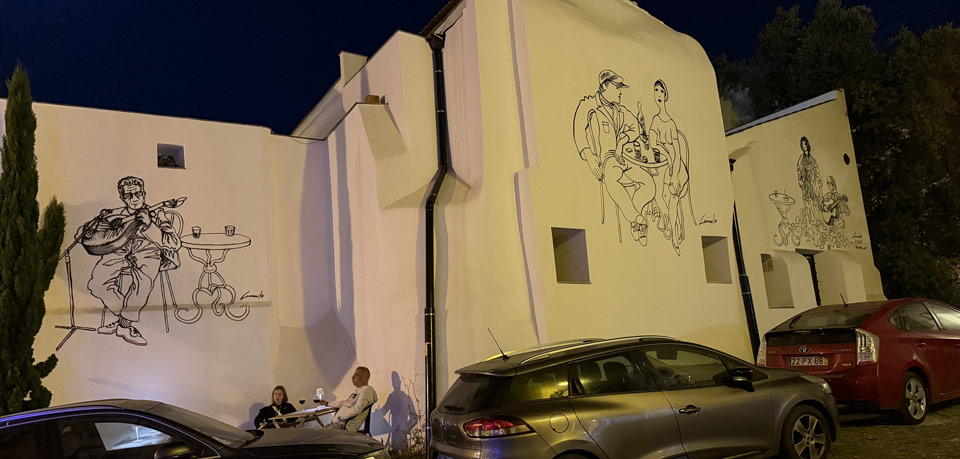
For dinner, we headed to Zum Zum, a lively Michelin-starred gastropub located on the cruise ship pier. The food was delicious, and the service was excellent. Afterward, we walked back up the hill under the warm, amber glow of Alfama’s streetlights, marveling at how the neighborhood transforms into a magical labyrinth of outdoor cafés at night.
Day 3: A Trip to Nearby Sintra & One Last Evening
Our third day began with a walk uphill for breakfast at Augusto Lisboa, a hidden gem on an exceptionally narrow sidewalk that made it a little difficult to find. Once again the service and food were fantastic.
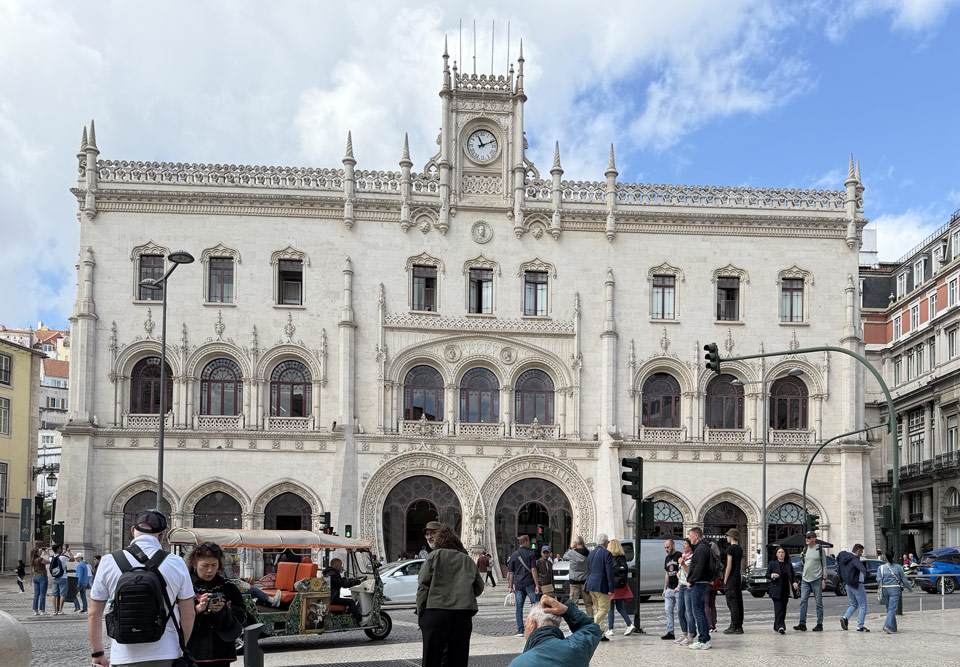
From there, we walked to Rossio station and took a day trip to the beautiful town of Sintra (details of that excursion coming in a future post).
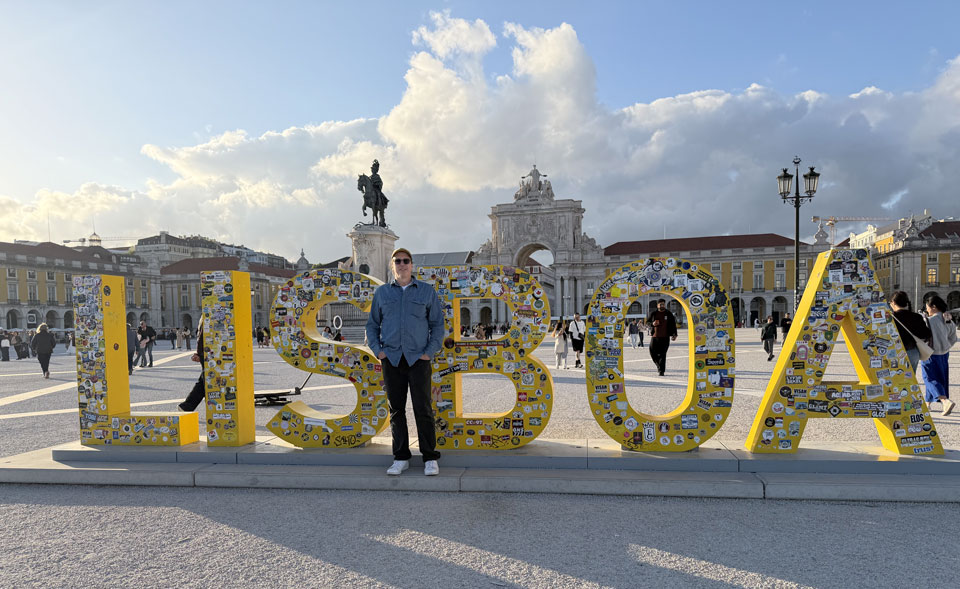
We returned to Lisbon in the early evening, walking down to the waterfront at Praça do Comércio to see the grand LISBOA sculpture and the old stone spires in the river.
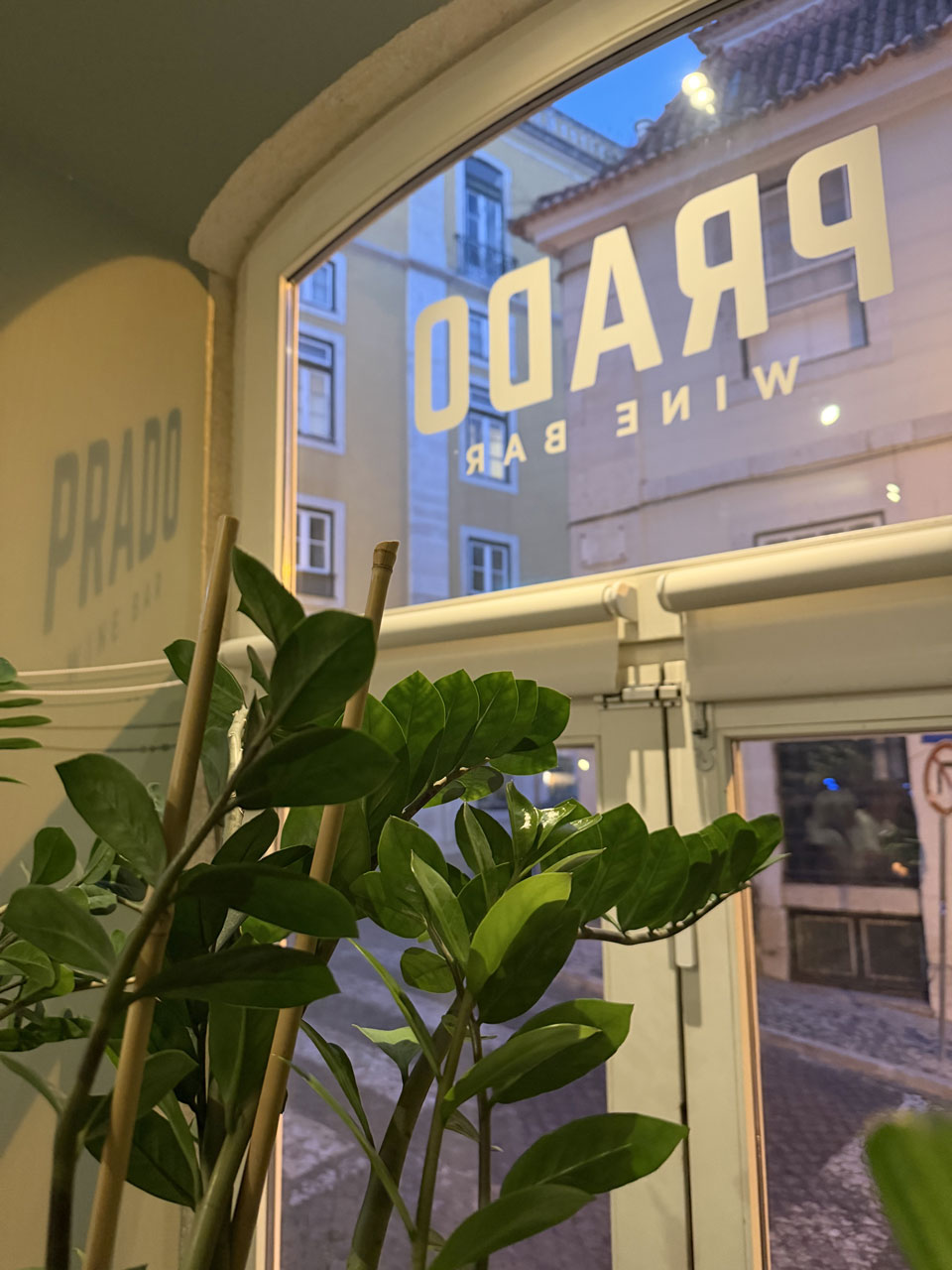
For dinner, we visited Prado Wine Bar, an intimate and beautifully designed space located right around the block from its parent restaurant. The service was outstanding; our server patiently guided us through local wine selections, turning our lack of Portuguese wine knowledge into a custom tasting. The menu is designed around shared small plates, and every dish excelled. Our favorites were the sublime tempura-style asparagus with hollandaise and a hint of white pepper, followed by a phenomenal, slow-roasted pork dish that was the undisputed star of the meal.
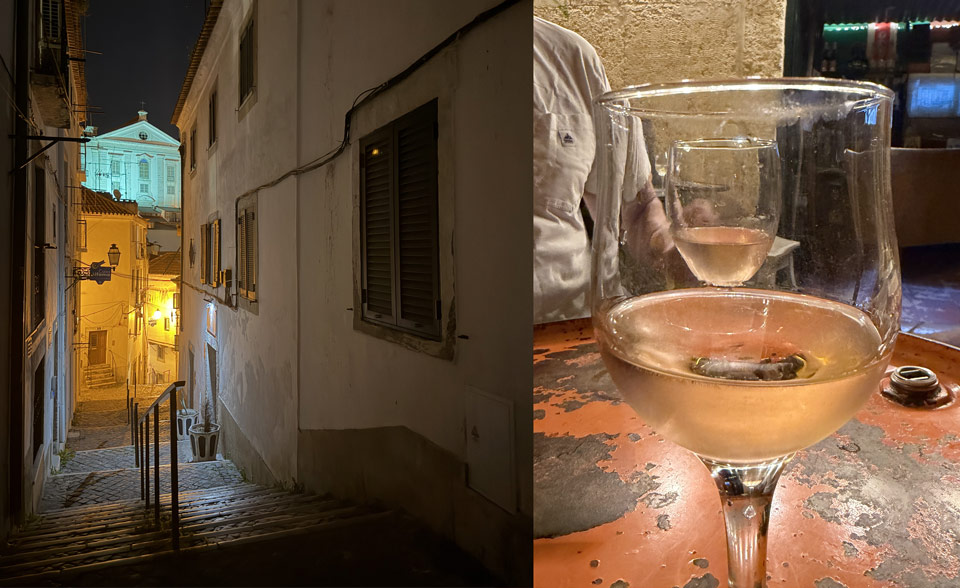
After dinner, we walked back through the now familiar, glowing streets of Alfama, ending our night at Café do Vigário with a glass of wine at a street table right next to our apartment.
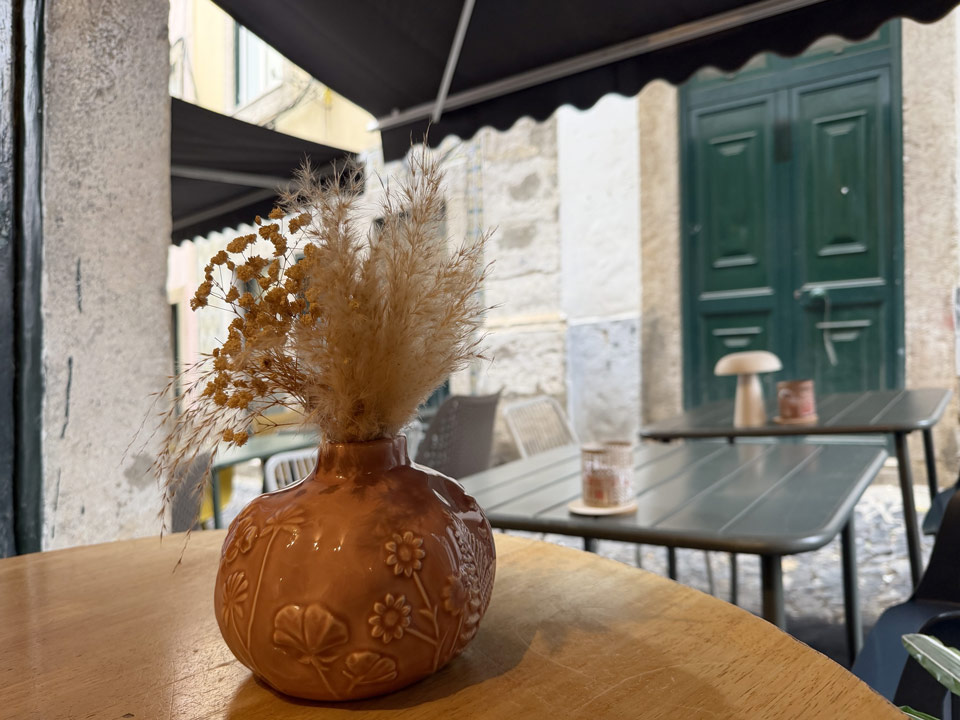
Our Last Morning
On our final morning, we made one last trip up the hill to Quase Cafe for another exceptional breakfast before grabbing our stored luggage and catching a train to Porto.
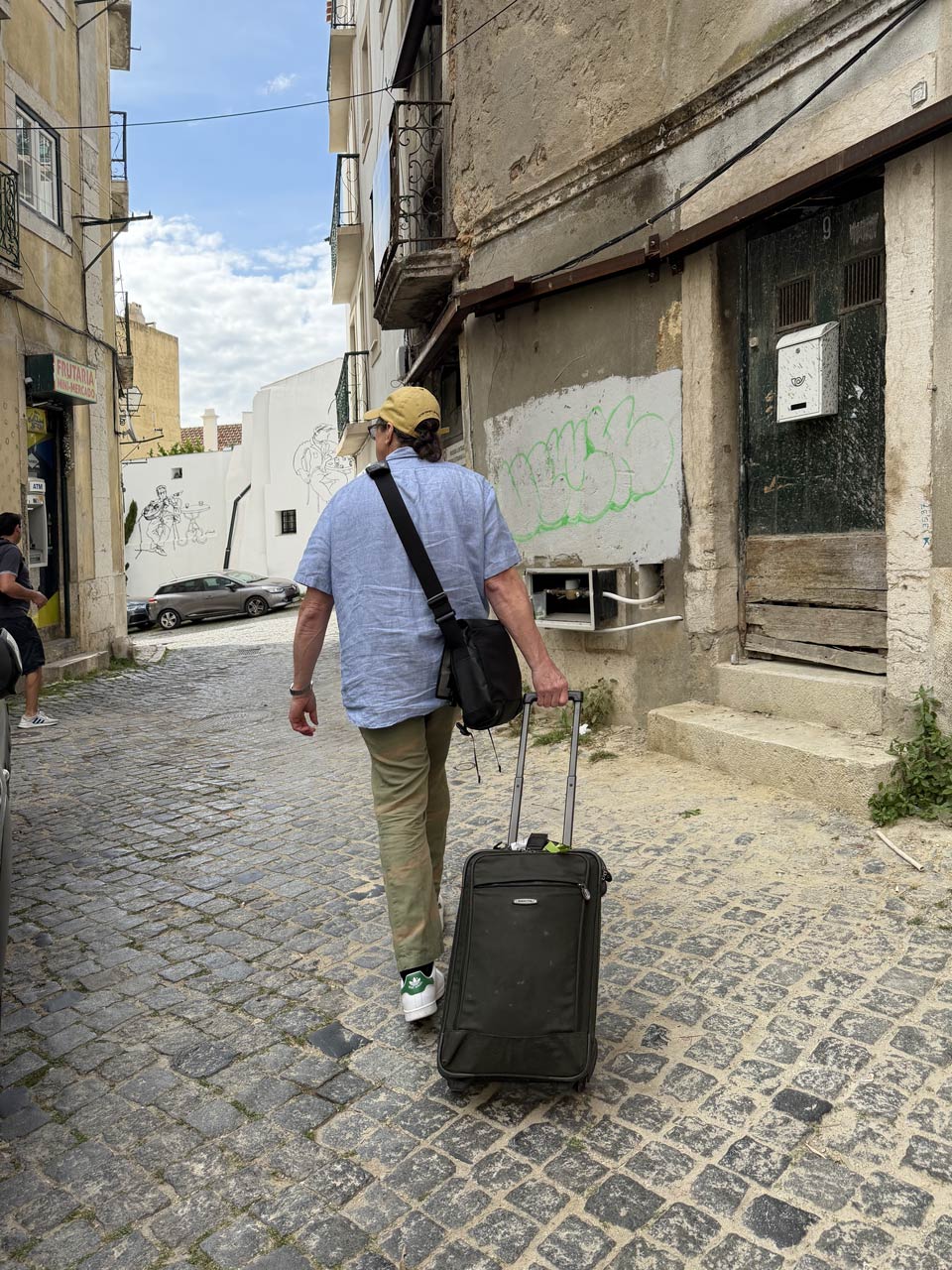
Reflecting on our three days, Lisbon completely captured our hearts. It is a spectacular city to explore on foot. From the ancient, hilly charm of Alfama to the grand, geometric streets of Baixa and Chiado, it offers an endless array of hidden cafés, beautiful views, and delicious food. We highly recommend adding this magical city on the Tagus to your travel bucket list.
This Article May Also Interest You: Mallorca: Where Every Turn Reveals Another Wonder

Iberian Adventure: Highlights from our trip to the Iberian peninsula
In late April, we embarked on a journey across the Iberian Peninsula that would take us through some of the most captivating destinations in Southern Europe. Our adventure began in Lisbon, Portugal, including a memorable day trip to Sintra. From there, we traveled north by train to Porto, Portugal followed by a flight to the island of Mallorca, Spain, with its collection of ancient cities, soaring mountains, and bucolic waterfronts. Our trip concluded in Barcelona, Spain exploring the seat of Catalonia. Each stop offered its own unique blend of history, culture, and unforgettable experiences.
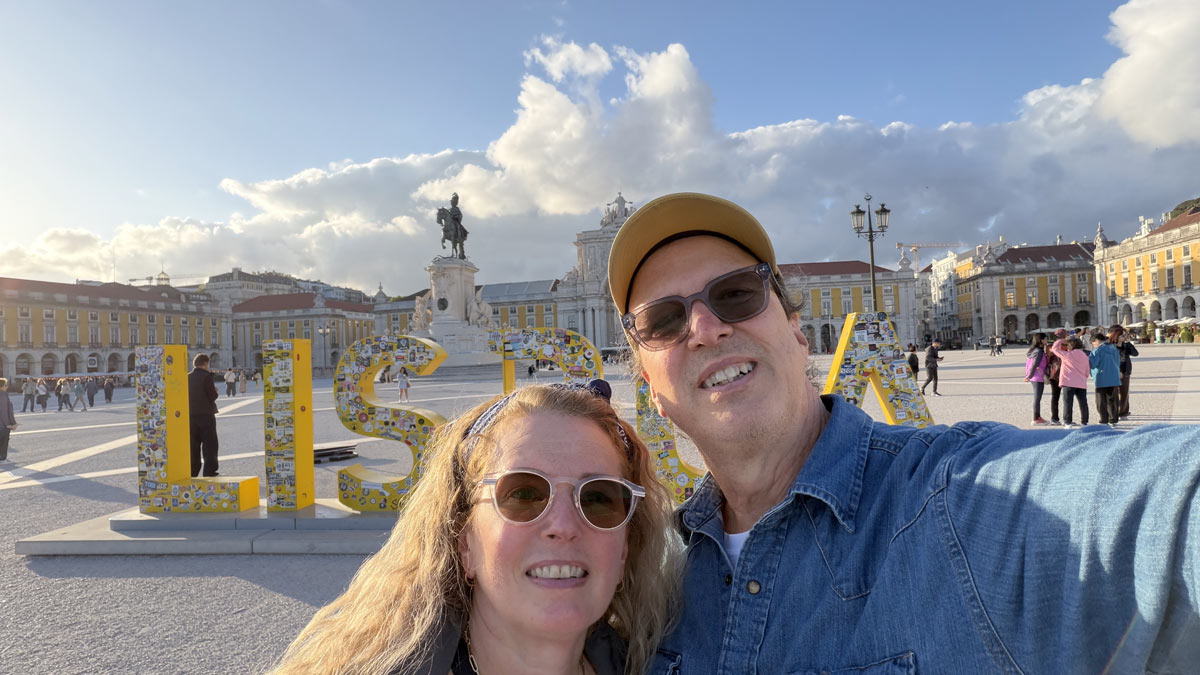
Lisbon
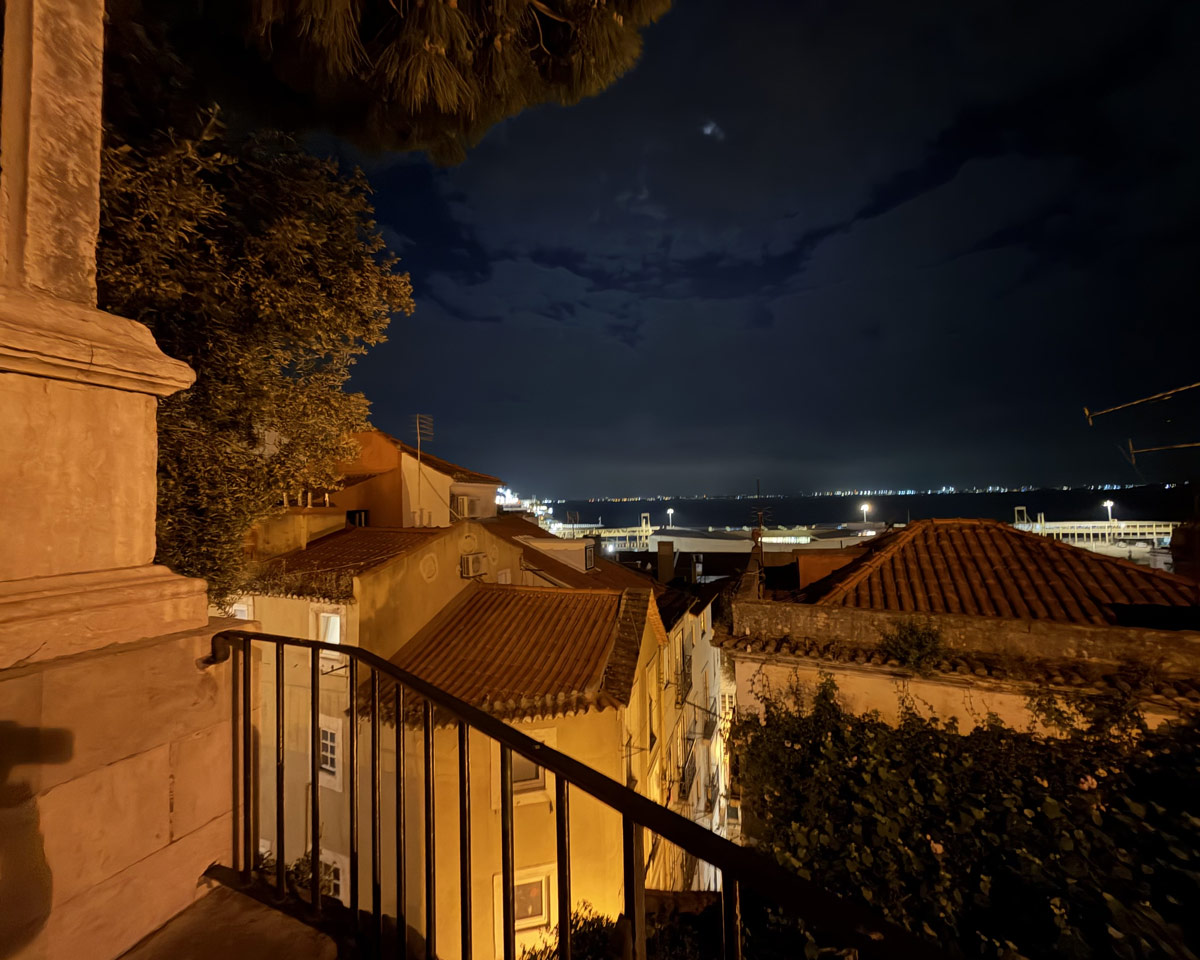
Lisbon is one of the oldest cities in Europe. Strategically positioned at the mouth of the Tagus River, the longest river on the Iberian Peninsula, the city has benefited from a naturally protected harbor and a location that linked northern Europe with northern Africa. As a result, Lisbon has served as an important center of commerce since roughly 800 BC.
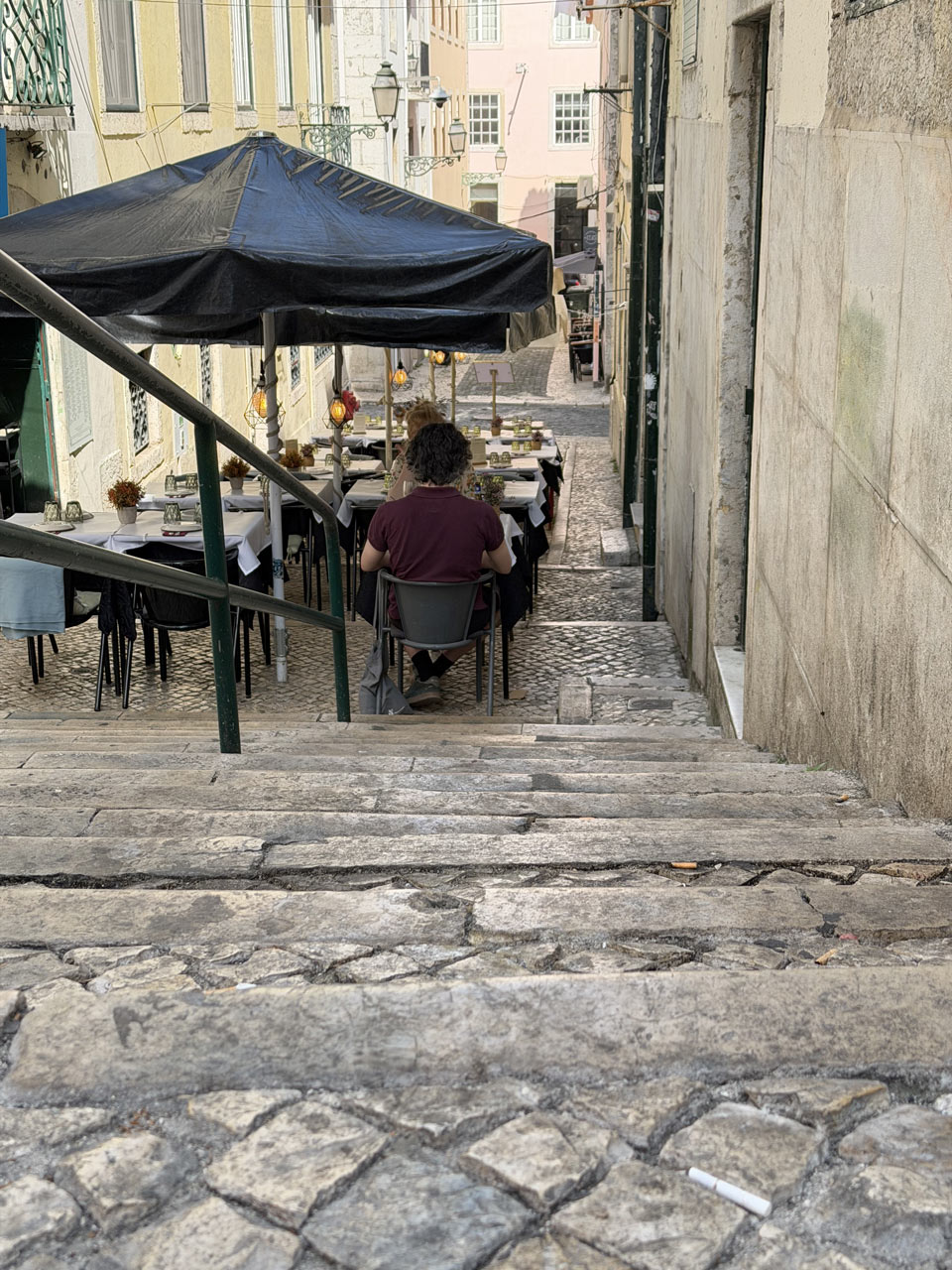
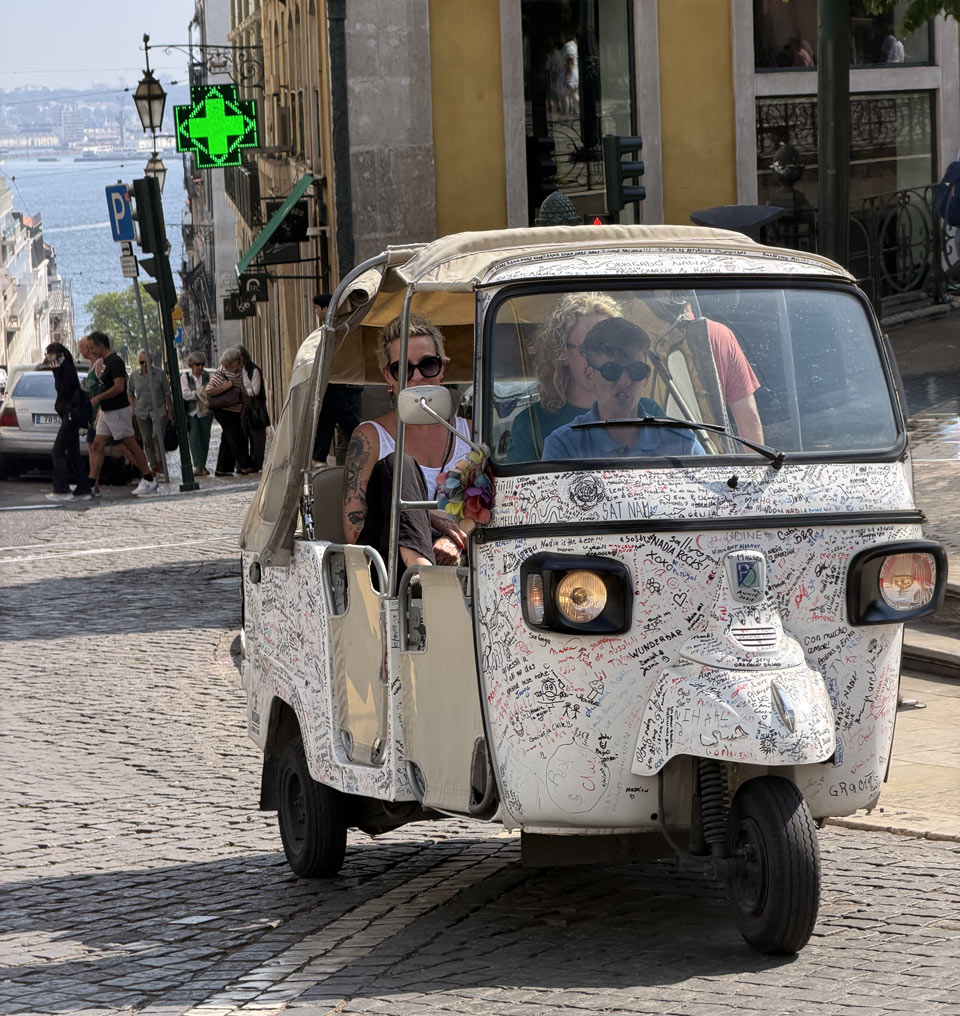
Replete with World Heritage sites, castles, monuments, and reminders of its storied past, Lisbon rewards visitors with spectacular vistas and endless discoveries. Our first observation upon arrival was simple: wow, this city is steep. Built across a series of hills and valleys, Lisbon challenges visitors to climb and descend its maze of ancient streets. Sidewalks, almost entirely paved with intricate cobblestones, weave among roadways, tram tracks, staircases, and shops that seem to spill directly onto the narrow streets. This is an exceptional walking city with fascinating discoveries around nearly every corner.

We quickly learned that the shoes of choice were Samba’s and Stan Smith’s. From our sixth-floor Airbnb walkup—appropriately dubbed "A Room with a View"—we spent our days wandering through neighborhoods where colorful Moorish inspired ceramic tiles decorate building facades, laundry hangs from balconies above winding lanes, and small shops displaying everything from handcrafted cork products to Portugal’s beloved sardines. Around nearly every corner was another postcard-worthy scene, another staircase disappearing into the distance, or another breathtaking overlook waiting to be discovered. Look for more explorations of this great city in our upcoming article on Lisbon.

Sintra

Just thirty minutes by commuter rail from Lisbon’s Rossio Station lies Sintra, a place that feels as though it has been lifted directly from the pages of a fairy tale. Nestled among the forested hills of the Sintra Mountains, this remarkable town has long been a retreat for Portuguese royalty, aristocrats, and wealthy merchants. Similar in age to Lisbon, Sintra is one of the most affluent regions on the Iberian Peninsula, home to sprawling estates, ancient castles, lavish palaces, and a densely populated historic center recognized as a World Heritage Site.

From the moment we arrived, Sintra seemed almost magical. Misty hills, winding roads, towering trees, and colorful palaces perched on distant ridges create an atmosphere unlike anywhere else in Portugal. Every turn reveals another hidden garden, stone wall, or grand estate, making it easy to understand why Sintra has inspired artists, writers, and dreamers for centuries.

After arriving by train, we wandered up the roadway carved into the mountainside, passing historic villas, modern estates, and public gardens whose scale and beauty were simply staggering. Our primary destination for the day was Quinta da Regaleira, a four-hectare palace and estate that feels more like a fantasy kingdom than a traditional historic property. Purchased by the town of Sintra, carefully restored, and opened to the public in 1998, the estate invites visitors to explore at their own pace through a self-guided tour. Crowds are managed through timed entry tickets, which can be purchased at the gate, though we recommend ordering them online when arriving at the train station, as we did. In future articles, we'll take a deeper dive into our experiences exploring Sintra.
Porto
Porto is Portugal’s second largest city, situated on the estuary of the Douro River. It is a fascinating and beautiful destination that seamlessly blends modern urban amenities with ancient architecture, winding cobblestone streets, and scenic waterfront promenades. One of the oldest urban centers in Europe, Porto's historic core was designated a UNESCO World Heritage Site in 1996.
We stayed in a lovely apartment on the border between the city’s historic center and the newer 19th and 20th century districts. Like Lisbon, Porto is a fantastic city to explore on foot. Modern avenues quickly give way to winding medieval passageways that meander down toward the Douro River waterfront. While the newer neighborhoods are relatively flat and easy to navigate, the older sections become increasingly steep as they descend toward the river.
One of our favorite side trips was taking the historic tram to the Atlantic coast, a ride of about twenty minutes each way. We spent some time exploring the beach before stopping at an interesting James Bond-themed shop and bar for a glass of wine and a bit of shopping. Afterward, we returned to the city waterfront and enjoyed a leisurely walk back to our apartment.
Our next destination required a flight to the island of Mallorca. Like most of Portugal, transportation arrangements were remarkably easy. The car service was waiting outside our door and delivered us to the airport in about twenty minutes. Please look for our upcoming, much more detailed article about Porto.
Mallorca
Next up was Mallorca. The largest of Spain’s Balearic Islands, located in the Mediterranean Sea off the eastern coast of mainland Spain. The island's capital, Palma, is also the capital of the autonomous community of the Balearic Islands. Most visitors begin their journey in Palma, which is not only the island’s largest city but also its cultural and economic center.
Mallorca offers an extraordinary variety of landscapes. From the dramatic mountains that rise along the western coast to rolling farmland, picturesque villages, and spectacular beaches, the island provides endless opportunities for exploration.
Palma itself is filled with historic landmarks, outstanding restaurants, fashionable shops, lively bars, and beautiful public spaces. Like any thriving modern city, it also faces the challenges of popularity, including crowds, limited parking, and higher prices in some areas.
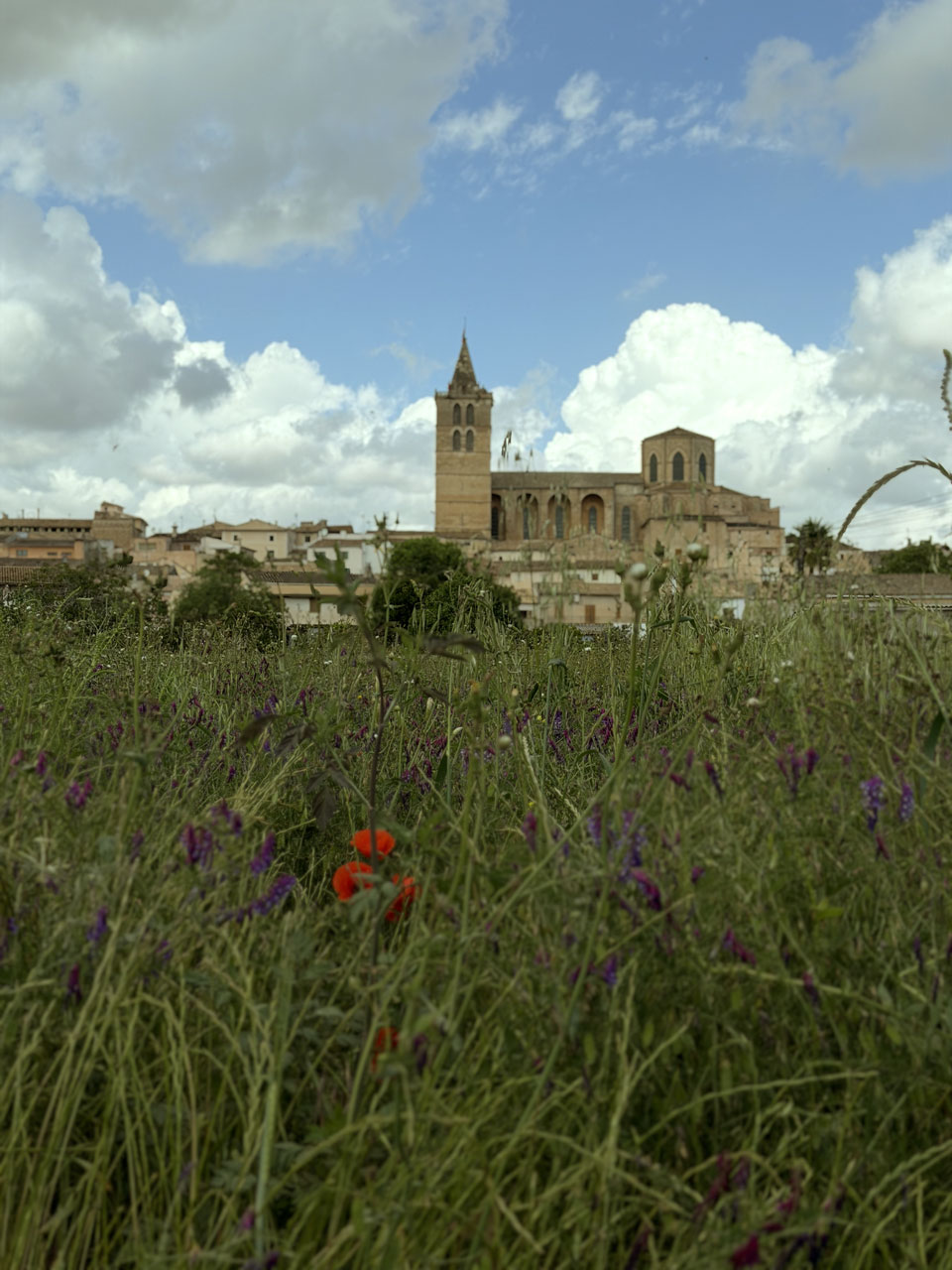
Beyond Palma, the countryside reveals an almost mythical collection of villages seemingly carved into the hillsides. Scenic waterfront communities appear around nearly every corner, offering mountain vistas, hidden coves, quaint vineyards, magical markets and charming harbors. Some towns evoke the atmosphere of a traditional Mediterranean fishing village, while others feature lively promenades reminiscent of classic American boardwalk destinations.
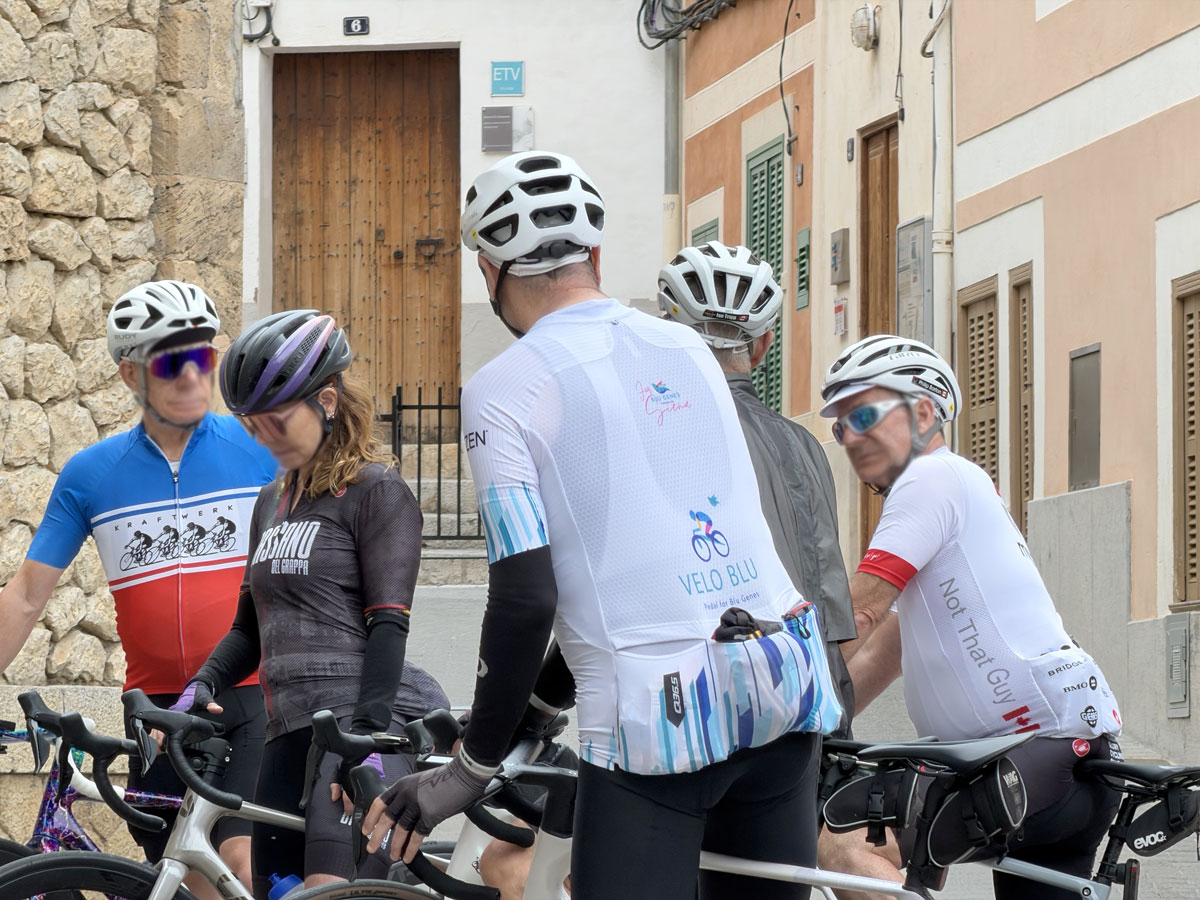
As we traveled around the island, one thing became immediately apparent: cyclists are everywhere. Some are professional riders or organized teams in training, while others are enthusiasts simply enjoying the opportunity to travel from town to town through this remarkable landscape.We will be publishing a more detailed article about Mallorca soon. Stay tuned!

Barcelona
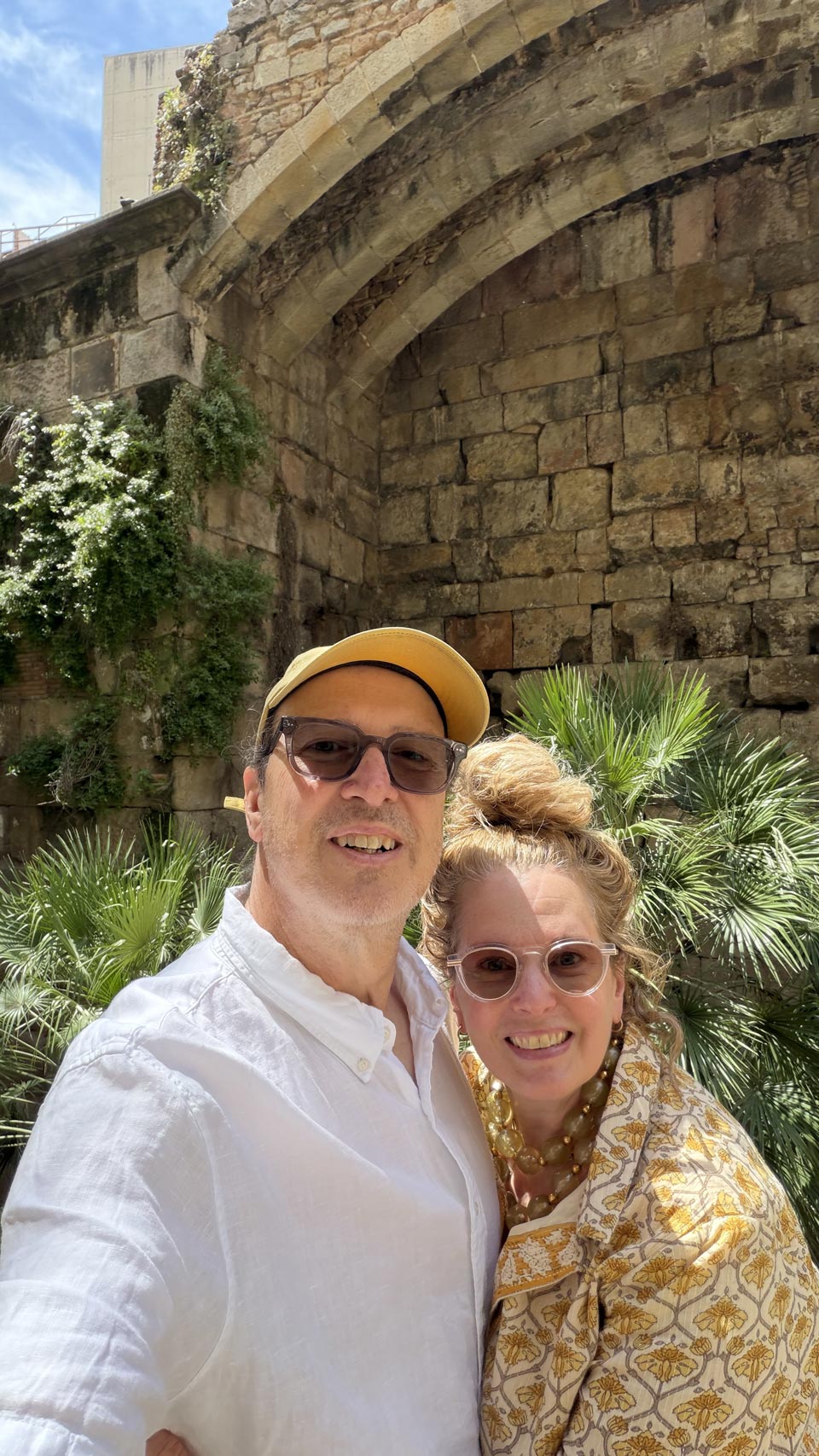
Barcelona was our last destination on this Iberian adventure. Barcelona is Spain’s second-largest city and the capital of the semi-autonomous region of Catalonia. One of Europe’s oldest and most influential municipalities, Barcelona is a jewel on Spain’s northeastern Mediterranean coast.
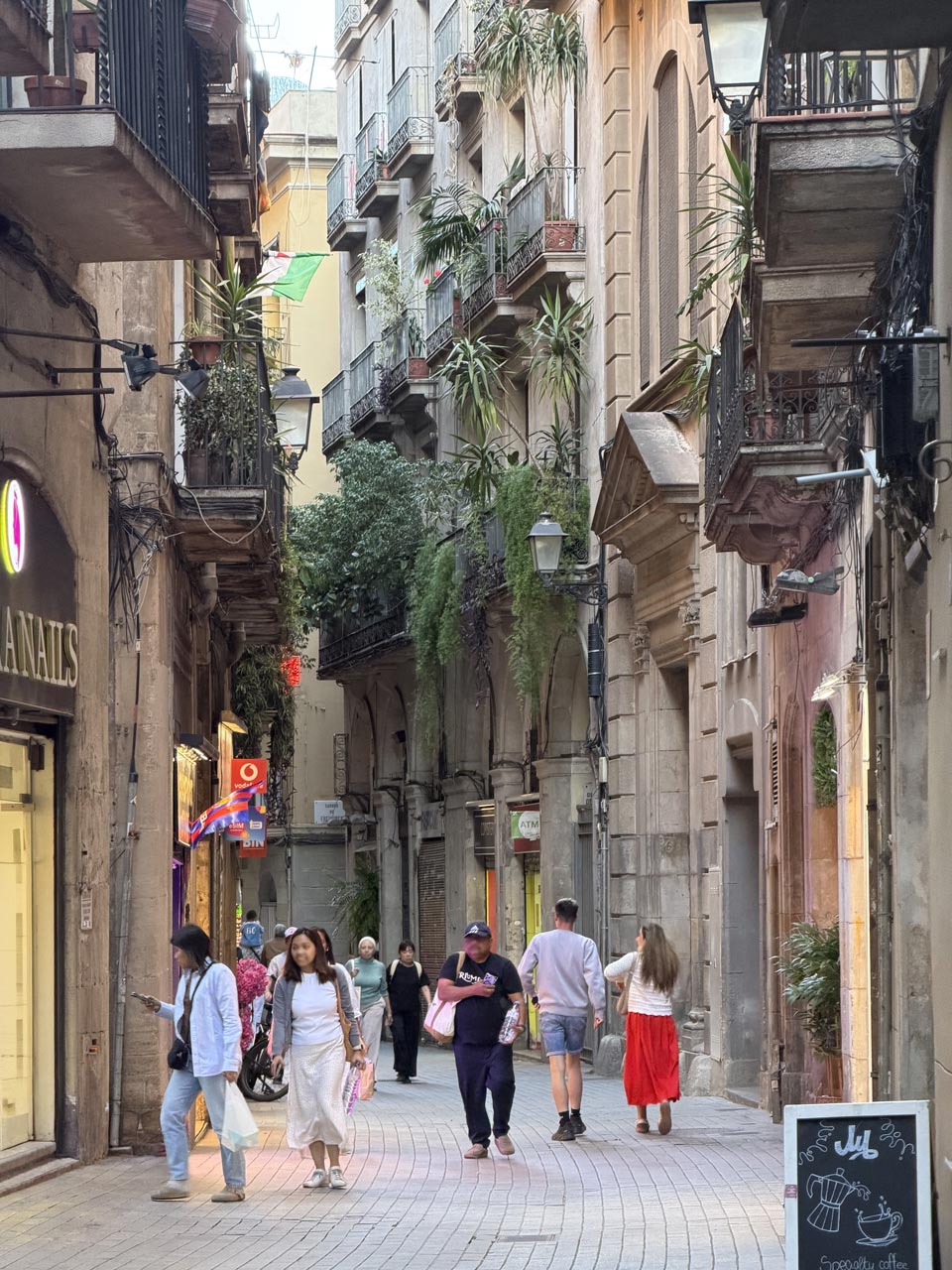
We stayed in the Gothic Quarter, a historic district characterized by narrow winding streets, beautiful churches and cathedrals, and an abundance of shops and restaurants. Although Barcelona is a vibrant modern metropolis in every sense, the Gothic Quarter often feels as though it has been frozen in time since the fifteenth century.
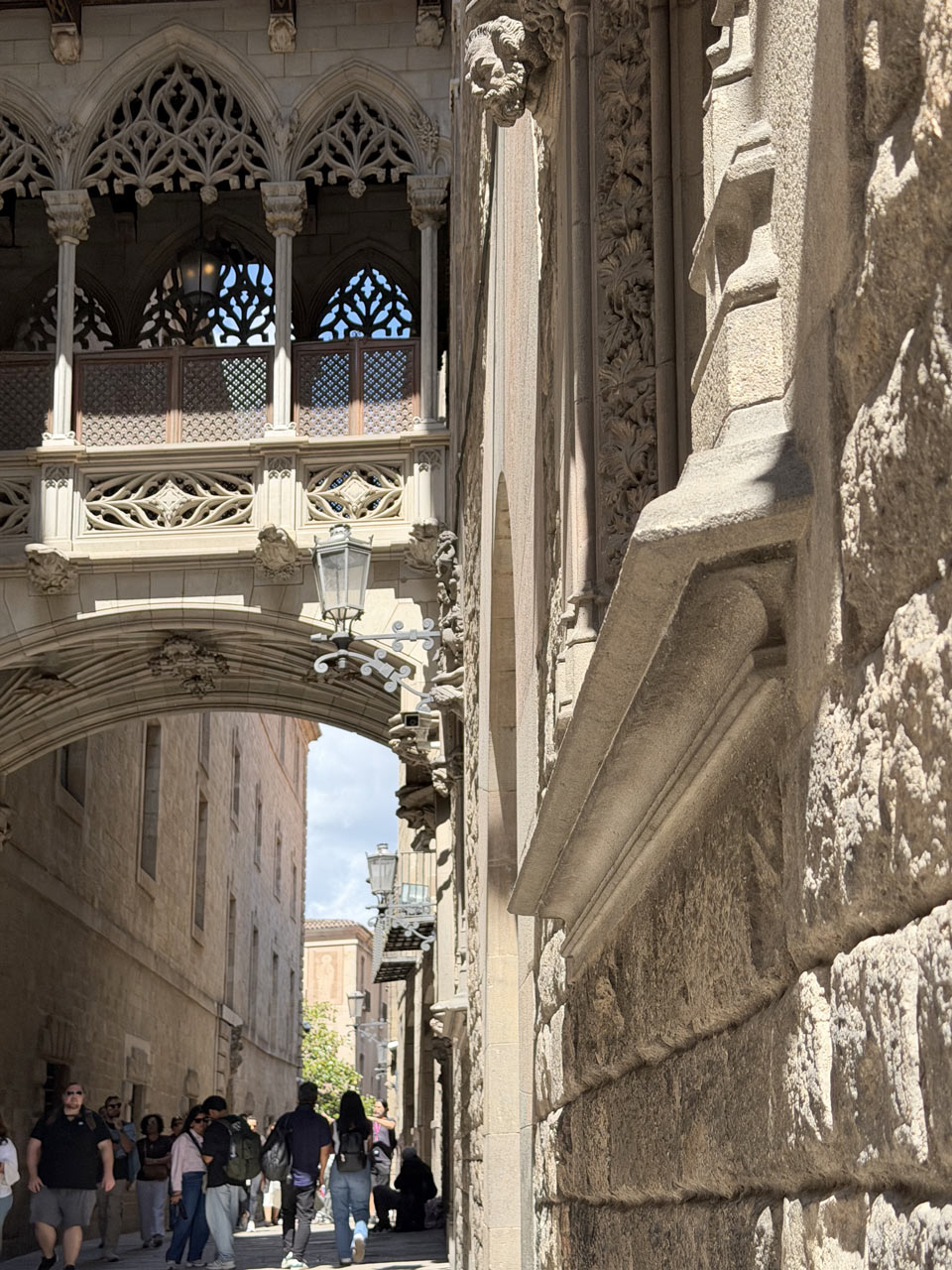
Barcelona is home to an extraordinary collection of museums, galleries, cafés, shops, and restaurants, with few poor choices for visitors. During our explorations, we passed numerous historic churches and cathedrals, many offering tours of their ancient interiors, hidden courtyards, and peaceful gardens. Museums seem to be everywhere.
We began our cultural exploration at the Picasso Museum. The museum provides a fascinating chronological journey through Picasso’s artistic development, beginning with his student years and tracing the evolution of his style. The collection clearly demonstrates how his later Cubist masterpieces grew from the foundations established in his earlier, more representational paintings and drawings.
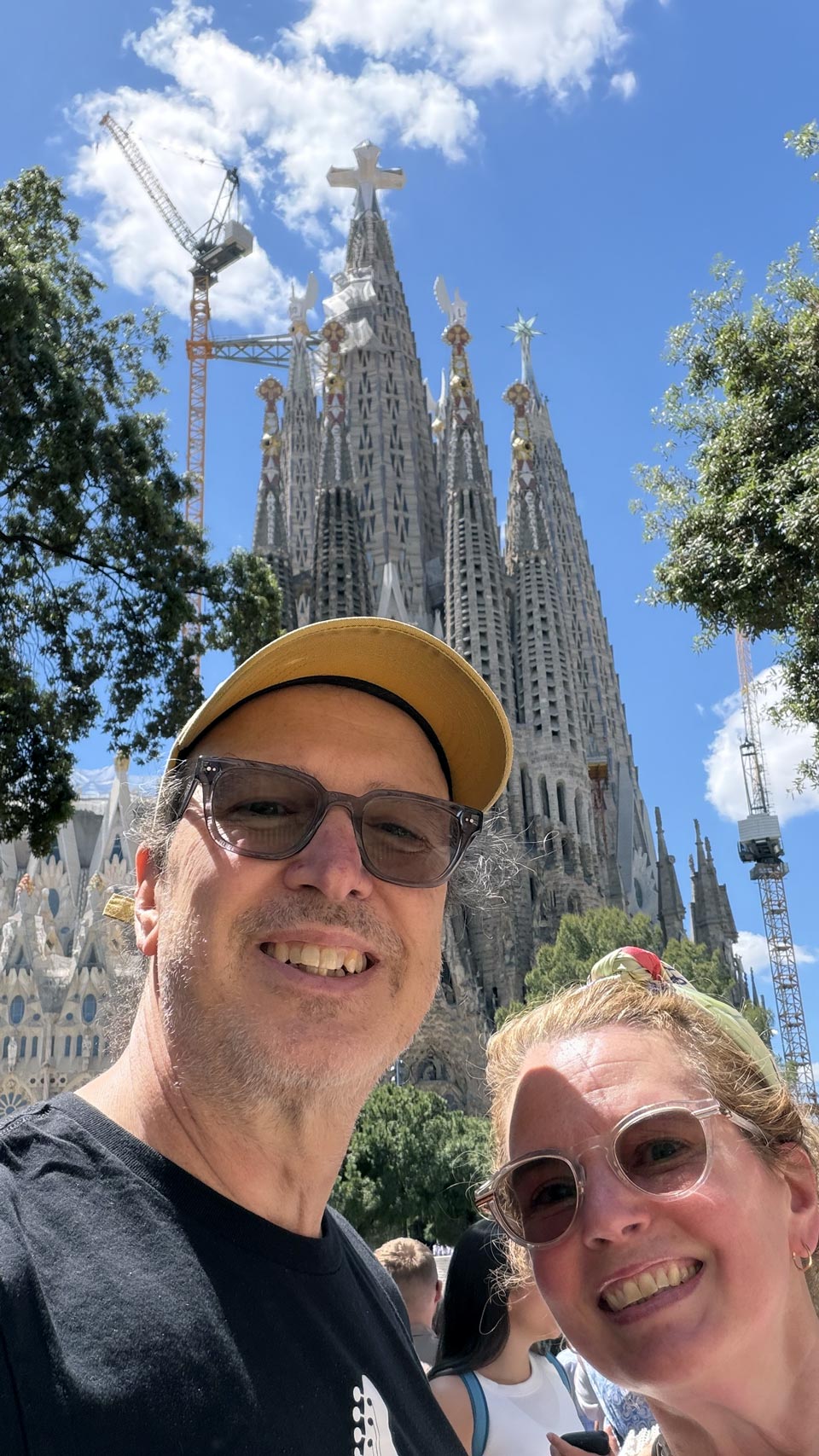
No trip to Barcelona would be complete without experiencing the work of Antoni Gaudí. We visited several of his most celebrated creations, beginning with the spectacular Palau Güell, located near the Gothic Quarter. We then toured the magnificent Sagrada Família, the iconic basilica whose construction has continued for well over a century. Our Gaudí exploration concluded at Casa Milà, his final major residential project before dedicating himself fully to work on the Sagrada Família. Look for our upcoming articles, which will explore Barcelona and the prolific work of Antoni Gaudí in greater detail.
As our journey across Portugal and Spain came to an end, we found ourselves reflecting on the remarkable diversity of experiences packed into just a few short weeks. From Lisbon's steep cobblestone streets and Sintra’s fairy-tale palaces to Porto’s riverside charm, Mallorca’s breathtaking landscapes, and Barcelona’s extraordinary blend of history, art, and architecture, each destination revealed a different facet of the Iberian Peninsula. Along the way we encountered ancient civilizations, vibrant modern cultures, spectacular natural beauty, and countless moments of unexpected discovery. While this overview captures the highlights of our adventure, each stop has a much deeper story to tell. In the coming weeks, we’ll share more detailed articles exploring the places, people, food, history, and hidden gems that made this journey one we will remember for years to come. Heidi & Tim
This Article May Also Interest You: Blooming Wonders: A Celebration of Spring

Cortina D'Ampezzo, Italy
Cortina is a enchanting place. Situated in a high valley in the Dolomites north of Venice. Cortina literally has something for everyone, from the designer shops lining the village, the Michelin star restaurants on the hill, to the ski slopes, and cliffs from James Bond this is a truly unique place.
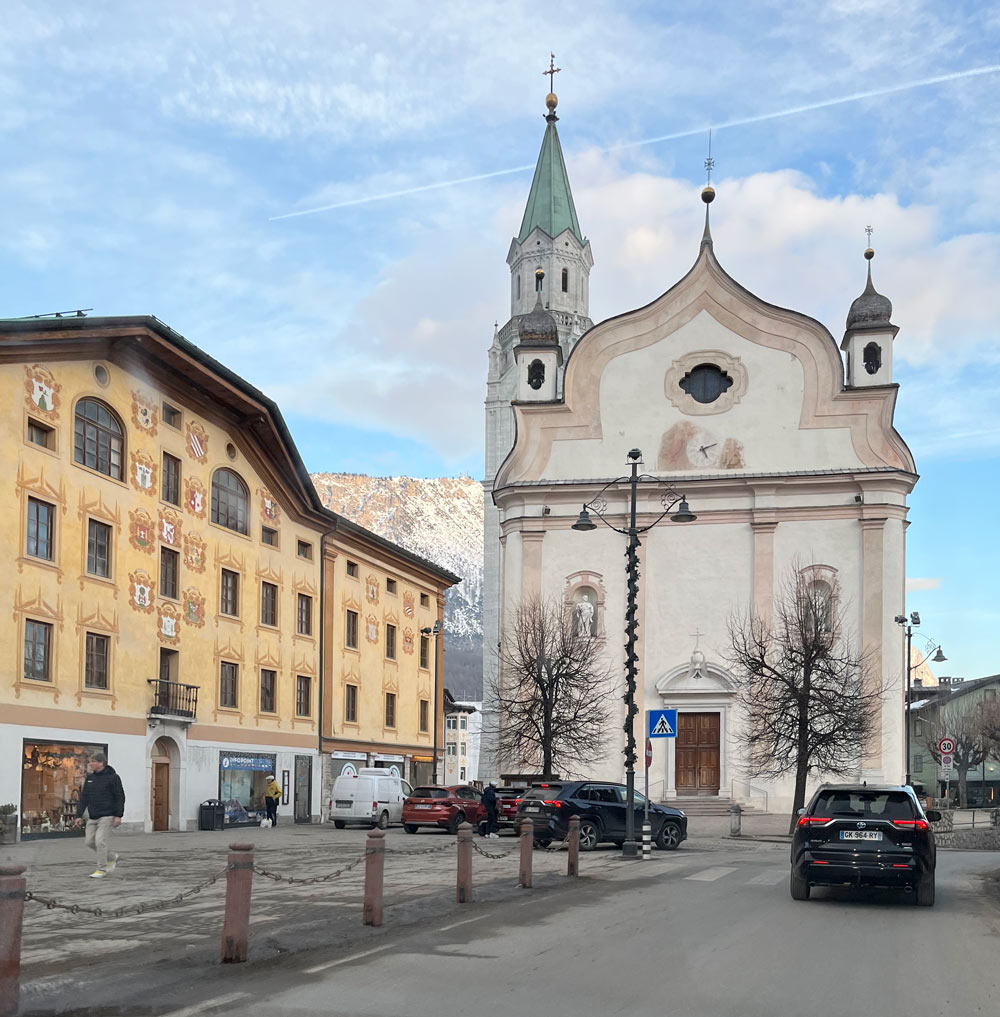
While some mountain towns are best experienced by walking, and riding public transportation, in Cortina a car is essential. There are buses, but the skiing is so spread out that it really makes sense to have a car to get around. Parking, however, can be a problem. For us it often dictated where we started our day skiing. There is a romantic idea that people here drive small Fiats. The reality is that they all drive large SUV’s, and parking can be an effort. Be prepared to squeeze in and out of your car.

Visually, Cortina looks very similar to other alpine areas with homes cut into the mountains using large overhanging rooflines to shed snow, large timber structure and many with stone or stucco walls broken up with balconies, railings, and large windows. Although not above the tree line, there are very few trees in and around the village. This creates spectacular views in almost any direction, with particularly beautiful vista’s from any elevated spot.
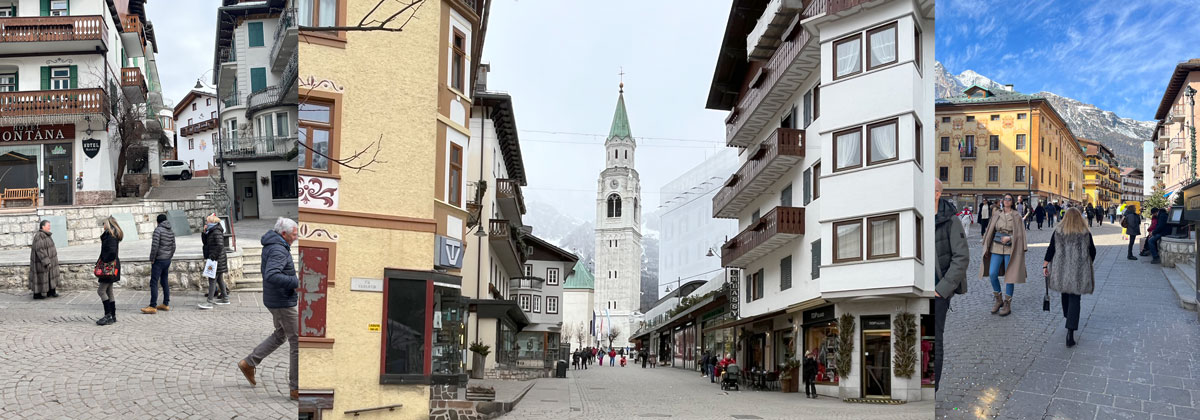
In the center of the village is a large pedestrian mall that has nearly every luxury boutique that one can imagine. There are restaurants, home stores, designers, hotels, bars and a farmer’s market next to the bus station all within easy walking distance. Galleries feature local artists and small shops have a great selection of anything you may need during your stay.
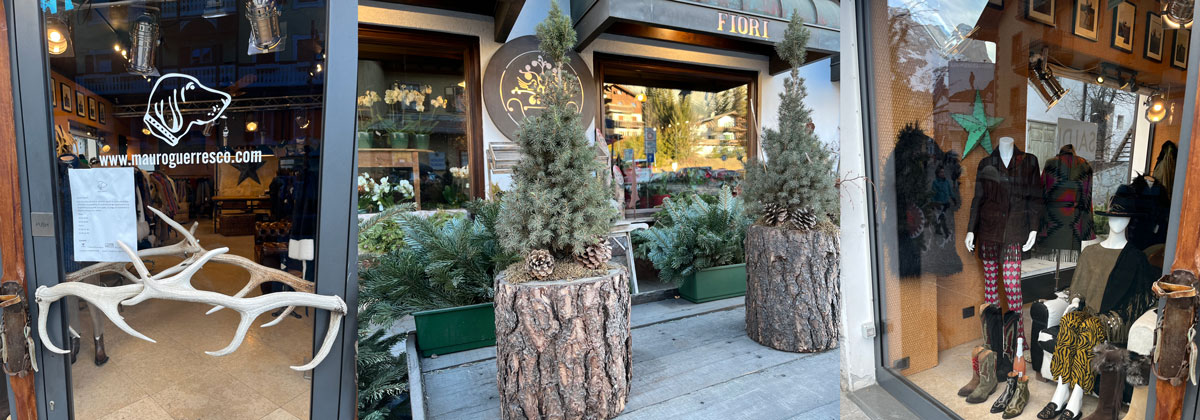
One of the most useful shops in town is the coop which features several shops including a very nice grocery store. La Cooperativa di Cortina is housed in a newly renovated building, the market features home stores, a gift shop, a jewelry store, a garden shop, wine shops, a book store, a clothing shop and a large supermarket spread over seven floors. A bank of escalators will take you up and down as you explore.
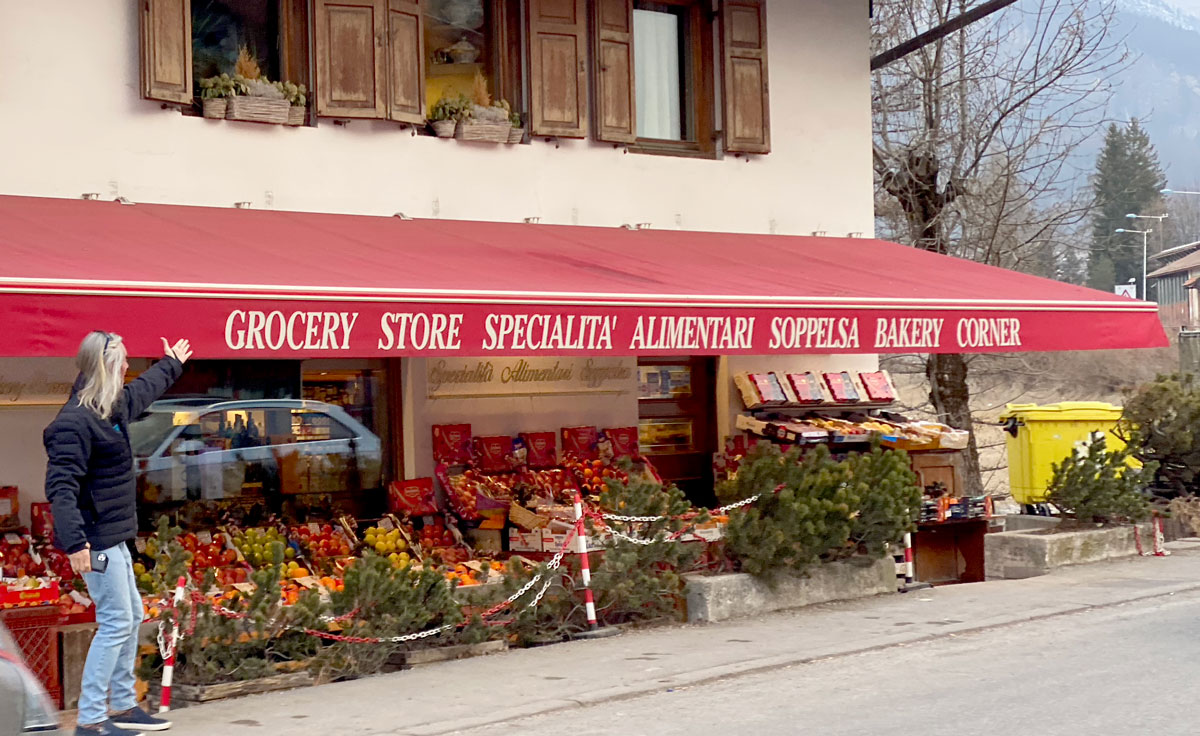
Our favorite small grocery store was on the northern edge of the village. We are still unsure of the actual name of the shop, but we began calling it just Prego, Prego. The proprietors are a father and son who barely speak any English, but have a way of communicating about the food and wine they carry. The items they carried were all fresh and very good. The name comes from the father, who doesn’t speak any English, but effectively communicates with varying tones of Prego. He could communicate with just changes in the pitch of his delivery of his Prego’s.

A unique feature of the Dolomite areas is that there are restaurants on the ski hill that appear ski in/ski out, but are also accessible via winding mountain roads with your car. These restaurants are some of the best in Cortina, with four sporting Michelin stars. We found that lunch was their important meal and several of the best restaurants only serve lunch during the week and offer dinner on Friday or Saturday.

Skiing
Like other European ski areas we have been to, base lodges are an exception. Most dressing and preparation is done at the car or before heading to the mountain. Some areas have small buildings with ticketing, rentals, and bathrooms, but we found very few areas to get ready and store unused gear the way it is done in the USA. Basically you will need to carry everything you will need with you on the mountain.
| | |
Ski Insurance: While skiing in Italy, you will require your own liability and injury insurance. There are ski patrols on the mountain, but you are expected to have personal liability insurance and will be expected to provide the details on the mountain if you have an issue. |
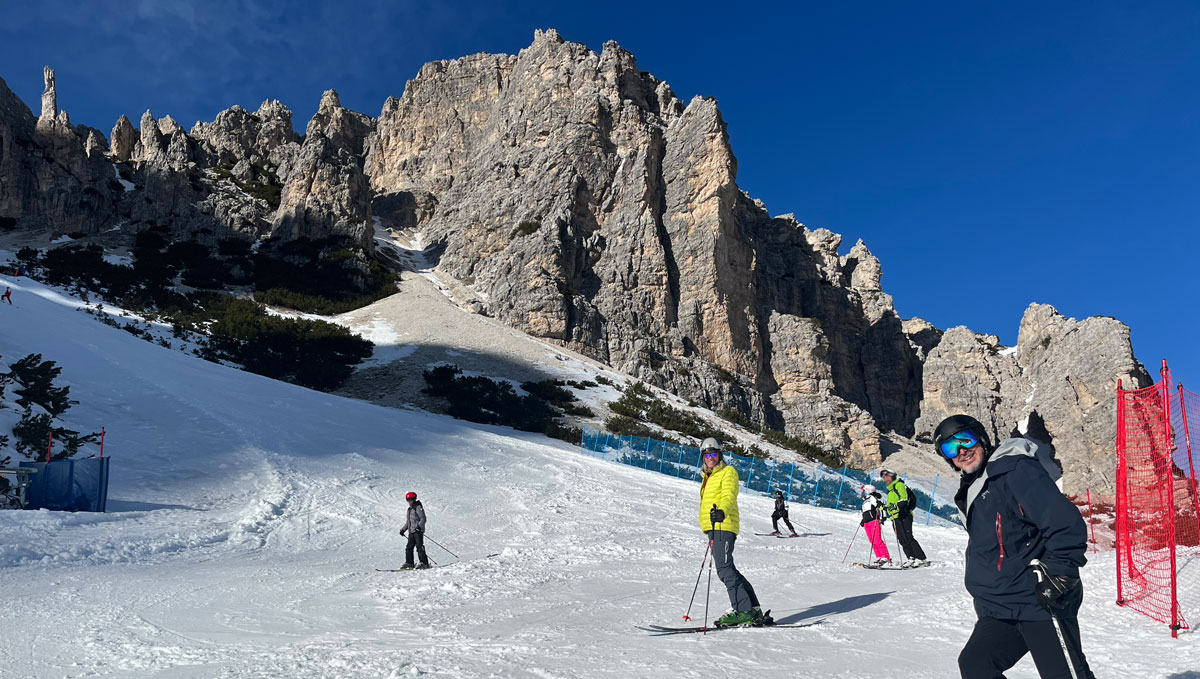
Tofana
Nestled along the west side of Cortina is the sprawling area of Tofana. There are three main access points to this area. One in the village is a gondola that is on the northern side of town. The second is the primary Tofana base that is a couple Kilometers up the hill with large parking lots and a few services like bathrooms and ski rentals at the base. Third is a bit further up the road toward Pocol. We primarily used the main Tofana base because it is where all of the terrain converges.
Tofana is the busiest area in Cortina. There are cars constantly trying to find spaces, and police ticketing the illegal parking that occurs along the roadway. Our patience rewarded us on several occasions with a rare parking spot for the day.
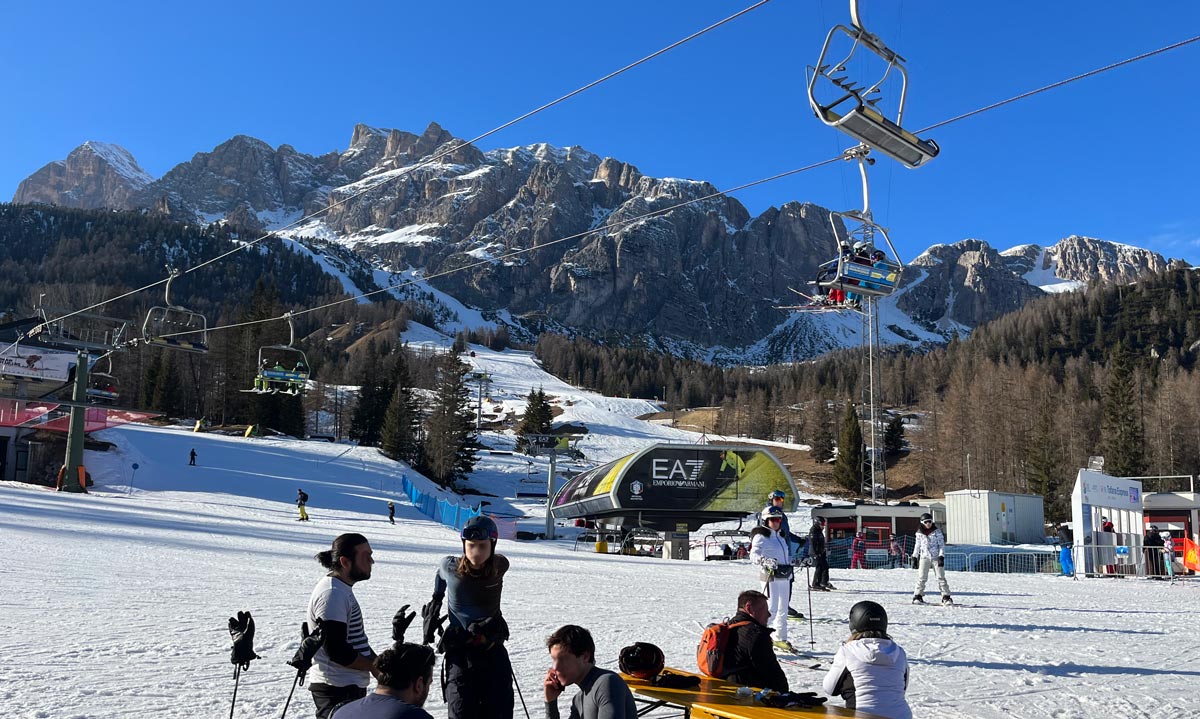
The primary Tofana base has a chain of four chairlifts that will take you up to the top. From the top you can ski the downhill race coarse complete with protective netting to keep skiers from falling off the edge of the trail. Icy and steep, the trail will take you through an amazing valley between two large rock outcrops. While this section is spectacular, it is very icy and scraped clear of snow by skiers side slipping their way down.

From the mid-mountain area we spotted a cable car that appeared to take skiers up to the neighboring mountain top. We skied down to a gondola mid station and rode the gondola up to the base of the cable car that we noticed. This cable car brought us up to a small additional area that has a chair lift and several trails that were quite a bit higher than the other Tofana terrain. The only limiting factor for this location is the narrow, very steep, exit back down to the rest of the area. Cutting through the mountain is a set of narrow chutes with at least one section approaching 40+% grade. The difficulty with this exit is the volume of people struggling with the difficulty of the trail.
Faloria
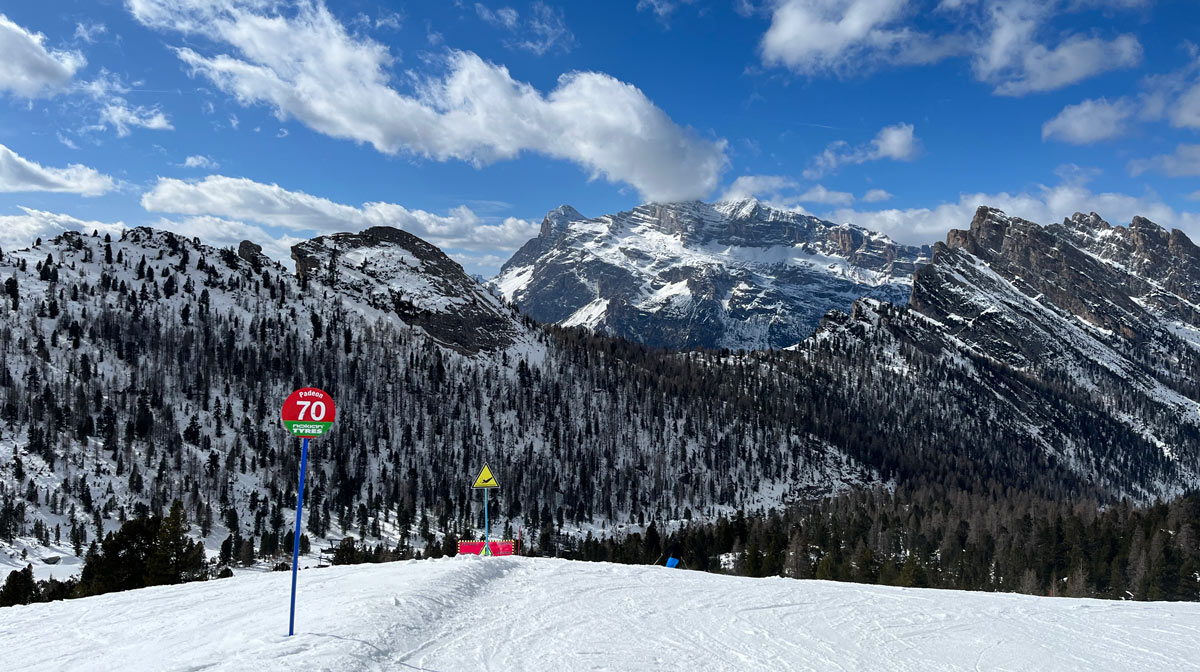
Nestled along the eastern side of the village, a tram will take you up a sheer rock wall to the Faloria area. This area can also be accessed by driving up to the base area, about seven kilometers. Faloria, while fairly small, offers some great terrain and some classic runs, like the 1956 Olympic Giant Slalom run. While we were in Cortina this area was always somewhat less crowded than it’s sister Tofana, and became a go to Friday to Sunday choice for us.
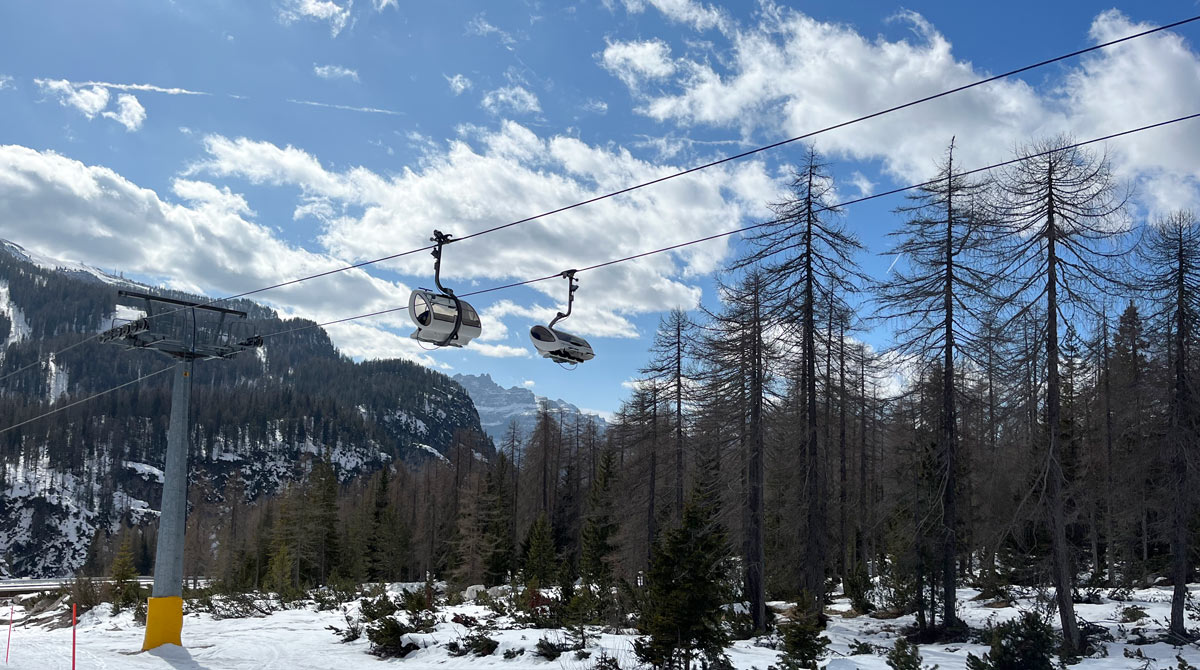
There are actually two areas that are accessible from the parking area. You can take the chairlift up toward the cable car terminal, or you can cross the street and take a 60’s mod covered chair up to a small area with a few trails and an additional lift. There appears to be a lift under construction going up some impressive terrain off the top of Monte Cristallo in this area.
At the top of Faloria you are treated to some fantastic trails including the 1956 Olympic giant slalom run, and extraordinary views. While there aren’t any easy ways down, there are less steep areas for a more relaxed trip down.
Alta Badia
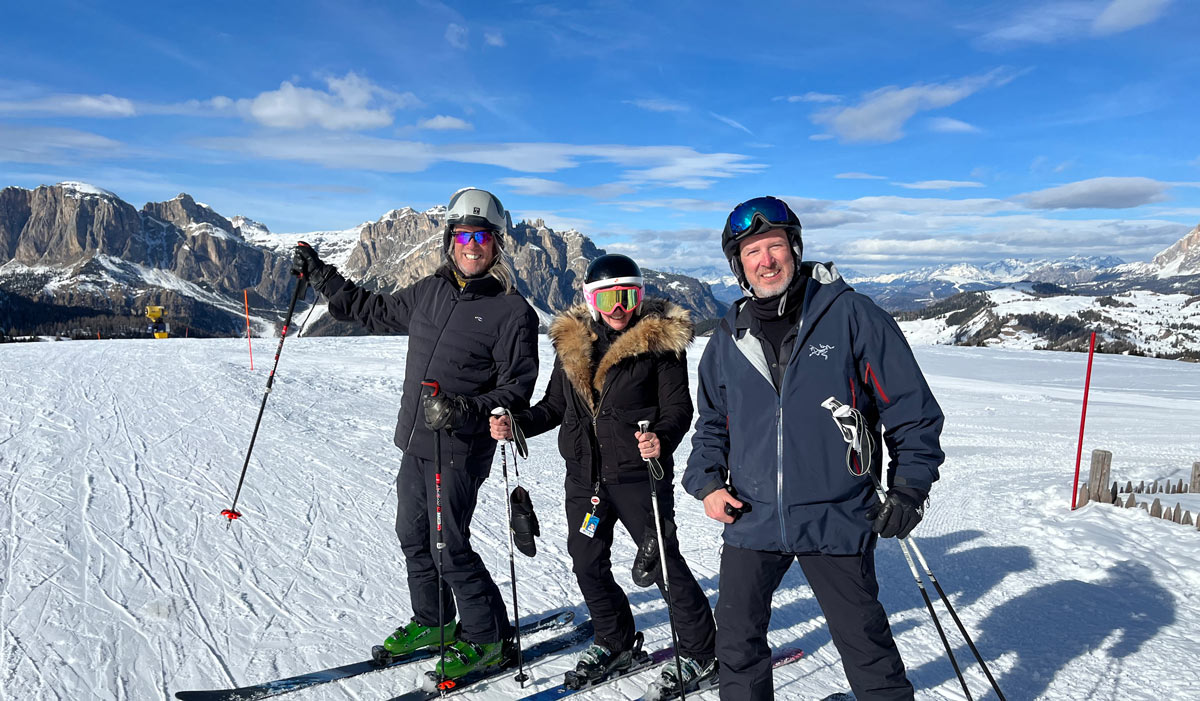
Just west of Cortina’s Tofana ski area is Alta Badia. Alta Badia is an area that encompasses several towns surrounding a group of mountains. This area has some groomed trails, but you can literally ski anywhere as there are not trees or other barriers to avoid once you get up to the top.
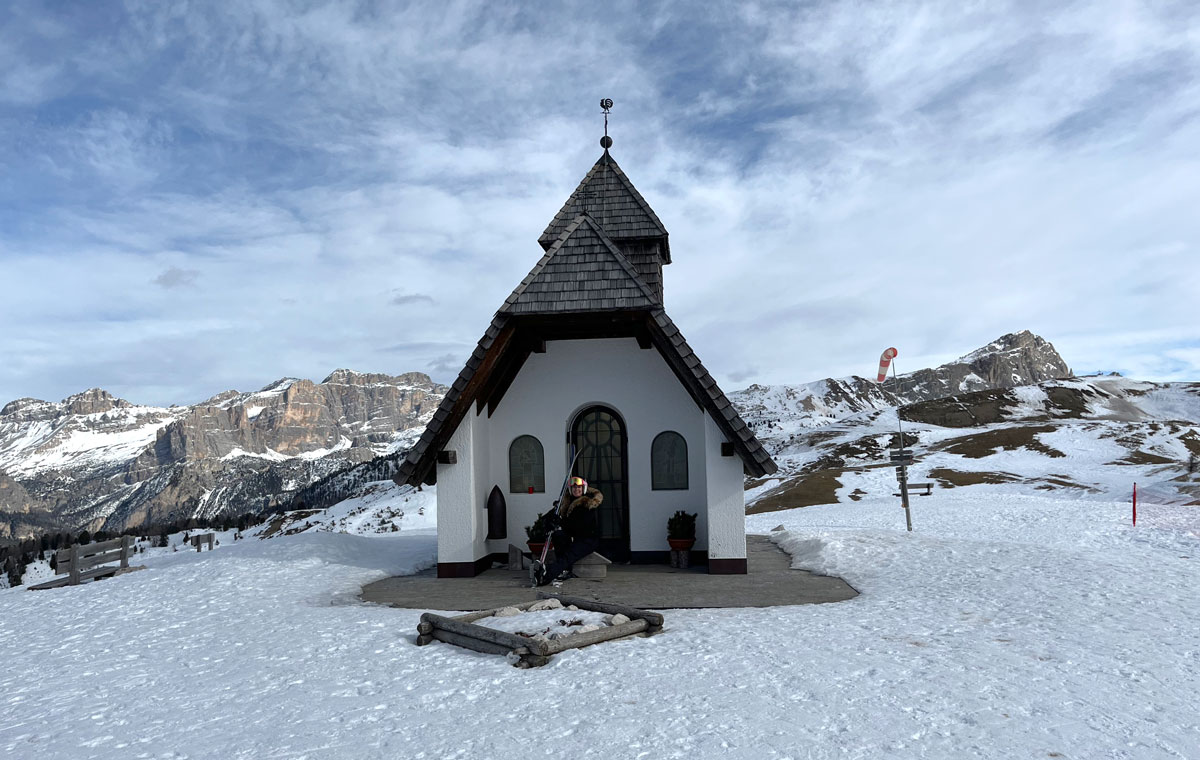
Our first trip to this area was to the village of Corvara. We worked our way up to an area of endless intermediate terrain that is accessed by several surrounding towns. You will see the sign taking you back to several towns that are surrounding this range. You will also find mountain cabins. These are ski-in cabins that are available for rent, and are just off piste. There is also a beautiful chapel and several restaurants scattered throughout this area.
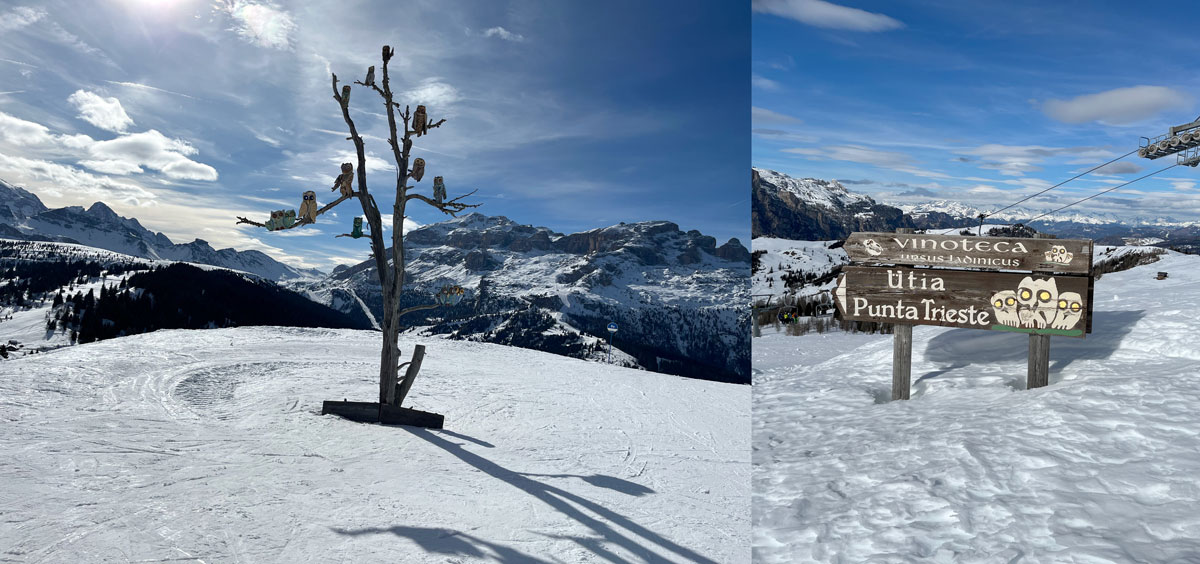
Part of the Dolomite Superski Pass, you can literally ski from town to town, or area to area. There are several marked tours that will take you on a full day of exploration of several towns, villages, and areas; to multi day linked tours that cover a much larger area.

Sellaronda
Sellaronda
The Sellaronda is a ski tour through five villages and four main ski areas, around a massive rock known as Gruppo Del Sella. A day tour that will take you on a loop in one of two directions, over several passes, through four main areas [Alta Badia, Arraba, Fassa, and Val Gardena], a bunch of small ski towns, and will return you to the place you began the tour. There are signs at every transition to guide you on which lift or trail will take you to the next transition. The green sign or counter clockwise direction is suggested as an easier route for skiers, and the orange sign or clockwise direction is better for more advanced skiers.
| | |
A tip for the Sellaronda is to start from the town of Colfosco. It is about 10km past Corvina and has much more parking for the day. |
The Green Tour
We began with the green, counter clockwise, course. Starting in the village of Colfosco was easiest for us heading over from Cortina because Corvina got very crowded and parking can become an issue. Colfosco is a short drive from Corvina in the Alta Badia area, and offers much better parking.
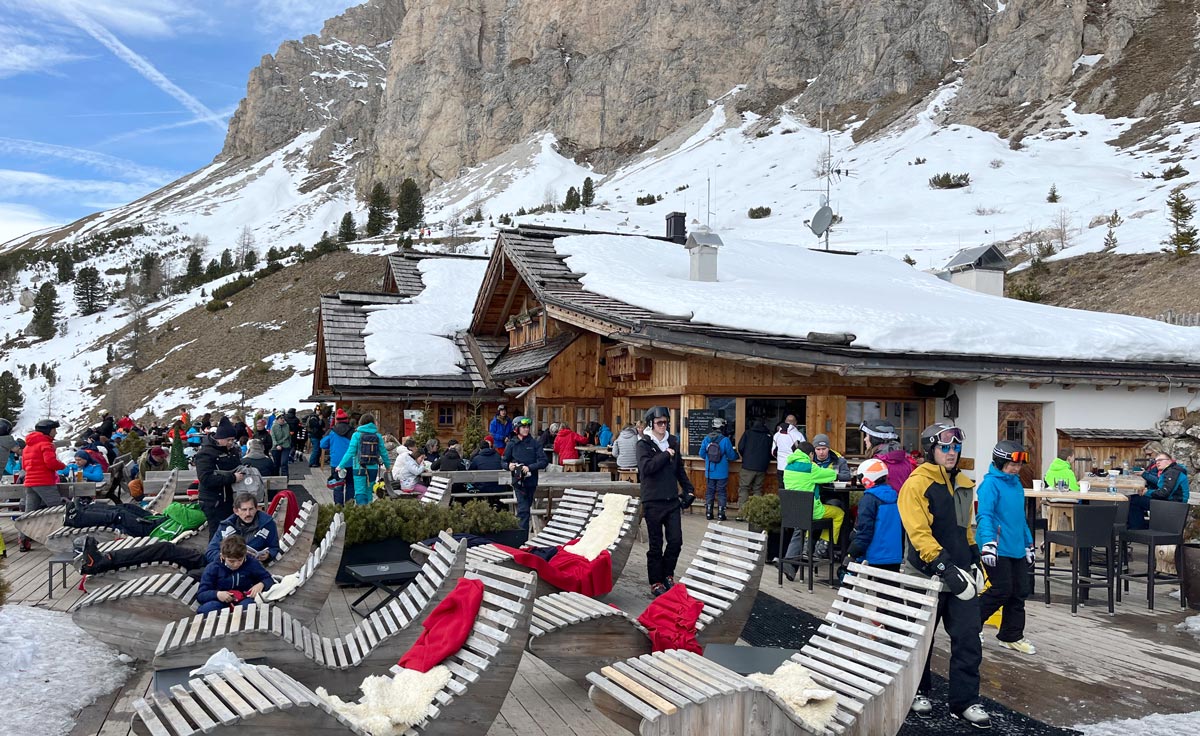
To get started, we took a short ride on a chair lift up to a small hill to get started. You will quickly become attuned to looking for the green, or orange, Sellaronda signs, and the signs soon have you riding a lift up to the Passo Gardena. At the top of the lift there is a fantastic lodge and restaurant with beautiful outdoor seating with truly spectacular views to the east. From here you begin down a moderate slope on a run to your next lift. Again lookin for the telltale Sellaronda signs for directions for your next step.
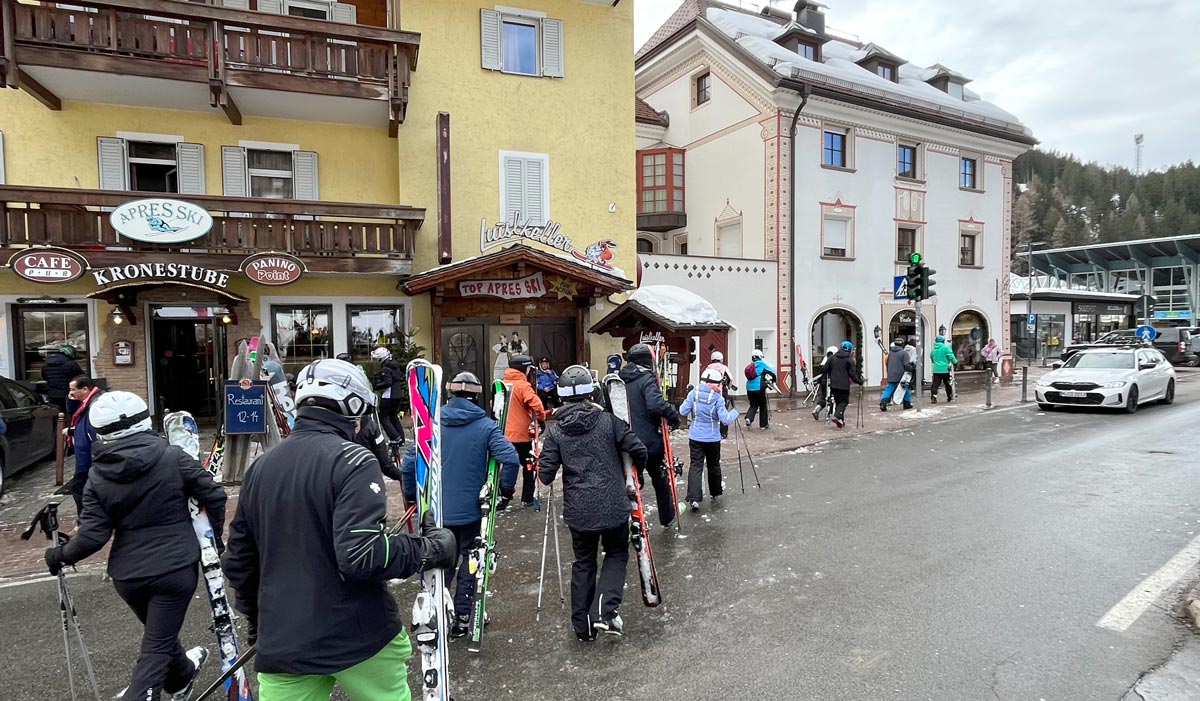
You will descend from the pass all the way down to the village of Selva in Val Gardena. Here you will be forced to remove your skis to cross the street and walk down the block to catch a gondola back up the mountain. The Val Gardena section represented some of the best terrain on the circuit. While crowded is fun to ski.
| | |
This section features some of the steepest, and most challenging runs. We were witness to several skiers removing their gear and walking down one of the more challenging runs. Patience and care are rewarded in this section. |
After your descent you are in Plan De Gralba and heading back up on the lift. This up and down continues over the Passo Sella, and the Passo Pordoi, until you arrive in the village of Arraba. From Arraba there are a couple of lift rides and then a descent to the Passo Campolongo and the back side of Alta Badia.
This is less a village, than a collection of lifts. There is a nice restaurant mixed in with several chairlifts on two sides of the road crossing the pass. The restaurant is busy, but solid and features Austrian/German food. Interestingly, they had menus in English or Austrian, but not Italian. Another interesting item is the signs informing you that the Alta Badia only tickets will only work on the lift going back to Corvara. We used our Ikon Pass, which is part of the Dolomite Superski that works on all of the mountains. If you do begin in the Alta Badia region, make sure your pass will work across all of the mountains on the tour.

At this point you are almost finished. A quick trip up the 8 seat chair and you are on your way down to Corvara and the last short gondola ride back to Colfosco. At the base of the Alta Badia area in Corvina there are a bunch of activities and bar/snack cabins to enjoy before you head back to your car.
Back at Colfosco you have completed your counter clockwise or green loop of the Sellaronda. This trip took us 4-5 hours, and was fairly strenuous for some of it. We would definitely recommend this direction for an easier skiing experience. It is difficult to describe how spectacular this tour is, but it is definitely worth the effort, and a day of your trip there.

The Orange Tour
Like the green tour, the orange tour will take you on a spectacular one day trip around the Grupo Del Sella, this massive stone mountain group forms the center of your loop. This clockwise direction is slightly longer and more difficult to complete, but it takes you through different routes and is definitely worth the trip if you have time to complete both directions.
Again we began our trip from the small village of Colfosco, where it is much less crowded than some of the other starting points. We had to take a short lift ride up to ski down to the gondola heading to Corvara. Again, onto the gondola heading up from there. This section is the most lift heavy of the tour. It seems like you are just taking lifts, but the skiing comes in off the top of this gondola.

Down at the Pass Campolongo, you will head up the chair to Arraba and begin your trip over the Pass Pordoi. The views in this section are particularly amazing. It seems like you can ski forever in any direction. This part will get a bit less crowded and offer some space before you get to the busier junction at the Pass Sella.
| | |
The orange tour offers two ways to proceed from the Passo Sella through Plan De Gralba. The original map will take you through Val Gardena on intermediate trails, but there is an alternate direction that will bring you up to, and down, the World Cup downhill run. This is a fun but extremely steep route. I recommend only advanced skiers choose this alternate route. |
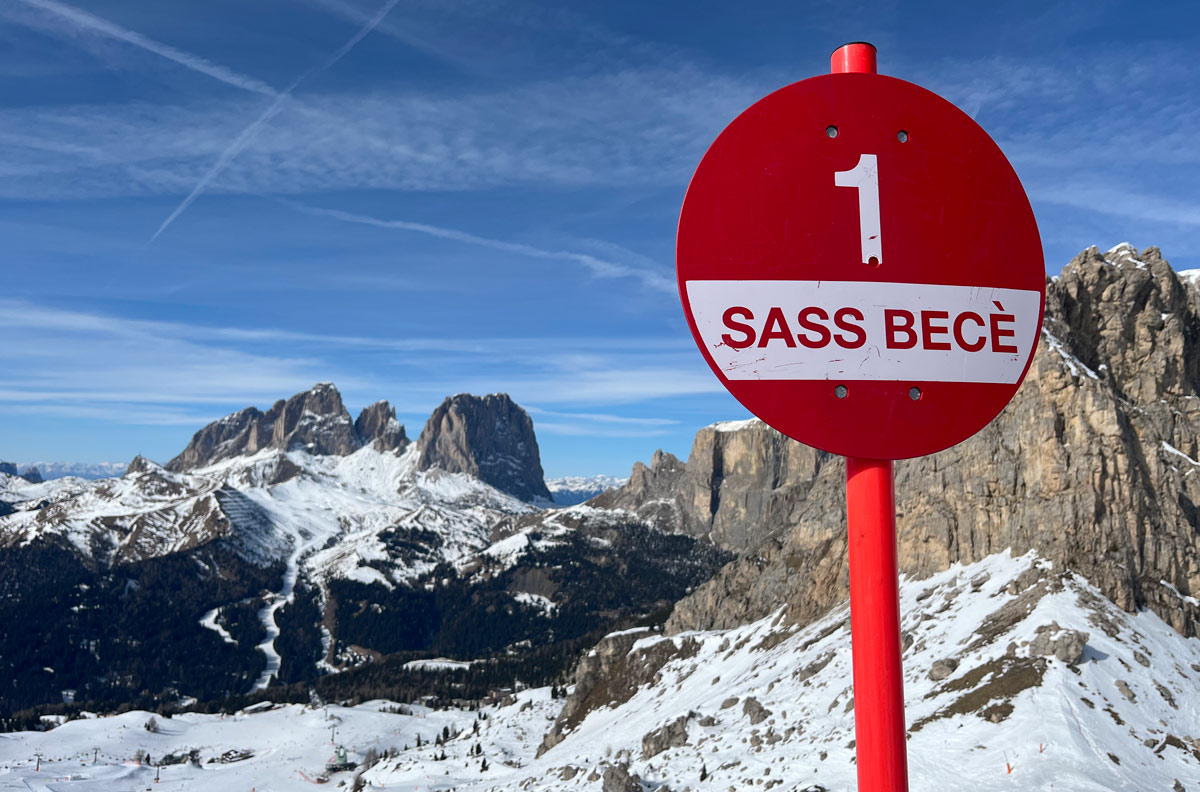
Faced with a choice in the Plan De Gralba, we went up to the more difficult route down the Val Gardena downhill coarse. Following our smaller alternate route signs we made it to the village of Selva. Traveling this direction offers a foot bridge to get across the roadway and to the next lift up the hill.
Heading up to the Passo Gardina, we rode on a lift into what appeared to be a Bond Movie set at the top of the lift and began our winding descent back to our starting point. It is a fairly long ski down and there are a couple of confusing sections, but it is a great day on the hill that we highly recommend if you are in the area.
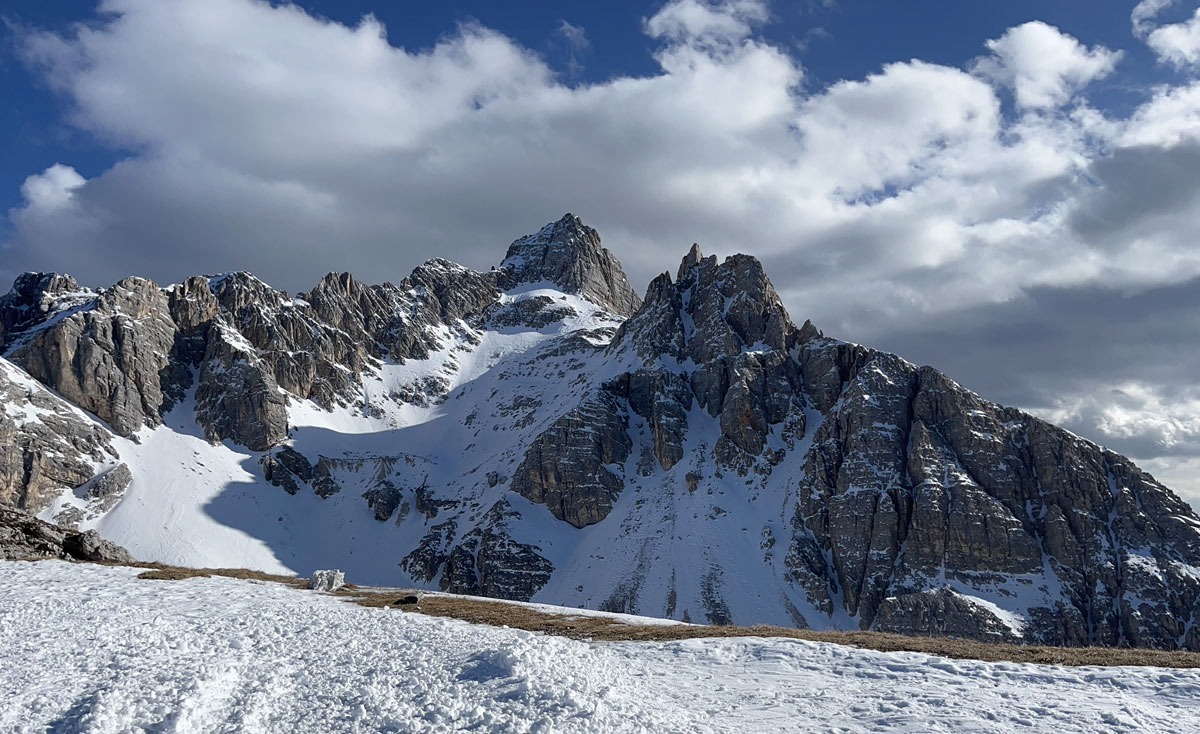
Beautiful, dramatic, and invigorating all describe Cortina. With incredible views in every direction, fantastic restaurants, wonderful skiing, and everything you may require along the way, a visit to this ancient village is a must. Superb skiing in a seemingly never ending string of area’s, cuisine that rivals any we have experienced, and off the mountain activities that will entertain everyone, elevate Cortina to one of our favorite destinations.
 |  | |
Cortina is home to some of the best restaurants you will find on the mountain that we have found. These she in/out restaurants offer fantastic cuisine, great service, and views that are indescribable. | ||
El Brite de Larieto SanBrite |
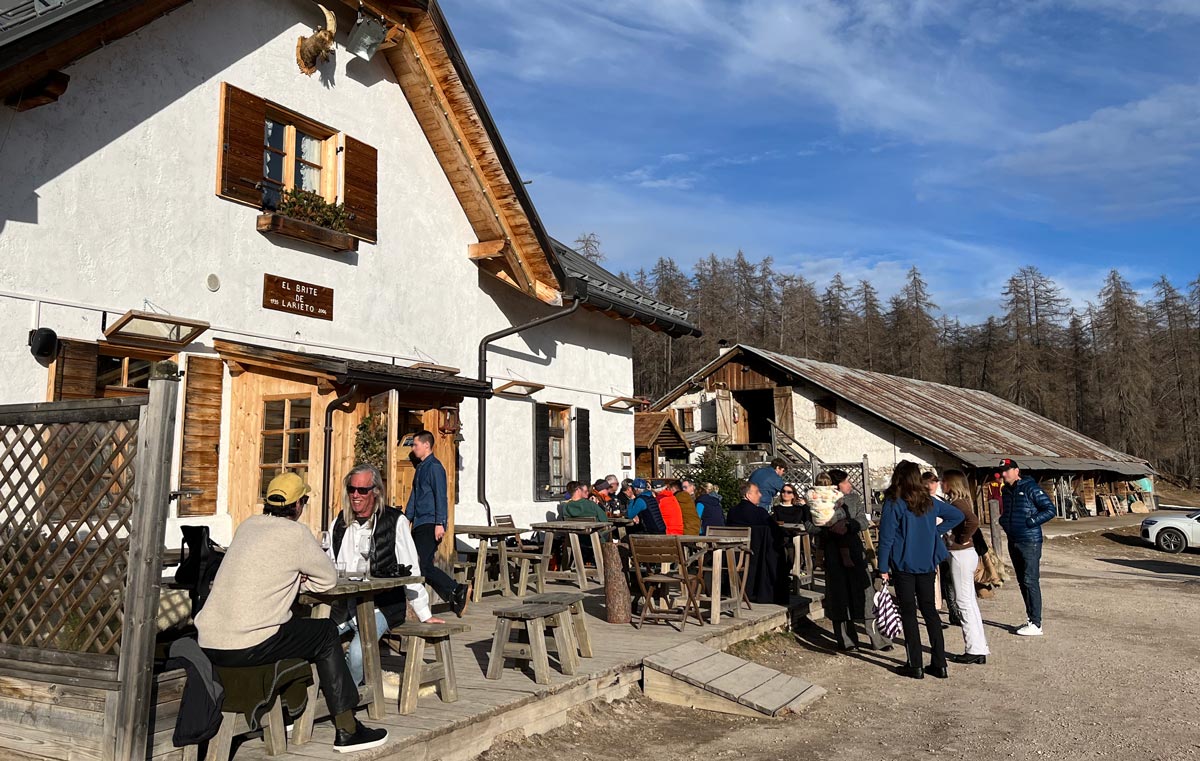
the front porch at El Brite de Larieto
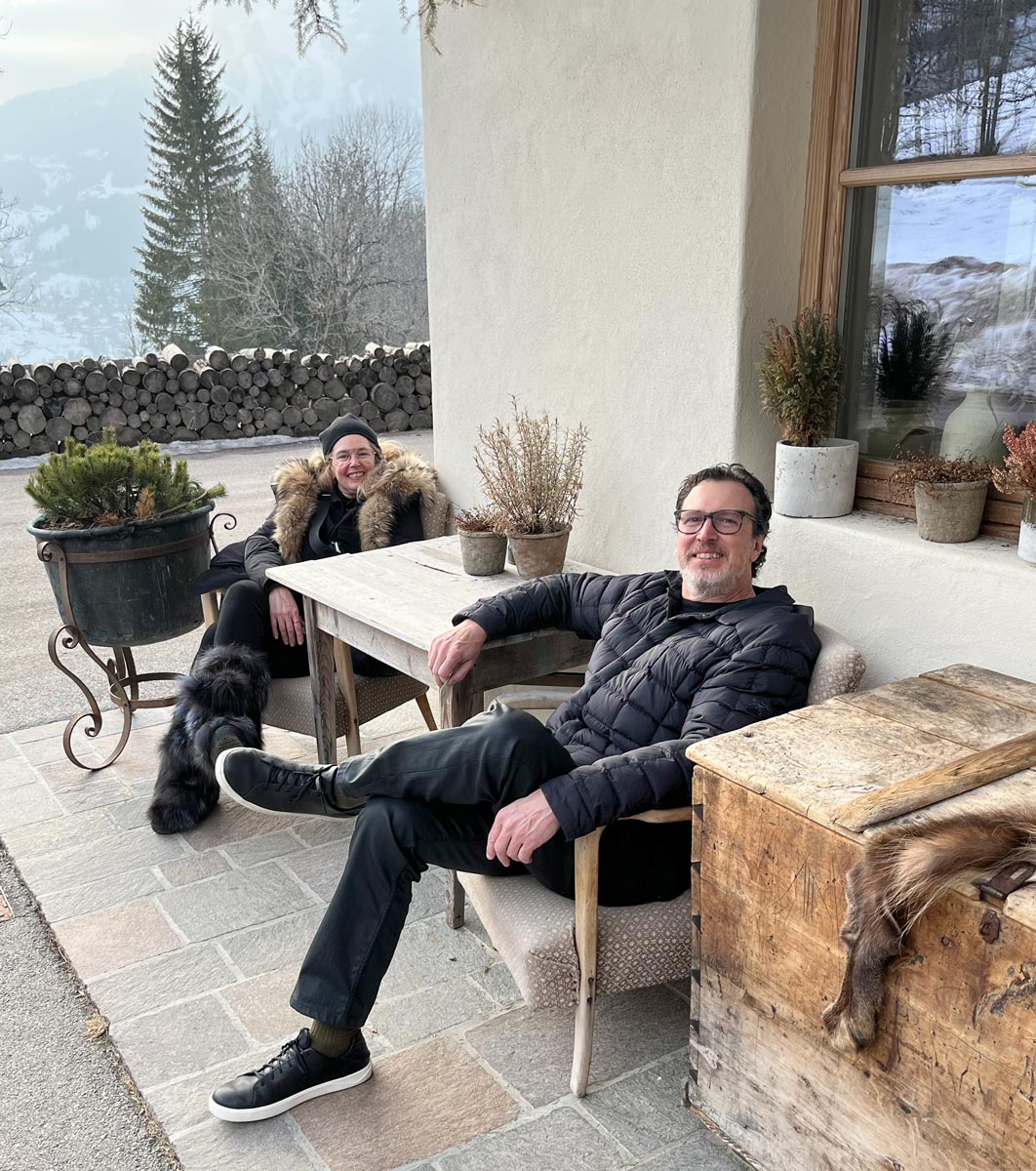
Heidi and I sitting outside of SanBrite

Winter in Chamonix
Chamonix France is a magical place. High in the French Alps the Mont Blanc valley features quiet homes, small villages and the thriving ski town that is Chamonix. Nestled in between Switzerland and Italy, in the Savoy region there is almost an endless selection of activities available to visitors. Our story will cover winter in the valley, highlighting the skiing, nightlife, restaurants, and shopping that make an extended trip exceptional.
We Stayed in the south end of the town of Chamonix, which worked out to be a great location in the village. An easy 5 minute walk to the bustling commercial area that cuts through the village from south to north, we were close to everything. All of the busses begin and end at the Chamonix Sud (South) bus stop making it very easy to get on a bus to any mountain location. All while offering easy walking distance to all of the shops and restaurants in town.
| | |
One tip: Have your cell service figured out before you arrive. Many of the streets are confusing and hidden in courtyards or in complexes. Google Maps was critical to finding our apartment, and it would have been very difficult to find without the help it offered. |
The central village is easily managed on foot with about a 15 minute walk from one side to the other. The village is fairly old with narrow streets much more suited to pedestrians than cars. In fact, cars become a bit of a pain to have in town largely due to the focus on walkability.
There seems to be cafe’s and restaurants everywhere, but there are a couple commercial streets and areas. Rue du Dr Paccard may be the busiest commercial street in the village and is close to traffic most of the time. There are shops where you can find anything. From equipment to gourmet coffee one can find anything they will need while here. Additionally, there are several smaller sections that offer a variety of shops that are never very far away.
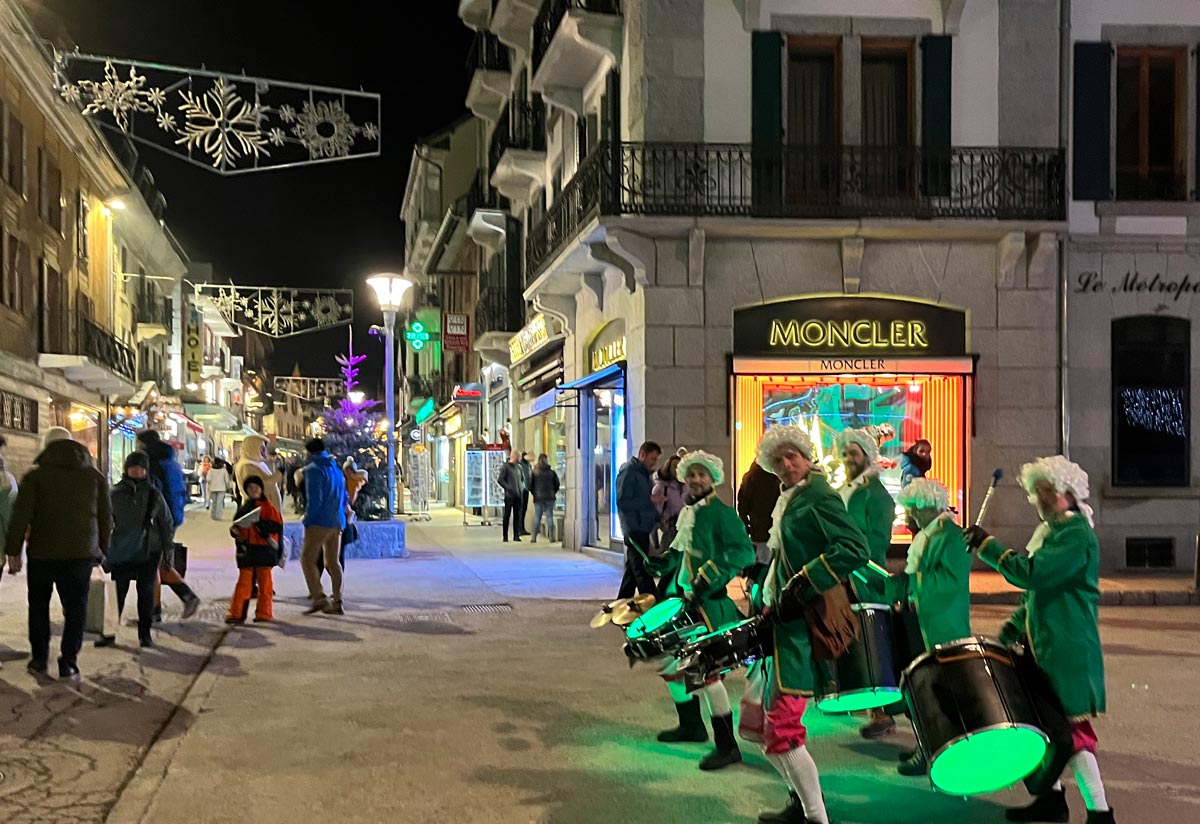
Unlike some ski towns we have visited, Chamonix is all business when it comes to winter activities. It is common to see people walking back to town from a day on the hill with full climbing gear. In the restaurants you will notice the functional fashion of the area. The latest technical gear over fashion. Think Arcteryx over Moncler, although there is a Moncler shop in the village.
While skiing is the main activity in winter there are many other activities to occupy skiers on their day off or members of your party not interested in the skiing. There is a cogwheel train called the Mer de Glace, that will take you up to the decent into the Mont Blanc glacier; a fantastic hiking path that wanders along the Arve river; and the Aiguille du Midi tram to the viewing area for Mont Blanc just to name a few.
Saturdays feature a farmers market and flea market in the parking areas around the main sports complex along the Av du Mont Blanc. This is a great resource in winter for produce, local cheese, seafood, all kinds of cured and dried items, crafts, and all kinds of items that might be handy during your stay. The market occupies both sides of the Avenue du Mont Blanc with the food on the south side and the merchandise on the north. It opens at 7:00 am and closes at 1:00 pm every Saturday.

Beginning along the Arve at the Avenue du Mont Blanc on the east side of the river is a fantastic walking path. It starts as the promenade du Fort and will take you along the river past the tennis center. A left onto the promenade des Econtres will take you on a walking bridge one a tributary and continue along the river all the way to Les Praz where you can get on the busses or explore the village area. The path is nice and wide and easy to walk in good boots in the winter. While the snow is managed, the walkway is not cleared of the snow and can be slippery in some spots. The path is roughly 35 to 40 minutes walk and if you are planning to make it a oneway and take the bus back, make sure you arrive in Les Praz before 3pm as the busses will fill up with skiers beginning around then.
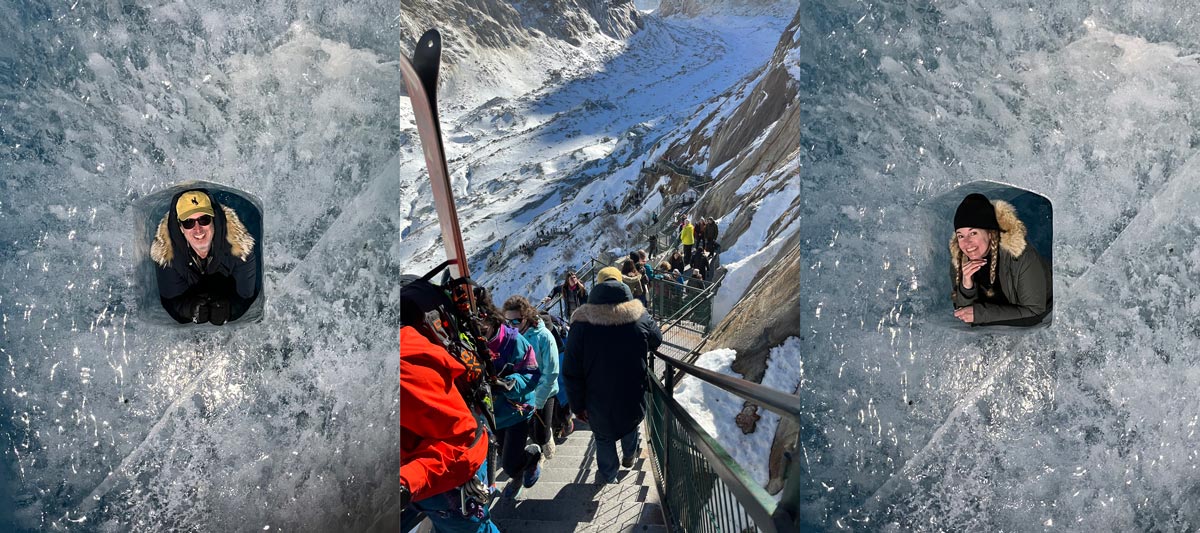
The Mer de Glace cogwheel train leaves several times a day to bring riders unto the Gare du Montenvers where you can take a gondola down to the Grotte de Grace, an ice cave carved into the base of the Mont Blanc glacier. (The Grotte de Glace is currently closed and is expected to re-open in January, while they are adding a new gondola that reaches the glacier. Saving you from the endless stairs the were required to reach the base.) The ice caves that they dig into the glacier are spectacular. Some areas are carved deep into the ice and offer a unique visual of the ancient ice. In other areas they have cut closer to the surface and let the light set the ice aglow which creates a stunning environment. After you make your way back up to the station a short walk over to the Refuge du Montenvers for a glass of wine and snacks out on their patio is a must. The views of the back side of Les Grand Monetets and the valley created by the receding glacier are spectacular, and the wine and charcuterie make it a must.
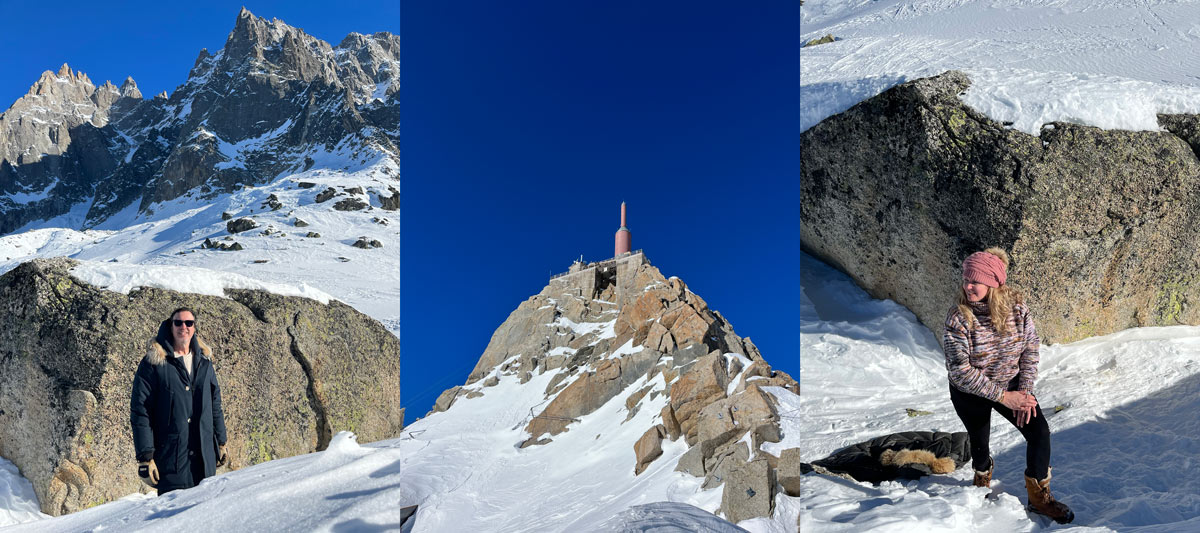
The tram that takes you unto the Aiguille du Midi leaves from the southern end of Chamonix and will take you to a mid station, and then on to the viewing area of Aiguille du Midi. There is an elevator that will whisk you even higher to a viewing platform that only looks up to Mont Blanc. From there you can literally look out and see forever. The skiers on the glacier, the surrounding mountains, the tiny specs of villages are all visible from what feels like the top of the world. There are several vantage points, each more tenuous looking than the others. Cut into the top of the mountain there is an information center with a brief history of the mountain and the glacier. There is a restaurant and a gift shop there as well. Just be aware that the altitude is an issue. The altitude is 12,600 feet and will affect your trips on stairs. On the decent you will have to stop at the Plan de L’Aiguille for a glass of wine and relax on the lounge chairs overlooking the valley.
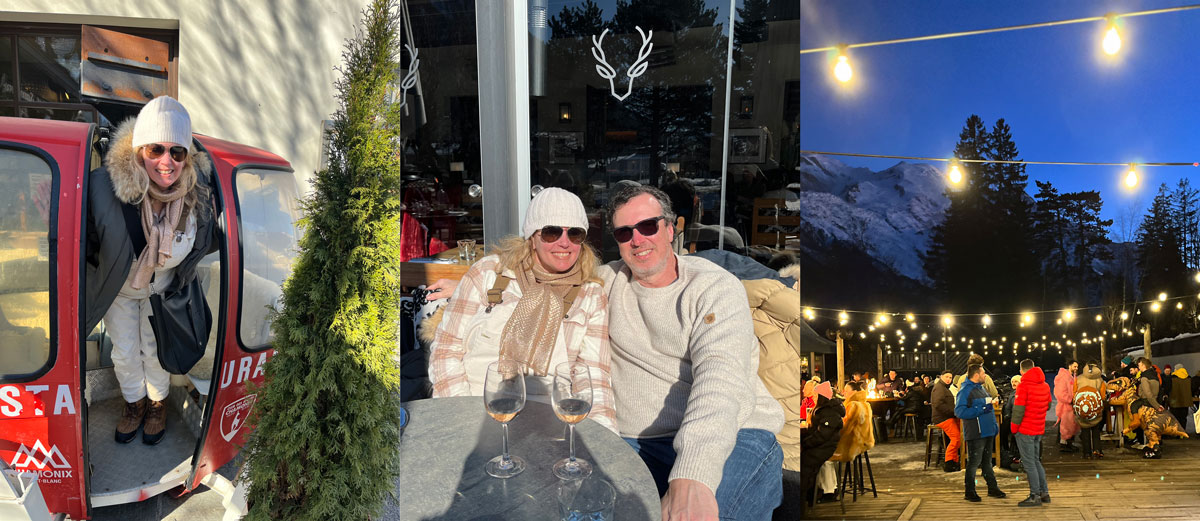
Arguably the most interesting thing to do in Chamonix is to sit at one of the endless restaurant patios and people watch as the crowd comes back to the village from the mountains. There are several places to choose from, but you will want to get to some places early, as seats start to fill fairly early. Two of our favorites are Rose du Pont, and La Folie Douce outdoor patio. You can wander the mostly closed to traffic streets and shop as well. Most of the central village is closed to traffic by the afternoon, making it vary nice to wander and shop. Much of the village was built in the 1920’s and while it has been updated a couple of times since then, the feel is definitely old world. The streets are narrow, and the buildings ornate. There is no real pattern to the streets and some will bear off in unexpected directions. All of this combines to make just walking around an interesting adventure.
| | |
We have listed some of our favorite places here. Our recommendation is that you use these as a starting place to explore all of the options throughout the valley. One thing that we failed to encounter was a bad restaurant. | ||
Le Chaudron La Maison Carrier Josephine Restaurant La Caleche Le Fournil Chamoniard Le Boccalatte Restaurant Le Castel |
|  | |
We will list two of our favorite places, but there are so many places to sit and have a cocktail that we think you will find your own favorites pretty quickly. While the town center has an abundance of cafe’s and restaurants, almost every area has a couple of places to grab a cocktail and a snack and relax in the magical place. | ||
La Folie Douce Hotels Chamonix Rose du Pont |
|  | |
Below we have added a couple of shops that we found important during our trip. Chamonix has litterally hundreds of shops of every type, and includes a fantastic Saturday market in the center of the village. | ||
Le Refuge Payot 2 Cheverny |
On To The Skiing:
Picking the best destination to ski is a bit like choosing a favorite child. A common experience is the spectacular visual spectacle that opens up on the mountain. There are no trees and the only defining feature is the rocky outcrops, snow, and occasional warning sign. Le Brevent is in the village, on the western range, and offers some spectacular skiing and atmosphere. From Brevent you can grab a cable car to the neighbor to the north and ski La Flagerre. Also accessible on the bus at the Les Praz stop. A bit further north of the village, and on the eastern range, you will find Les Grands Montets. This area has very few easier trails and is targeted at the advanced skier with great steeps and a combination of groomed and off piste. Le Tour is located with Balme on the northern edge of the valley and offers terrain from mello to advanced. In the southern end of the valleys you will find Les Houches. Les Houches is a bit lower than the other options and offers many trails cut in the trees, rare at the other areas.
One major difference to skiing in the USA is the lack of base lodges. There are not many places to put on ski boots or store your gear at the mountain, so you will have to carry everything with you as you ski. Most times it is easier to get dressed and ride the bus ready to ski. If you drive to the base, you can put boots on in the parking lot and store gear in the car. But be warned, the parking areas are small and they fill up early, making parking very difficult. Even if you find a spot, you may return to the car to find that someone has parked you in. Given that the busses are so frequent and easy, we found that gearing up in our room and riding the bus ready to ski was the easiest way to the mountain.
| | |
We skied using the Ikon Pass’s 7 days of lift tickets. You will have to convert your Ikon pass days to the Mont Blank Natural Resort Pass. This can be accomplished at the base area ticket offices. It will take a few minutes to do the conversion and they will require personal information as well. One thing to do while you are there is to purchase insurance for the services on the mountain. Unlike in the USA, Chamonix will require that you pay for ski patrol services. So if you have an issue that will require the ski patrol you will be expected to pay the fees, on the hill. This insurance is inexpensive and we highly recommend that you purchase insurance when to pickup your ski passes. |
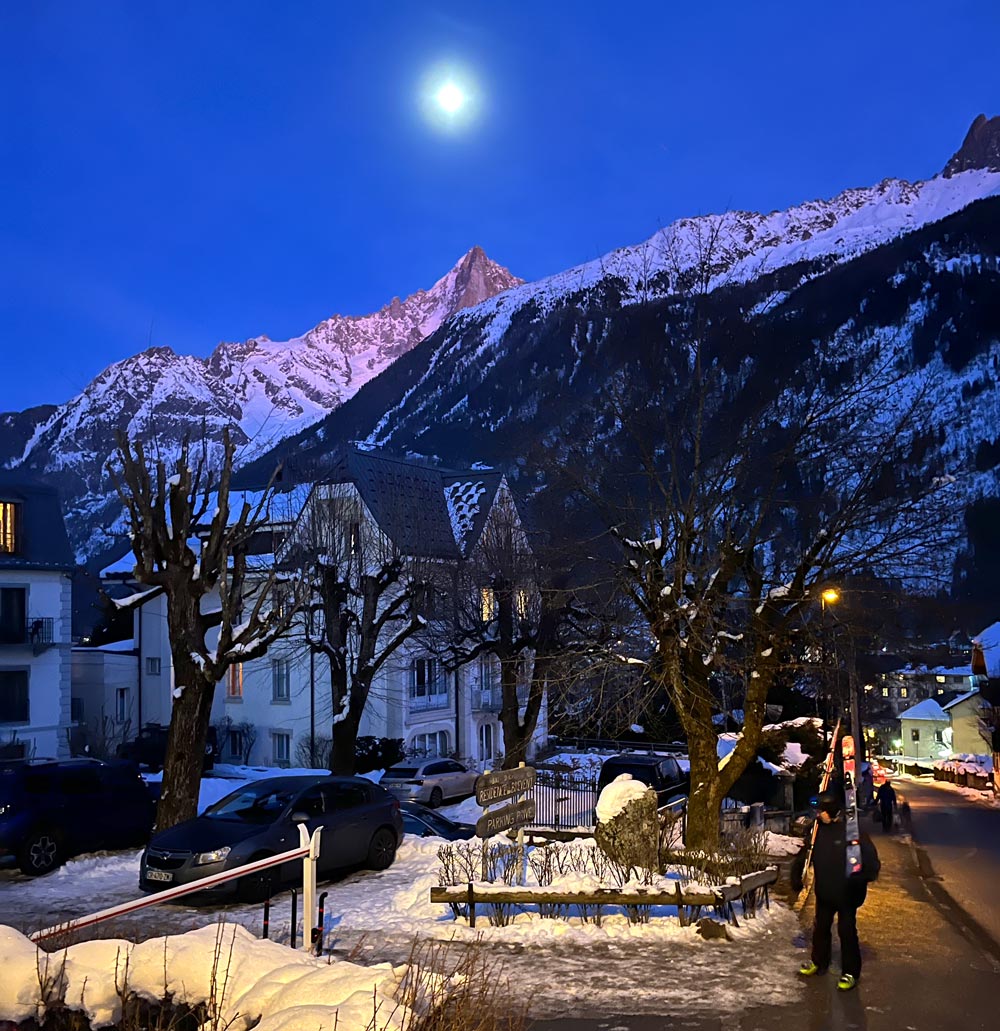
Le Brévent: We skied Brévent last February and it was extremely crowded. There is a wide variety of terrain to ski, but the less challenging trails on this area seemed to attract all of the skiers. So, even if you are on a more challenging trail eventually the lifts back up. Some of the ways down at Brévent are as steep and challenging as anywhere, with some probably unmatched. The skiing at this area is definitely worth some of the crowd battles that seem to come with it’s proximity to the village. A cable car ride was the only way in and out when we were there, so getting down at the end of a busy day can lead to you missing the last bus down the hill to the village. While the walk is not that far, it seems much worse due to heavy gear and walking in ski boots.
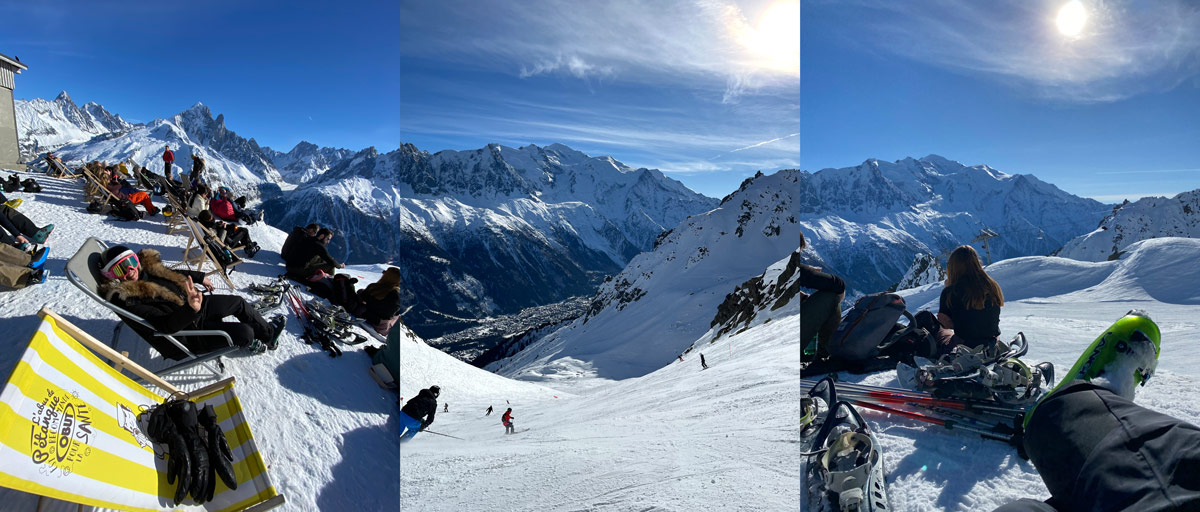
La Flagérre: Flagérre is equally difficult and impressive, but seems to be a bit less crowded and manageable. It is almost difficult to focus on skiing with the spectacular surroundings. This area is a bit less focused on easier terrain and rewards accomplished skiers with long steeps, and off piste that is not quite as extreme as some others in the Vally. One special feature is the café at the top of the highest lift serving lunch. We were able to relax and refuel while enjoying an absolutely spectacular view on a perfect weather day. You will get to burn off the calories after lunch on some really great terrain.

Les Grands Montetes: Sporting the highest elevation of lift serviced terrain in Chamonix, Grands Montetes also features some of the most challenging trails. Unlike most of the other areas that don’t maintain the trails below the tree line, here you can ski down a windy, icy trail to the base at the end of the day. Like any other false choice, there was no bad choice of areas, this proved to be our go to. The challenging terrain and population of accomplished skiers made for many great days on this hill. Even riding the lift had entertainment. Beyond the postcard views we were often treated to the hard core hiking the peaks, scouting the ridges traversing the craggy ribs of the upper mountain ,and dropping in some of the more insane upper sections.
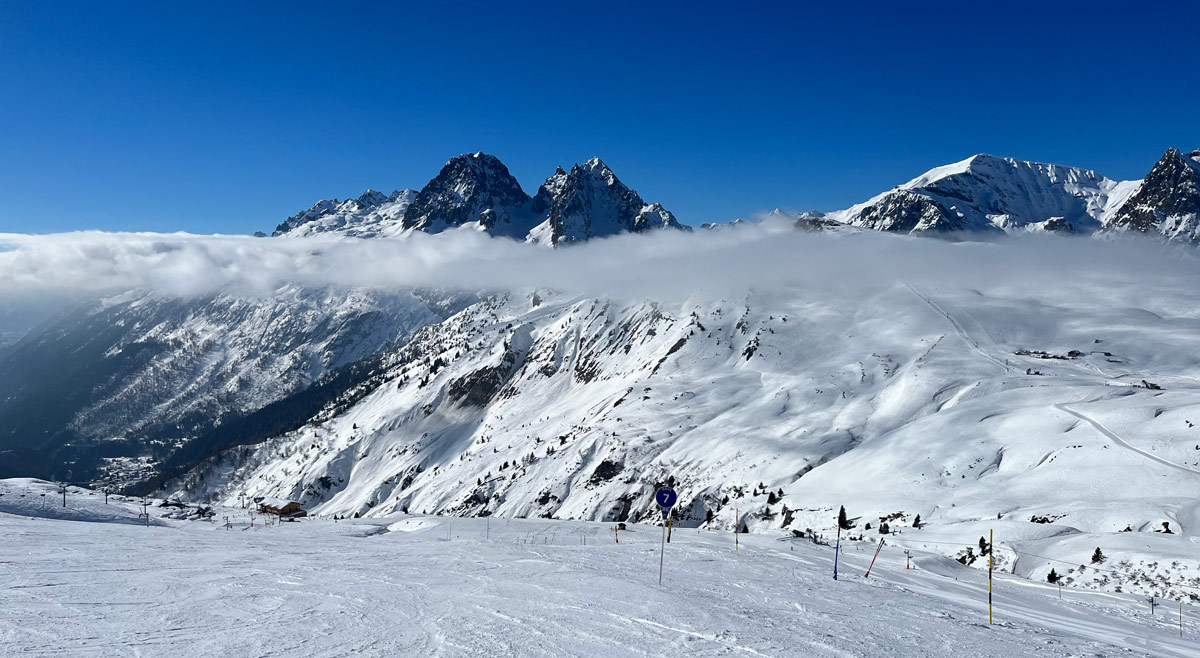
Le Tour/Balme: This is a comfortable fairly easy area to ski. Up as far north as you can ski without crossing into Switzerland, Le Tour has a vast array of groomed trails with off piste options at almost every trail merge. Unlike the other areas there are a lot of T-Bar lifts here and some of the best runs require at least one run of the t-bar. At one point you can look down into Switzerland and even ski to a small Swiss village on the back of the mountain. The crowd skiing over there is close enough to shout to, but getting back up the lift may be an issue. The terrain up here is very intermediate friendly with a couple of really challenging runs and off piste to keep it interesting.
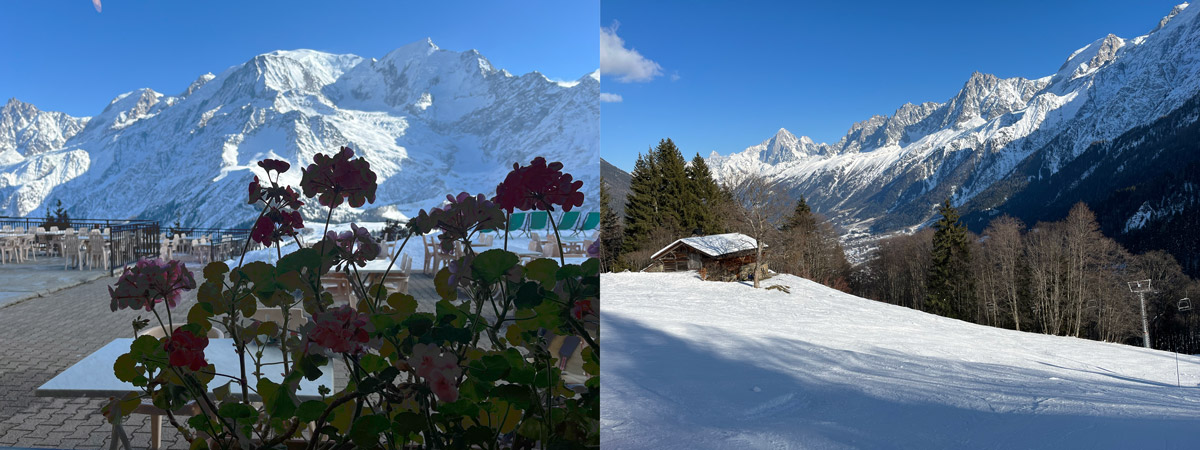
Les Houches: At the southern end of the valley is Les Houches. This area will seem familiar to American skiers. It features trails cut in the trees and offers a good place to ski in tough weather. While this has the most approachable terrain for beginning skiers, there are also several steep trails to keep your attention. The snow condition is also effected by the lower altitude and thin cover and heavy snow are sometimes a feature.
With a fantastic selection of mountains and terrain, the Mont Blanc valley provides some of the most interesting and challenging terrain anywhere. Whether dropping in to some crazy steeps, or enjoying some relaxing turns on a scenic groomer, there is something for everyone here. We found that the northern area’s of Le Tour and Les Grande Monetets worked best for us, but there was not a bad choice to make for skiing. Add the fantastic village of Chamonix with a seemingly endless selection of shops, restaurants, and activities off the hill this place has a magic that everyone should experience at least once.
This Article May Also Interest You: Blooming Wonders: A Celebration of Spring
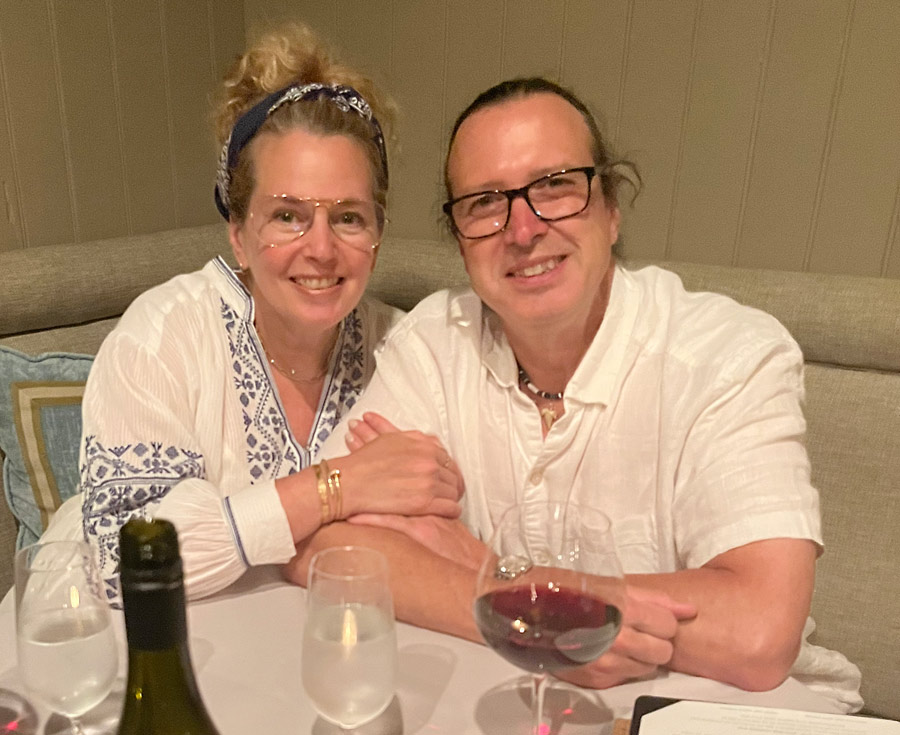
Finding a great restaurant on your travels
We have developed a system to find great choices in an abundance of reviews and options when you are away from home. With the notable exception of the Michelin Guide, finding a great restaurant on the web is often a crap shoot with thousands of options. In this article you will learn the system we have developed to cut through the outdated or erroneous reviews to find a great place within your budget.

First, if money is not an issue, the Michelin Guide is usually a very good choice. The limitation for the Michelin Guide is weather they cover the location you will be traveling in. Just make sure the choice and review are current.
The first thing to do is an internet search for “the best restaurants [or: breakfast, lunch, or dinner]” in your target location. For this example we will search Charleston, SC. You will get pages of sites with reviews, and details about the area you search. Among them will be a combination of large review sites, international customer based review sites, and several local sites. Some will have editorial reviews, while others may also have customer reviews.
Our search has several sources:
Customer review sites like Trip Advisor, Google, and Yelp; and several large review sites as well. There are also local state, city, and newspaper sites. Finally, Michelin reviews do not currently cover Charleston, SC.
From here; start with large review sites and select the restaurants that appeal to your parameters, and begin to cross reference them across the multiple sites and begin a list. Some of the large review sites are: Condé Nast Traveler, The Infatuation, and Eater to name a few. They will usually offer 10, 20, up to more than 30 choices from the restaurants that they have reviewed.
Our initial search of Charleston produced a list here;
Circa 1886, Slightly North of Broad (SNOB), Fig, Husk, and Magnolia’s
Each of these sites offers information about the type of food, strengths, and expense of the restaurants and reviews are based on their reviewers experience there.
The second area of search is the local review sites. Local newspapers and travel organizations offer, in some cases, a more local view. They will have information about the restaurants, but may have a paid bias, so we will usually look to the local paper sites more than the sponsored local travel sites. The reviews and descriptions will help you reinforce some restaurants and help eliminate others.
From the Charleston City Paper, and other local reviews we have added emphasis to the list. We use the plus sign here, any cumulative mark that you will recognize will work here.
Our List now looks like this:
Circa 1886+, SNOB+, Fig+, Husk, and Magnolia’s
The next search is in the customer based reviews. Primarily Trip Advisor, Google, and Yelp. We look up each choice up from our list. There are several signs of an errant or unhelpful review. The first red flag we look for is the age of the reviews. Often the reviews listed are old and out of date. In this case we will check other customer review sites and if all of the reviews are out of date, remove the restaurant from the list. After that, we look at the details of their reviews. If we are looking for fine food, the food reviews become the primary focus. For a happening nightspot, or romantic dinner, generally add atmosphere, service, or other element into the calculation.
From our reviews, the list is now:
Circa 1886++, SNOB++, Fig+, Husk+, Magnolia’s+
Still in the customer reviews, we now begin to read the most recent reviews. There are some reviews that are not helpful. Often people get angry about not getting in, and voice this anger in the review. Ignore those. Additionally, place less weight on over the top great reviews, unless there are several recents to match. Some critical review of the customer reviews can help you rank your choices effectively. Many times you will find a review that complains about the speed of service but lauds the food. If you are not in a hurry and are looking for great food this type of sub-5 star review can be very helpful to segregate your choices. Conversely it would eliminate a choice if you are in a hurry. We generally recommend that you use only view the last 3 to 4 months of reviews.
From this our list has ended up with 2 choices:
Circa 1886+++, SNOB+++
And the 3 that just missed: Still good second choices:
Fig++, Husk++, and Magnolia’s++
We have used this system very effectively for several years, over a broad area, from Jackson Hole to Chamonix, and I have found it to be incredibly effective at finding places to dine that are not so much a surprise, but a pleasure.
This Article May Also Interest You: Two Years, and the Journey Continues